

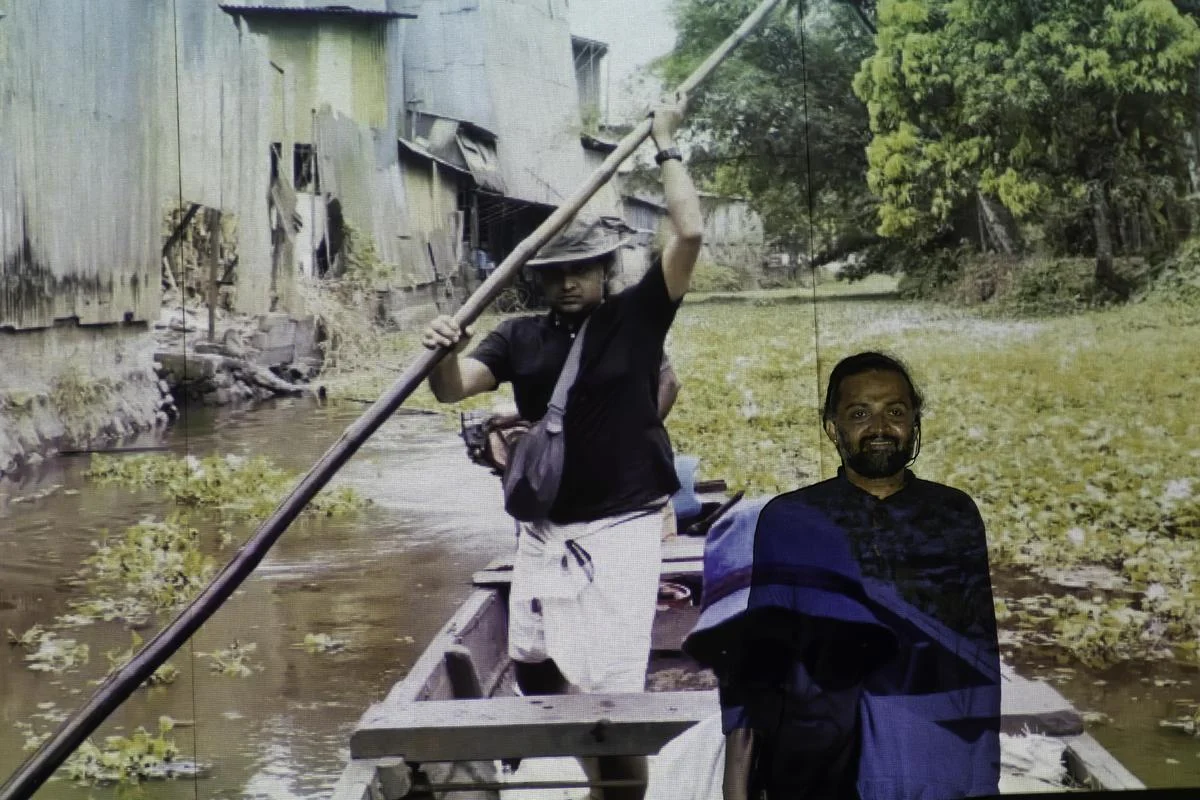
Kochi, India – In the hushed intimacy of a darkened performance space, a solitary figure, Abheesh Sasidharan, commands attention not with grand gestures, but with a profound stillness. His back to the audience, a hooded silhouette against a vast screen, he embodies a quiet contemplation, a prelude to a powerful narrative that is about to unfold. This is the beginning of "Meenachil R," a performance that transcends mere artistic expression, delving into the very essence of a river, the turbulent history of a region, and the enduring spirit of its people. More than just a show, it is an immersive journey that weaves together personal memory, historical excavation, and a potent commentary on social structures.
The Lifeline of Kottayam: A Personal and Historical Tapestry
At its core, "Meenachil R" is an ode to the Meenachilaar, the river that serves as the lifeblood of Kottayam district in Kerala, and for Sasidharan, a deeply personal connection. The performance begins as a serene reminiscence of a childhood spent in the river’s embrace. However, as Sasidharan’s narrative deepens, it reveals the river’s own tumultuous past, unearthing stories of generations who have lived, struggled, and thrived along its various tributaries.
The Meenachilaar, a river often taken for granted, becomes the central protagonist, its currents carrying not just water, but echoes of human experience. Sasidharan, through his masterful storytelling and evocative performance, invites the audience to see this river not just as a geographical entity, but as a repository of memory and history. The performance artfully shifts from the personal to the collective, revealing how the river’s journey mirrors the complex social and historical evolution of the region.
From Childhood Reverie to Caste Reckoning: The Manjadikkari Revelation
What begins as a tender exploration of childhood memories soon morphs into a potent and unflinching discourse on caste. The narrative pivots, leading Sasidharan to the story of Manjadikkari, a remote village near Kumarakom. This village holds a significant place in the region’s history, believed to have been a refuge for subaltern communities escaping the brutal realities of caste oppression and slavery in the early 19th century.
Sasidharan’s research and performance are deeply rooted in the work of author and historian Vinil Paul, particularly his seminal book, Manjadikkari: Olichottathinte Vimochana Daivashastram (Manjadikkari: The Gospel of Liberation through Light). Paul’s book meticulously chronicles the history of the slave trade in the region, providing a vital historical anchor for Sasidharan’s exploration.

"Manjadikkari was a crocodile-infested marsh," Sasidharan explains, his voice resonating with a profound understanding of the historical context. "Vinil’s book tells the story of two slaves who escaped along the Meenachilaar. They were running away from pain and humiliation to ultimately find and build a land they could call home." This poignant anecdote encapsulates the performance’s ability to connect the abstract concept of historical injustice with tangible human narratives of resilience and hope. The river, in this context, becomes not just a pathway to escape, but a symbol of a new beginning, a testament to the human desire for freedom and self-determination.
The Genesis of "Meenachil R": A Decade-Long Artistic Evolution
The journey of "Meenachil R" from its nascent stages to its current sophisticated form has been a protracted and deeply personal one for Abheesh Sasidharan. The performance began to take shape over 12 years ago, initially conceived as an artist’s aesthetic self-reflection. Born and raised in Pala, a town situated along the Meenachilaar, the river is intrinsically woven into the fabric of Sasidharan’s identity. He had previously created over 13 fictionalised performative works centered around the river, yet a sense of incompleteness persisted.
"Something still seemed amiss," Sasidharan admits. This feeling of an incomplete narrative spurred him to embark on a more comprehensive and collaborative approach. He assembled a team of artists and researchers, initiating an extensive river trail that traced the Meenachilaar from its origins and along its numerous tributaries. This meticulous research involved a year-long investigation into historical writings on slavery routes, a deliberate effort to unearth the silenced narratives of the past. The team meticulously collected sounds, visuals, and objects from the river, immersing themselves in its environment to glean a deeper understanding of its ecological and historical significance.
"In this performance, I try to share the ‘river experience’ to the spectators with my body, sound, visuals, objects and technology," Sasidharan elaborates. This holistic approach underscores his commitment to creating an immersive and multi-sensory experience for the audience. His creative collaborator and technical coordinator, Sudheer C, played an instrumental role in translating this vision into a tangible reality, ensuring the seamless integration of various artistic elements.
The performance’s evolution reflects a growing awareness of the interconnectedness of environmental, social, and historical factors. While the narrative prominently features the history of displacement and oppression, it also serves as a potent reminder of the river’s geographical and ecological realities. References to flooding, the surrounding flora and fauna, and the delicate balance of the ecosystem are subtly woven into the performance, highlighting the broader implications of human interaction with the natural world.

The Facilitator of Dialogue: Engaging and Provoking the Audience
Abheesh Sasidharan consciously refrains from identifying himself solely as a performer. Instead, he prefers the term "facilitator," a role that emphasizes his intention to foster dialogue and encourage critical engagement with the audience. His performance style is characterized by a unique blend of provocation, entertainment, and thoughtful questioning. He navigates the intimate performance space with a deliberate rhythm, often pausing mid-sentence, leaving the audience in a state of anticipation, pondering the unspoken.
"It is, of course, intentional," Sasidharan reveals, referring to these pauses. "I see these as little emotional breaks. Both for me and for the audience." These deliberate moments of silence are not lapses in memory but carefully orchestrated opportunities for reflection. They serve to disrupt the passive consumption of art, urging the audience to actively participate in the unfolding narrative.
His ultimate aim is to ignite a process of introspection. "I want the audience to think about their socio-political standpoints and express them. I want them to wonder, to guess, to think," he states. This pedagogical approach transforms the performance into a dynamic space for learning and social consciousness-raising. By challenging conventional theatrical norms, Sasidharan encourages a deeper connection between the art, the artist, and the spectator, fostering a sense of shared responsibility in understanding and addressing complex societal issues.
A Rich Tapestry of Theatrical Pedigree and Innovation
Abheesh Sasidharan’s profound engagement with theatre is deeply rooted in his extensive training and diverse artistic experiences. Having honed his craft under the tutelage of the celebrated dramatist S. Ramanujam, Sasidharan has been a driving force in community-based theatre projects since 2004, leading initiatives with Theatre Hut, an intimate theatre space nestled in Pala. His dedication to community theatre extends to his role as an educator, where he actively trains aspiring actors.
His academic journey has been equally expansive, with alumni affiliations to prestigious institutions such as Freie Universität Berlin, the University of Hyderabad, the National School of Drama (NSD) in New Delhi, and the School of Drama in Thrissur. This broad educational foundation has equipped him with a comprehensive understanding of theatrical methodologies and historical perspectives.

For a significant portion of his career, Sasidharan has dedicated himself to the role of a design director. This experience has imbued him with a remarkable adeptness in orchestrating the intricate interplay of audio, lighting, and visuals within a performance. His skill in seamlessly integrating these technical elements while simultaneously performing on stage, and at times interacting with a camera, creates a hyper-real experience for the audience. He masterfully employs small DC (direct current) lights, not only for their artistic potential in manipulating visibility, light, and shade, but also as a conscious choice towards a more sustainable model of stagecraft.
Sasidharan’s prolific creative output includes a diverse range of notable works such as "Fraction," "The Caucasian Chalk Circle," "Pattangal," "Floating Bodies," "Marks," "Bhranthu: A Mediated Performance," "IoE: Inheritors of the Earth," "Prethabhashanam," and "Zero One: An Interactive Performance Project." These productions showcase his continuous exploration of innovative performance practices and his commitment to pushing the boundaries of theatrical expression.
Furthermore, Sasidharan is the visionary founder of Techno Gypsie Production, a dynamic collective and multilingual podcast. This platform serves as a vital hub for contemporary performance practices, theatre, and art, providing a space for critical discourse and the dissemination of artistic ideas.
Beyond the Stage: Continuing the Journey and Amplifying Voices
Currently based in Jodhpur, Abheesh Sasidharan remains deeply committed to bringing "Meenachil R" to a wider audience. His intention is to tour the performance extensively across Kerala, ensuring that its potent message and immersive experience reach diverse communities. His recent performance at Mamangam in Kochi marks a significant step in this ongoing endeavor to amplify the river’s story and the human narratives it carries.
"Meenachil R" is more than a performance; it is a testament to the power of art to illuminate history, challenge social injustices, and foster a deeper connection with our environment and our collective past. Through Abheesh Sasidharan’s visionary work, the Meenachilaar, a humble river, becomes a profound symbol of resilience, memory, and the enduring human spirit. The performance serves as a crucial reminder that the stories of our rivers are intrinsically linked to the stories of our people, and that by understanding one, we gain a richer appreciation for the other.
