

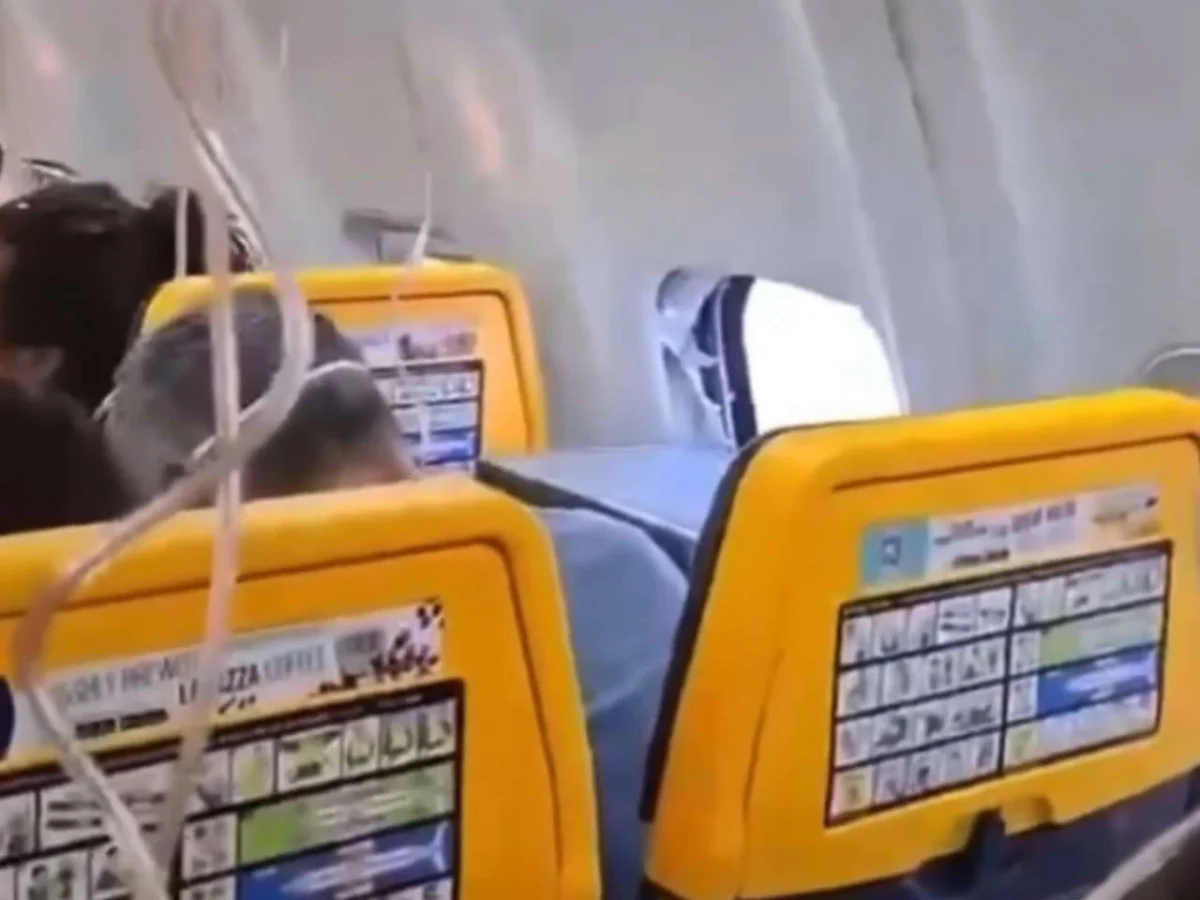
Thessaloniki, Greece – July 11, 2026 – In a harrowing incident that sent shockwaves through the aviation community and left passengers traumatized, a Malta Air flight operating for Ryanair was forced to make an emergency return to Thessaloniki International Airport (SKG) on Friday after a cabin window dislodged shortly after take-off. The sudden depressurization led to a terrifying scene where a 61-year-old passenger was partially pulled out of the aircraft, only to be heroically rescued by fellow travelers. The flight, bound for Memmingen, Germany, descended rapidly amidst panic before safely landing, underscoring the critical importance of aircraft integrity and the remarkable courage of ordinary citizens in extraordinary circumstances.
The incident, which occurred on a Boeing 737-800, has immediately triggered a high-level international investigation, with aviation authorities meticulously examining what led to such a critical structural failure. While the passenger survived with significant injuries, the event serves as a stark reminder of the latent dangers of air travel and the complex systems designed to keep millions of passengers safe daily.
Main Facts
The dramatic events unfolded on Friday, July 10, 2026, on Malta Air flight FR1879, operated by Ryanair, which departed from Thessaloniki, Greece, en route to Memmingen, Germany.
Dramatic Mid-Air Incident Shakes Ryanair Flight
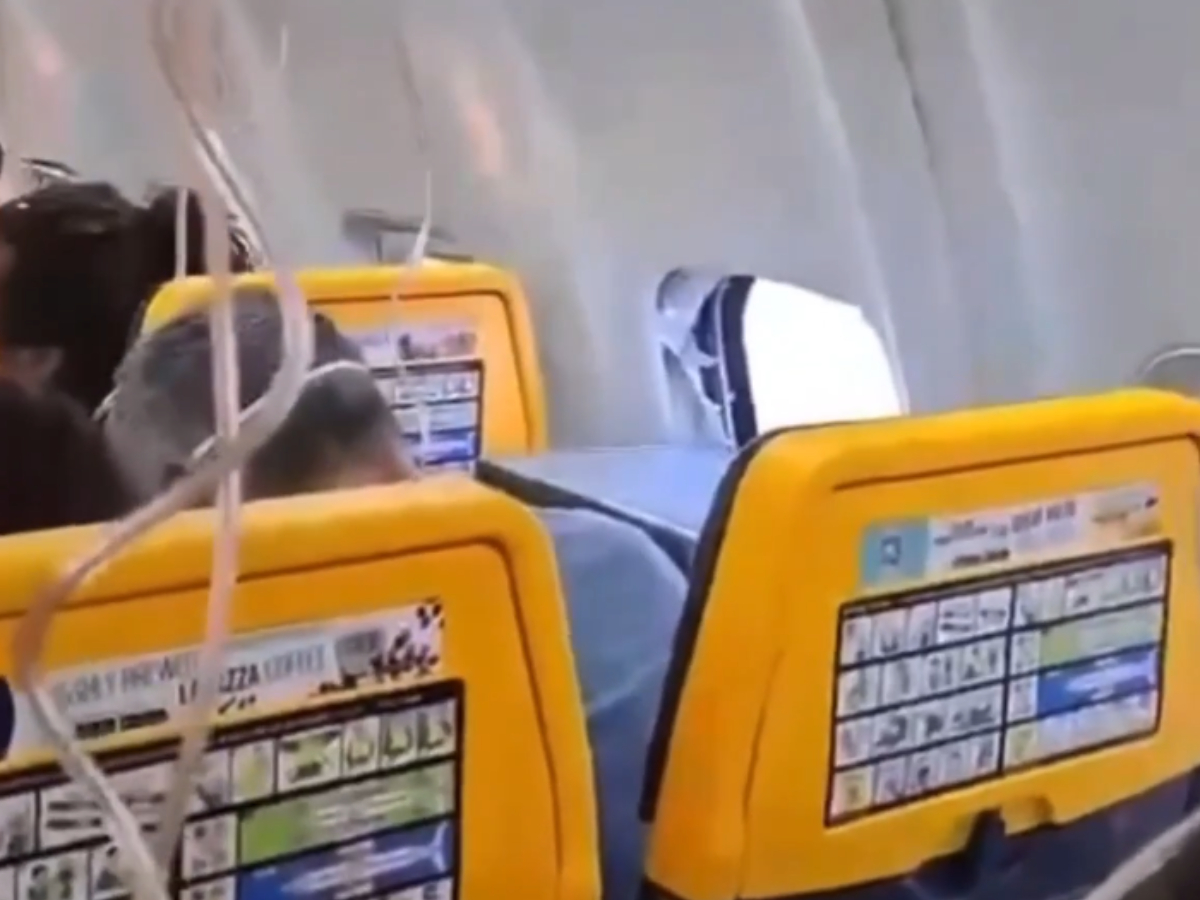
Shortly after ascending to cruising altitude, passengers reported hearing a deafening "tire bursting" sound, followed by the rapid deployment of oxygen masks and a palpable sensation of the aircraft losing altitude. This sudden onset of alarm indicated a severe breach in the aircraft’s pressurized cabin, a situation universally dreaded in aviation. The ensuing chaos and fear within the confined space of the aircraft cabin painted a vivid picture of the sheer terror experienced by those on board.
)
Passenger Partially Ejected After Window Failure
The most critical and terrifying aspect of the incident involved a 61-year-old passenger seated near the compromised window. According to eyewitness accounts, the passenger was partially pulled out of the aircraft due to the sudden and powerful pressure differential. "His whole head, neck, shoulders were pulled out of the window," recounted Christina, a fellow passenger, to local radio. This harrowing detail highlights the extreme forces at play during a rapid decompression event and the immediate, life-threatening danger faced by the individual.
Heroic Actions of Fellow Passengers
In a testament to human courage and solidarity, several passengers seated nearby reacted instinctively and heroically. They reportedly grabbed the struggling individual, pulling him back inside the aircraft against the powerful suction created by the breached window and the outside air. Their quick thinking and physical intervention were crucial in preventing a far more tragic outcome, saving the man’s life in a moment of extreme peril.
)
Emergency Return to Thessaloniki
Following the catastrophic window failure and subsequent depressurization, the flight crew immediately declared an emergency. Demonstrating exceptional professionalism and adherence to safety protocols, they initiated an emergency descent and turned the aircraft back towards Thessaloniki. Flight tracking data later confirmed the plane’s rapid descent from over 15,000 feet to approximately 6,000 feet before it stabilized and began its approach for an emergency landing. The aircraft touched down safely at Thessaloniki International Airport approximately an hour after its initial departure.
Initial Assessment of Injuries
Upon landing, emergency services were on standby, and the injured passenger received immediate medical attention. According to a Greek hospital official, the 61-year-old suffered neck and shoulder injuries, consistent with the immense forces he endured, along with friction burns from being exposed to the high-speed airflow outside the aircraft. While serious, his injuries were not life-threatening, a fact largely attributed to the prompt intervention of his fellow passengers. Other passengers reported varying degrees of shock and minor discomfort but no major physical injuries.

Investigation Initiated
Ryanair confirmed the incident, stating that the aircraft returned due to "a passenger window dislodged in-flight." The US National Transportation Safety Board (NTSB) was notified and indicated that the flight turned back due to "a right engine issue and cabin decompression." The primary investigation into the cause of the window failure and the potential connection to an engine issue will be led by the Aircraft Accident and Incident Investigation Committee of the Republic of North Macedonia, with the NTSB offering its expertise and assistance. The aircraft involved, a Boeing 737-800, entered service with Ryanair in 2008.
Chronology of Terror
The terrifying sequence of events unfolded rapidly, transforming a routine flight into a struggle for survival for those on board.
)
The Unsettling Take-off from Thessaloniki
Flight FR1879, a Malta Air service operated for Ryanair, departed Thessaloniki International Airport (SKG) on Friday afternoon, carrying passengers eager for their journey to Memmingen, Germany. The Boeing 737-800, a workhorse of the aviation industry, climbed steadily into the skies, following standard departure procedures. For many passengers, the initial phase of the flight was likely uneventful, perhaps a moment to relax or doze off after the pre-flight bustle.
The Sudden Decompression
The normalcy was shattered approximately 15 minutes after take-off, as the aircraft ascended above 15,000 feet. Passengers described a sudden, deafening "bang" – likened by one to a "tire bursting, but very loud." This sound marked the catastrophic failure of a cabin window. Almost instantaneously, the cabin air rushed out, creating a violent depressurization. Oxygen masks dropped automatically from the ceiling, a clear and chilling signal of a critical emergency. The sudden loss of pressure plunged the cabin into an eerie silence, broken quickly by the sounds of panic. "We knew straight away we lost pressure because we lost altitude," Christina recalled, describing the immediate understanding of the gravity of the situation. "Screams, shrieks, shouting," filled the cabin as the reality of their predicament set in.
)
A Struggle Against the Vacuum
In the immediate aftermath of the window failure, the most dramatic and life-threatening event transpired. The 61-year-old passenger seated directly next to the compromised window bore the brunt of the depressurization. The powerful suction forces, a direct consequence of the sudden pressure differential between the pressurized cabin and the thin air outside, began to pull him out of the aircraft. Eyewitness Christina’s description of "His whole head, neck, shoulders" being pulled out underscores the extreme physical danger he faced. It was in these critical seconds that a remarkable display of human solidarity unfolded. Without hesitation, fellow passengers, battling against the powerful vacuum and their own fear, reportedly grabbed hold of the man, pulling him back inside the relative safety of the cabin. This heroic act undoubtedly saved his life, preventing him from being fully ejected into the high-altitude atmosphere.
Rapid Descent and Emergency Procedures
With the cabin compromised and a passenger injured, the highly trained flight crew immediately initiated emergency protocols. The pilots declared an emergency and began a rapid, controlled descent, a standard procedure designed to bring the aircraft to a safer altitude where supplemental oxygen is less critical, typically below 10,000 feet. Flight tracking data corroborated this, showing the aircraft plummeting from over 15,000 feet to around 6,000 feet in a short span, a maneuver that, while unsettling for passengers, is crucial for managing a decompression event. Simultaneously, the crew would have been working through checklists, communicating with air traffic control, and preparing the aircraft for an emergency return to Thessaloniki.
)
Safe Landing and Aftermath
Despite the chaos and terror experienced mid-air, the flight crew managed to guide the damaged aircraft back to Thessaloniki International Airport. Approximately one hour after its initial departure, the Boeing 737-800 touched down safely, greeted by a full complement of emergency vehicles. The injured passenger was swiftly attended to by paramedics and transported to a local hospital for treatment of his neck, shoulder injuries, and friction burns. Passengers, shaken and relieved, were disembarked and returned to the terminal, where they received support and were later provided with a replacement aircraft to continue their journey to Germany. The immediate aftermath was characterized by a mixture of shock, relief, and profound gratitude for the collective effort that averted a major catastrophe.
Supporting Data and Expert Analysis
Understanding the intricacies of this incident requires delving into the technical aspects of aviation safety, aircraft design, and the physics of flight.
)
Aircraft Details and Operational History
The aircraft involved in the incident was a Boeing 737-800, specifically registered as an -8AS variant, which entered service with Ryanair in 2008. The Boeing 737 series is one of the most widely used and reliable aircraft types in commercial aviation, with hundreds of them operating daily across the globe. An aircraft entering service in 2008 would be considered mid-life, typically having undergone numerous maintenance checks and inspections throughout its operational history. Investigators will meticulously review the maintenance records of this particular aircraft, looking for any anomalies, deferred maintenance items, or previous reports related to fuselage integrity, window seals, or engine performance.
Understanding Cabin Pressurization
Commercial aircraft fly at high altitudes (typically 30,000-40,000 feet) to optimize fuel efficiency and avoid turbulence. At these altitudes, the atmospheric pressure is too low to sustain human life without supplemental oxygen. To counteract this, aircraft cabins are pressurized to simulate an altitude of around 6,000-8,000 feet. This crucial system maintains a comfortable and breathable environment for passengers and crew. Cabin windows, therefore, are not just simple panes of glass but highly engineered, multi-layered structures designed to withstand significant internal pressure differences and external stresses, including temperature extremes and aerodynamic forces. They are typically composed of three panes: an outer pane that takes the primary pressure load, a middle pane that serves as a fail-safe, and an inner scratch pane.
)
The Physics of Decompression
When a cabin window fails, as appears to have happened on FR1879, a rapid decompression occurs. This is an extremely dangerous event where the air inside the cabin, pressurized to several pounds per square inch above the external atmospheric pressure, rushes violently out through the breach. This creates a powerful suction force, or venturi effect, capable of pulling objects and even people towards the opening. The speed and force of this outflow can be immense, generating hurricane-force winds within the cabin, loud noises, and a sudden drop in temperature. Oxygen levels plummet, necessitating the immediate deployment of oxygen masks to prevent hypoxia, a condition that impairs judgment and can lead to unconsciousness. The rapid descent performed by the pilots is vital to quickly bring the aircraft to an altitude where passengers can breathe normally without supplemental oxygen.
Previous Incidents: A Look at Similar Aviation Events
While rare, incidents involving fuselage or window failures have occurred in aviation history, providing crucial lessons and shaping safety protocols.
)
- Southwest Airlines Flight 1380 (2018): Perhaps the most recent and relevant parallel, this incident involved an uncontained engine failure that sent shrapnel into the fuselage, shattering a window. A passenger seated next to the window was partially sucked out and tragically died despite efforts by fellow passengers to pull her back in. The incident highlighted the devastating consequences of fuselage breaches at altitude and led to enhanced inspections of certain engine types.
- Aloha Airlines Flight 243 (1988): This infamous incident saw a significant section of the fuselage peel away in flight due to metal fatigue. While the plane remarkably landed safely, one flight attendant was swept out of the aircraft and perished. This event drastically altered understanding of aging aircraft maintenance and inspections for fatigue cracks.
- British Airways Flight 5390 (1990): In an extraordinary event, the cockpit windscreen of a BAC One-Eleven aircraft detached mid-flight due to incorrect screw installation during maintenance. The captain was partially sucked out of the cockpit but was held onto by cabin crew for over 20 minutes until the first officer performed an emergency landing. This incident emphasized the critical importance of maintenance quality control.
These historical precedents underscore the severity of the Thessaloniki incident and the critical role of timely intervention, both by the crew and fellow passengers.
Role of Crew Training in Emergencies
The safe return of flight FR1879 is a testament to the rigorous training undergone by airline pilots and cabin crew. In a rapid decompression scenario, pilots are trained to immediately don oxygen masks, declare an emergency, initiate a rapid descent, and manage the aircraft’s systems under extreme stress. Cabin crew are trained to ensure passengers properly use oxygen masks, assist any injured individuals, and prepare the cabin for an emergency landing. Their ability to remain calm, follow procedures, and communicate effectively under pressure is paramount to saving lives.
)
Flight Tracking Data Insights
Post-incident flight tracking data, often publicly available, provides invaluable insights for investigators and the public. In this case, the data showing the rapid climb above 15,000 feet followed by a swift descent to around 6,000 feet, and the subsequent return to Thessaloniki, corroborates the eyewitness accounts of a decompression and emergency maneuver. Such data helps to reconstruct the flight path, altitude, speed, and timing of critical events, offering objective evidence for the investigation.
Official Responses and Investigative Pathways
The immediate aftermath of such an incident involves a multi-layered response from airlines, regulatory bodies, and international investigative agencies.
)
Ryanair/Malta Air’s Statement
Ryanair, operating the flight on behalf of its subsidiary Malta Air, issued a statement confirming the incident. They acknowledged that the aircraft returned to Thessaloniki after "a passenger window dislodged in-flight" and confirmed that one passenger received medical treatment on the ground. The airline also stated that a replacement aircraft was arranged to transport the remaining passengers to their destination in Germany. Such statements are standard procedure, aiming to inform the public while deferring detailed explanations to the official investigation.
Role of Aviation Authorities
In Greece, the Hellenic Air Accident Investigation and Aviation Safety Board (AAIASB) would typically be the primary national authority. However, the NTSB’s statement indicated that the investigation would be led by the Aircraft Accident and Incident Investigation Committee of the Republic of North Macedonia. This jurisdictional nuance could be due to the aircraft’s registration, the operator’s nationality (Malta Air is based in Malta), or other international aviation agreements. Regardless of the lead agency, the investigation will involve close cooperation between multiple national and international aviation safety bodies.
)
International Cooperation in Accident Investigation
Aircraft accident investigations are inherently international due to the global nature of aviation. The International Civil Aviation Organization (ICAO) sets standards and recommended practices for accident investigation, ensuring consistency and thoroughness. The involvement of the NTSB, even in an advisory or supportive capacity, is significant, especially if the aircraft or a critical component was manufactured in the United States (Boeing). This cooperation ensures that expertise, resources, and lessons learned from past incidents are shared across borders.
The NTSB’s Involvement and Scope
The NTSB, a highly respected independent U.S. government agency responsible for investigating civil aviation accidents, confirmed its awareness of the incident. Their statement that the flight turned back due to "a right engine issue and cabin decompression" is particularly noteworthy. This suggests that preliminary information or initial assessments pointed towards a potential connection between an engine malfunction and the window failure/decompression. The NTSB’s involvement would typically include providing technical assistance, specialized equipment for analysis, and potentially participating in on-site investigations, especially if U.S.-manufactured components are implicated.
)
Focus of the Investigation: Engine and Fuselage Integrity
The investigation will have several critical areas of focus. Firstly, the precise cause of the window dislodgement. This will involve metallurgical analysis of the window frame, panes, and seals, as well as an examination of the fuselage skin immediately surrounding the window for any signs of fatigue cracks, corrosion, or impact damage. Secondly, the NTSB’s mention of a "right engine issue" will prompt a thorough examination of the engine itself. Investigators will look for signs of an uncontained engine failure (where parts of the engine break through its casing), foreign object damage (FOD), or any other malfunction that could have produced debris capable of striking the fuselage and the window. The relationship between the engine issue and the window failure will be a primary investigative thread.
Potential for Wider Safety Implications
Depending on the findings, the incident could have wider safety implications. If a systemic issue with a particular aircraft component, maintenance procedure, or even an engine type is identified, it could lead to airworthiness directives (ADs) being issued by aviation authorities. ADs mandate specific inspections, repairs, or modifications for all affected aircraft, ensuring that similar incidents are prevented across the global fleet. This proactive approach is a cornerstone of aviation safety.
)
Implications and Future Outlook
The incident on flight FR1879, while thankfully not resulting in fatalities, carries significant implications for passenger confidence, airline operations, and the ongoing evolution of aviation safety standards.
Passenger Safety and Confidence
For the passengers on board, the psychological impact of such a terrifying experience will be profound. Surviving a rapid decompression and witnessing a fellow passenger nearly being ejected from an aircraft is an event that can lead to post-traumatic stress. More broadly, such incidents, though rare, can erode public confidence in air travel. Airlines and regulators must be transparent with their findings and proactive in demonstrating that every measure is being taken to prevent recurrence, thereby rebuilding trust. The perceived safety of air travel is paramount for the industry’s sustained growth and public acceptance.
)
Airline Maintenance Protocols Under Scrutiny
The incident places Malta Air and Ryanair’s maintenance protocols under intense scrutiny. While both airlines adhere to strict regulatory requirements, any structural failure of this magnitude will prompt a deep dive into their maintenance records, inspection schedules, and quality control processes for the specific aircraft and its components. Investigators will examine if all required inspections were performed correctly, if any defects were previously noted and addressed, and if the airline’s maintenance staff were adequately trained and certified. The integrity of the maintenance chain, from manufacturers to operators, is a critical component of aviation safety.
The Human Element: Heroism in Crisis
The heroism displayed by the fellow passengers who pulled the 61-year-old man back into the aircraft stands as a powerful testament to the human spirit in crisis. Their selfless and immediate action averted a potential tragedy, highlighting how ordinary individuals can become life-savers in extraordinary circumstances. Such acts often become a focal point in the aftermath of aviation incidents, reminding us that alongside sophisticated technology and rigorous training, human compassion and bravery remain vital. Recognition for these individuals, if they choose to come forward, would be well-deserved.
)
Psychological Impact on Passengers and Crew
Beyond the immediate physical injuries, the psychological toll on all involved – passengers, cabin crew, and flight deck crew – cannot be underestimated. Exposure to such a traumatic event can lead to anxiety, fear of flying, sleep disturbances, and other symptoms of trauma. Airlines typically offer psychological support services to affected individuals, recognizing that the emotional recovery is as important as the physical one. The crew, having expertly managed a severe emergency, may also experience stress and require debriefing and support.
Regulatory Review and Potential Policy Changes
Depending on the investigation’s findings, the incident could prompt regulatory bodies worldwide to review existing safety standards. If a specific design flaw, manufacturing defect, or maintenance loophole is identified, it could lead to new airworthiness directives, changes in maintenance manuals, or even adjustments to aircraft design specifications. The aviation industry operates on a principle of continuous improvement, where every incident, no matter how rare, serves as a learning opportunity to enhance safety for future flights.
)
The Broader Context of Aviation Safety
This incident, while alarming, must be viewed within the broader context of aviation safety, which remains incredibly high. Commercial air travel is statistically one of the safest modes of transportation. Incidents like these are rare precisely because of the multi-layered safety systems, stringent regulations, continuous maintenance, and highly trained personnel that underpin the industry. Nevertheless, each event serves as a crucial data point, allowing experts to identify potential vulnerabilities and further refine the robust safety framework that protects millions of travelers every day. The full findings of the investigation will be eagerly awaited, not just by those directly affected, but by the entire global aviation community committed to preventing such harrowing events from ever recurring.
