

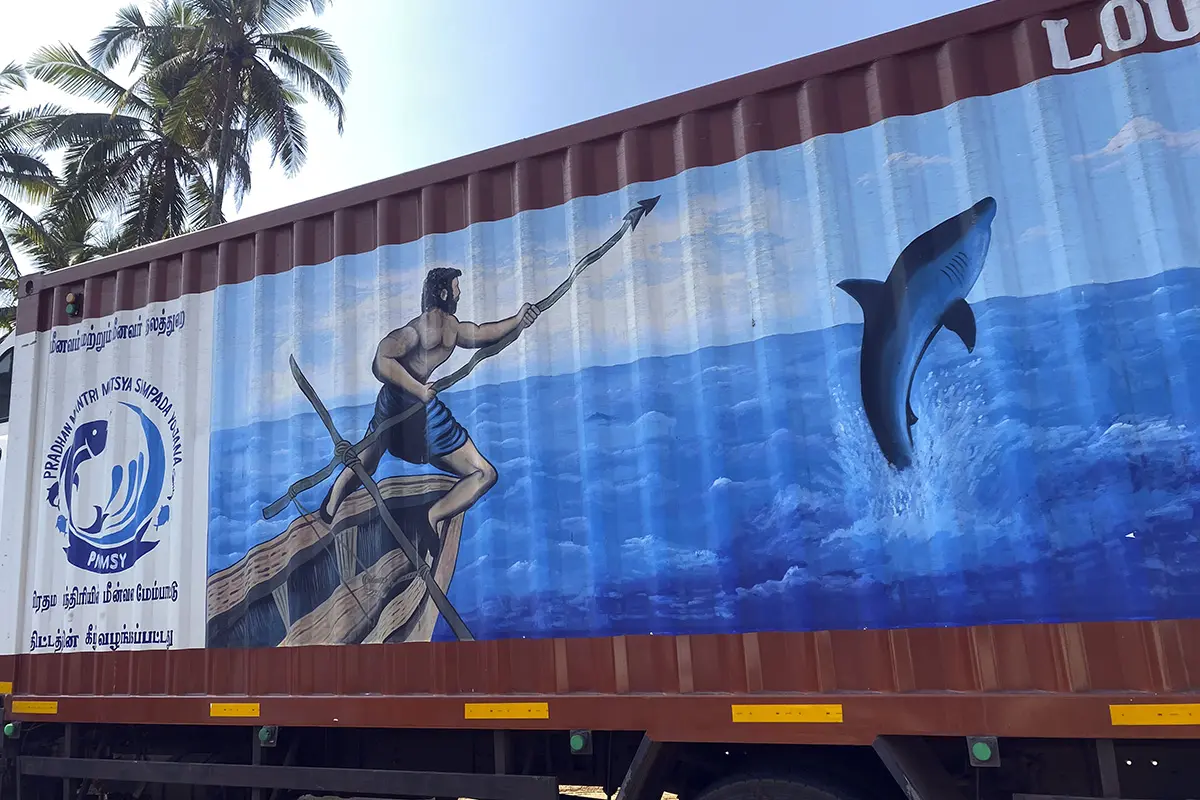
The horizon of the Indian Ocean has long represented a boundary of both mystery and sustenance for the country’s millions of traditional fishers. Today, that horizon is being redefined by a massive state-led push toward the "Blue Frontier." As near-shore waters become increasingly overexploited and climate change alters migratory patterns, the Indian government has pivoted its strategy toward the deep sea—the vast, untapped Exclusive Economic Zone (EEZ) that extends up to 200 nautical miles from the coast.
However, the transition from artisanal, coastal fishing to high-tech, deep-sea expeditions is proving to be a turbulent journey. While policy documents paint a picture of modernization and "doubling fishers’ incomes," the reality on the ground—revealed through field reporting, Right to Information (RTI) queries, and community testimonies—suggests a widening gulf between bureaucratic ambition and the economic viability for the fishers themselves.
Main Facts: The Architecture of the Deep-Sea Dream
At the heart of India’s maritime strategy is the Pradhan Mantri Matsya Sampada Yojana (PMMSY), a flagship scheme launched in 2020 with an estimated investment of ₹20,050 crore (approximately $2.4 billion) over five years. A significant portion of this scheme is dedicated to modernizing the fishing fleet and encouraging traditional fishers to move into deep-sea waters.
The Shift from Trawling to Longlining
The government’s primary objective is to phase out "bottom trawling"—a destructive practice that scrapes the ocean floor—and replace it with "deep-sea longlining" and gillnetting. These methods target high-value species such as Yellowfin and Bigeye tuna, swordfish, and oceanic sharks. The logic is twofold: environmental conservation of the seabed and the pursuit of lucrative export markets in Europe, Japan, and the United States.
Financial Incentives and the Cost Gap
To facilitate this, the government offers subsidies for the construction of Deep-Sea Fishing Vessels (DSFVs). A standard vessel, designed for multi-day voyages, costs between ₹80 lakh and ₹1.2 crore ($96,000 to $145,000). The PMMSY provides a 40% subsidy for the general category and up to 60% for women and Scheduled Castes/Scheduled Tribes (SC/ST) beneficiaries.
Despite these incentives, the "beneficiary contribution"—the remaining 40% to 60%—represents a monumental financial burden for traditional fishers who have historically operated on narrow margins. For a community used to small motorized boats costing a few lakhs, a debt of ₹40 lakh is a daunting prospect that often requires mortgaging ancestral land or homes.
Chronology: The Evolution of Deep-Sea Policy
The push for deep-sea fishing is not a new phenomenon, but its intensity has reached a fever pitch in the last decade.
- The 1990s: The Era of Foreign Trawlers: In the early 1990s, the Indian government issued licenses to foreign joint-venture vessels to fish in the EEZ. This led to massive protests by traditional fishers (led by the National Fishworkers’ Forum), who argued that foreign industrial ships were depleting stocks. The licenses were eventually revoked following the recommendations of the Murari Committee in 1996.
- 2014-2015: The Blue Revolution (Neel Kranti): The current administration rebranded the sector’s growth as the "Blue Revolution." The focus shifted from merely catching fish to creating a sustainable "Blue Economy."
- 2017: The Palk Bay Scheme: A specific pilot project was launched in Tamil Nadu to divert fishers from the Palk Bay (where they frequently clashed with Sri Lankan authorities) into the deep sea. This served as the blueprint for the national scheme.
- 2020-2025: The PMMSY Phase: The Pradhan Mantri Matsya Sampada Yojana was launched, marking the most aggressive financial commitment to deep-sea fishing in India’s history. This phase emphasizes "Vocal for Local" by encouraging indigenous boat building and domestic entrepreneurship in the deep sea.
Supporting Data: The Economic and Logistical Hurdles
Data gathered through field investigations and parliamentary reports highlights the friction between the scheme’s targets and its implementation.
Low Uptake in Coastal States
In states like Odisha, Andhra Pradesh, and Gujarat, the response to the deep-sea vessel scheme has been lukewarm. According to RTI replies, several states have seen only a handful of applications for DSFVs compared to the hundreds of units planned.
- Tamil Nadu: While the state has been a frontrunner, many early adopters of the 2017 scheme reported that the boats provided were "unstable" in high seas or lacked the specialized refrigeration needed to keep tuna at export-grade quality.
- Kerala: Traditional fishers here have resisted the scheme, fearing that it paves the way for corporate entry into the fishing sector, eventually displacing small-scale operators.
The Operational Cost Crisis
Deep-sea fishing is an energy-intensive enterprise. A single voyage can last 15 to 20 days.
- Fuel: Diesel accounts for nearly 70% of operational costs. With fluctuating fuel prices and no dedicated "deep-sea subsidy" for diesel, many fishers find that a single "dry trip" (where the catch is low) can push them into a debt trap.
- Skill Gap: Traditional fishers are masters of coastal navigation, but deep-sea longlining requires knowledge of satellite telemetry, advanced sonar, and specialized handling of high-value fish. The training programs provided by the government have often been criticized as too short and theoretical.
Infrastructure Deficits
India’s fishing harbors were largely designed for small, daily-return boats. Deep-sea vessels require deeper berths, industrial-scale ice plants, and cold-chain logistics that can maintain temperatures of -60°C for sashimi-grade tuna. Currently, only a few ports, like Cochin and Vizag, possess parts of this infrastructure, leaving fishers in other regions at a logistical disadvantage.
Official Responses: The Government’s Perspective
The Ministry of Fisheries, Animal Husbandry, and Dairying maintains that the transition is an absolute necessity for the long-term survival of the industry. In various Lok Sabha reports and official statements, the government has addressed the concerns:
- Sustainability: Officials argue that coastal waters (up to 50 meters deep) are overfished. Moving to the deep sea is the only way to allow coastal ecosystems to recover while meeting the national target of 22 million metric tonnes of fish production by 2024-25.
- Modernization of Design: Responding to complaints about vessel stability, the Cochin Shipyard and other government-approved builders have stated they are refining boat designs to better suit Indian sea conditions.
- Institutional Credit: The government has encouraged banks to provide "Kisan Credit Cards" (KCC) to fishers to provide working capital. However, officials acknowledge that banks remain hesitant to lend large sums for deep-sea vessels due to the high-risk nature of the business.
- The "Blue Economy" Policy: The government emphasizes that this is part of a larger maritime vision that includes port-led development (Sagarmala) and international cooperation in the Indian Ocean Region.
Implications: What Lies Beneath the Surface?
The push for deep-sea fishing carries profound implications for India’s social fabric and environmental future.
The Risk of Debt and Dispossession
The most immediate concern is the potential for a "debt crisis" at sea. If the deep-sea schemes fail to yield the promised returns, thousands of traditional fishers could lose their collateral—often their homes. This could lead to a "proletarianization" of the fishing community, where independent boat owners are forced to become wage laborers for larger industrial corporations who have the capital to absorb the risks of deep-sea ventures.
Ecological Uncertainties
While longlining is more selective than trawling, it is not without environmental costs. The deep sea is a fragile ecosystem with slow-growing species. There is a lack of comprehensive data on the "maximum sustainable yield" of tuna and billfish in India’s EEZ. Expanding the fleet without robust, real-time monitoring could lead to the same overexploitation that currently plagues the coastline.
Food Security vs. Export Revenue
The government’s focus is clearly on high-value exports. This raises questions about domestic food security. As resources and subsidies are diverted toward catching tuna for foreign plates, the availability and affordability of "common man’s fish" (like sardines and mackerel) for the domestic market may be impacted.
The Future of the "Dream"
For India’s deep-sea dreams to stay afloat, the policy must evolve from a "one-size-fits-all" subsidy model to a holistic support system. This includes:
- Localized Boat Designs: Tailoring vessels to the specific sea conditions of the Bay of Bengal versus the Arabian Sea.
- Price Support: Implementing a price stabilization fund for fuel or a minimum support price for deep-sea catch to protect fishers from market volatility.
- Community-Led Cooperatives: Encouraging fishers to form cooperatives to share the cost and risk of deep-sea vessels, rather than placing the entire financial burden on individuals.
As the 2020-2025 phase of the PMMSY nears its conclusion, the lessons from the coast are clear: modernization cannot be forced from the top down. It must be built on the foundations of the lived realities, economic safety nets, and the traditional wisdom of the communities that have called the sea their home for generations. The "Blue Frontier" holds great promise, but only if the people expected to navigate it are not left to sink under the weight of an uncertain future.
