

Introduction: Bridging the Gap Between the Capital and Purvanchal
In a significant move aimed at revolutionizing long-distance travel for the common man, the Indian Railway Board has officially approved the introduction of a new Amrit Bharat Express service connecting New Delhi and Gorakhpur. This development marks a pivotal milestone in the expansion of India’s high-speed, budget-friendly rail network, specifically targeting one of the busiest transit corridors in the country.
The Delhi-Gorakhpur route has historically been one of the most high-demand sectors for Indian Railways, serving as a lifeline for millions of residents from the Purvanchal region of Uttar Pradesh who travel to the national capital for employment, education, and healthcare. The approval of the Amrit Bharat Express is not merely an addition of another train; it represents a strategic shift in the Ministry of Railways’ approach to providing "premium-style" amenities to non-AC coach passengers at an affordable price point.
Main Facts: The New Delhi-Gorakhpur Amrit Bharat Express
The upcoming Amrit Bharat Express is designed to cater to the aspirations of lower and middle-income travelers who seek faster transit without the steep ticket prices associated with the Vande Bharat or Rajdhani categories.
Key Highlights of the Approved Service:
- Service Frequency: The train is scheduled to operate on a weekly basis, providing a consistent mid-week travel option.
- Operating Day: Both the onward journey from Gorakhpur and the return leg from New Delhi are expected to take place every Tuesday.
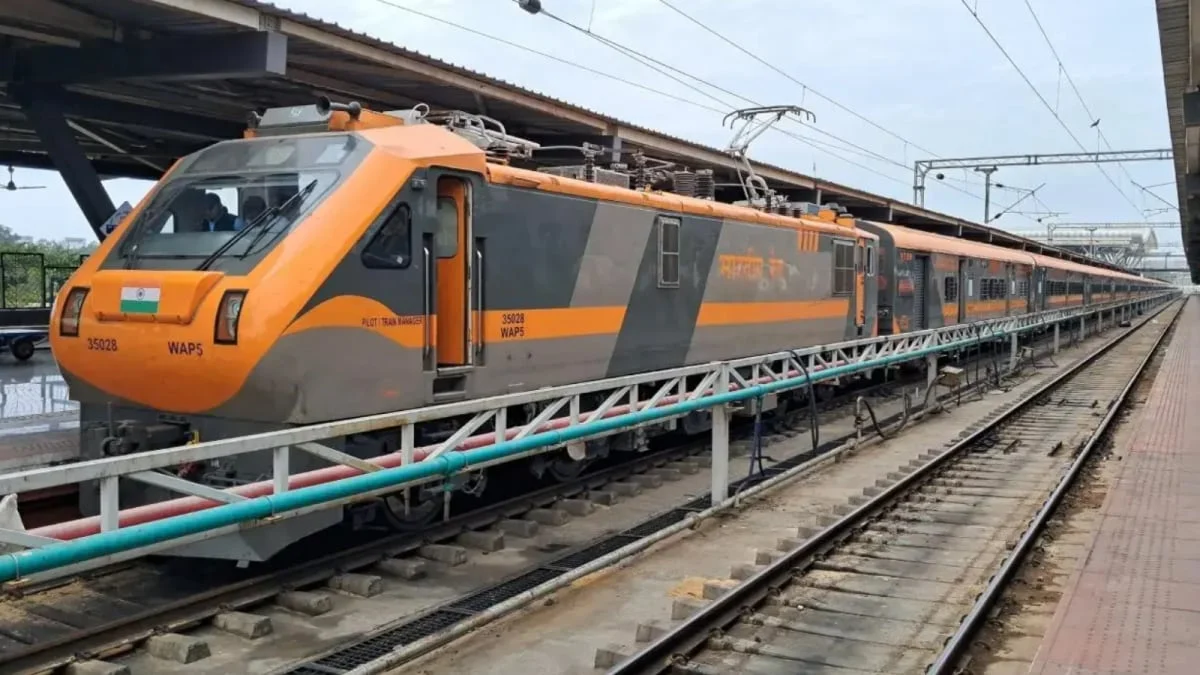
- Train Configuration: Following the standard Amrit Bharat blueprint, the train will feature a "Push-Pull" locomotive configuration, with engines at both the front and rear to ensure rapid acceleration and deceleration, thereby reducing overall travel time.
- Capacity: The train will primarily consist of Second Class Unreserved and Sleeper Class coaches, focusing on maximum passenger capacity while ensuring modern ergonomic standards.
Chronology: The Evolution of the Amrit Bharat Initiative
To understand the significance of the Delhi-Gorakhpur approval, one must look at the timeline of the Amrit Bharat project. The initiative was conceptualized as a "Vande Bharat for the masses."
- December 2023: Prime Minister Narendra Modi flagged off the inaugural Amrit Bharat Express services. The first routes included the Darbhanga-Anand Vihar (Delhi) and Malda Town-Sir M. Visvesvaraya Terminal (Bengaluru) services. These trains served as the "pilot" for the technology.
- 2024-2025: Following the success and high occupancy rates of the initial trains, the Railway Board conducted extensive feasibility studies for other high-density routes. During this period, the focus shifted toward connecting industrial hubs in Maharashtra with the labor-exporting regions of Uttar Pradesh and Bihar.
- Early 2026: The Ministry announced a series of new connections, including the Mumbai-Gorakhpur and Mumbai-Varanasi Amrit Bharat Expresses, acknowledging the immense pressure on the North-South and West-East corridors.
- May 8, 2026: The official approval for the New Delhi-Gorakhpur direct Amrit Bharat Express was granted. This specific approval addresses the long-standing demand for a dedicated budget-fast train on this route, which previously relied on the Darbhanga-bound Amrit Bharat passing through Gorakhpur.
Supporting Data: Route, Stops, and Technical Specifications
The New Delhi-Gorakhpur Amrit Bharat Express is set to cover a distance of approximately 750 to 800 kilometers in a timeframe that rivals many existing Superfast Expresses, thanks to its superior technical build.
Proposed Route and Stoppages:
While the final detailed timetable is awaiting its official publication in the "Trains at a Glance" guide, the Railway Board has identified 11 critical stations in Uttar Pradesh that will serve as halts. These stops are strategically chosen to maximize regional impact:
- Kanpur Central: A major industrial and transit hub.
- Lucknow Charbagh: The state capital, ensuring connectivity for administrative and business commuters.
- Basti & Khalilabad: Crucial stops for the local population of the Basti division.
- Gonda & Mankapur: Serving the agrarian and trading communities of North-Central UP.
Technical Superiority:
The Amrit Bharat Express is not a standard "Mail/Express" train. It utilizes the WAP-5 locomotives in a push-pull arrangement. This eliminates the need for "engine reversal" at certain junctions and allows the train to maintain higher average speeds even on tracks with multiple speed restrictions.
- Speed: Capable of reaching 130 km/h where track conditions permit.
- Amenities: The coaches feature zero-jerk couplers, CCTV cameras in common areas, sensor-based taps, aesthetically pleasing interiors, and mobile charging points for every seat—features previously reserved for AC-class travel.
Official Responses: A Vision for Integrated Connectivity
Railway officials have expressed high optimism regarding the new service. A spokesperson for the Northern Railway indicated that the Delhi-Gorakhpur route was a "natural choice" for the Amrit Bharat expansion due to the sheer volume of waitlisted passengers on existing trains like the Gorakhdham Express and Bihar Sampark Kranti.
"The Amrit Bharat Express is a testament to the ‘Antyodaya’ philosophy of the government—serving the last person in the line," a senior Railway Board official stated. "By providing a direct link between Gorakhpur and Delhi with these modern rakes, we are ensuring that the migrant workforce and students do not have to compromise on dignity or safety for the sake of an affordable fare."
Furthermore, officials emphasized that the overnight schedule—departing Delhi at approximately 11:00 PM and arriving in Gorakhpur by 10:30 AM the next day—is designed to minimize the loss of a working day for passengers, making it an ideal choice for weekend travelers and laborers alike.
Implications: Socio-Economic Impact and Future Outlook
The introduction of this train carries profound implications for the socio-economic landscape of Eastern Uttar Pradesh.
1. Economic Mobility for the Workforce:
Gorakhpur and its surrounding districts (Deoria, Kushinagar, Maharajganj) contribute a significant portion of the national capital’s workforce. A reliable, fast, and cheap transit option reduces the "cost of migration," allowing workers to visit their families more frequently and transfer more of their earnings back to the local rural economy.
2. Educational Access:
Delhi remains a premier destination for higher education and competitive exam coaching. Students from Purvanchal often struggle with the high costs of travel or the unavailability of tickets during peak seasons. This weekly service provides a dedicated window for student movement.
3. Easing the Burden on Premium Trains:
Currently, the Vande Bharat Express between Delhi and Gorakhpur caters to the business and upper-middle-class segment. However, the heavy rush often spills over, leading to overcrowded general compartments in other trains. The Amrit Bharat Express acts as a "pressure valve," absorbing the high-volume traffic and improving the travel experience across all classes.
4. Tourism and Religious Circuit:
Gorakhpur serves as the gateway to the Buddhist Circuit (Kushinagar) and is home to the famous Gorakhnath Temple. Improved connectivity from Delhi will likely boost domestic tourism, as pilgrims find it easier to plan short trips to these spiritual landmarks.
Conclusion: A New Chapter in Indian Rail History
The approval of the New Delhi-Gorakhpur Amrit Bharat Express is a clear indicator that the modernization of Indian Railways is becoming more inclusive. While the Vande Bharat trains represent the "speed and luxury" of a rising India, the Amrit Bharat Express represents the "strength and reach" of the nation’s infrastructure.
As the Ministry of Railways prepares for the official inaugural run, the focus will now shift to track upgrades on the Gorakhpur-Lucknow-Kanpur-Delhi stretch to ensure the train can consistently hit its top speed. For the people of Eastern Uttar Pradesh, the Tuesday weekly service is more than just a train; it is a faster, safer, and more dignified bridge to the opportunities of the national capital. With more such trains planned for the future, the vision of a "Viksit Bharat" (Developed India) where high-quality transport is a right rather than a luxury is slowly but surely becoming a reality.
