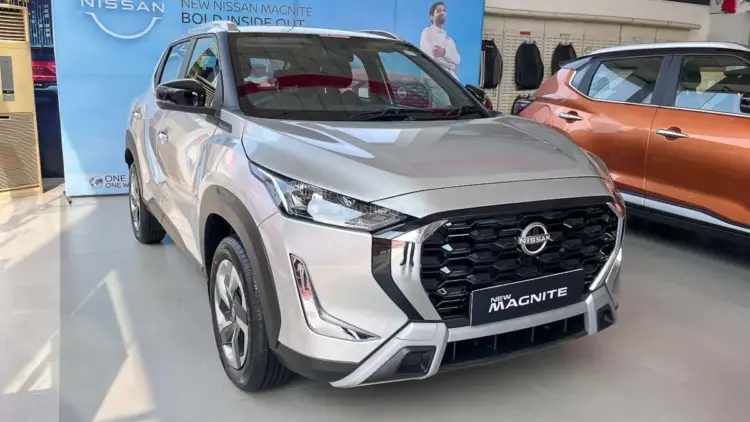
New Delhi, India – In a move designed to capture the momentum of the Indian festive season and address the growing demand for economical mobility, Nissan Motor India Pvt Ltd (NMIPL) has announced a significant promotional campaign. The Japanese automaker is offering government-approved CNG (Compressed Natural Gas) retrofitment kits at no additional cost for its popular Magnite compact SUV and the newly introduced Gravite three-row vehicle. This initiative, valued at up to ₹85,999, marks a strategic pivot for Nissan as it seeks to strengthen its footprint in the highly competitive "value-for-money" segment of the Indian automotive market.
Main Facts: The Festive "Green" Advantage
The cornerstone of Nissan’s latest offer is the democratization of alternative fuel technology. While many manufacturers offer factory-fitted CNG at a premium price point (often ₹90,000 to ₹1,00,000 above the petrol variants), Nissan is absorbing this cost to incentivize bookings during the peak shopping window.
Key Offer Details:
- Offer Validity: The free CNG kit offer is applicable on bookings made until November 16, 2026.
- Value Proposition: The kit for the Nissan Magnite is valued at ₹74,999, while the more complex setup for the Nissan Gravite is valued at ₹85,999.
- Warranty Coverage: To alleviate consumer concerns regarding aftermarket or retrofit modifications, Nissan has secured a third-party warranty of 3 years or 1,00,000 kilometers (whichever comes first). This sits alongside the standard vehicle warranty, providing a comprehensive safety net for the buyer.
- The "Zero-Cost" Appeal: By providing these kits for free, Nissan effectively lowers the "entry barrier" for CNG adoption, allowing customers to enjoy the lower running costs of gas without the high upfront investment usually associated with the technology.
Technical Specifications: Single vs. Twin-Cylinder Innovation
Nissan’s approach to the CNG retrofitment varies between the two models, reflecting the different utility requirements of a 5-seater compact SUV versus a 7-seater family vehicle.
The Nissan Magnite Setup
For the Magnite, the kit features a traditional single-cylinder configuration placed in the boot. This setup is optimized for the 1.0-liter naturally aspirated petrol engine. The Magnite has been Nissan’s "survival" model in India, known for its robust build and aggressive pricing. The addition of a free CNG kit enhances its reputation as one of the most cost-effective SUVs to own and operate in the B-segment.
The Nissan Gravite Setup
The Gravite, being a three-row vehicle where space management is critical, receives a more sophisticated "Twin-Cylinder" technology. This involves two smaller cylinders (2 x 25 liters) instead of one bulky tank.
- Space Optimization: By splitting the capacity, Nissan ensures that the Gravite retains its three-row functionality and a usable portion of its luggage space.
- Market Positioning: This move puts the Gravite in direct competition with "Twin-Cylinder" pioneers like Tata Motors, offering a premium alternative fuel solution in the multi-purpose vehicle (MPV) and extended SUV space.
Chronology: Nissan’s Evolution in the Indian Market
To understand the significance of this offer, one must look at Nissan’s journey over the last five years.
- The Magnite Launch (2020): Nissan launched the Magnite at a disruptive price point, which saved the brand from exiting the Indian market. It became a volume driver, reaching the 1,00,000-unit production milestone rapidly.
- The "The Big Leap" Strategy (2023-2024): Nissan announced a renewed focus on the Indian market, involving a $600 million investment alongside partner Renault. This plan included the introduction of new models, including a C-segment SUV and an A-segment EV.
- The Introduction of Gravite (2025-2026): Recognizing the Indian consumer’s preference for larger family vehicles, Nissan introduced the Gravite. Based on a modified version of the CMF-A+ platform, it aimed to provide a more premium 7-seater experience than the existing budget MPVs.
- The Festive Push (October 2026): With the market showing signs of stagnation in pure petrol sales and a slow transition to EVs, Nissan identified CNG as the "middle ground." The announcement of the free retrofit kit on October 2026 is the culmination of this strategy to boost year-end sales and clear inventory before the new calendar year.
Supporting Data: The Economics of CNG
The decision to offer free CNG kits is backed by compelling data regarding Indian fuel consumption patterns.
Running Cost Comparison (Estimated):
- Petrol: With petrol prices hovering around ₹95–₹105 per liter, the average running cost for a Magnite is approximately ₹6.5 to ₹7.5 per km.
- CNG: At current CNG prices (approx. ₹75–₹80 per kg), and given the higher thermal efficiency of the gas, the running cost drops to approximately ₹3.0 to ₹4.0 per km.
- The "Savings" Factor: For a customer driving 1,000 km per month, switching to CNG could result in monthly savings of nearly ₹3,500. Over a five-year ownership period, this equates to over ₹2,00,000 in fuel savings—nearly 25% of the car’s original value.
Variant Eligibility:
Nissan has been selective about which variants qualify for the free kit to protect its margins and ensure mechanical compatibility:
- Magnite: Eligible on all non-turbo versions. Crucially, the base Visia MT, Visia EZ-Shift, and Visia+ MT trims are excluded from this specific offer, as these are already priced at "rock-bottom" levels.
- Gravite: The offer is targeted at the Tekna trim, which is the higher-spec version. This encourages customers to "upsell" themselves to a more premium variant in exchange for the free fuel-saving technology.
Official Responses and Brand Philosophy
While Nissan India executives have emphasized the "customer-first" approach during festive briefings, the underlying philosophy is one of Practical Sustainability.
A spokesperson for Nissan Motor India noted, "The festive season is a time of joy and new beginnings for Indian families. By offering government-approved CNG kits for free, we are not just offering a discount; we are offering a long-term solution to rising fuel costs. Our goal is to make green mobility accessible without requiring the customer to pay a ‘green premium’ upfront."

Industry analysts suggest that this move is also a response to the "wait-and-see" attitude of Indian car buyers regarding Electric Vehicles (EVs). By providing a free CNG bridge, Nissan is catering to the massive demographic that wants lower emissions and costs but is not yet ready for the charging infrastructure challenges of an EV.
Implications: Impact on the Market and Competition
Nissan’s bold move has several far-reaching implications for the Indian automotive landscape:
1. Pressure on Competitors
Maruti Suzuki and Tata Motors currently dominate the CNG market. Maruti, in particular, has built its brand on factory-fitted S-CNG technology. However, Maruti rarely offers the CNG kit for "free." Nissan’s offer forces competitors to reconsider their festive discount structures. If a buyer can get a mid-to-high spec Nissan SUV with free CNG, they may be less inclined to pay a premium for a competitor’s CNG variant.
2. Boosting Resale Value
Historically, aftermarket CNG kits could negatively impact a car’s resale value due to concerns over engine wear and installation quality. However, by providing Government-approved kits with a manufacturer-backed third-party warranty, Nissan is legitimizing the retrofit. This ensures that the secondary market treats these vehicles as "factory-standard," thereby protecting the owner’s investment.
3. Environmental Footprint
CNG produces significantly lower levels of nitrogen oxides (NOx) and particulate matter compared to petrol. By incentivizing thousands of buyers to opt for CNG, Nissan is contributing to a reduction in the overall carbon footprint of its fleet in India, aligning with the government’s "Green Mobility" mission.
4. Inventory Management
The exclusion of Turbo variants suggests that Nissan is focusing on moving volumes of its naturally aspirated engines. These engines are often preferred by fleet operators and budget-conscious families—the exact demographic that prioritizes fuel economy over raw performance.
Conclusion: A Festive Masterstroke?
As the November 16th deadline approaches, the automotive industry will be watching Nissan’s sales charts closely. This offer is more than a simple rebate; it is a calculated attempt to change the "Total Cost of Ownership" (TCO) narrative in the compact SUV and MPV segments.
For the consumer, the proposition is simple: a stylish, safe, and modern SUV with the running costs of a small hatchback, all without the traditional "CNG surcharge." If successful, this strategy could serve as a blueprint for other manufacturers looking to navigate the complex transition between internal combustion engines and the eventual electric future.
Nissan has laid down the gauntlet. In the battle for the Indian driveway this festive season, the winner may not be the one with the fastest car, but the one who makes the journey the most affordable.