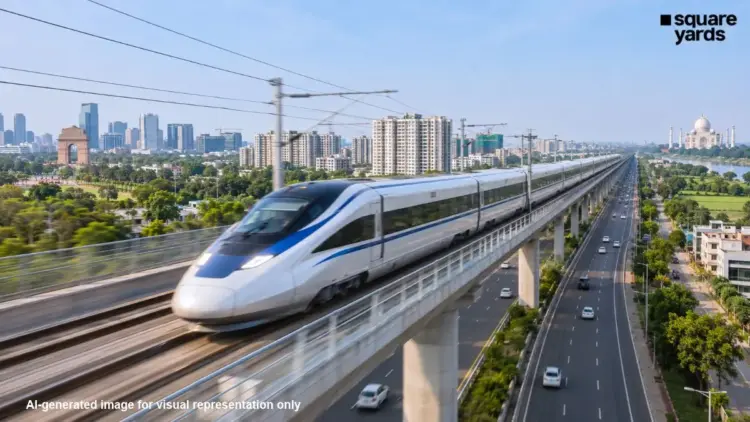
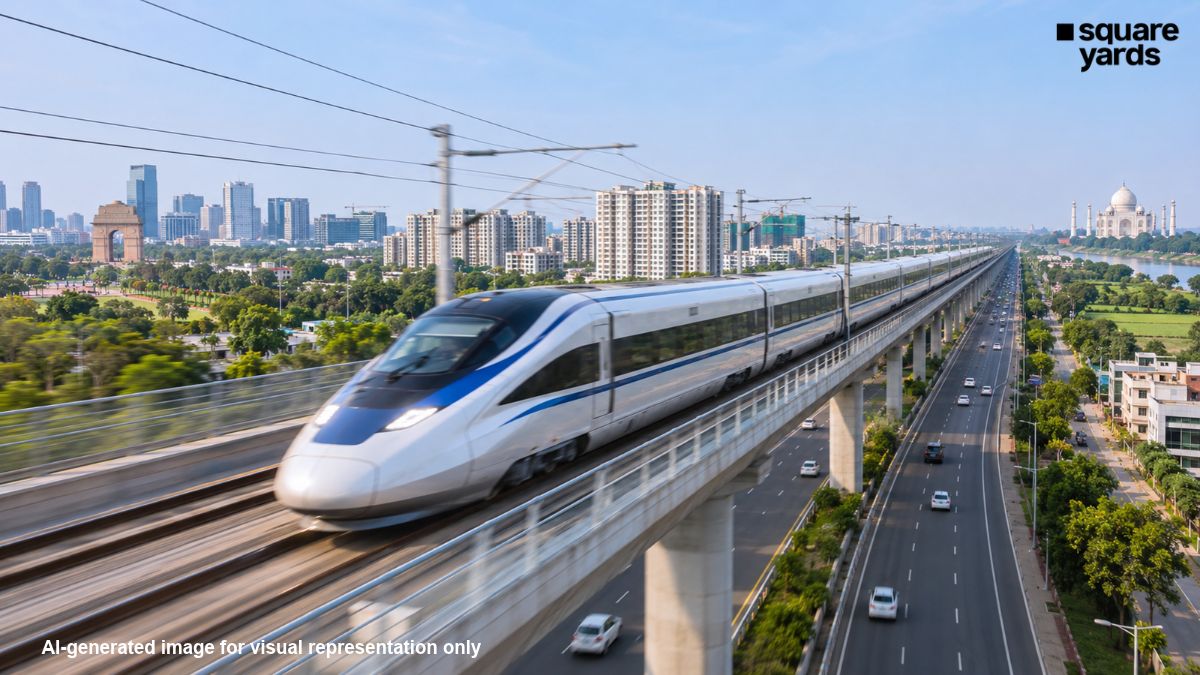
New Delhi, November 2026 – In a move set to redefine the geographical and economic landscape of Northern India, Prime Minister Narendra Modi has officially greenlit the ambitious Northern Bullet Train Corridor. This high-speed rail (HSR) project, a cornerstone of the nation’s modern infrastructure push, aims to connect the national capital with Agra and several other major urban centers across Uttar Pradesh. By slashing the travel time between Delhi and Agra to a mere 59 minutes, the project is poised to catalyze a massive shift in real estate dynamics, commercial activity, and intercity commuting patterns.
The announcement, made by the Union Railway Minister during a high-profile briefing in Varanasi, marks a significant milestone in India’s journey toward a high-speed transit future. While the Mumbai-Ahmedabad corridor remains the pioneer, the Northern Corridor is expected to serve one of the most densely populated and economically vital regions in the world.
I. Main Facts: The Blueprint of a High-Speed Future
The Northern Bullet Train Corridor is designed not just as a transport link, but as an economic artery. The project encompasses several key cities, creating a seamless high-speed network that integrates the political heart of India with its cultural and industrial hubs.
Strategic Route and Travel Projections
The corridor will originate at a central terminal in Delhi—likely integrated with existing transit hubs like Sarai Kale Khan—and extend through the following major stops:
- Agra: Reachable in 59 minutes.
- Kanpur: Estimated travel time of 1 hour and 45 minutes.
- Lucknow: Estimated travel time of 2 hours and 12 minutes.
- Ayodhya: Connecting the burgeoning spiritual tourism hub to the capital.
Technical and Economic Foundations
Under the "Make in India" initiative, the project will prioritize indigenous engineering, locally manufactured materials, and an Indian workforce. This approach is intended to reduce dependency on foreign technology while boosting the domestic manufacturing sector. Furthermore, the government has signaled that ticket pricing will be strategically positioned to be more affordable than air travel, making high-speed rail accessible to a broader segment of the population, including business professionals, students, and middle-class families.
II. Chronology: From Vision to Approval
The journey toward the Northern Bullet Train Corridor has been a multi-year endeavor, aligning with the broader National Rail Plan (NRP).
- Conceptualization (Pre-2024): Preliminary feasibility studies were conducted to identify high-traffic corridors where traditional rail could no longer meet the growing demand for speed and efficiency.
- Detailed Project Report (DPR) Phase (2024-2025): The National High-Speed Rail Corporation Limited (NHSRCL) worked on the alignment, identifying potential station locations and environmental impact assessments.
- Strategic Integration (Early 2026): The project was integrated with other mega-projects, such as the Noida International Airport (Jewar) and the Yamuna Expressway development plan.
- Official Approval (November 2026): Prime Minister Narendra Modi provides the final executive nod, allowing for the commencement of land acquisition frameworks and the tendering process for construction.
The Union Railway Minister emphasized that the project is now on a "mission mode" track, with the goal of finalizing railway alignments and station accessibility plans in the coming months.
III. Supporting Data: Real Estate and Market Projections
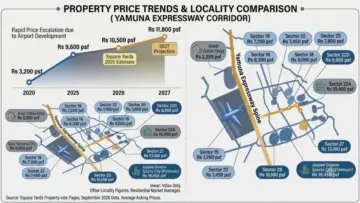
The approval of the Northern Bullet Train Corridor has sent ripples through the real estate markets of the Delhi-NCR region and the broader Uttar Pradesh belt. Data provided by Square Yards highlights a significant uptick in interest and property valuations in areas situated along the proposed route.
The Emerging Real Estate Heatmap
The impact on property markets varies by region, influenced by existing infrastructure and proximity to proposed transit hubs.
| Region | Average Property Rate (Approx. 2026) | Market Trend |
|---|---|---|
| Noida Expressway | Rs 12,800 per sq. ft. | Strengthening demand for luxury apartments. |
| Greater Noida | Rs 8,500 per sq. ft. | High interest from mid-segment homebuyers. |
| Yamuna Expressway | Rs 9,800 per sq. ft. | Rapid growth in residential and commercial plots. |
| Mathura | Rs 9,050 per sq. ft. | Spike in demand for second homes and hospitality. |
| Vrindavan | Rs 10,850 per sq. ft. | Premium spiritual-living residential projects. |
| Agra | Rs 3,750 per sq. ft. | Potential for significant appreciation post-connectivity. |
| Jewar (Villas) | Rs 2,200 per sq. ft. | Infrastructure-driven growth near the airport. |
Sector-Specific Analysis
- Noida and Greater Noida: The Noida Expressway, particularly Sectors 147 and 148, is expected to see a "halo effect" from the bullet train. While the average rate sits at Rs 12,800 psf, the ease of reaching a high-speed station could push these prices higher as the project nears completion.
- The Jewar-YEIDA Hub: Jewar is currently a hotspot due to the Noida International Airport. The addition of a bullet train link makes it a "multi-modal" hub, significantly increasing the investment appeal for long-term capital appreciation.
- The Spiritual Corridor (Mathura & Vrindavan): With Vrindavan reaching prices of Rs 10,850 psf as of September 2026, the bullet train is expected to turn these pilgrimage sites into "weekend getaways" for Delhi residents, further driving up the demand for serviced apartments and villas.
IV. Official Responses: A Commitment to "Atmanirbhar" Infrastructure
The government’s stance on the Northern Bullet Train Corridor reflects a broader philosophy of self-reliance and modernization. In his address at Varanasi, the Union Railway Minister outlined several key pillars of the project:
Indigenous Innovation
"This project is a testament to the prowess of Indian engineers," the Minister stated. By utilizing Indian-made materials, the government aims to create a sustainable ecosystem for high-speed rail technology within the country. This includes the development of specialized tracks, signaling systems, and rolling stock.
Economic Inclusivity
A primary concern for the administration has been ensuring the project does not become an "elite-only" service. Official responses indicate a tiered fare structure designed to compete with luxury bus services and airlines, ensuring that the time-saving benefits of the 59-minute Delhi-Agra journey are available to the masses.
Environmental Stewardship
The Ministry of Railways has also highlighted the project’s role in reducing the carbon footprint. By shifting a significant portion of intercity travelers from private vehicles and short-haul flights to electric-powered high-speed rail, the corridor aligns with India’s net-zero emissions targets.
V. Implications: Reshaping the Socio-Economic Fabric
The ripple effects of a 59-minute commute between Delhi and Agra extend far beyond simple travel. The Northern Bullet Train Corridor is expected to trigger a structural shift in how people live and work in North India.
1. The Rise of the "Super-Commuter"
With travel times reduced to under an hour, Agra, Mathura, and even Kanpur could effectively become "satellite cities" of Delhi. Professionals could potentially reside in the more affordable and less congested environs of Agra or Greater Noida while working in the national capital. This could ease the immense pressure on Delhi’s housing market and infrastructure.
2. Tourism and the "Golden Triangle" 2.0
The Delhi-Agra-Jaipur "Golden Triangle" is India’s most famous tourist circuit. The bullet train dramatically enhances the accessibility of the Taj Mahal and the temples of Mathura. We can expect a surge in "day-trip" tourism, benefiting local artisans, the hospitality sector, and retail businesses in Uttar Pradesh.
3. Decentralization of Industry
Improved connectivity often leads to the decentralization of commercial hubs. Businesses may find it more viable to set up back-offices or logistics centers in cities like Kanpur or Lucknow, knowing that their teams can reach the capital in a fraction of the time currently required.
4. Real Estate Diversification
As highlighted by the Square Yards data, the "wait-and-watch" period for investors is over. The focus is shifting from traditional hubs like South Delhi or Gurugram to the Yamuna Expressway and the Delhi-Agra belt. However, experts warn that the real impact will depend on "last-mile connectivity"—the ability of commuters to get from the bullet train station to their final destination via local metro, bus, or taxi networks.
VI. Conclusion: A New Era of Mobility
The approval of the Northern Bullet Train Corridor is more than just an infrastructure project; it is a declaration of intent. It signals India’s readiness to join the global league of nations with high-speed connectivity, bridging the gap between its major urban centers.
While challenges such as land acquisition, final railway alignment, and station location confirmation remain, the roadmap is clear. For the residents of Delhi, Agra, and the vast corridor in between, the dream of a 59-minute journey is no longer a distant vision—it is a fast-approaching reality. As the project moves from the drawing board to the construction phase, it will undoubtedly remain the focal point of India’s economic and real estate narrative for the next decade.