

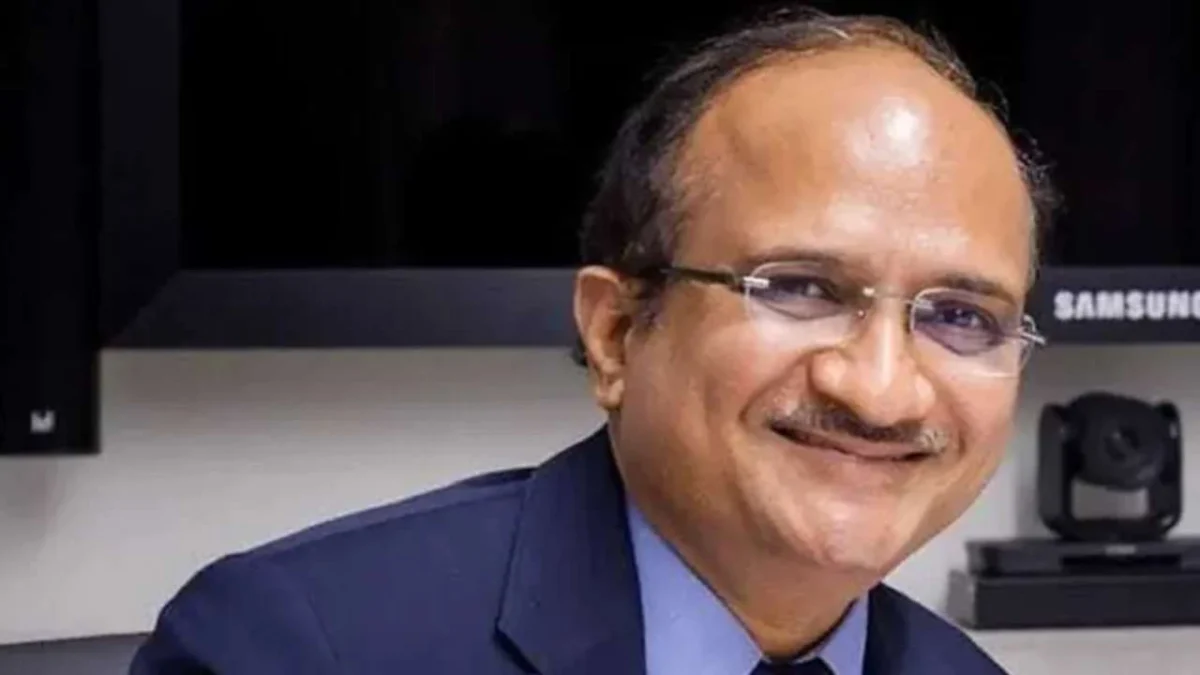
New Delhi, India – [Date of Publication] – In the wake of recent controversies and a growing recognition of the diverse academic backgrounds of its students, a prominent voice from the Indian Institutes of Technology (IITs) system is calling for a significant overhaul of the flagship Bachelor of Technology (B.Tech) programs. V. Ramgopal Rao, the esteemed Group Vice-Chancellor of BITS Pilani Campuses and former Director of IIT Delhi, has proposed a shift towards five-year B.Tech programs across all IITs. This bold suggestion, aimed at addressing the "one-size-fits-all" inadequacy in current classrooms, comes amidst sensitive discussions surrounding student well-being and academic support within these premier engineering institutions.
Rao, a seasoned academic with over 25 years of experience at IIT Bombay and IIT Delhi, including his tenure as Director of IIT Delhi from 2016 to 2021, articulated his views in response to the recent controversy involving IIT Bombay professor Suryanarayana Doola. While emphasizing the need for fair examination of any raised concerns, Rao also highlighted a more systemic issue: the widening gap in preparedness among students admitted to IITs, driven by an intensified coaching culture and the subsequent heterogeneity in classrooms.
The "One-Size-Fits-All" Dilemma: A System Under Strain
The core of Rao’s argument lies in the observation that the current four-year B.Tech model, designed with a certain homogeneity in mind, is struggling to accommodate the vastly different learning paces and foundational knowledge of students admitted to IITs. He points to the intense competition in the Joint Entrance Examination (JEE) Advanced, which results in a broad spectrum of ranks – from single digits to five digits – entering the same lecture halls.
"The current ‘one-size-fits-all’ model is inadequate for the highly heterogeneous classrooms across IITs," Rao stated, underscoring the challenge faced by educators. He cited the example of Computer Science and Engineering (CSE) at IIT Delhi, where students with widely disparate JEE Advanced ranks share the same learning space. This, coupled with potential language barriers, creates a complex teaching-learning dynamic.
)
"A faculty member cannot pitch every class at several levels at once," Rao explained. "Move too slowly, and some students lose interest. Move too quickly, and others are left behind." This delicate balancing act, he argued, is becoming increasingly untenable in the current pedagogical framework.
The Coaching Conundrum and Its Aftermath
Rao’s proposal is deeply rooted in his observations of how the prevalent coaching ecosystem has reshaped student preparation. He noted that while coaching excels at equipping students to solve familiar problem types rapidly, it often falls short in fostering the independent critical thinking and problem-solving skills crucial for navigating novel challenges encountered at the university level.

"Coaching had prepared them to solve familiar types of questions quickly. Many are lost when they see a question which they haven’t solved before," Rao observed. This phenomenon, he clarified, is not confined to any particular admission category but rather reflects the broader transition from a structured coaching environment to the independent learning demands of an IIT.
He also recalled personal instances of students with top JEE Advanced ranks struggling in his classes, indicating that high performance in the entrance exam does not always translate to immediate academic success within the rigorous IIT curriculum. This suggests a need for a more sustained and individualized approach to learning, allowing students to bridge the gap between their preparation and the academic expectations.
)
Addressing Heterogeneity: The Five-Year B.Tech Proposal
To address these multifaceted challenges, Rao proposes a significant structural change: the adoption of five-year B.Tech programs across all IITs. This extended duration, he believes, offers a flexible and supportive framework to cater to the diverse learning needs of students.
Under the proposed model, students who demonstrate academic proficiency and fulfill the credit requirements would have the option to graduate in four years, or even three-and-a-half years. Conversely, those who require additional time and support could extend their coursework to five years. This flexibility would allow for more in-depth learning, remediation, and personalized academic assistance.
)
"The pace would be decided by performance within the IIT, not by a student’s admission category or entrance rank," Rao emphasized, highlighting a crucial shift towards an internal, performance-based progression system. This would decouple the pace of learning from the often-arbitrary metrics of entrance examinations, fostering a more equitable and student-centric academic journey.
Furthermore, Rao suggested that a designated five-year program for all would offer a significant psychological benefit. "Students who need more time would simply be following the programme as designed, while those who are ready could complete it sooner. No one would be singled out for taking a fifth year," he explained. This de-stigmatization of taking longer to complete a degree is a vital component of creating a more supportive academic environment.
)
The extended five-year structure would also provide ample opportunities for students to receive tailored support, including access to recorded lectures, supplementary online materials, and language assistance where necessary. This would enable students to consolidate their understanding, develop a deeper grasp of concepts, and build the confidence to tackle complex academic challenges.
Upholding Academic Rigor While Fostering Growth
Rao was emphatic that the proposed shift to a five-year B.Tech program is not a dilution of academic standards but rather a recalibration of how those standards are achieved. "Academic standards must be maintained, while acknowledging that students do not all start at the same level or learn at the same pace," he stated.
)
He believes that the responsibility lies with the academic system to provide the necessary time and support for students to reach these high standards. This proactive approach, he argues, is essential for nurturing well-rounded engineers who are not only academically proficient but also possess the critical thinking and problem-solving skills to excel in their future careers.
The proposal also implicitly acknowledges the broader debate surrounding student mental health and well-being in high-pressure academic environments. By offering a more flexible and supportive learning pathway, IITs can potentially alleviate some of the academic stress experienced by students who may feel overwhelmed by the demanding four-year curriculum.
)
Responding to Controversy and Advocating for Fairness
Rao’s intervention also brings a human dimension to the discussion, as he expressed his dismay at the public vilification of Professor Suryanarayana Doola of IIT Bombay. Having known Doola personally, Rao described him as "one of the finest faculty members I have known in the IIT system, and a gentleman of the highest integrity."
He stressed the importance of a fair and impartial examination of any concerns raised against Professor Doola. "Whatever concerns have been raised should be examined fairly. A public campaign against an individual serves no one," Rao remarked, advocating for due process and a measured approach to addressing allegations. This stance underscores his belief in institutional fairness and the protection of individual reputations.
)
Implications and the Path Forward
The proposal for five-year B.Tech programs at IITs carries significant implications for the entire higher education landscape in India. If adopted, it could lead to:
- Enhanced Student Support: A more structured and extended learning period would allow for better integration of academic support services, including tutoring, mentorship, and remedial programs.
- Reduced Academic Stress: Greater flexibility in course progression could alleviate the pressure on students to perform at an accelerated pace, potentially improving mental well-being.
- Improved Learning Outcomes: A longer duration could enable deeper conceptual understanding and the development of critical thinking skills, rather than rote learning.
- Greater Inclusivity: The model could better accommodate students from diverse educational backgrounds and learning styles, fostering a more inclusive academic environment.
- Curriculum Innovation: The extended timeline could allow for the integration of more interdisciplinary studies, research opportunities, and skill development modules.
However, the implementation of such a significant change would also require careful consideration of various factors, including:
)
- Faculty Load and Resources: An extended program might necessitate adjustments in faculty workload and resource allocation.
- Industry Perception: The perception of a five-year B.Tech degree by the industry would need to be managed and communicated effectively.
- Cost Implications: A longer duration might have financial implications for students and the institutions.
- Curriculum Design: A comprehensive redesign of the curriculum would be required to effectively utilize the extended period.
V. Ramgopal Rao’s proposal represents a forward-thinking approach to a complex educational challenge. By advocating for a more flexible and supportive five-year B.Tech program, he aims to equip IITs to better serve their diverse student body, foster deeper learning, and uphold their commitment to academic excellence in an ever-evolving educational landscape. The debate initiated by his proposal is crucial for shaping the future of engineering education in India and ensuring that its premier institutions continue to produce graduates who are not only technically proficient but also well-prepared for the complexities of the 21st century.
