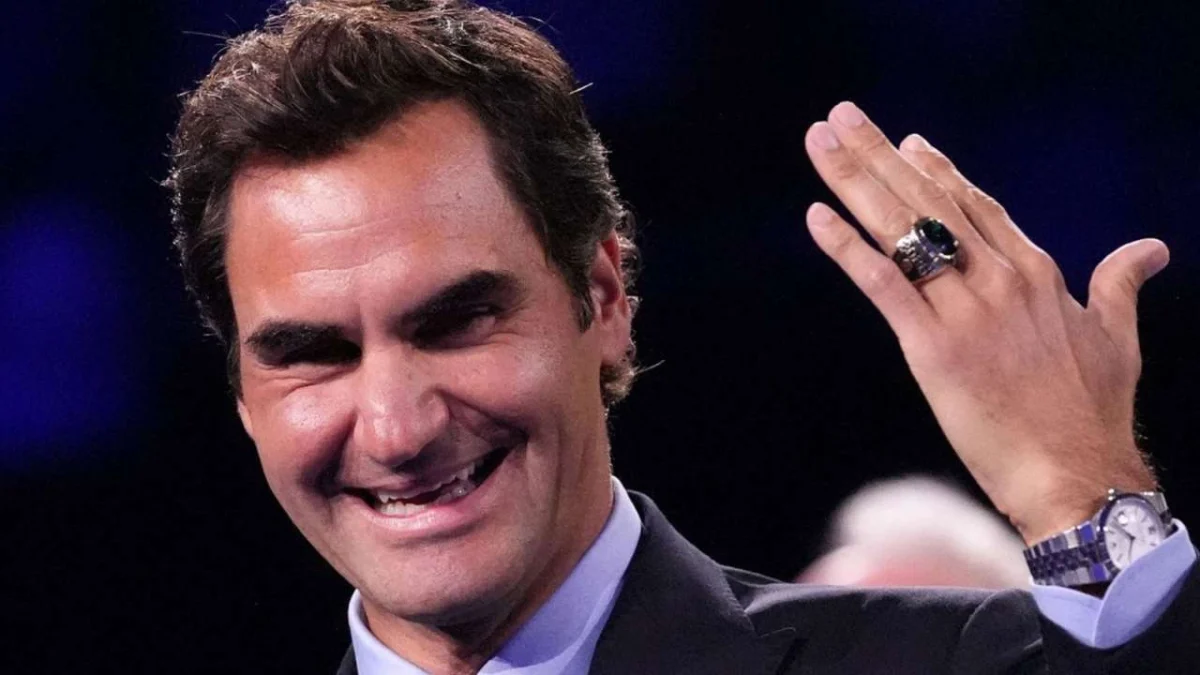
NEW YORK, USA – In a moment that transcended the ongoing competition, tennis icon Roger Federer returned to the hallowed grounds of Arthur Ashe Stadium at the US Open on Monday, receiving his International Tennis Hall of Fame (ITHF) ring. The ceremony, held just two days after his official induction in Newport, Rhode Island, served as a poignant tribute to a career defined by unparalleled grace, dominance, and sportsmanship. The atmosphere was electric, a testament to the enduring affection and respect the global tennis community holds for the Swiss maestro.
The presentation of the ring during the prestigious US Open further underscored Federer’s indelible mark on the sport. Inside the colossal stadium, a venue where he once reigned supreme for five consecutive years, the 45-year-old legend was met with thunderous applause and a standing ovation, a fitting reception for a player who captivated millions and redefined excellence in tennis. His presence alone brought a palpable sense of occasion, transforming a regular tournament day into a celebration of history.
A Resounding Tribute at Arthur Ashe Stadium
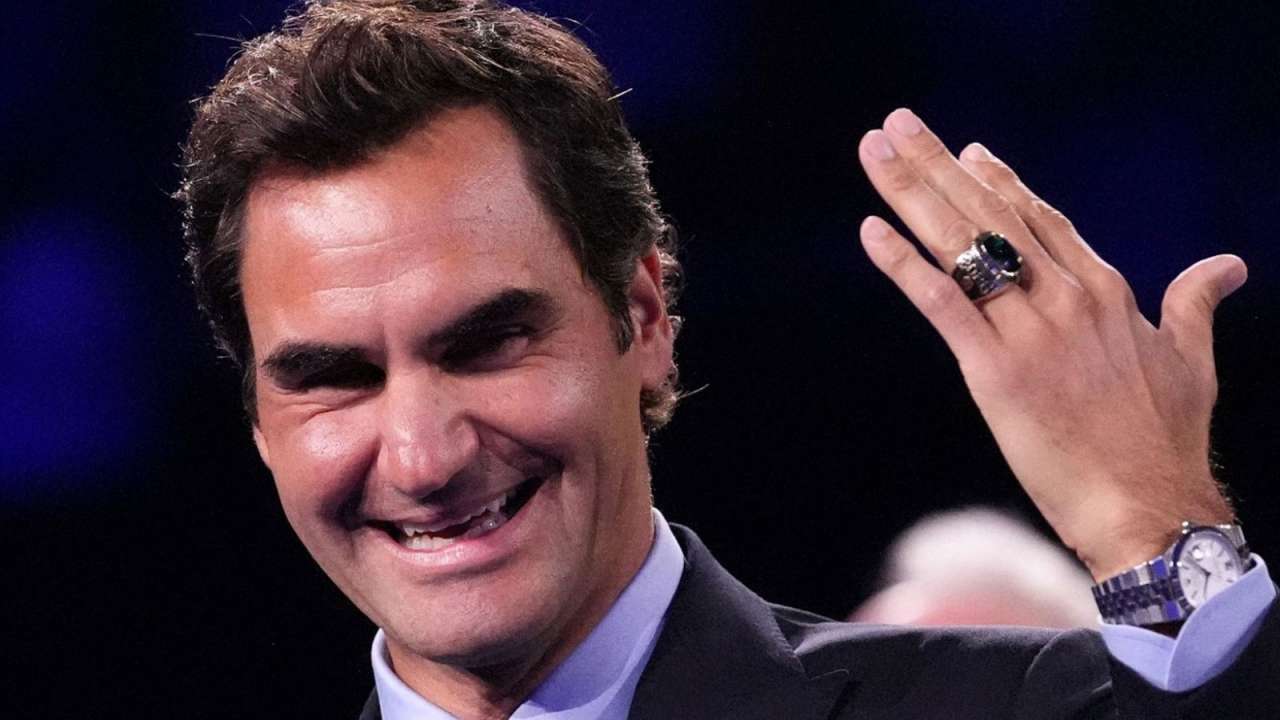
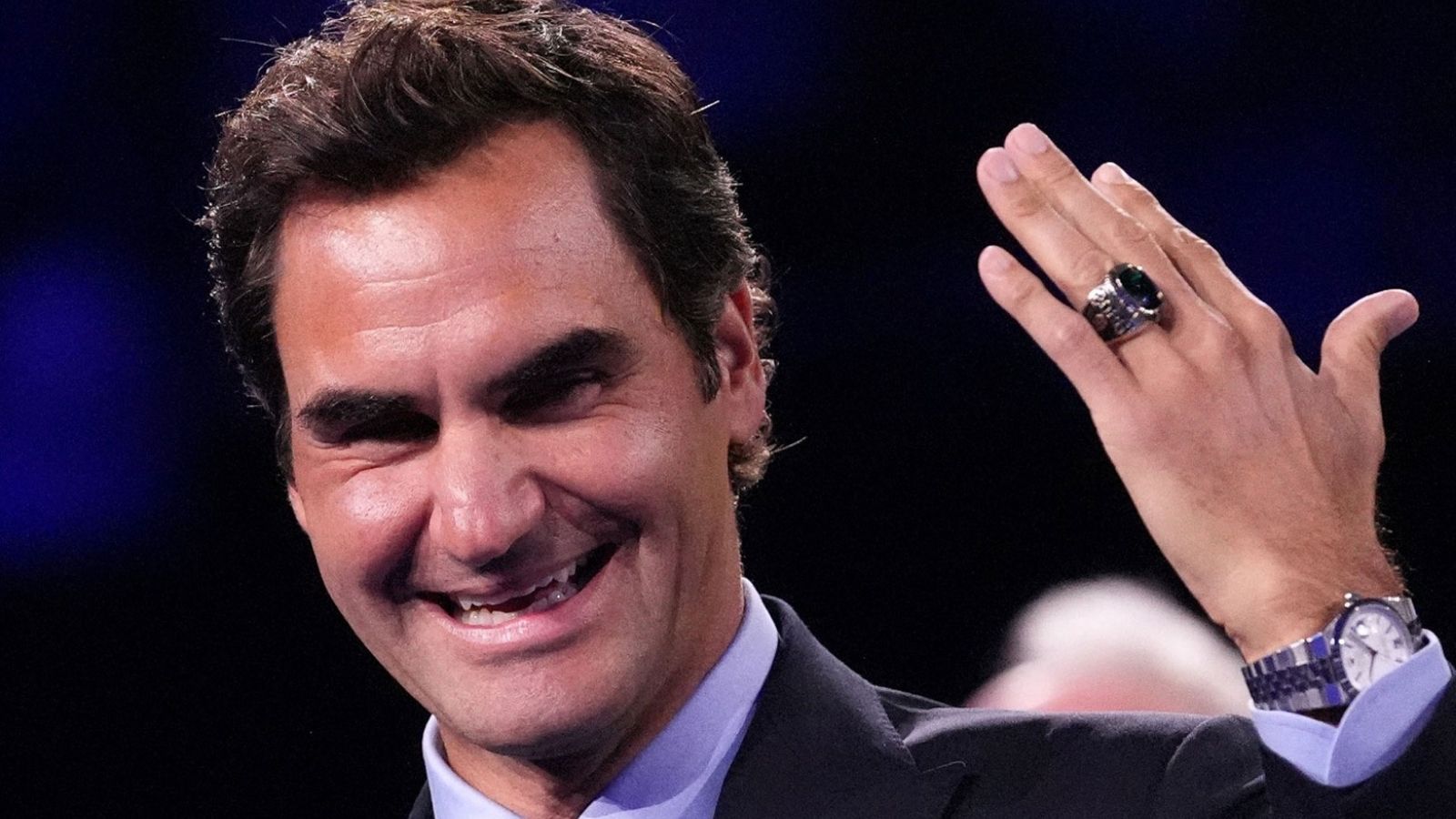
The ceremony itself was steeped in significance. The coveted ITHF ring, a symbol of tennis immortality, was presented to Federer by none other than Hall of Fame President and 2017 inductee, Kim Clijsters. Her presence, as a fellow former world No. 1 and Grand Slam champion, added another layer of prestige to the event, highlighting the camaraderie and mutual respect among tennis’s elite. As Federer accepted the ring, a broad smile illuminated his face, and he pumped his fist towards the roaring crowd, holding up his hand to proudly display the shimmering emblem of his latest honour. The gesture was classic Federer – humble yet celebratory, acknowledging the fans who had cheered him through countless victories.
Federer’s induction into the International Tennis Hall of Fame on Saturday had been a momentous occasion, where he joined alongside former American player and celebrated commentator Mary Carillo. The Newport ceremony officially welcomed him into an exclusive fraternity of legends, recognizing not just his statistical achievements but also his profound impact on the culture and global appeal of tennis. The subsequent presentation at the US Open allowed a much larger audience, many of whom were witnessing the current generation of stars compete, to share in the celebration of a player whose legacy continues to inspire.
)
The Journey to Immortality: A Chronology of a Legend
Roger Federer’s path to the International Tennis Hall of Fame is a narrative woven with extraordinary achievements, unwavering dedication, and an artistry that transcended the confines of the tennis court.
The Golden Era and Dominance (Early 2000s – 2010s):
Federer’s career began in the late 1990s, but it was in the early 2000s that he truly began to ascend, culminating in his first Grand Slam title at Wimbledon in 2003. This victory marked the beginning of an era of unprecedented dominance. He went on to win 20 major trophies, a record at the time of his retirement, which included a staggering eight Wimbledon titles, six Australian Opens, five US Opens, and a coveted French Open, completing his career Grand Slam in 2009. His supremacy was further evidenced by his 103 tour-level championships, placing him second only to Jimmy Connors in the Open Era.

Unmatched Consistency and World No. 1 Status:
Beyond titles, Federer’s consistency was legendary. He held the coveted top spot in the PIF ATP Rankings for an astonishing 310 weeks, including a record 237 consecutive weeks from February 2004 to August 2008. This feat underscores his sustained excellence and ability to fend off challenges from a burgeoning generation of talent. He is a proud member of the exclusive ATP No. 1 Club, a group comprising only 29 players who have reached the pinnacle of men’s professional tennis. His presence in this club, for such an extended period, speaks volumes about his mental fortitude and physical prowess.
Retirement and Transition (2022):
After a career spanning over two decades, Federer announced his retirement from professional tennis in September 2022, following the Laver Cup in London. His farewell was an emotional event, drawing tributes from rivals, fans, and fellow legends, all acknowledging the end of an era. While his competitive playing days concluded, his connection to the sport and its fans remained as strong as ever, setting the stage for his continued involvement as an ambassador and icon.
)
The Exhibition Return to New York (August 25, 2026):
Leading up to his Hall of Fame ring ceremony, Federer made a much-anticipated return to the US Open for an exhibition event on August 25. This nostalgic appearance saw him once again grace the courts, participating alongside fellow ATP No. 1 Club members. He played in a series of lighthearted but competitive matches, first facing off against his long-time rival and friend Andy Roddick, and later teaming up with the legendary John McEnroe. This event was a delightful precursor to the formal induction, allowing fans to relive some of the magic and witness the enduring camaraderie among these tennis greats. It also highlighted his enduring connection to New York, a city that had witnessed some of his most memorable triumphs.
The Hall of Fame Induction (Saturday, August 29, 2026):
The official induction ceremony took place in Newport, Rhode Island, at the International Tennis Hall of Fame. Here, Federer, alongside Mary Carillo, was formally enshrined among the pantheon of tennis legends. It was a moment of reflection and celebration, where his career achievements were meticulously detailed, and his profound influence on the sport was lauded by peers and dignitaries.
)
The Ring Ceremony at US Open (Monday, August 31, 2026):
Just two days after the Newport ceremony, the spotlight shifted back to New York. The presentation of the ITHF ring at Arthur Ashe Stadium was a deliberate choice, allowing the thousands of fans attending the US Open to partake in the honour. It was a full-circle moment for Federer, returning to a place where he had lifted the US Open trophy five consecutive times from 2004 to 2008, cementing his bond with the tournament and its passionate supporters.
A Legacy Beyond Numbers: Supporting Data and Impact
Roger Federer’s statistical resume is breathtaking, but his impact on tennis extends far beyond the raw numbers. He is widely considered one of the greatest athletes of all time, not just in tennis, but across all sports.
)
Statistical Prowess in Detail:
- Grand Slam Titles (20): His 20 major championships were a benchmark for greatness. These included a record eight men’s singles titles at Wimbledon, a testament to his mastery on grass. His five US Open titles, all won consecutively (2004-2008), showcased his adaptability and dominance on hard courts. The six Australian Open titles further cemented his all-court prowess, and his single French Open title in 2009, achieved after years of trying against Rafael Nadal, completed the career Grand Slam, a rare feat that solidifies his place among the sport’s most versatile champions.
- Tour-Level Championships (103): This extensive list of titles across various surfaces and tournaments highlights his consistent excellence and ability to perform at the highest level throughout his career.
- Weeks at World No. 1 (310): The sheer duration of his reign at the top, particularly the 237 consecutive weeks, is a record that may stand for generations. It signifies an unmatched level of consistency and mental strength required to maintain such a high standard against ever-improving competition.
- ATP No. 1 Club: Membership in this elite group is by invitation of accomplishment, reserved for those who have reached the pinnacle of the sport. Federer’s long tenure at the top distinguishes him even within this exclusive club.
- Longevity: Turning 45 last month, Federer’s career spanned a remarkable period, allowing him to compete and win against multiple generations of players. His ability to adapt his game and maintain a high level of fitness for so long is a testament to his dedication and professionalism.
The "Big Three" Era:
Federer was a central figure in what is often dubbed the "Big Three" era of men’s tennis, alongside Rafael Nadal and Novak Djokovic. Their unparalleled rivalry pushed each player to new heights, captivating audiences worldwide and elevating the sport to unprecedented levels of popularity. Federer’s elegant, attacking style often contrasted with Nadal’s brute force and Djokovic’s defensive tenacity, creating compelling narratives and memorable matches that are etched in tennis history. His rivalries, particularly with Nadal, are considered among the greatest in sports.
)
Style and Grace:
Federer’s playing style was often described as poetry in motion. His effortless movement, elegant one-handed backhand, powerful forehand, and all-court game captivated fans. He played with a fluidity and grace that made the incredibly difficult look deceptively simple. Beyond the power and precision, there was an artistry to his game that transcended mere athleticism, making him a joy to watch for casual observers and seasoned aficionados alike.
Sportsmanship and Ambassadorial Role:
Off the court, Federer was equally exemplary. Known for his impeccable sportsmanship, humility, and polite demeanor, he became a global ambassador for tennis. He rarely showed frustration and always respected his opponents, earning him the admiration of peers and fans. His philanthropic efforts, particularly through the Roger Federer Foundation, have also had a significant positive impact, supporting education for children in Southern Africa and Switzerland.
)
Connection to the US Open:
The US Open holds a special place in Federer’s heart, and vice-versa. His five consecutive titles from 2004 to 2008 were a golden era for him in Flushing Meadows. He owned Arthur Ashe Stadium during those years, producing some of his most memorable performances. His return for the exhibition and the ring ceremony was a poignant reminder of this deep connection, solidifying his status as a beloved figure in New York.
Official Responses and Sentiments
Federer’s own words captured the essence of his return and the significance of the honour. Speaking to reporters and quoted by the ATP website, he expressed profound gratitude:
)
"What a pleasure to be back in New York. The trip, playing out here last Tuesday with the legends, getting the chance to thank everybody who has always supported me here in New York has been incredible. Getting inducted into the International Hall of Fame, it gave me a chance to look back at all the incredible people that have helped me along the way, the game I love so much and what it gave me."
His sentiments highlighted not just the personal joy of the honour but also his deep appreciation for the support system throughout his career – from coaches and family to the legions of fans. The reference to "the game I love so much and what it gave me" underscored a lifelong passion that fueled his unparalleled success.
)
Kim Clijsters, as ITHF President and the one who presented the ring, likely echoed similar sentiments of admiration and respect. While no direct quotes from her were immediately available from the ceremony, her actions spoke volumes, reflecting the collective pride of the tennis community in welcoming Federer into the Hall of Fame.
A representative from the International Tennis Hall of Fame, speaking on the broader significance of the induction, might have added: "Roger Federer embodies everything the International Tennis Hall of Fame stands for: unparalleled achievement, sportsmanship, and a lasting impact on the global landscape of tennis. His induction is not just about celebrating records, but about recognizing an individual who elevated the sport to new heights and inspired millions worldwide. To present his ring at the US Open, a venue so integral to his legendary career, makes this moment even more special."
)
Similarly, an ATP spokesperson could have emphasized: "Roger’s career statistics speak for themselves, but his influence on the ATP Tour goes beyond numbers. He was a role model for aspiring players, a fierce but fair competitor, and a global icon who brought new fans to the sport. His legacy will continue to shape the future of professional tennis for generations to come, and we are immensely proud of his induction into the Hall of Fame."
Implications and Enduring Legacy
The induction of Roger Federer into the International Tennis Hall of Fame and the subsequent ring ceremony at the US Open carry profound implications for his legacy, the sport of tennis, and future generations of athletes.
)
Cementing an Unassailable Legacy:
This honour solidifies Federer’s place in history as one of the undisputed titans of tennis. It’s not merely a recognition of past achievements but a formal acknowledgement that his contributions have forever altered the sport. His name will now reside alongside other legends like Rod Laver, Bjorn Borg, Pete Sampras, and Martina Navratilova, forming a continuous narrative of tennis excellence. This induction ensures that his story and his impact will be preserved and celebrated for eternity.
An Enduring Role as an Ambassador:
Post-retirement, Federer has naturally transitioned into an ambassadorial role for tennis. His Hall of Fame status amplifies this responsibility. He will undoubtedly continue to be a prominent figure at major tournaments, exhibition events, and promotional activities worldwide. His global appeal and universal respect make him an ideal spokesperson for the sport, capable of attracting new audiences and inspiring participation at all levels. This includes his continued involvement with his foundation and various charitable initiatives, leveraging his platform for social good.
)
Inspiration for Future Generations:
Federer’s career serves as a beacon of inspiration for countless aspiring tennis players and athletes across various disciplines. His journey, marked by dedication, resilience, and an unwavering pursuit of excellence, offers a powerful lesson in sportsmanship and perseverance. Young players will look to his example not just for how to win, but for how to conduct themselves with grace and integrity, both on and off the court. His ability to maintain such a high level for so long will be a benchmark for longevity and sustained performance.
Shaping the Future of Tennis:
The "Big Three" era, spearheaded by Federer, Nadal, and Djokovic, has left an indelible mark on tennis. It has raised the bar for physical and mental toughness, elevated the quality of play, and significantly increased the sport’s global reach and commercial appeal. As these legends gradually transition out of competitive play, their legacy will continue to influence the strategies, training methods, and professional standards of the sport. The ITHF’s role in preserving this history is crucial for understanding the evolution of tennis.
)
Enhancing the Prestige of the US Open:
Hosting the ITHF ring ceremony at Arthur Ashe Stadium during the US Open adds another layer of prestige to an already iconic tournament. It allows the Grand Slam to celebrate its own rich history and its connection to one of its most beloved champions. Such events create memorable moments for fans and reinforce the US Open’s status as a premier event on the global sporting calendar, capable of blending current competition with historical tributes.
In conclusion, Roger Federer’s reception of his International Tennis Hall of Fame ring at the US Open was far more than a ceremonial act. It was a profound celebration of a once-in-a-generation athlete, a testament to his enduring legacy, and a powerful reminder of the values he brought to the game. As the roar of the crowd echoed through Arthur Ashe Stadium, it was clear that while Federer’s competitive chapter might have closed, his story in the annals of tennis history has only just begun.