

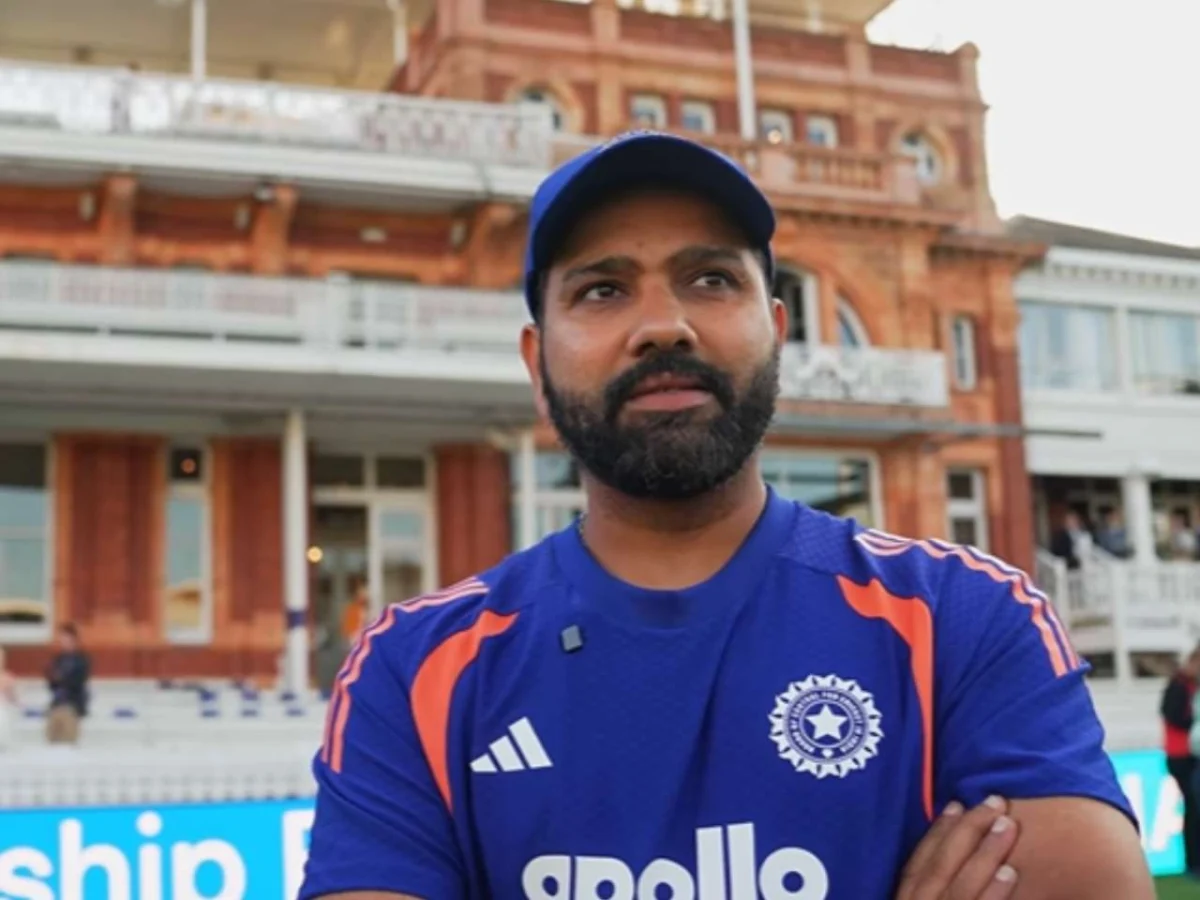
LONDON, ENGLAND – In a cricketing world perpetually buzzing with speculation, India’s veteran captain and prolific opener, Rohit Sharma, has once again demonstrated his remarkable ability to cut through the "noise" – both on and off the field. Following India’s recent One Day International (ODI) series defeat to England, Sharma delivered a powerful message, asserting that external chatter has never swayed his approach to the game. His candid remarks, shared in a video by the Board of Control for Cricket in India (BCCI), came hot on the heels of a magnificent, record-breaking century at Lord’s, an innings that defied whispers of his potential ODI retirement and reaffirmed his enduring class.
Main Facts: The Unyielding Spirit of the ‘Hitman’
The core narrative emerging from the recently concluded England-India ODI series is not merely the outcome of the matches, but the emphatic statement made by Rohit Sharma. At 39 years old, an age often associated with career twilight in international cricket, Sharma found himself at the epicentre of retirement speculation. However, in a manner befitting his "Hitman" moniker, he responded with both a bat-wielding masterclass and a philosophical dismissal of his critics.
His defiant century – a breathtaking 138 runs off 110 balls – in the third and final ODI at the iconic Lord’s Cricket Ground, served as a potent counter-narrative to the prevailing rumours. Despite India ultimately falling short in their daunting chase of England’s monumental 388, Sharma’s individual brilliance shone brightest. His innings was not just a personal milestone; it was a testament to his mental fortitude and undiminished skill.
In a subsequent interview, circulated by the BCCI, Sharma articulated his long-held philosophy with characteristic bluntness: "My job is with the bat. Come and play, represent my country, represent the team. That’s what I’ve been told to do since I made my debut. So that’s what I’m going to do." He further elaborated on his indifference to external pressures, stating, "The noise since I made my debut was there. And till the time I’m going to stay here, it’s always going to be there. So it doesn’t really matter too much." His concluding remark, "What matters is what I do on the field… if there’s no noise, there’s no fun. My job is inside; their job is outside. So that’s how I look at it," perfectly encapsulated his steadfast focus and a healthy disregard for public opinion that doesn’t align with his on-field objectives. This stance not only quashed immediate retirement talks but also reiterated his commitment to Indian cricket, irrespective of the external narrative.
)
Chronology: A Lord’s Masterclass Amidst a Series Defeat
The series decider at Lord’s on July 20th was a high-stakes encounter that saw England post a formidable total, challenging India from the outset.
England’s Dominant Batting Display
Winning the toss and opting to bat first, England’s batsmen unleashed a relentless assault on the Indian bowling attack. Ben Duckett led the charge with a scintillating 141, ably supported by Jacob Bethell’s aggressive 91. Veteran Joe Root anchored the innings with an unbeaten 74, while Jos Buttler provided a late flourish with a quickfire 41 not out. Their collective effort propelled England to a colossal 387 for 3 in their allotted 50 overs, setting a record for the highest team total at Lord’s in an ODI against India and presenting the visitors with a monumental chase.

Rohit Sharma’s Heroic Pursuit
Facing an almost insurmountable target of 388, India’s response needed a special effort from their top order, and Rohit Sharma delivered precisely that. Opening the innings, Sharma launched a counter-attack that combined classical strokeplay with audacious power-hitting. He meticulously built his innings, weathering the initial storm before accelerating to punish anything loose. His partnership with young opener Shubman Gill was crucial, laying a robust foundation of 147 runs for the first wicket. Gill contributed a fluent 77 before his dismissal.
Sharma then found another formidable partner in Virat Kohli, and the experienced duo stitched together a vital 113-run stand. Their synergy in the middle, marked by excellent running between the wickets and intelligent shot selection, kept India’s hopes alive. Kohli, too, played a significant hand with 74 runs, showcasing glimpses of his vintage form.
)
A Century of Records
Sharma’s innings was a landmark achievement. His 138 off 110 balls was his 34th ODI century, placing him firmly among the all-time greats in the format. More significantly, it etched his name into the annals of Lord’s history as the first Indian batter to score an ODI century at the ‘Home of Cricket’. The innings was a masterclass, adorned with 17 fours and five towering sixes, each stroke a testament to his timing and placement. This magnificent effort also surpassed his own record, becoming the highest individual ODI score by an Indian against England in England, eclipsing his unbeaten 137 at Trent Bridge in 2018. The historical context of this achievement, at such an iconic venue and under immense pressure, amplified its significance.
The Dramatic Collapse
Despite the heroics of Sharma, Gill, and Kohli, India’s chase faltered dramatically. From a strong position of 304 for 2, a sudden and devastating collapse ensued. The middle and lower order struggled to maintain the required scoring rate and succumbed to the pressure exerted by England’s bowlers. Sam Curran emerged as the chief architect of India’s downfall, claiming four crucial wickets that dismantled the chase. Ultimately, India fell short by 27 runs, finishing their innings at 360 for 8, handing England a 2-1 series victory. The result, while disappointing for India, could not overshadow the brilliance of Sharma’s individual performance.
)
Supporting Data: Unpacking the ‘Noise’ and the Numbers
Rohit Sharma’s robust declaration regarding "outside noise" is not a new phenomenon in his career, nor is it unique to him in the high-pressure environment of Indian cricket. The intense scrutiny from media, passionate fan bases, and the omnipresent social media landscape creates an unparalleled level of public commentary around every player’s performance and future. For a senior player like Sharma, approaching the latter stages of his career, such speculation is amplified, often focusing on age, fitness, and perceived dips in form.
The Nature of Speculation
The "retirement rumours" preceding the Lord’s ODI were likely fueled by a confluence of factors. At 39, Sharma is among the older active players in international cricket. While his form has been exceptional in patches, any slight inconsistency can quickly ignite debates about succession planning and the need for younger blood. The demanding schedule of international cricket, encompassing three formats, also prompts questions about player longevity and workload management. For many, a series defeat, especially one with a decisive loss, becomes fertile ground for such discussions. However, Sharma’s response highlighted his seasoned approach to such narratives. His words, "if there’s no noise, there’s no fun. My job is inside; their job is outside," indicate a mature understanding of the ecosystem he operates in. He views it as an inevitable, almost entertaining, byproduct of playing at the highest level, distinguishing his internal focus from external opinions.
)
Statistical Brilliance and Historical Context
Sharma’s 34th ODI century places him in an elite club of batsmen with more than 30 hundreds in the format, a list dominated by legends like Sachin Tendulkar, Virat Kohli, Ricky Ponting, and Sanath Jayasuriya. This consistency over a prolonged period underscores his immense talent and dedication. The significance of his Lord’s century cannot be overstated. Lord’s, with its rich history and hallowed grounds, is a venue where every cricketer dreams of performing. To be the first Indian to score an ODI century there is a remarkable feat, adding a unique chapter to his already illustrious career. This achievement elevates him into a pantheon of Indian greats who have left their mark on the venue in various formats, but none had achieved this particular ODI milestone. His previous record of 137 against England in 2018 further illustrates his consistent prowess against this particular opponent and in English conditions, which are often challenging for subcontinental batsmen. This innings was not an anomaly but a continuation of his high standards, reaffirming that his capabilities remain undiminished.
Official Responses: Disappointment, Learning, and Camaraderie
While Rohit Sharma’s individual brilliance was a highlight, his post-match comments also reflected a profound sense of disappointment over the team’s inability to secure a series victory. His statements, released through the BCCI, provided insight into the team’s perspective and his leadership philosophy.
)
Disappointment and Collective Responsibility
Despite his personal milestone, Sharma candidly admitted, "A little disappointed with the result because I thought we were playing really good cricket." He detailed the team’s performance across the series, acknowledging the strong start in Birmingham but lamenting the batting failures in Cardiff and the final match at Lord’s. "We fell a little short at Cardiff with the bat; actually, it was not enough to score on the board," he noted. Regarding the Lord’s chase, he conceded, "there was a massive total to chase. We tried everything we could with the bat, but again, we fell 20-25 runs short with the bat."
Crucially, Sharma did not shy away from addressing the bowling performance, but did so with a protective and developmental mindset. "Again, when it comes to bowling, you’ve got to understand these guys haven’t played a lot of ODI cricket. You’ve got to give them some time," he stated, highlighting the importance of patience and nurturing young talent. His emphasis on collective learning was clear: "But yeah, hopefully we can learn from this game, take it into our stride, make sure when we come across a situation like that, we try and better ourselves." This reflects a captain who understands the process of team building and the need for continuous improvement rather than immediate, harsh judgments.
)
Fondness for England and Batting with Kohli
Sharma also expressed his deep affection for playing cricket in England. "I love playing in England. There’s no doubt about it. The atmosphere, the ground, the pitches, when you turn up here to play any sort of format, it challenges you in different ways. And that’s what, as a cricketer, you want; you want to be challenged all the time." This sentiment underscores his professional ambition and his desire to test himself against the best in varying conditions, a hallmark of top-tier athletes.
His reflections on batting alongside Virat Kohli offered a rare glimpse into the camaraderie and understanding shared between two of India’s cricketing titans. "We played our entire career together [referring to Virat Kohli], so it was nice to have him in the middle. You know, we’ve had a lot of partnerships. It’s always fun batting together. We understand each other so much," Sharma remarked. He elaborated on their on-field communication: "It’s always nice in the middle, bouncing off ideas, trying to see what we can do. So there was a lot of conversation that was going around in between when we were batting." This insight highlights the invaluable experience and synergy that such long-standing partnerships bring to a team, especially in high-pressure chases. The BCCI’s decision to share these insights directly from Sharma via their official channels serves as a powerful endorsement of his leadership and the team’s internal dynamics, implicitly quelling further speculation and reinforcing stability.
)
Implications: Future Trajectory and Legacy
Rohit Sharma’s emphatic performance and resolute statements carry significant implications for his own future, the immediate trajectory of the Indian team, and the broader narrative surrounding veteran cricketers.
Cementing His Leadership and ODI Future
The Lord’s century, coupled with his strong stance against retirement rumours, has undoubtedly solidified Rohit Sharma’s position as India’s ODI captain and a vital component of the team. For an Indian side constantly navigating transitional phases, the experience and proven match-winning ability of Sharma are indispensable. His performance suggests that he remains hungry for success and capable of delivering at the highest level. This should effectively silence, at least temporarily, the whispers about his immediate ODI future, allowing him to focus on leading the team towards upcoming challenges, potentially including major ICC tournaments. His leadership style, characterized by a calm demeanor and a focus on collective growth, will be crucial in mentoring younger players and integrating them into the national setup.
)
Team Stability and Performance Outlook
For the Indian team, Sharma’s continued presence and form provide a crucial anchor at the top of the order. His ability to score big centuries and set the pace of an innings is vital, especially when chasing daunting totals. The partnerships he forged with Shubman Gill and Virat Kohli in the Lord’s match underscore the importance of experienced players guiding emerging talent and collaborating with established stalwarts. However, the dramatic collapse from a strong position also highlights areas of concern, particularly the middle order’s ability to handle pressure and finish games. The implication here is that while individual brilliance can set platforms, collective responsibility and depth are paramount for consistent success in ODI cricket. Sharma’s call for the team to "learn from this game" and "better ourselves" indicates a proactive approach to addressing these shortcomings.
The Enduring Debate: Individual vs. Team Success
Sharma’s magnificent century, achieved in a losing cause, reignites the age-old debate in team sports about the balance between individual milestones and collective victory. While his innings was historically significant, the team’s defeat underscored that cricket remains a team game. This scenario, however, also highlights the psychological boost such performances can provide. A captain leading from the front with such an innings, even in defeat, can inspire confidence and demonstrate what is possible. It reaffirms that even in challenging circumstances, top players can rise to the occasion, setting a benchmark for others to aspire to.
)
Legacy and Inspiration
Beyond the immediate future, Rohit Sharma’s resilient response to critics and his ability to perform under pressure will contribute significantly to his legacy. In an era where athletes are increasingly exposed to public scrutiny, his "no noise, no fun" philosophy offers a powerful lesson in mental fortitude and self-belief. It provides an inspiring example for aspiring cricketers and athletes across disciplines, demonstrating that true focus comes from within, impervious to external distractions. His 34th ODI century at Lord’s will be remembered not just for its statistical grandeur, but as a symbolic act of defiance and a resounding declaration of intent from a player who continues to challenge conventional timelines in international sport. As India looks ahead, Sharma’s blend of experience, leadership, and undiminished batting prowess will be a cornerstone of their ambitions.
