

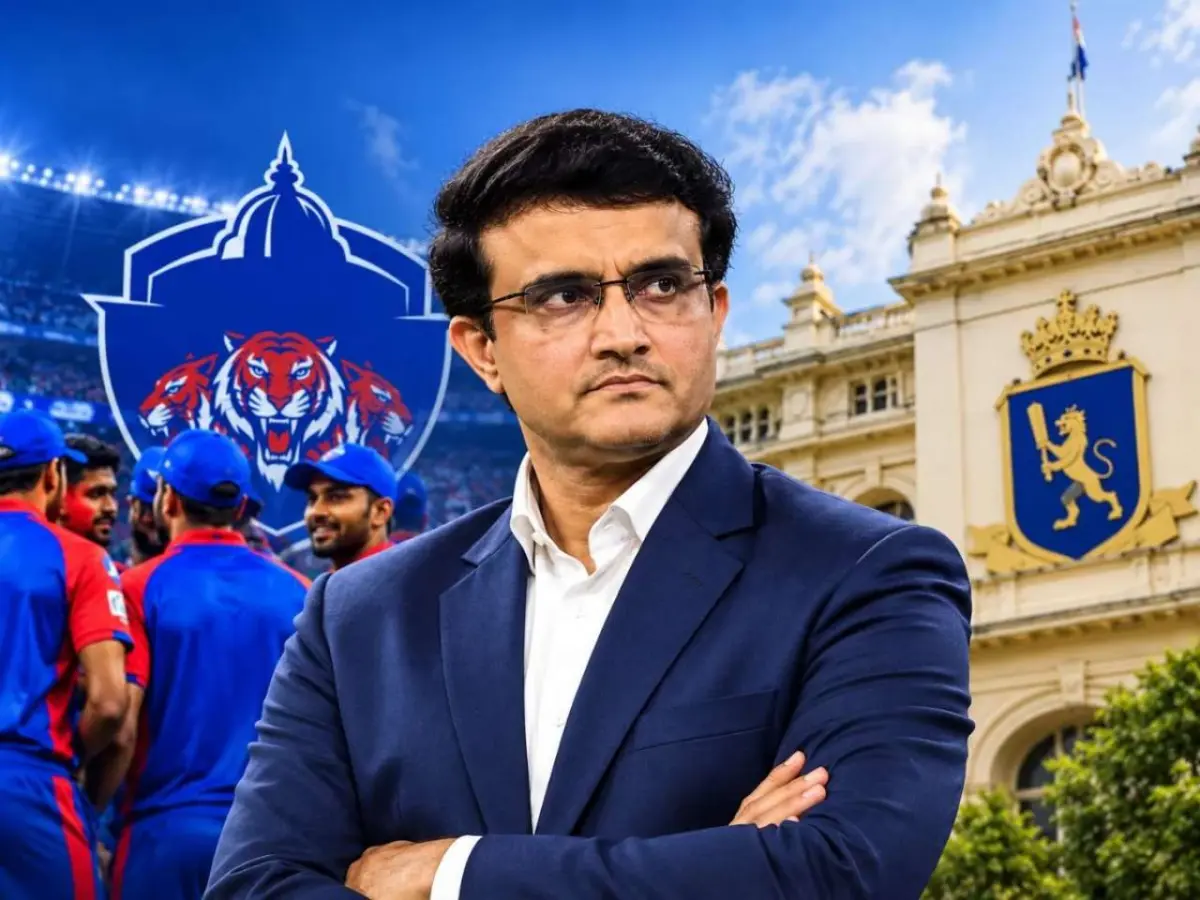
New Delhi, India – In a move that has once again placed the spotlight firmly on the intricate governance landscape of Indian cricket, legendary former India captain Sourav Ganguly has been appointed as the head coach of the Delhi Capitals (DC) for the upcoming 2027 Indian Premier League (IPL) season. The announcement, while exciting for DC fans eager for a maiden IPL title, has simultaneously reignited perennial discussions surrounding potential conflicts of interest, as Ganguly will assume this high-profile coaching role while continuing his tenure as the president of the Cricket Association of Bengal (CAB).
Ganguly, a figure synonymous with aggressive leadership and transformative change in Indian cricket, wasted no time in addressing the burgeoning concerns. Speaking to reporters outside Salt Lake Stadium in Kolkata, following an international football friendly, he confidently dismissed the allegations, asserting that he was operating within the stipulated guidelines set by the Board of Control for Cricket in India (BCCI). "I’ve received the ombudsman appointment," Ganguly declared, implying a formal clearance or a process vetted by the relevant ethics authority. He exuded optimism for his new venture, adding, "Delhi will perform excellently. I’m excited about what’s ahead."
This appointment marks Ganguly’s latest engagement with the Delhi-based franchise, deepening a relationship that has evolved through various capacities over several years. His return as head coach, however, raises pertinent questions about the feasibility and ethical considerations of simultaneously holding a significant administrative position within a state cricket body and a coaching role in a professional franchise league, especially given the BCCI’s increasingly stringent conflict of interest regulations. The cricket fraternity, media, and fans alike will be watching closely to see how this dual responsibility plays out, both on the field and in the complex administrative corridors of Indian cricket.
A Chronology of Ganguly’s Multifaceted Engagements
Sourav Ganguly’s journey in Indian cricket, post his illustrious playing career, has been marked by a remarkable transition into various influential roles, from commentary to administration and now, increasingly, coaching and mentorship in franchise leagues. Understanding the timeline of his associations is crucial to grasping the current debate.
)
The Administrative Ascent (CAB & BCCI):
Ganguly’s foray into cricket administration began in earnest in 2015 when he was elected as the President of the Cricket Association of Bengal (CAB). His tenure at CAB was widely lauded, characterized by efforts to modernize infrastructure and promote grassroots cricket. His administrative prowess culminated in October 2019 when he ascended to the presidency of the Board of Control for Cricket in India (BCCI), becoming the first former international captain to hold the top post since Maharaja of Vizianagaram in 1954. During his BCCI presidency, Ganguly oversaw significant policy decisions, including the successful organization of the Day-Night Test in India and navigating the initial challenges posed by the COVID-19 pandemic. He completed his term as BCCI President in October 2022, but subsequently resumed his role as CAB President, a position he currently holds.
The Delhi Capitals Connection – A Developing Relationship:
Ganguly’s association with the Delhi Capitals franchise has been a gradual, evolving process, marked by several key engagements:

- 2019 – Advisor: His initial formal link with the Delhi Capitals came in 2019 when he joined the franchise as an advisor. Even then, while serving as the CAB President, his role sparked discussions regarding potential conflicts of interest. However, the BCCI had, at that time, resolved the matter in his favour, deeming his advisory capacity permissible alongside his CAB duties.
- 2023 – Director of Cricket: Ganguly returned to the DC fold in 2023, this time in a more expansive role as the Director of Cricket. This appointment was part of a two-year commitment, during which he oversaw the broader cricketing operations of the franchise. Throughout this period, the seasoned Australian tactician Ricky Ponting remained the head coach. This directorship also extended to the larger JSW group, co-owners of the franchise, indicating a deeper integration into the sporting ecosystem managed by the conglomerate.
- 2026 – Pretoria Capitals Head Coach (SA20): Demonstrating his growing interest and capability in coaching, Ganguly took charge as the head coach of the Pretoria Capitals in South Africa’s SA20 league ahead of the 2026 season. His inaugural year in this role was remarkably successful, as he led the team to the championship final, showcasing his tactical acumen and leadership in a coaching capacity. This experience likely bolstered confidence in his ability to take on a similar role in the IPL.
- 2025 – JSW Sports Director of Cricket & Hemang Badani’s Appointment: Following Ricky Ponting’s departure before the 2025 IPL season, speculation was rife that Ganguly would step directly into the head coaching position for DC. However, the franchise opted for Hemang Badani instead. Concurrently, Ganguly’s role within the JSW group evolved, as he was appointed as the Director of Cricket for JSW Sports, overseeing their broader cricketing initiatives, including their investments in various leagues.
- 2027 – Delhi Capitals Head Coach: The latest chapter sees Ganguly assume the coveted head coach position for the Delhi Capitals for the 2027 IPL season, directly succeeding Hemang Badani. This marks his second head coaching role at a franchise level, building upon his success with the Pretoria Capitals. This appointment, coming while he holds the CAB presidency, has once again brought the conflict of interest debate to the forefront.
This intricate web of roles highlights Ganguly’s enduring influence and demand across various facets of cricket, from administrative leadership to strategic oversight and direct team management.
Supporting Data: The BCCI’s Conflict of Interest Framework
The BCCI’s conflict of interest regulations have been a cornerstone of its governance reforms, particularly since the recommendations of the Justice Lodha Committee. These stringent rules were primarily instituted to ensure transparency, prevent undue influence, and maintain the integrity of the sport. The core philosophy behind these regulations is to avoid situations where an individual’s personal or financial interests could potentially influence their official duties or decisions within cricket administration or its commercial ventures.
)
Key Principles of BCCI’s Conflict of Interest Rules:
- No Dual Roles: Individuals holding administrative positions within the BCCI or its state associations are generally prohibited from simultaneously holding positions in IPL franchises, commentary panels, or player management agencies.
- Financial Interest: Any direct or indirect financial interest in entities related to cricket (e.g., franchises, broadcast companies, sponsorship deals) by an administrator or their immediate family is scrutinized.
- Undue Influence: The rules aim to prevent individuals from leveraging their official position to gain personal advantage or benefit related parties.
- The Ethics Officer/Ombudsman: To adjudicate and resolve such matters, the BCCI established the position of an Ethics Officer (sometimes referred to as an Ombudsman), an independent legal authority responsible for investigating complaints and issuing rulings on alleged conflicts of interest. Their decisions are binding, subject to appeals.
Past Precedents and Challenges:
The BCCI’s conflict of interest rules have been a recurring point of contention and discussion, affecting numerous prominent figures in Indian cricket:
)
- Rahul Dravid: The former India captain and current head coach faced a conflict of interest complaint when he was the head of the National Cricket Academy (NCA) while simultaneously serving as a mentor for an IPL franchise. He eventually stepped down from the IPL role to comply.
- Sachin Tendulkar, VVS Laxman, and Sourav Ganguly (2019): All three legendary cricketers faced complaints for their dual roles as members of the Cricket Advisory Committee (CAC) and mentors/advisors for IPL franchises (Tendulkar with Mumbai Indians, Laxman with Sunrisers Hyderabad, and Ganguly with Delhi Capitals). While they were eventually cleared or adapted their roles, it underscored the strict interpretation of the rules.
- MS Dhoni: Even a player of Dhoni’s stature faced scrutiny for his association with a sports management company while actively playing for India.
- The Intent: The regulations, while sometimes perceived as overly rigid, are designed to protect the sport from controversies that could erode public trust and ensure a level playing field for all stakeholders.
The JSW-GMR Partnership and Delhi Capitals Ownership:
The Delhi Capitals franchise is co-owned by the JSW Group and the GMR Group. This partnership has a unique operational structure: each owner manages the affairs of the franchise on alternating two-year cycles. For the 2027 IPL season, it is the JSW Group’s turn to oversee the cricket operations of the Delhi Capitals. This context is important because Ganguly’s previous role as Director of Cricket for JSW Sports indicates a deep alignment with the JSW vision and management philosophy. This continuity, combined with his success at the SA20 league with the JSW-owned Pretoria Capitals, likely played a significant role in his elevation to the DC head coach position. Interestingly, as per the ownership arrangement, the GMR Group will now assume responsibility for the DC women’s team and the Pretoria Capitals’ sporting operations, highlighting the clear demarcation of duties within the joint venture.
Official Responses and Interpretations
Sourav Ganguly’s direct response to the conflict of interest questions was unequivocal: "I’ve received the ombudsman appointment." This statement is pivotal. It suggests that Ganguly and the Delhi Capitals management have proactively engaged with the BCCI’s Ethics Officer or the relevant ombudsman, seeking clarification or formal approval for his dual roles. The implication is that a thorough review has been conducted, and a determination has been made that his simultaneous positions as CAB President and DC Head Coach do not violate the existing conflict of interest guidelines, or that specific dispensations have been granted.
)
Interpreting the "Ombudsman Appointment":
The phrasing "received the ombudsman appointment" could be interpreted in a few ways:
- Clearance: The most likely interpretation is that Ganguly has received a formal clearance or a ruling from the Ethics Officer/Ombudsman confirming that his dual role does not constitute a prohibited conflict. This could be based on specific clauses in the regulations, or a precedent set in previous cases involving similar situations.
- Vetting Process: It might refer to the successful completion of a vetting process where he declared all his interests, and the ombudsman’s office found no actionable conflict based on the information provided and the specific nature of the roles.
- Specific Conditions: It is also possible that the clearance comes with specific conditions or disclaimers, requiring Ganguly to recuse himself from certain discussions or decisions at the CAB that might directly or indirectly relate to the IPL or the Delhi Capitals.
Without the specific ruling or the exact wording of the clearance, the public and media are left to infer. However, Ganguly’s confidence suggests a robust process has been followed.
)
BCCI’s Implied Stance:
If Ganguly’s claim of clearance holds true, it implies the BCCI, through its independent Ethics Officer, has given a tacit approval to this arrangement. This would mean that the governing body views the CAB presidency as distinct enough from an IPL coaching role not to trigger a conflict, or that the nature of the CAB presidency, compared to a direct BCCI administrative role, allows for more flexibility. This position, if confirmed, could potentially set a new precedent or offer a clearer interpretation of how certain "non-governing" roles (like a state association president) can coexist with commercial cricket engagements.
Delhi Capitals’ Perspective:
From the Delhi Capitals’ standpoint, securing a figure of Ganguly’s stature as head coach is a significant coup. His leadership, tactical mind, and vast experience in Indian cricket are invaluable assets for a franchise perennially chasing an IPL title. The management would have undoubtedly conducted its due diligence regarding the conflict of interest aspect before making such a high-profile appointment. Their willingness to bring him on board suggests confidence in his ability to manage both roles effectively and in the validity of his asserted clearance.
)
CAB’s Position:
The Cricket Association of Bengal, while not directly commenting on the Delhi Capitals appointment, would likely view their president’s continued high-profile involvement in Indian cricket as a source of prestige. His stature often benefits the association, attracting attention and resources. The potential for conflict, however, would necessitate careful management, ensuring that his administrative duties at CAB are not neglected or compromised by his coaching commitments, particularly during the demanding IPL season.
Implications: On and Off the Field
The appointment of Sourav Ganguly as the head coach of the Delhi Capitals while he simultaneously serves as the President of the Cricket Association of Bengal carries significant implications, both for the immediate future of the franchise and for the broader landscape of cricket governance in India.
)
For the Delhi Capitals:
- Championship Aspirations: DC has been a consistent performer but has often faltered at crucial junctures, never lifting the IPL trophy. Ganguly brings a winning mentality and an understanding of high-pressure situations, forged during his playing and captaincy days. His aggressive brand of cricket and astute man-management could be the missing ingredient.
- Team Dynamics and Player Development: Ganguly is known for backing his players and fostering a strong team environment. His presence will undoubtedly inspire the squad, particularly the younger talents. His experience as a former captain and selector will also be invaluable in identifying and nurturing talent.
- Strategic Vision: As Director of Cricket for JSW Sports, Ganguly already has a deep understanding of the franchise’s long-term vision. His elevation to head coach means a seamless integration of strategic planning with on-field execution.
- Media Attention and Brand Value: Ganguly’s celebrity status ensures immense media attention for DC, boosting the franchise’s brand value and fan engagement.
For the Cricket Association of Bengal (CAB):
)
- Time Commitment: The IPL is an intense, two-month-long tournament that demands absolute focus from the head coach. Balancing this with the administrative responsibilities of leading a major state cricket association like CAB will be a significant challenge. While the CAB President’s role might not be day-to-day operational during the IPL, strategic decisions and oversight remain crucial.
- Perceived Conflict: Even with an official clearance, the optics of the CAB President coaching an IPL team might lead to public perception of a conflict. Questions could arise if any CAB-related decisions appear to favour IPL interests or vice versa.
- Prestige vs. Practicality: While having a figure like Ganguly as CAB President is prestigious, the practicalities of his dual roles will need careful monitoring to ensure the smooth functioning of the state association.
For Sourav Ganguly’s Legacy and Role in Indian Cricket:
- Reinforced Versatility: This move further cements Ganguly’s image as a versatile figure capable of excelling in multiple facets of cricket – player, captain, administrator, and now, a high-profile coach.
- Continued Influence: It ensures his continued direct involvement and influence in the operational aspects of professional cricket, beyond just administrative oversight.
- Scrutiny: His actions and decisions will be under intense scrutiny. Successfully managing both roles will further enhance his reputation, but any misstep could lead to renewed criticism and questions about the efficacy of conflict of interest regulations.
For Broader Governance in Indian Cricket:
)
- Precedent Setting: The BCCI’s Ethics Officer’s implicit clearance for Ganguly’s dual role could set a significant precedent. It might clarify the boundaries for state association presidents engaging in commercial cricket ventures, potentially opening doors for others.
- Debate on Regulations: Conversely, it could reignite the debate on the stringency and interpretation of the conflict of interest rules. Critics might argue that such arrangements, even with clearances, create an environment where influence can be subtly exerted, potentially undermining the spirit of the regulations.
- Transparency and Clarity: The episode underscores the ongoing need for absolute transparency and clear communication from the BCCI regarding such clearances, to avoid speculation and maintain public trust. The detailed reasoning behind such decisions, if made public, could help clarify the nuanced application of the rules.
- The Future of Former Players: The increasing involvement of former players in both administrative and commercial roles highlights the perpetual challenge for the BCCI: how to leverage their invaluable experience and knowledge without compromising the integrity and impartiality of the sport’s governance.
In conclusion, Sourav Ganguly’s appointment as Delhi Capitals head coach while retaining his CAB presidency is a bold move that speaks volumes about his enduring appeal and the trust placed in his leadership. While Ganguly remains confident in his adherence to regulatory guidelines, the situation will undoubtedly be a fascinating case study in the evolving dynamics of cricket administration, franchise operations, and the ongoing quest for robust governance in the world’s most popular cricket league. The coming IPL season will not only test the Delhi Capitals’ mettle under Ganguly’s guidance but also the resilience and clarity of the BCCI’s conflict of interest framework.
