

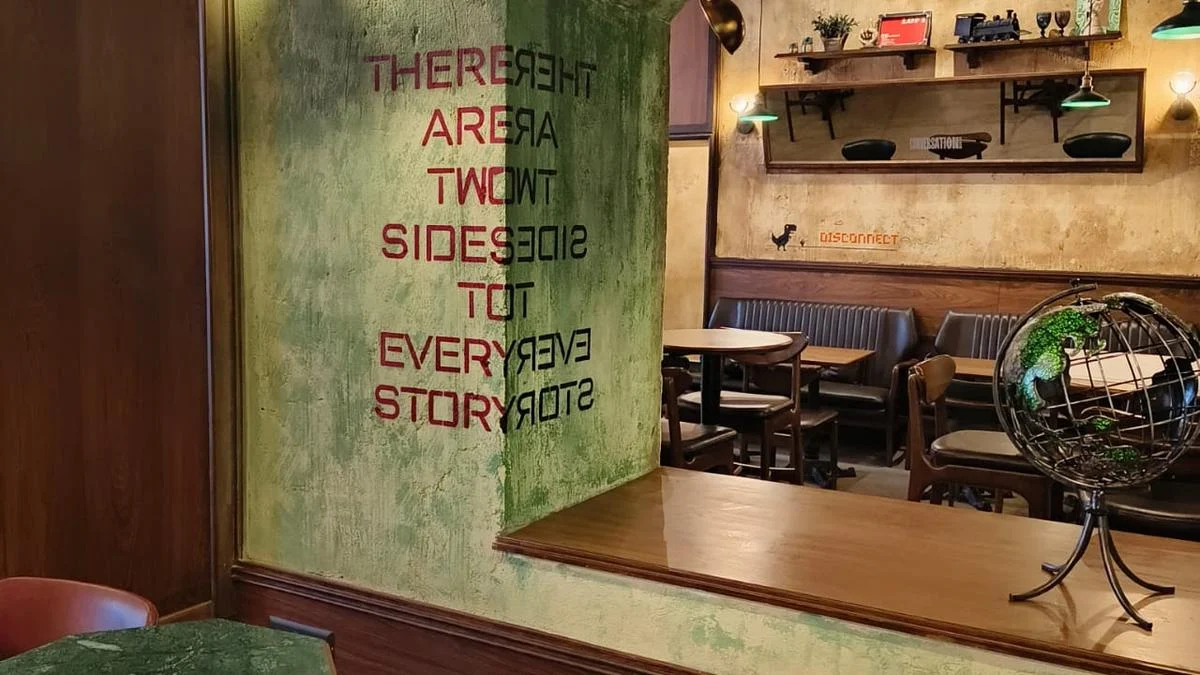
In the heart of New Delhi’s Vasant Vihar, a three-story structure stands not merely as a venue for libation, but as a living piece of speculative fiction. AABBCC, a bar that has rapidly ascended to the upper echelons of the continent’s hospitality scene, is redefining the boundaries of mixology by treating the guest experience as a narrative progression. Having recently secured its place on the prestigious Asia’s 50 Best Bars 2026 list—a feat achieved in less than a year of operation—the establishment is now set to export its unique "retro-futurist" universe to the cultural capital of India.
On July 17, the AABBCC team will descend upon Kolkata’s Conversation Room. This high-profile takeover, led by founders Abhimanyu Maheshwari and Ramesh Agarwal, promises to introduce the "City of Joy" to a brand of mixology that is as much about storytelling and scientific deconstruction as it is about taste.
Main Facts: A Three-Tiered Journey into Speculative Mixology
AABBCC is not a traditional bar; it is an architectural and sensory journey divided into three distinct "chapters." Located in the bustling Basant Lok area of Vasant Vihar, the venue’s name itself—AABBCC—is a nod to the concept of ascent and foundational learning, mirroring the way a child learns their ABCs.

The Architectural Narrative
The Delhi establishment is structured to play with the senses across three floors:
- The Laboratory (First Floor): This is the engine room of the operation. Here, ingredients are deconstructed, fermented, and distilled. Guests are invited to witness the "background work"—the rigorous scientific processes that transform raw botanicals into complex elixirs.
- The Assemblage (Second Floor): This is the core cocktail bar where the flavors deconstructed downstairs are reassembled into avant-garde drinks and paired with globally inspired small plates.
- The Rooftop (Third Floor): Reserved for "underground" music and artists who align with the brand’s distinct aesthetic, this floor serves as the cultural climax of the AABBCC experience.
The Kolkata Collaboration
The upcoming takeover at the Conversation Room in Kolkata represents a significant moment in India’s domestic bar culture. Conversation Room, located on Chowringhee Road, has built a reputation for experimental mixology, making it the ideal canvas for AABBCC’s arrival. The event will not be a simple guest shift; rather, the Conversation Room team aims to recreate the lighting, atmosphere, and thematic identity of the Delhi original.
Chronology: From Opening to International Acclaim
The rise of AABBCC has been nothing short of meteoric. To understand the significance of the Kolkata takeover, one must look at the timeline of the bar’s evolution:

- Late 2024 – Early 2025: AABBCC opens its doors in Vasant Vihar, Delhi. Co-founder Aditi Singh and her team introduce a "retro-futurist" vision, blending nostalgia for the past with a bold, experimental outlook on the future of drinking.
- The First Six Months: The bar gains a cult following for its "in-house only" philosophy. Unlike most premium bars that rely on imported liqueurs, AABBCC begins producing its own amaretto, chocolates, and ferments from scratch.
- The Asia’s 50 Best Bars 2026 Announcement: In a landmark achievement for Indian hospitality, AABBCC is named among the top 50 bars in Asia. This placement is particularly notable as it occurred within the bar’s first year of operation, placing it alongside established icons like Bar Outrigger in Goa.
- July 17, 2026: The scheduled date for the Kolkata takeover at Conversation Room, marking AABBCC’s first major domestic expansion of its "speculative fiction" concept.
Supporting Data: The "Yesterday, Today, Tomorrow" Philosophy
The core of AABBCC’s appeal lies in its meticulously structured menu, which is divided into three temporal categories: Yesterday, Today, and Tomorrow. This data-driven approach to menu design ensures a balance between comfort and radical experimentation.
Yesterday: The Reconstruction of Classics
In the "Yesterday" segment, the team revisits historical staples like the Godfather or the Long Island Iced Tea. However, these are not mere recreations.
- Data Point: 100% of the liqueurs used in "Yesterday" cocktails are made in-house.
- Example: Their version of the Godfather does not use commercial Amaretto. Instead, the team sources raw ingredients to create a proprietary almond-apricot liqueur that provides a cleaner, more nuanced profile than mass-produced alternatives.
Today: Contemporary Global Trends
The "Today" menu focuses on current drinking styles—clarified punches, low-ABV options, and the use of modern techniques like rotary evaporation to capture fresh, fleeting scents.

Tomorrow: The Frontier of Flavor
The "Tomorrow" section is where the speculative fiction element truly takes hold. These drinks use ingredients and combinations that challenge the palate:
- Where’s My Rice: A cocktail inspired by the aromatic profiles of Thai curry.
- Charred Aubergine: A smoky, savory drink famously garnished with edible ants to provide a formic acid "zing" and a futuristic protein element.
- Miyazaki: A bourbon-based dessert cocktail that features house-made chocolate, named after the legendary Japanese animator, reflecting the bar’s "retro-futurist" aesthetic.
- Tepache: The bar also champions traditional ferments, such as the hundred-year-old Mexican pineapple beverage, Tepache, integrated into modern cocktail formats.
Official Responses: Insights from the Founders
The success of AABBCC is attributed to a rigid adherence to a unique vision. Aditi Singh, co-founder of AABBCC, emphasizes that the international recognition is a win for the entire team and the broader Indian cocktail culture.
"What has gotten us here is believing in an idea so unique, and secondly our team," Singh stated. "This win is for everyone. You work hard every single day… to bring something new to India. The idea is to have a futuristic product that anyone and everyone can enjoy and it leaves a mark in your memory."

Regarding the bar’s placement on the Asia’s 50 Best list alongside Bar Outrigger, Singh expressed a desire for even more Indian representation. "We were hoping that there would be two, three more Indian bars in the top 50 list. But again, this is, as you can imagine, out of eight lakh bars; it is a very big feat. The idea is to take India forward to the world."
Abhimanyu Maheshwari, co-founder of Kolkata’s Conversation Room, echoed this sentiment, noting the importance of the collaboration. "It’s one of the most interesting bars to emerge from India in a long time. It’s remarkable that a bar which opened less than a year ago has already found a place among Asia’s finest. When we host bars, we don’t simply pour their cocktails. We try to recreate their world."
Implications: The Maturation of the Indian Cocktail Scene
The emergence of AABBCC and its upcoming expansion into Kolkata signifies a paradigm shift in how urban India consumes alcohol. There are several broader implications for the industry:

1. The Shift from Consumption to Storytelling
AABBCC proves that the modern consumer is looking for more than just a drink; they are looking for "storytelling." By framing the bar experience as "chapters" and "speculative fiction," the establishment moves away from the transactional nature of hospitality and toward an immersive cultural experience.
2. Hyper-Local Production as a Global Standard
The "Yesterday" menu’s reliance on house-made liqueurs and chocolates reflects a global trend toward hyper-localization. By eschewing commercial brands for in-house distillates, Indian bars are gaining the creative freedom to define a "national" cocktail identity that can compete with the best of Singapore, Tokyo, and London.
3. The "City of Taste" Recognition
Aditi Singh’s description of Kolkata as a "City of Taste" rather than just the "City of Joy" highlights a growing recognition of Kolkata’s sophisticated palate. The collaboration suggests that Kolkata is becoming a vital node in the national circuit of high-end mixology, moving beyond its traditional reputation for classic heritage clubs toward a future of experimental gastronomy.

4. Retro-Futurism as a Cultural Aesthetic
The choice of "retro-futurism"—an aesthetic that imagines the future through the lens of the past—is a poignant choice for a modern Indian bar. It mirrors India’s own trajectory: a nation with deep, ancient roots (the "Yesterday") rapidly innovating toward a technological future (the "Tomorrow").
As AABBCC prepares to transform the Conversation Room on July 17, the event stands as a testament to the vibrancy of India’s bar industry. It is a reminder that the most successful ventures are those that refuse to separate hospitality from art, and those that dare to ask: what does the future taste like?
Event Details:
- AABBCC (Delhi): Basant Lok, Vasant Vihar. Average cost for two: ₹3,500–₹4,000.
- Conversation Room (Kolkata): Chowringhee Road. Average cost for two: ₹2,000–₹3,000.
- Takeover Date: July 17, 2026. Prior registration is highly recommended.
