

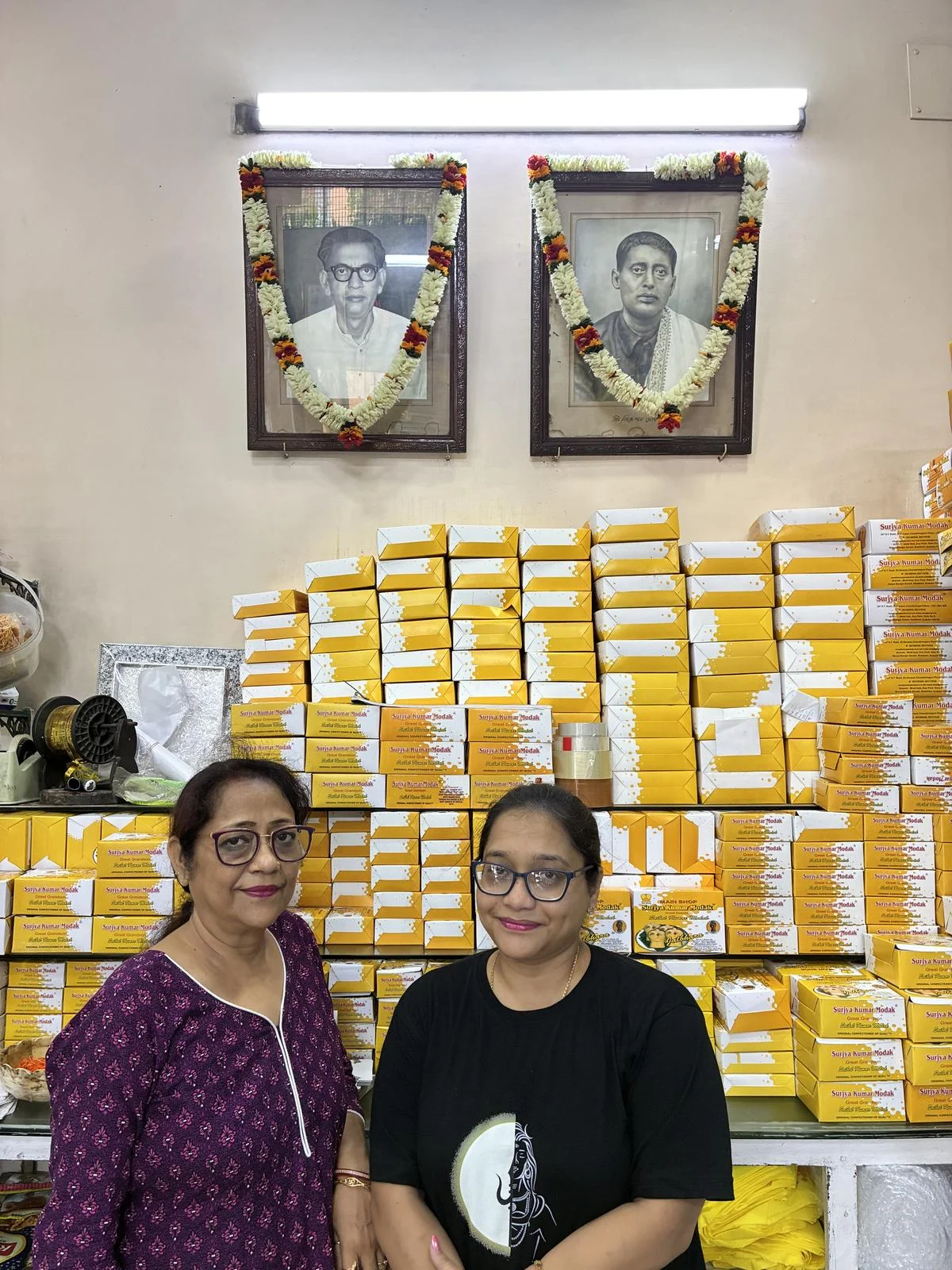
CHANDANNAGAR, WEST BENGAL – History has many hiding places, but in the former French colony of Chandannagar, it chose to settle inside a piece of sandesh. On the banks of the Hooghly River, where colonial architecture meets the humid air of Bengal, a small sweet no larger than a palm has carried the memory of a town for over two centuries.
On June 26, 2026, this culinary marvel—the Jalbhara—was officially awarded the Geographical Indication (GI) tag. The recognition serves as a formal acknowledgment of what locals have known since the mid-19th century: the Jalbhara is a confection inseparable from the soil, water, and history of Chandannagar. Created by the visionary confectioner Surjya Modak and his son Siddheshwar Modak, the sweet has survived the departure of the French, the dissolution of the British Raj, the fading of the zamindari (land-owning) system, and the rise of global migration.

Main Facts: A Masterpiece of Confectionery Engineering
The Jalbhara (literally meaning "filled with water") is an unassuming sweet that performs a feat of confectionery magic. To the naked eye, it appears to be a standard piece of sandesh—a traditional Bengali sweet made from chhena (curdled milk solids). However, beneath its firm exterior lies a pocket of fragrant syrup that remains liquid and refuses to seep through the porous walls of the cheese.
The Mystery of the Shell
The primary intrigue for any first-time visitor to the Surjya Kumar Modak shop is the physics of the sweet. "The outer shell has such a specific consistency that it never absorbs the liquid inside," explains Gitasree Modak, a sixth-generation descendant of the founder. "Even during the peak of a Bengali summer, it can remain intact for four to five days without the need for refrigeration."

Strategic Location and Authenticity
While the fame of the Jalbhara has led to numerous "Surjya Modak" offshoots appearing throughout the Hooghly district, the original lineage remains tethered to 247, Grand Trunk Road East, Barasat Chandannagar. This flagship store, alongside the original 1843 workshop, remains the epicenter of production. The family maintains only one legitimate branch in Kolkata, located at the Misti Hub in New Town’s Eco Park, ensuring that quality control remains within the family’s direct supervision.
Chronology: From a Zamindar’s Prank to a National Icon
The story of the Jalbhara is rooted in a moment of 19th-century social playfulness. To understand its birth, one must look back to the Bengali year 1250 (roughly 1843-1844 AD).

1843: The Request of the ‘Grihini’
In the Telinipara neighborhood of Chandannagar, the wife (grihini) of a powerful local zamindar approached Surjya Modak with a unique challenge. She wanted a sweet that would surprise her newlywed son-in-law—a "prank" sweet that looked ordinary but would create a playful spectacle when consumed.
Surjya and his son Siddheshwar devised a mold shaped like the talshansh (the translucent, water-filled pulp of the ice apple). They crafted a shell of fine chhena and, using a technique that remains a closely guarded family secret, injected a core of aromatic rose extract mixed with dolo (reduced jaggery).

When the unsuspecting groom bit into the sweet, the hidden reservoir of syrup burst forth, spilling down his silk panjabi (kurta). The household erupted in laughter, and the "water-filled" sandesh became an overnight sensation among the Bengali aristocracy.
The Portuguese Influence and the Evolution of ‘Chhena’
The Jalbhara’s existence is also a byproduct of colonial cross-pollination. History suggests that the widespread use of curdled milk in Bengali sweets was a result of Portuguese influence in nearby Bandel. Before the arrival of the Portuguese, Hindus generally did not curdle milk, as it was considered "spoiled." Local moiras (sweet makers) like Surjya Modak took this "foreign" technique and refined it, creating a sophisticated confectionery culture that would eventually define the Bengali identity.

19th Century: The Poet-Confectioner
Surjya Modak was not merely a businessman; he was a man of letters. During an era when craft and culture were inextricably linked, he authored a poetry collection titled Geet Gobindo. Today, his manuscripts are preserved in the French Museum in Chandannagar, serving as a reminder that the creators of Bengal’s culinary heritage were often intellectuals who viewed sweet-making as an art form equivalent to literature.
Supporting Data: Sourcing, Pricing, and Modern Variations
Maintaining a 220-year-old legacy requires rigorous standards in raw material procurement. The Modak family continues to source milk, sugar, and chhena from trusted local suppliers in the Hooghly suburbs to ensure the fat content and texture remain consistent with the 19th-century original.

Seasonal Dynamics
The Jalbhara changes with the calendar:
- Summer: The classic version features a white chhena shell with a rose-scented liquid center. In recent years, the shop has introduced a mango variety filled with Alphonso pulp, priced at ₹90 per piece.
- Winter: This is the season of Nolen Gur (date palm jaggery). The sweet undergoes a transformation, where both the shell and the liquid center acquire the deep, smoky amber hue of fresh jaggery.
Pricing and Product Range
While the original Jalbhara is priced at ₹65, the shop has diversified to appeal to modern palates. Current offerings include:

- Strawberry and Black Currant Jalbhara.
- Green Mango Jalbhara.
- Cadbury-inspired chocolate versions.
- The "Motichur Sandesh," a delicate, pearl-grained sweet named by Rabindranath Tagore during his stay in Chandannagar.
Official Responses: The Significance of the GI Tag
The awarding of the GI tag on June 26, 2026, marks a pivotal moment for the Modak family and the state of West Bengal. For the current custodians, Saibal Kumar Modak (fifth generation) and his wife Madhuri, the tag is more than a trophy; it is a tool for global expansion.
Gitasree Modak, representing the sixth generation, highlighted the necessity of this legal protection. "For international business, we needed official recognition. Earlier, everyone knew it as Surjya Modak’s Jalbhara. Now it has officially become Chandannagar’s Jalbhara. It places our town on the global map," she stated.

The GI tag ensures that no other confectioner can market a product as "Chandannagar Jalbhara" unless it meets the specific geographical and qualitative standards associated with the origin. This protection is vital as the brand moves into increasingly complex international markets.
Implications: From the Hooghly to the Hudson
The Jalbhara has successfully transitioned from a local delicacy to a global export. The implications of its new status and modern logistics are reshaping how traditional Indian sweets are consumed worldwide.

Global Logistics and the Diaspora
Through partnerships with international couriers like DHL, the Modak family now exports Jalbhara to the United States, where a dedicated vendor distributes the sweets across the country. The demand is particularly high among the Bengali diaspora, for whom the sweet is a tangible link to their heritage.
Domestically, the shop manages six to seven major dispatches every week to metropolitan hubs like Bengaluru, Delhi, Hyderabad, and Mumbai. The ability of the sandesh to survive a 24-hour journey without losing its structural integrity has been the key to its commercial success outside of West Bengal.

The Tagore Connection and Cultural Capital
The Jalbhara continues to benefit from its association with the "Bengal Renaissance." The fact that Rabindranath Tagore—India’s first Nobel Laureate—frequented Chandannagar’s Patal Bari and personally named the Motichur Sandesh provides the brand with an unparalleled level of cultural capital. In a modern market that prizes "storytelling," the Modak family sits on a goldmine of historical narratives.
Conclusion: The Enduring Magic
As another tray of Jalbhara empties at the counter on Grand Trunk Road, the sweet performs the same trick it did in 1843. A brittle shell yields, sweetness spills where none seemed possible, and a customer—perhaps a local, perhaps a tourist—laughs in surprise.

The GI tag may have arrived in 2026, but the Jalbhara had long ago escaped the need for official endorsement. It remains a testament to the fact that while empires and borders may shift, the human appetite for a bit of magic, wrapped in the familiar taste of home, is eternal. Through the efforts of the Modak family, Chandannagar’s liquid-filled secret is no longer a hidden history, but a global celebration of Bengali ingenuity.
