

The production of a single malt Scotch whisky is, at its core, a defiance of the modern world’s obsession with immediacy. While the digital age demands instant gratification, the liquid gold aging in the damp, cool warehouses of the Scottish Highlands operates on a geological clock. It is a craft defined by the slow dialogue between spirit and wood—a process where years are measured not by minutes, but by the changing of seasons and the gradual respiration of oak barrels.
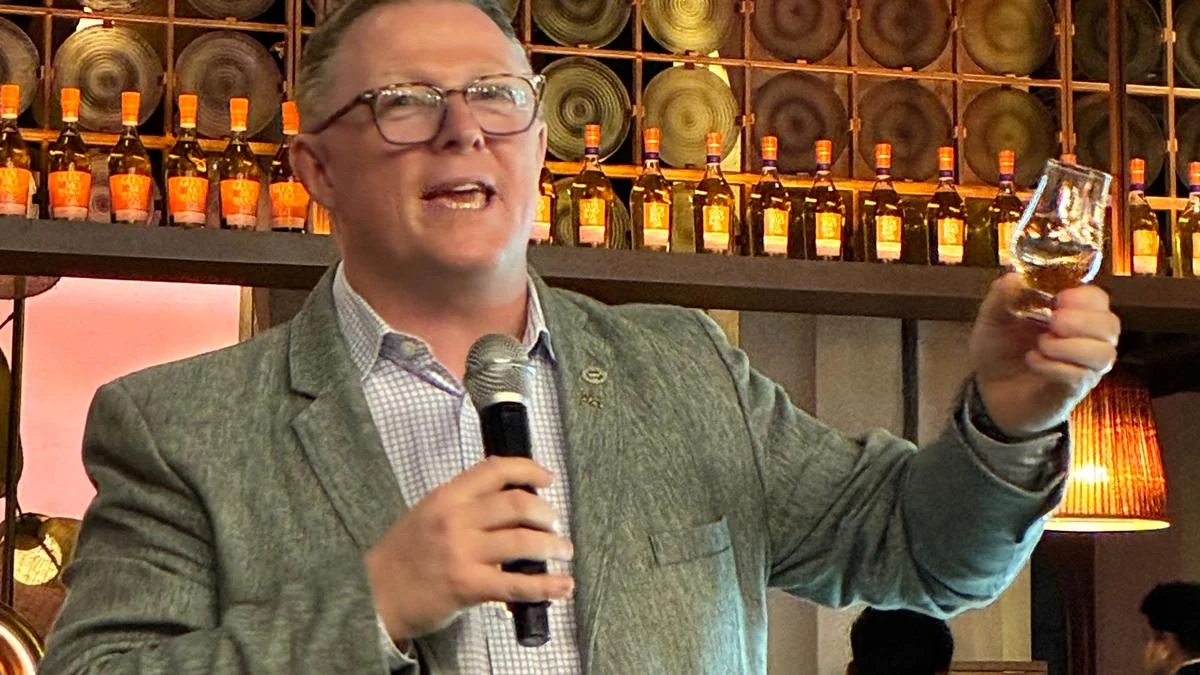
On June 11, this philosophy of "liquid patience" was brought to life in Kolkata. Against the neoclassical backdrop of Olterra, a Greek-themed bar and microbrewery, a curated group of connoisseurs and curious novices gathered for an evening titled "Cask and Conversation." Hosted by Glenmorangie and Moët Hennessy India, the event was more than a mere tasting; it was an exploration of how time, geography, and wood chemistry converge to create some of the world’s most revered spirits.
Leading the journey was David Blackmore, the Global Brand Ambassador for Glenmorangie and Ardbeg. With the poise of a seasoned storyteller, Blackmore transformed the clinical act of tasting into a sensory voyage through Scotland’s diverse landscapes—from the floral, sun-drenched Highlands to the rugged, peat-smoked shores of Islay.
Main Facts: A Strategic Convergence of Heritage and Market
The "Cask and Conversation" event serves as a significant marker in the luxury spirits landscape of East India. Kolkata, a city with a deep-rooted historical affinity for Scotch, has recently seen a surge in "premiumization"—a trend where consumers are shifting from volume-based consumption to value-based, high-quality experiences.

Key Highlights of the Evening:
- The Curator: David Blackmore, a veteran of the industry, provided technical insights into the distillation and maturation processes of the LVMH-owned distilleries.
- The Portfolio: The tasting featured a vertical flight of Glenmorangie (12-Year-Old, the newly unveiled Lasanta 15-Year-Old, and the prestigious 18-Year-Old) followed by a dramatic pivot to the heavily peated Ardbeg.
- The Venue: Olterra’s choice as a venue highlights the growing synergy between traditional spirits and the modern "microbrewery" culture emerging in Indian metros.
- The Strategic Focus: Moët Hennessy India’s emphasis on education over marketing, aiming to build a community of "educated drinkers" who understand the nuances of cask finishing and peat levels.
Chronology: A Sensory Descent into the Heart of the Cask
The evening was structured as a progression, beginning with the light and ethereal and concluding with the bold and elemental.
The Highland Preamble: Glenmorangie 12-Year-Old
The session opened with the Glenmorangie 12-Year-Old, a whisky that Blackmore described as the "house style." This expression is the quintessential representation of the Highland distillery’s signature character, shaped by the tallest stills in Scotland. These stills, reaching the height of an adult giraffe, ensure that only the lightest and purest vapors reach the top, resulting in a fruity and floral spirit.
Attendees were encouraged to observe the "legs" of the whisky on the glass before diving into the nose. The initial notes of citrus, honey, and vanilla were greeted with recognition. Blackmore’s advice to the room was practical: "I recommend trying it neat and then adding a dash of water." This technique, he explained, lowers the alcohol by volume (ABV) slightly, releasing esters that allow the whisky to "blossom" and reveal hidden layers of coconut and orange.
The Evolution of Wood: Lasanta 15-Year-Old
The highlight for many was the introduction of the Lasanta 15-Year-Old. In the world of Scotch, "Lasanta" is Gaelic for warmth and passion. This expression undergoes a complex maturation process: twelve years in American oak ex-bourbon casks, followed by a three-year finishing period in Spanish Oloroso and Pedro Ximénez sherry casks.

The transition from the 12-year-old to the 15-year-old was palpable. The spirit had deepened into a rich sunset hue. The flavor profile shifted from the bright citrus of the Highlands to the dark, autumnal notes of chocolate-covered hazelnuts and spiced orange marmalade. It was a masterclass in how "finishing"—a technique pioneered by Glenmorangie’s Director of Whisky Creation, Dr. Bill Lumsden—can fundamentally alter the DNA of a spirit.
The Peak of Sophistication: Glenmorangie 18-Year-Old
As the evening matured, the glasses were filled with the Glenmorangie 18-Year-Old, often referred to as "The Extremely Rare." This expression is a testament to the balance of time. Blackmore revealed that this is his "desert island whisky"—the one bottle he would choose if stranded.
The 18-Year-Old is a complex marriage of spirits. While the majority remains in bourbon casks for nearly two decades, approximately 30% is moved into Oloroso sherry casks for the final phase. The result is a silky, honeyed texture with a floral bouquet of jasmine and geranium, underpinned by a subtle "kiss of sherry."
The Islay Finale: The Ardbeg Experience
The final act of the night was a departure from the elegance of the Highlands. Ardbeg, hailing from the island of Islay, represents the "wild side" of Scotch. Unlike the Glenmorangie expressions, the Ardbeg served was a non-vintage statement, focusing on the raw intensity of the distillery’s character.

The room’s reaction was immediate and divided. The nose was no longer filled with flowers and honey but with the scent of a dying campfire on a rainy beach—tar, soot, sea spray, and iodine. "Ardbeg divides the room; it’s an acquired taste," Blackmore admitted. For some, the smoke was overwhelming; for others, it was an "old friend," a reminder of the elemental power of peated malt.
Supporting Data: The Rise of Single Malts in India
The Kolkata event is a microcosm of a much larger shift in the global spirits market. According to recent industry reports from the Scotch Whisky Association (SWA):
- Market Growth: India has overtaken France to become the UK’s largest Scotch whisky market by volume. In 2023, India imported the equivalent of over 167 million bottles of Scotch.
- The Shift to Single Malts: While blended Scotch remains the volume driver, the "Single Malt" category is seeing double-digit growth in Indian urban centers. Consumers are increasingly willing to pay a premium for whiskies with a specific "sense of place" and age statement.
- The "Tallest Still" Advantage: Glenmorangie’s technical advantage lies in its stills, which stand at 5.14 meters (16 feet 10 inches). This height allows for maximum copper contact, which strips away heavier, sulphurous compounds, leaving the light, fruity profile that David Blackmore highlighted during the tasting.
- Cask Influence: Research suggests that up to 60-70% of a whisky’s flavor is derived from the wood. The use of first-fill and second-fill bourbon casks (as practiced by Glenmorangie) ensures that the "wood memory" of vanilla and caramel is transferred effectively to the spirit.
Official Responses: Insights from the Brand Ambassador
Throughout the evening, David Blackmore provided a bridge between the distillery and the consumer. His insights reflected a broader corporate philosophy of transparency and storytelling.
"Whisky is a conversation," Blackmore noted during the session. "It is about the people who make it, the people who drink it, and the time it takes to bridge the two."

On the topic of the new Lasanta 15, Blackmore emphasized the intent behind the extra three years of maturation: "We aren’t just aging it longer for the sake of the number on the bottle. Those three years in Spanish oak are where the ‘passion’ comes from. It’s about achieving a specific texture—a mouthfeel that is rich, buttery, and long-lasting."
Addressing the Ardbeg enthusiasts, he spoke of the "Ardbeg Committee," a global community of over 100,000 members dedicated to ensuring the distillery’s doors never close again, as they did in the 1980s. "Ardbeg is about the peat, yes, but it’s also about the hidden sweetness. It’s a paradox in a glass."
Implications: What This Means for the Indian Palate
The "Cask and Conversation" event in Kolkata signifies more than just a successful marketing activation. It points to several long-term implications for the Indian beverage industry:
1. The Death of the "Soda and Ice" Era
For decades, Scotch in India was consumed largely as a highball—diluted with heavy amounts of soda and ice. Events like this are educating consumers on the "neat" or "dash of water" approach, encouraging a deeper appreciation for the master blender’s intent.

2. The Evolution of Kolkata’s Nightlife
Kolkata, often viewed as a traditionalist city, is rapidly modernizing its luxury offerings. The presence of global ambassadors like Blackmore and the choice of a high-end microbrewery like Olterra suggest that the city is being recognized as a critical node in the global luxury circuit.
3. The Influence of the "New" Connoisseur
The demographic at the event was notably younger than the traditional "whisky club" stereotype. Young professionals and entrepreneurs are increasingly viewing single malt as a lifestyle choice and a collectible asset, rather than just a drink.
4. Climate and Maturation
A recurring theme of the evening was the impact of the Scottish climate on the spirit. As Indian-made single malts (like Amrut and Indri) gain global acclaim, the conversation is shifting toward how India’s "angel’s share" (evaporation) is much higher than Scotland’s due to heat, making the 12, 15, and 18-year-old age statements of Scotch even more impressive for their endurance.
In conclusion, the evening at Olterra was a reminder that while the world moves faster every day, some things—like the perfect dram—cannot be rushed. As the rain tapped against the windows of the Kolkata bar, much like it does against the stone warehouses of the Highlands, the guests left with a newfound respect for the slow, mysterious work of time. Through the guidance of David Blackmore and the spirits of Glenmorangie and Ardbeg, they hadn’t just tasted whisky; they had tasted patience.
