

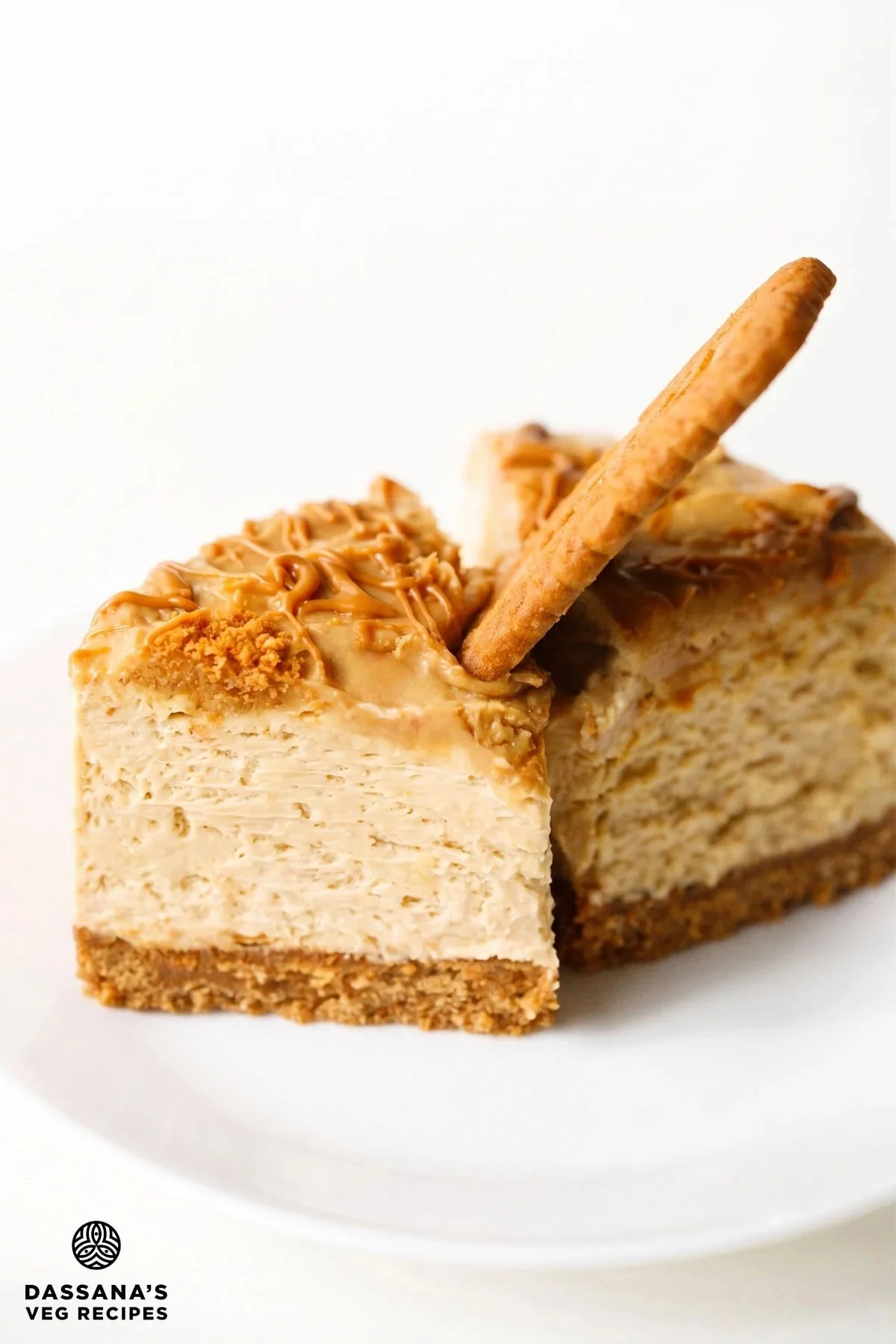
In the landscape of contemporary confectionery, few ingredients have achieved the cult-like status and versatility of the Lotus Biscoff biscuit. Originally a humble Belgian accompaniment to coffee, the speculoos-flavored cookie has evolved into a global phenomenon, anchoring a new generation of desserts. At the forefront of this movement is the No-Bake Biscoff Cheesecake—a dish that marries structural stability with a rich, caramelized flavor profile. This article examines the architectural precision, nutritional data, and culinary implications of this modern dessert staple, providing a comprehensive guide to its creation and its place in the current gastronomic trend toward high-impact, low-effort home baking.

Main Facts: The Anatomy of a Modern Classic
The No-Bake Biscoff Cheesecake represents a significant shift in home baking, moving away from the temperamental nature of oven-baked New York-style cheesecakes toward a more accessible, refrigerator-set model. Unlike traditional recipes that rely on eggs and high-temperature coagulation to achieve structure, this iteration utilizes the inherent properties of fat-dense cream cheese and aerated whipping cream.

The recipe’s primary appeal lies in its "no-bake" status, which eliminates the risks of surface cracking and water-bath mishaps. Furthermore, it achieves a "clean-cut" stability without the use of gelatin or other artificial setting agents—a feat accomplished through a specific ratio of cream cheese to whipped cream. By prioritizing a higher proportion of cream cheese, the dessert maintains a firm, sliceable texture that stands up to room temperature longer than traditional mousse-based desserts.

Key Components:
- The Crust: A compressed layer of Lotus Biscoff biscuit crumbs and molten butter.
- The Filling: A homogenous blend of softened cream cheese, powdered sugar, vanilla, and Biscoff spread, folded into high-fat whipped cream.
- The Aesthetic: A minimalist finish featuring melted Biscoff spread, biscuit crumbs, and whole cookies for visual and textural contrast.
Chronology: The Engineering of a Masterpiece
The construction of a Biscoff cheesecake is a sequential process that requires attention to temperature and timing. The following chronology outlines the development of the dessert from raw ingredients to a table-ready centerpiece.

Phase I: Establishing the Foundation
The process begins with the preparation of a 5-inch detachable or springform pan. Precision starts here; lining the base and sides with parchment paper is a critical step to ensure the aesthetic integrity of the final product during unmolding.

The crust is engineered by pulverizing 125 grams of Biscoff biscuits into a fine, uniform sand. This is then integrated with 40 grams of melted butter. The butter acts as a binding agent that, once chilled, creates a rigid, buttery lattice. The mixture is pressed firmly into the pan using a flat-bottomed tool to ensure an even distribution of pressure, preventing the base from crumbling upon slicing.

Phase II: The Emulsification of the Core
While the base sets in the refrigerator (a 20-to-30-minute requirement), the filling is developed. This stage is divided into two distinct chemical processes:

- The Cream Cheese Base: 200 grams of softened cream cheese are beaten with 40 grams of powdered sugar and vanilla. This creates a smooth, sweet emulsion that serves as the flavor carrier.
- The Aeration: In a separate chilled bowl, 150 ml of cold whipping cream (minimum 35% fat) is whipped to stiff peaks. This introduces the air bubbles necessary for a light, "melt-in-the-mouth" mouthfeel.
Phase III: The Integration
The final filling is created by gently folding the whipped cream into the cream cheese mixture. This is followed by the addition of 5 tablespoons of Biscoff spread. The folding technique is vital; over-mixing at this stage would deflate the air bubbles, resulting in a dense, heavy texture rather than a fluffy cheesecake.

Phase IV: Maturation and Setting
The assembled cheesecake requires a minimum of 5 to 6 hours of refrigeration. However, culinary experts suggest an overnight chill. This duration allows the fats to re-solidify and the flavors of cinnamon, nutmeg, and caramelized sugar to permeate the cream cheese matrix.

Phase V: The Glaze and Finishing
For a professional finish, the Biscoff spread is melted—either via a microwave or a bain-marie—until it reaches a pourable consistency. This is applied over the partially set cheesecake to create a mirror-like glaze. The final garnishes (crumbs and whole biscuits) are added just before serving to maintain their crunch against the moisture of the filling.

Supporting Data: Precision and Nutritional Profile
To understand the success of this recipe, one must look at the data behind the flavor. The following metrics provide a look at the technical specifications of a standard 6-serving yield.

Nutritional Breakdown (Per Serving)
- Energy: 482 kcal
- Total Fat: 37g (Saturated Fat: 19g)
- Carbohydrates: 34g (Sugars: 22g)
- Protein: 5g
- Sodium: 254mg
- Cholesterol: 76mg
Component Ratios
The stability of the "no-gelatin" filling is attributed to the fat-to-moisture ratio. By using a cream with 35% fat content and full-fat cream cheese, the dessert utilizes "fat-setting." At refrigerator temperatures (approx. 4°C), these fats provide enough structural support to hold the weight of the Biscoff glaze and garnishes.

Tooling Requirements
The recipe is optimized for a 5-inch pan. Using a larger pan without scaling the ingredients would result in a "flat" cheesecake, negatively impacting the visual height-to-width ratio that is characteristic of premium pâtisserie.

Expert Methodology: Insights from the Test Kitchen
The developer of this specific recipe, Dassana, emphasizes that the "balance of cream cheese, whipped cream, and Biscoff spread is what makes this recipe work." Her methodology highlights several "Pro-Tips" that elevate the dish from a simple home recipe to a professional-grade dessert.

On Stability: Dassana recommends a higher proportion of cream cheese than whipped cream. This ensures that the cheesecake is "stable yet creamy," allowing for the "neat slices" required for formal presentation.

On Temperature Control: A recurring theme in the expert notes is the necessity of chilled equipment. "In another chilled bowl, whip… cold whipping cream," she instructs. This is a scientific necessity; fat globules in cream remain stable and trap air more efficiently when cold.

The "Double-Layer" Strategy: While many recipes call for a single layer, this methodology suggests a secondary layer of melted spread added after four hours of chilling. This creates a "Biscoff-forward" experience that satisfies the palate of speculoos enthusiasts.

Implications: The Future of Home Baking and Branded Desserts
The rise of the No-Bake Biscoff Cheesecake carries broader implications for the culinary industry and consumer behavior.

The Rise of "Ingredient-Led" Baking
This recipe is a prime example of the "ingredient-led" trend, where a specific branded product (Lotus Biscoff) drives the creation of the dish. This synergy between global brands and home creators has changed marketing dynamics, as brands now rely on the viral nature of such recipes to drive product sales.

Accessibility and the De-skilling of Pâtisserie
The "no-bake" movement represents a democratization of high-end desserts. By removing the technical barrier of oven temperatures and egg-based custards, complex-tasting desserts are now accessible to the novice. This has led to a surge in "performance baking" on social media platforms, where the visual result often outweighs the technical difficulty of the process.

The Convenience Economy
The "make-ahead" nature of the Biscoff cheesecake aligns with the modern consumer’s need for convenience. As social schedules become more compressed, the ability to prepare a sophisticated dessert 24 hours in advance without occupying oven space is a significant logistical advantage for home entertainers.

Conclusion
The No-Bake Biscoff Cheesecake is more than a fleeting food trend; it is a masterclass in culinary balance and accessible engineering. By utilizing the unique flavor profile of speculoos and the structural properties of dairy fats, it provides a reliable, repeatable, and remarkably indulgent experience. Whether served at a casual family dinner or a formal celebration, it stands as a testament to the power of simple ingredients treated with precision and care.
