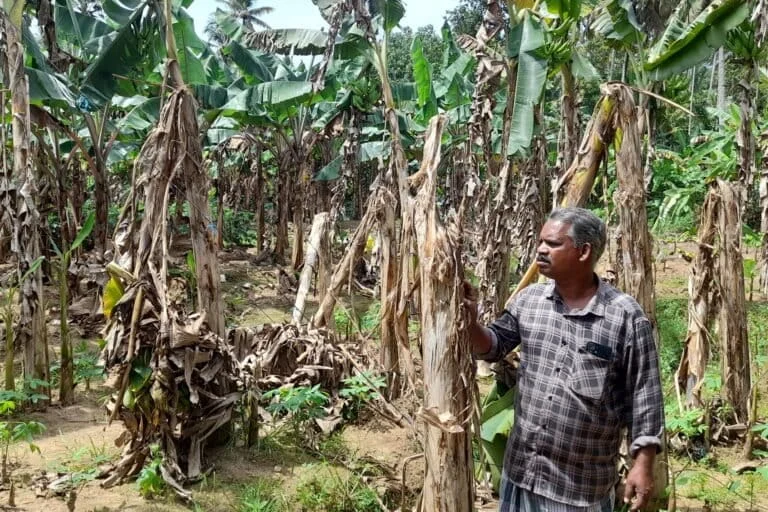
THIRUVANANTHAPURAM, KERALA — On August 16, the first day of the ten-day harvest festival of Onam, 72-year-old P. Vijayalakshmi did something she had never done in seven decades of life. Instead of harvesting vegetables from her own backyard and spending the morning over a wood-fired stove, she walked into a restaurant in Thiruvananthapuram to collect a "packet Onam sadhya."
For Vijayalakshmi, this was not a choice born of convenience, but of necessity. "Every Onam, I would make at least twenty dishes for the feast with vegetables I grew on my own land," she says. "But this time, the crops perished in the torrential rain. I had no choice but to follow the trend of the packet feast."
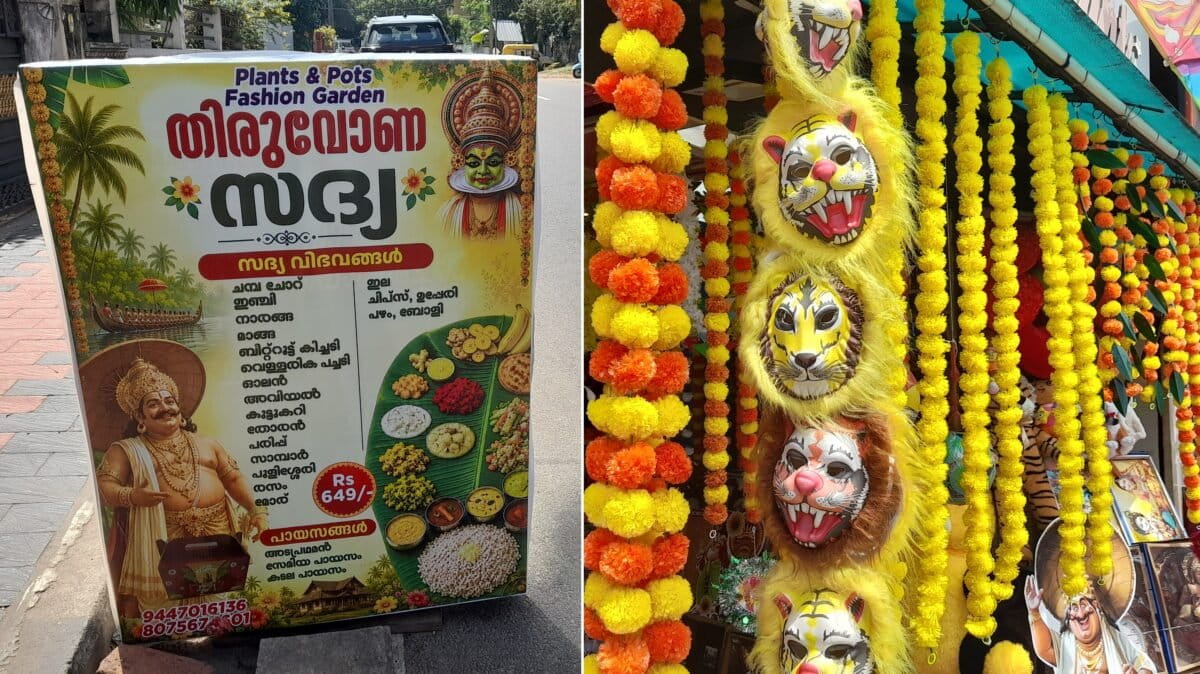
Her story is a microcosm of a larger, more unsettling transformation taking place across Kerala. Onam, a festival defined by agricultural abundance and the celebration of the harvest, is increasingly becoming a festival of market dependence. As climate change disrupts the predictable rhythms of the southwest monsoon, the traditional "Sadhya"—the elaborate vegetarian feast served on banana leaves—is being packaged in plastic containers, while natural floral carpets are being replaced by synthetic alternatives.

Main Facts: An Agricultural Crisis in the Season of Plenty
Onam commemorates the return of the legendary King Mahabali and traditionally arrives at the end of the southwest monsoon, a time when the annual paddy is harvested and the granaries are full. However, the 2024 season has been marked by a stark irony: a festival of prosperity occurring amidst significant agricultural loss.
According to the Kerala Department of Agriculture Development and Farmers’ Welfare, the state’s farming sector has been dealt a staggering blow. Initial assessments indicate that over 45,904 farmers have been directly impacted by erratic weather patterns this year. By early August, reported losses were estimated at approximately ₹127 crores ($1.2 billion), though veteran farmers argue that the long-term ecological and economic damage cannot be so easily quantified.
The scarcity has triggered a dramatic shift in consumer behavior. In urban centers like Thiruvananthapuram, Kochi, and Kozhikode, hotels and restaurants have stepped in to fill the void left by destroyed home gardens. These establishments are selling "packet feasts"—pre-cooked meals containing the traditional 20 to 30 dishes—for prices ranging from ₹250 to ₹1,000. While these packets offer a culinary facsimile of the festival, they represent a deeper loss of the self-sufficiency that once defined the Keralite household.
Chronology: From a Dry July to a Torrential August
The path to this year’s disrupted harvest began with an unusual meteorological sequence that caught even the most experienced farmers off guard.

- June 2024: The sowing season began with cautious optimism. Farmers like R.P. Balachandran Nair in Pallichal gram panchayat planted over 20 varieties of vegetables, including cucumbers, pumpkins, yams, and okra, timed specifically to hit the market during the Onam peak.
- July 2024: Instead of the steady rains required for germination and growth, Kerala experienced an uncharacteristic dry spell. This "rainfall deficit" put early-stage crops under severe water stress.
- August 2, 2024: The weather shifted violently. Heavy winds and torrential downpours lashed the state. In Kalliyoor gram panchayat, farmer Vinu A. Muthukuzhi watched as his plantain farm was decimated. "Half my plantains were destroyed in a single day," he recalls. "It cost me a loss of ₹40,000."
- August 9, 2024: The State Government released its first comprehensive damage report, detailing the destruction of paddy fields in the "rice bowl" districts of Alappuzha, Pathanamthitta, and Palakkad.
- August 16, 2024 (Atham): As the festival officially began, the scarcity of local produce became undeniable. Wholesale prices spiked, and the "packet feast" became the primary option for thousands of families whose gardens had failed.
Supporting Data: The Economics of Scarcity
The impact of the weather is most visible in the headquarters of the Sangamaithri Farmers Producer Company Ltd, a collective of over 2,000 farmers. In a typical year, the facility is a hive of activity during Onam. This year, the silence is telling.
V. Manoharan Chettiyar, the CEO of Sangamaithri, provides a grim comparison: "Last Onam, we procured around 11 tonnes of bananas daily. This year, we are hardly receiving one tonne."
This supply-side collapse has had a predictable effect on market prices. E.S. Biju, Secretary of the Kerala Vyapari Vyavasayi Samathi (a traders’ rights organization), notes that the state has been forced to increase imports from neighboring Tamil Nadu and Andhra Pradesh to meet the festival demand.
Price Increases Compared to Previous Year:
- Vegetables and Rice: Increased by 30%
- Nendran Bananas: Increased by 100%
- Coconut Oil: Increased by 25%
- Marigold Flowers: Increased from ₹100/kg to ₹150/kg
The floriculture sector, which provides the blossoms for the "Pookalam" (floral carpets), has also felt the squeeze. While the area under flower cultivation in Thiruvananthapuram grew to 221.5 hectares this year, the heavy rains damaged the delicate blooms just as they were ready for harvest. Consequently, Kerala is expected to import 150 tonnes of flowers from the Thovalai market in Tamil Nadu this season, up from 100 tonnes last year. This scarcity has led to a controversial trend: the rise of plastic "Pookalams," as consumers opt for cheaper, synthetic decorations over the increasingly expensive natural petals.
Official Responses and Scientific Context
Government officials and meteorologists are pointing to a broader pattern of "climatic departure." M.G. Manoj, a meteorologist at the Cochin University of Science and Technology, explains that between June 1 and August 15, Kerala suffered a rainfall deficit of 23%. The state received only 1,213.2 mm of rain against a normal average of 1,556.2 mm.
"Kerala’s rainfall departure fell into the ‘deficient’ range," Manoj states. "This is not just about the volume of rain, but the timing. We are seeing a compression of rainfall—long dry spells followed by extreme, short-duration bursts that the soil cannot absorb."
Agriculture Minister T. Siddique confirmed that the first week of August saw massive destruction of paddy, particularly in the low-lying areas of Alappuzha. The state government is currently seeking central assistance to mitigate the ₹110 crore urgent requirement for the farm sector.

However, the crisis is also structural. Data shows that the area under rice cultivation in Kerala has plummeted from 881,000 hectares in the mid-1970s to less than 200,000 hectares today. While productivity (yield per hectare) has doubled, the shrinking land base makes the state’s food security increasingly vulnerable to single-event climate shocks.
Implications: The Human and Cultural Cost
Beyond the statistics, the shifting nature of Onam carries profound implications for the social fabric of Kerala.
The Financial Trap for Smallholders
Most of Kerala’s small-scale farmers operate on leased land. To fund their Onam crops, many take loans from private moneylenders at exorbitant interest rates. When a harvest fails due to climate volatility, they are left with no capital to reinvest in "climate-resilient" varieties or micro-irrigation systems. "Most adaptation methods impose even more financial constraints," says Vinu A. Muthukuzhi. "No small farmer can bear the cost of climate-proofing their farm alone."
The Erosion of Traditional Knowledge
For generations, Keralite farmers followed a "harvest calendar" based on lived experience and ancestral wisdom. Climate change is rendering this knowledge obsolete. S. Saradha, head of the Department of Vegetable Science at the College of Agriculture, Vellayani, notes that shifting weather patterns are delaying germination and flowering. When the harvest finally arrives—late—the market is often flooded with imports, and prices crash, leaving local farmers with a double loss.

Environmental Warning Signs
The immediate crisis of the Onam harvest may be a precursor to a harsher summer. Meteorologists warn that the current rainfall deficit, exacerbated by a strengthening El Niño, could lead to a severe groundwater crisis. "If we don’t get enough rain in late August and September, it will have a bearing on groundwater levels," warns M.G. Manoj. "It may lead to a drought next summer similar to what we saw in 2015-16."
The Commercialization of Tradition
The "packet feast" and the plastic flower are more than just market trends; they represent a fundamental shift in the Keralite identity. Onam was once a celebration of the bond between the people and their land. As that land becomes increasingly unpredictable, the festival is being untethered from its agricultural roots.
As P. Vijayalakshmi sits down to her store-bought meal, the flavors may be familiar, but the connection is gone. "The joy of Onam was in the dirt under your fingernails from pulling your own yams," she says. "Now, we are just customers at our own festival."
For the state of Kerala, the challenge is clear: unless significant investments are made in climate adaptation and farmer support, the "harvest festival" may soon become a celebration of a harvest that no longer exists.