In an era where the automotive industry is characterized by a relentless pursuit of the "next big thing," Bajaj Auto has once again demonstrated its unique ability to balance innovation with a deep-rooted respect for heritage. The Pune-based manufacturer, often referred to as the "Global Biking Company," has officially signaled that its "Classic" Pulsar 125 Neon is not going anywhere. Despite the successful rollout of the "New Gen" Pulsar 125 and 150 models, the company has introduced a refreshed 2027 iteration of the classic Pulsar 125 Neon, ensuring that one of India’s most beloved silhouettes remains a staple on showroom floors.
The Pulsar brand has been a cornerstone of Indian motorcycling since 2001. While many expected the older architecture to be phased out in favor of the more modern, monoshock-equipped "N" series, market demand has dictated a different path. The arrival of the 2027 units at dealerships across the country confirms that for Bajaj, the "Classic" Pulsar is not just a legacy product, but a vital component of its current sales strategy.
Main Facts: What’s New for the 2027 Pulsar 125 Neon?
The 2027 update for the Pulsar 125 Neon is a masterclass in subtle evolution. Rather than reinventing the wheel, Bajaj has focused on aesthetic enhancements and cost-effective branding updates that resonate with its target demographic.
Aesthetic Overhaul and Branding
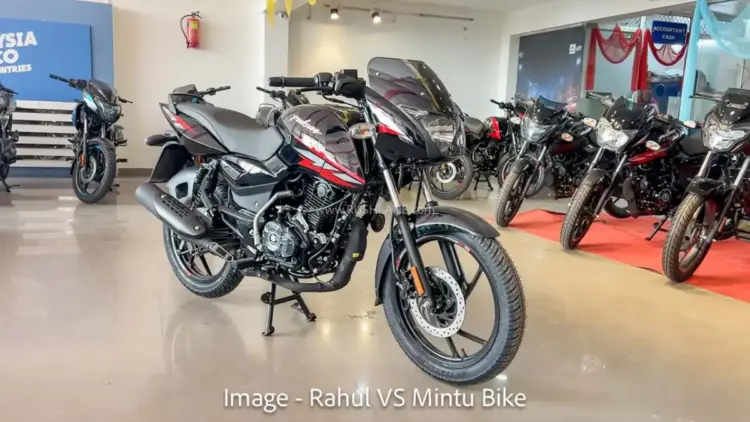
The most significant visual change is the departure from the 3D chrome "PULSAR" emblem that has adorned the fuel tanks of these machines for years. In its place, the 2027 model features a high-quality "PULSAR" sticker. This shift, while seemingly minor, aligns the 125 Neon with a more contemporary, "street-graphic" look. The bike also receives a fresh graphics package, featuring bold accents on the fuel tank extensions, the rear cowl, and the iconic "wolf-eye" headlamp cowl.
Color Palettes and Pricing
The updated model has been spotted in two primary color schemes: a vibrant Red-and-Black combination and a sleek Blue-and-Black variant. These "Neon" accents are applied to the wheel rims, the grab rail, and the branding, providing a pop of color against the matte or gloss black base. According to early reports from dealership sources, the 2027 Bajaj Pulsar 125 Neon is priced at approximately Rs. 1.04 Lakh (on-road), positioning it as a premium yet accessible entry point into the Pulsar family.
Retention of Core Mechanicals
Underneath the new decals, the 2027 Pulsar 125 Neon remains the dependable workhorse that riders have come to trust. It continues to be powered by the 124.4cc, single-cylinder, air-cooled engine. This powerplant delivers a respectable 12 PS of maximum power and 10.8 Nm of peak torque, mated to a 5-speed gearbox.
Key features carried over include:

- The "Classic" Silhouette: The muscular fuel tank and sharp tail section remain unchanged.
- Chassis and Suspension: The bike retains the telescopic front forks and the signature twin "Nitrox" gas-charged rear shock absorbers—a feature that remains a major selling point for specific buyer segments.
- Braking and Safety: A front disc brake combined with a rear drum brake (assisted by a Combi-Braking System or CBS) ensures reliable stopping power.
- Instrumentation: The semi-digital instrument cluster, featuring a large analog tachometer—a favorite among enthusiasts—is preserved.
Chronology: The Evolution of the 125cc Pulsar
To understand why Bajaj is updating a "classic" model alongside a "new" one, it is essential to look at the timeline of the Pulsar 125’s journey.
- August 2019: Bajaj launches the Pulsar 125 Neon. It was a strategic move to offer the Pulsar’s "big bike" feel to buyers who were restricted by high insurance costs and the rising prices of 150cc motorcycles. It became an overnight success.
- 2021-2022: As BS6 emission norms and safety regulations (ABS/CBS) evolved, the Pulsar 125 was updated with fuel injection and improved hardware. During this period, the 125cc segment became the most competitive space in the Indian market.
- 2023-2024: Bajaj introduced the "New Gen" Pulsar series (N125, N150, N160). These bikes featured entirely new frames, monoshock rear suspension, and underbelly exhausts. While these models targeted urban youth, the company noticed that a significant portion of the market still preferred the original "OG" Pulsar design.
- Late 2025: Rumors circulated about the discontinuation of the "Classic" 150 and 125 models to make room for the "N" and "F" series.
- November 2026 (Present): Bajaj defies expectations by refreshing the Classic Pulsar 125 Neon for the 2027 model year, proving that the old-school design remains a formidable sales force.
Supporting Data: Why the "Classic" Still Sells
The decision to keep the older Pulsar 125 alive is backed by hard market data. In the Indian two-wheeler landscape, the 125cc segment acts as a bridge between economy-focused commuters (100-110cc) and performance-oriented machines (150cc+).
The Load-Bearing Factor
One of the primary reasons for the continued demand for the Classic Pulsar 125 is its rear suspension. The twin-shock absorber setup is widely perceived as more robust for "heavy-duty" commuting. In semi-urban and rural markets, where motorcycles are often used to carry pillion riders over rough terrain or transport goods, the twin-shock configuration is preferred over the more sophisticated but "softer" monoshock setups found on modern bikes.
The Aspiration Value
The Pulsar 125 Neon offers the dimensions of a 150cc motorcycle. For many buyers, the visual "heft" of the bike provides a sense of prestige that slimmer, more modern commuters lack. Data suggests that the Pulsar 125 family consistently ranks as Bajaj Auto’s highest-selling product line, often moving over 50,000 units a month collectively. A significant portion of these sales comes from the "Classic" variant.
Official Responses and Strategic Philosophy
While Bajaj Auto has not released a formal press statement regarding the 2027 update, the company’s management has historically been vocal about their "market-first" philosophy.
In previous investor calls, Bajaj leadership has emphasized that they "do not kill brands; the customers do." This explains why, when the Pulsar 220F was briefly discontinued, it was brought back due to overwhelming dealer and customer demand. The update to the Pulsar 125 Neon follows this logic. Bajaj recognizes that a "one-size-fits-all" approach does not work in a country as diverse as India. By offering both the "New Gen" (for the tech-savvy, urban rider) and the "Classic" (for the traditional, utility-focused rider), Bajaj effectively covers the entire spectrum of the 125cc market.
Industry experts suggest that by replacing the 3D emblem with a sticker, Bajaj is also subtly managing production costs. This allows them to keep the price hike for the 2027 model minimal, ensuring the bike remains competitive against rivals like the Honda SP 125 and the TVS Raider 125.

Implications: What This Means for the Future
The launch of the 2027 Pulsar 125 Neon has several implications for the Indian motorcycling industry and Bajaj’s competitors.
1. Market Segmentation
Bajaj is successfully running a "dual-track" strategy. This is similar to how software companies offer a "Legacy" version alongside a "Pro" version. By keeping the Classic 125, Bajaj prevents its traditional customer base from migrating to competitors like the Hero Glamour or the Honda Shine, who might find the "New Gen" Pulsars too radical or aggressive.
2. Resilience of Design
The fact that a design nearly two decades old (with minor tweaks) can still command a six-figure price tag and high sales volumes is a testament to the original Pulsar aesthetic. It has become a "modern classic" in its own right, much like the Royal Enfield Bullet.
3. Future of the Pulsar 150 and 220
This update reinforces the belief that the Classic Pulsar 150 will also receive a 2027 refresh. Furthermore, with the New Gen Pulsar 220 confirmed for launch, it is likely that Bajaj will maintain a "Classic 220" alongside it if the demand persists.
4. Resale Value
For existing owners, the continuation of the model line is good news. It ensures the availability of spare parts and maintains strong resale value, as the model does not become "obsolete" in the eyes of the second-hand market.
Conclusion
The 2027 Bajaj Pulsar 125 Neon is more than just a motorcycle; it is a symbol of Bajaj Auto’s pragmatic approach to business. By listening to the "headwinds of the market," the company has chosen to honor a design that has powered the dreams of millions of Indian riders. While the New Gen Pulsars represent the future of the brand, the Classic 125 Neon remains its heart—a reliable, stylish, and familiar companion that refuses to fade into the sunset. As these new units arrive at showrooms, one thing is clear: the Pulsar’s reign as the king of the Indian streets is set to continue, one "Neon" stripe at a time.