

The luxury mid-size SUV segment has long been a battlefield where brand prestige meets everyday utility. For over two decades, the BMW X3 has served as the Bavarian automaker’s stalwart contender, often lauded for its "Goldilocks" proportions—neither too large for urban navigation nor too small for family excursions. With the introduction of the new BMW X3 30 xDrive M Sport Pro, priced at ₹74,50,000 (ex-showroom, India), BMW has moved beyond the "quiet achiever" persona. This latest iteration represents a significant pivot toward a more aggressive, tech-saturated, and performance-oriented identity designed to capture a younger, more demanding demographic in the Indian luxury market.
Main Facts: The M Sport Pro Identity
The "M Sport Pro" nomenclature is not merely a marketing suffix; it denotes a comprehensive suite of aesthetic and functional upgrades that elevate the X3 from a standard executive crossover to a performance-oriented statement piece.
Exterior Assertiveness and Dimensions
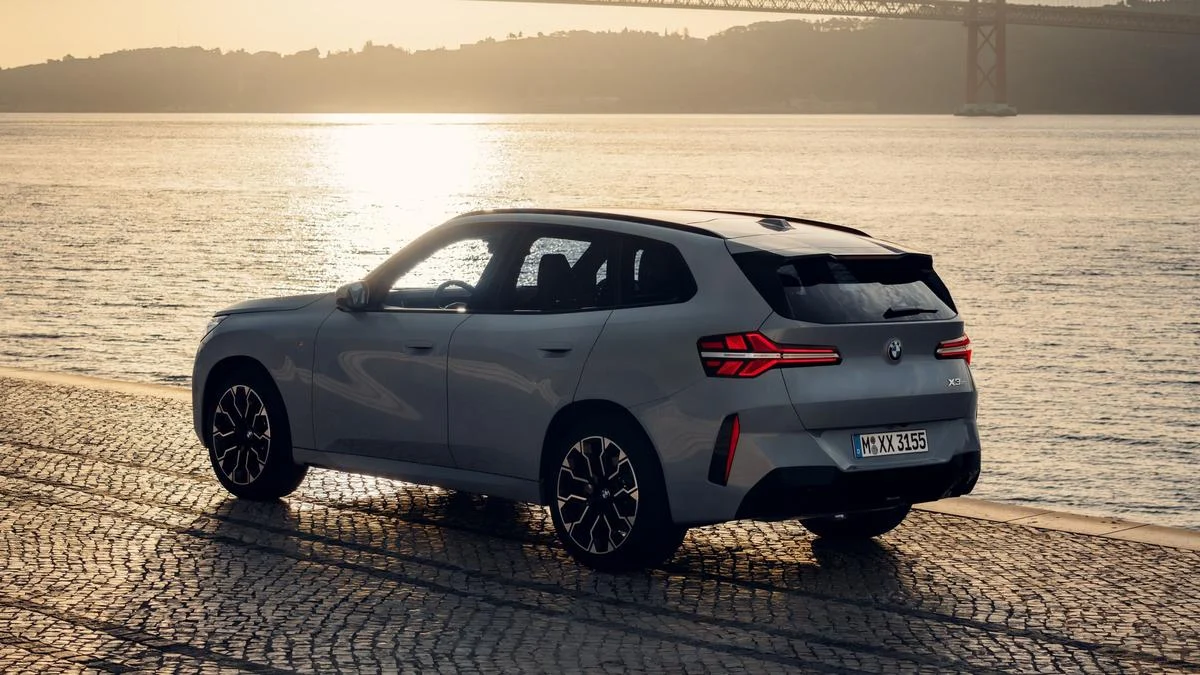
The new X3 30 xDrive M Sport Pro commands attention through a design language that BMW describes as "monolithic." Measuring 4,755 mm in length, 1,920 mm in width, and 1,660 mm in height, the vehicle possesses a physical footprint that emphasizes its "X" heritage while leaning into modern minimalism.
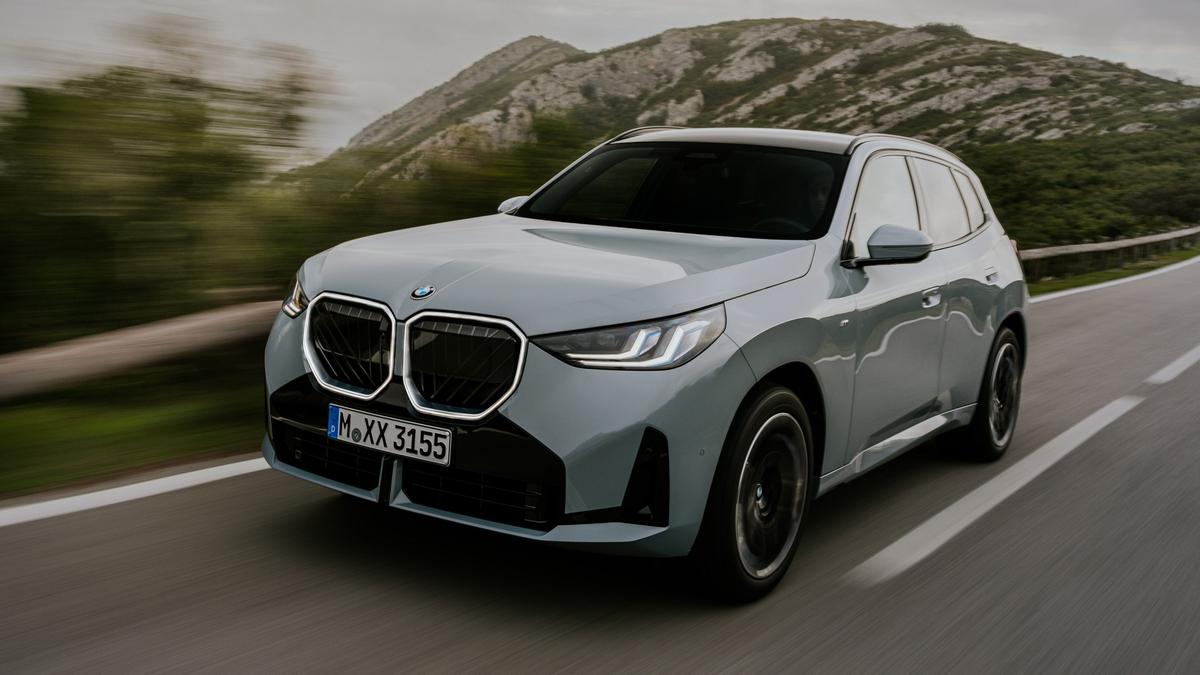
The focal point of the exterior is the redesigned, fully blacked-out kidney grille. In a nod to the higher-tier X7 and 7 Series, this model features the "Iconic Glow" contour illumination, providing a distinct light signature even at a standstill. This is flanked by adaptive LED headlights utilizing projector technology, finished with "Shadowline" accents that lend the front fascia a purposeful, almost predatory expression.
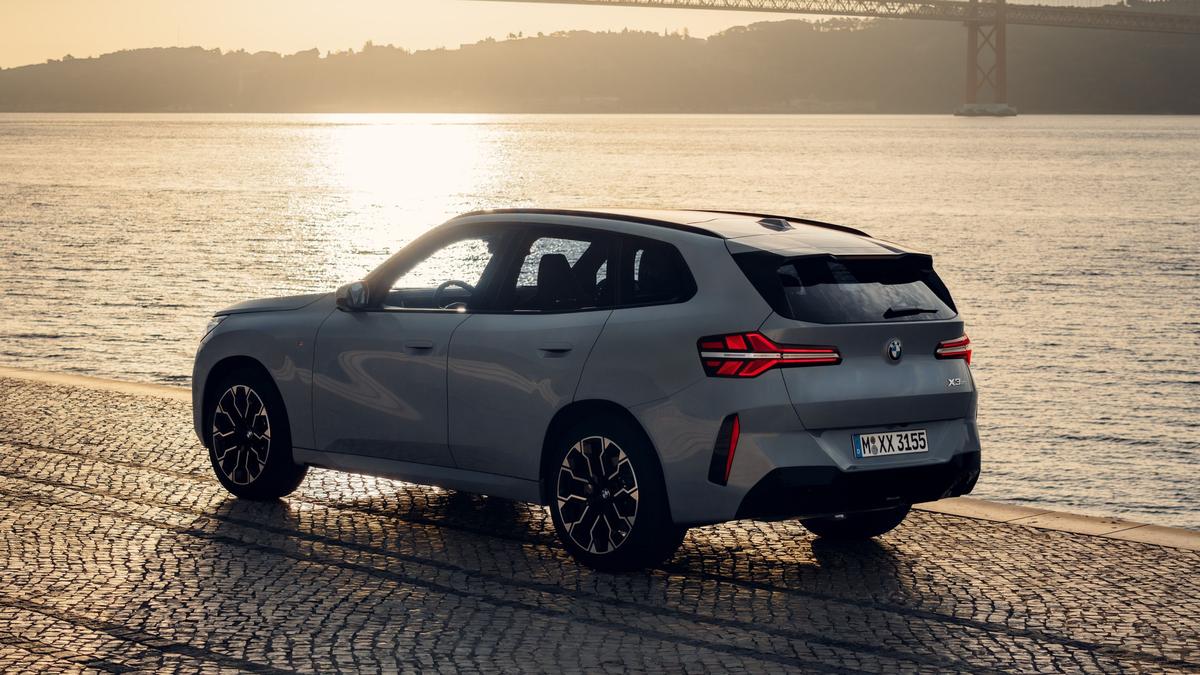
Functional sportiness is integrated throughout the silhouette. The vehicle sits on standard 20-inch M light-alloy wheels, behind which peek red M Sport brake calipers—a visual cue to the vehicle’s stopping power. Design details such as flush-mounted door handles and sculpted wheel arches contribute to a drag-efficient profile, while the rear is defined by darkened, split LED lamps featuring a double L-shaped signature.
The Digital Cockpit: OS 9 and Beyond
Inside, the X3 undergoes a digital revolution. The cabin is centered around the BMW Curved Display, a seamless glass surface housing a 12.3-inch information display (instrument cluster) and a 14.9-inch control display. This system runs on the latest BMW Operating System 9, which introduces "QuickSelect" technology—a logic-based interface designed to reduce menu diving and keep the driver’s focus on the road.
The interior materials reflect a shift toward sustainable luxury. The dashboard and door panels are wrapped in Sensatec, a high-grade synthetic leather that offers a tactile, premium feel without the environmental footprint of traditional hides. A standout feature is the BMW Interaction Bar—first seen in the flagship 7 Series—which integrates ambient lighting with touch-sensitive controls for ventilation and other functions, creating a futuristic, layered atmosphere.
Chronology: The X3’s Journey to the M Sport Pro
To understand the significance of the 30 xDrive M Sport Pro, one must look at the X3’s evolutionary timeline.
- The Inception (2003): BMW launched the first-generation X3 (E83) at a time when the "Sports Activity Vehicle" (SAV) concept was still nascent. It was criticized for a stiff ride but praised for its car-like handling.
- Refinement (2010): The second generation (F25) addressed the comfort issues and grew in size, effectively filling the gap left by the original X5.
- The Digital Pivot (2017): The third generation (G01) introduced the first M Performance variant (the M40i) and brought semi-autonomous driving features to the segment.
- The Current Era (2024-Present): The latest update, culminating in the M Sport Pro, represents the "Life Cycle Impulse" (LCI) philosophy taken to its logical extreme. It bridges the gap between traditional internal combustion excellence and the digital-first approach of BMW’s "Neue Klasse" future.
This chronology demonstrates a clear trajectory: the X3 has evolved from a utilitarian off-shoot of the 3 Series into a sophisticated, standalone tech powerhouse that now serves as the primary gateway to the BMW luxury experience for many Indian buyers.
Supporting Data: Performance and Engineering Specifications
The heart of the X3 30 xDrive M Sport Pro is a 2.0-litre, four-cylinder TwinPower Turbo petrol engine. While the industry is seeing a shift toward smaller displacements, BMW’s engineering ensures that performance remains uncompromised.
| Feature | Specification |
|---|---|
| Engine Type | 2.0L 4-Cylinder TwinPower Turbo |
| Max Power | 258 hp |
| Max Torque | 400 Nm |
| Transmission | 8-Speed Steptronic Sport |
| Drivetrain | xDrive Intelligent All-Wheel Drive |
| Acceleration (0-100 km/h) | Approx. 6.6 Seconds |
| Top Speed | 235 km/h (Electronically Limited) |
| Wheels | 20-inch M Light Alloy |
| Audio System | Harman Kardon 750W (16 Speakers) |
The xDrive System and Off-Road Capability
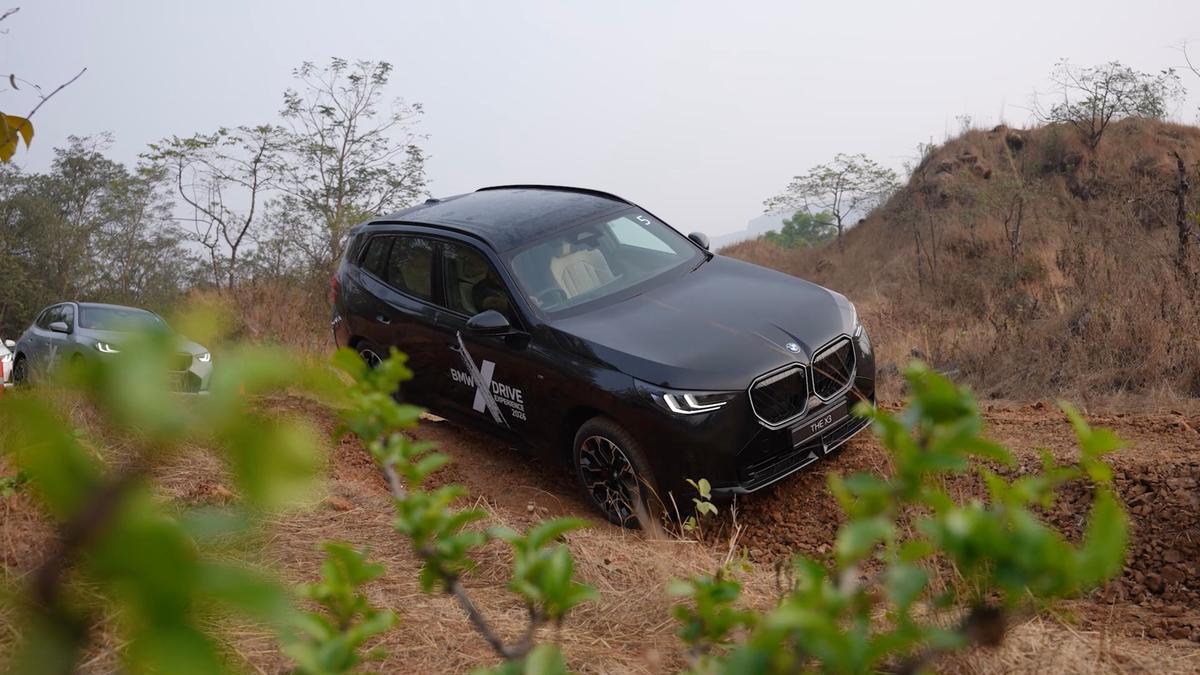
While the X3 is predominantly found in urban environments, the 30 xDrive M Sport Pro is engineered for genuine versatility. The intelligent xDrive system continuously monitors wheel slip and can redistribute 100% of the engine’s torque to either axle within milliseconds.
During off-road testing on gravel and steep inclines, the vehicle’s electronics—including Dynamic Traction Control (DTC) and Automatic Differential Brakes (ADB)—worked in synergy to maintain momentum. The Hill Descent Control (HDC) allows the driver to navigate steep, slippery gradients at a set crawling speed, ensuring that the luxury SUV remains composed even when the tarmac ends.
Official Responses and Market Positioning
BMW Group India has positioned the X3 30 xDrive M Sport Pro as a "complete package" for the modern professional. While official corporate statements emphasize "Sheer Driving Pleasure," the strategic pricing of ₹74.5 lakh places it squarely against the Mercedes-Benz GLC 300, the Audi Q5, and the Volvo XC60.
Industry analysts note that BMW’s decision to offer the "M Sport Pro" trim as a flagship petrol variant in India is a response to the growing "petrolification" of the luxury segment. With tightening emission norms and a changing consumer preference away from diesel in urban centers, the 258 hp petrol engine is designed to offer the punch of a larger engine with the refinement of a modern four-cylinder unit.
BMW’s service packages, including the "BMW Service Inclusive" and "BMW Repair Inclusive," are also part of the official push to lower the total cost of ownership—a historical pain point for luxury car buyers in the Indian subcontinent.
Implications: The Future of the Luxury SAV
The arrival of the X3 30 xDrive M Sport Pro has several broader implications for the Indian automotive landscape and the BMW brand globally.
1. The "Trickle-Down" of Technology
The inclusion of the BMW Interaction Bar and Operating System 9 signifies that BMW is no longer reserving its best technology for its $100,000+ flagships. By democratizing these features in the X3, BMW is forcing competitors to accelerate their own technological cycles, benefiting the consumer through better-equipped entry-and-mid-level luxury vehicles.
2. The Persistence of ICE in a Transitional Market
Despite the global push toward the "iX" electric line, the X3 30 xDrive proves that there is still significant life and innovation left in the internal combustion engine (ICE). By pairing a highly efficient petrol engine with a sophisticated AWD system, BMW provides a solution for Indian buyers who desire luxury but remain wary of the country’s developing EV charging infrastructure for long-distance touring.
3. The Shift from "Flashy" to "Purposeful"
The X3’s design evolution suggests a shift in luxury consumer psychology. Buyers are moving away from chrome-heavy, "status" designs toward a "stealth wealth" or "athletic luxury" aesthetic. The blacked-out elements and matte finishes of the M Sport Pro cater to a demographic that values engineering substance and digital integration over traditional displays of opulence.
4. Safety and Autonomous Integration
With the inclusion of Driving Assistant Plus, the X3 brings Level 2 Advanced Driver Assistance Systems (ADAS) to the forefront. Features like Lane Keeping Assistant and Collision Warning with brake intervention are no longer optional extras but expected standards. This implies a future where the "driving pleasure" BMW is known for will increasingly involve a partnership between human intuition and machine intelligence.
Conclusion
The BMW X3 30 xDrive M Sport Pro is a masterclass in balanced engineering. It manages to satisfy the traditionalist who demands precise steering and linear power delivery, while simultaneously catering to the technophile who views their car as an extension of their digital ecosystem. At ₹74,50,000, it represents a significant investment, but one that is justified by its ability to transition seamlessly from a refined city commuter to a confident weekend explorer. In the ever-crowded segment of luxury SUVs, the X3 remains not just a participant, but a benchmark for what a versatile, modern luxury vehicle should be.
This report was compiled in association with Motorscribes and The Hindu, providing deep-dive analytics into the latest automotive trends and releases.
