

The Indian automotive landscape is no stranger to the disruptive force of the Tata Nexon. Since its inception in 2017, the Nexon has evolved from a quirky newcomer into a dominant pillar of the sub-four-metre SUV segment. As competition intensifies with the arrival of the Mahindra XUV 3XO, the Skoda Kylaq, and the upcoming Kia Syros, Tata Motors appears to be readying a counter-offensive that could redefine expectations for the category once again.
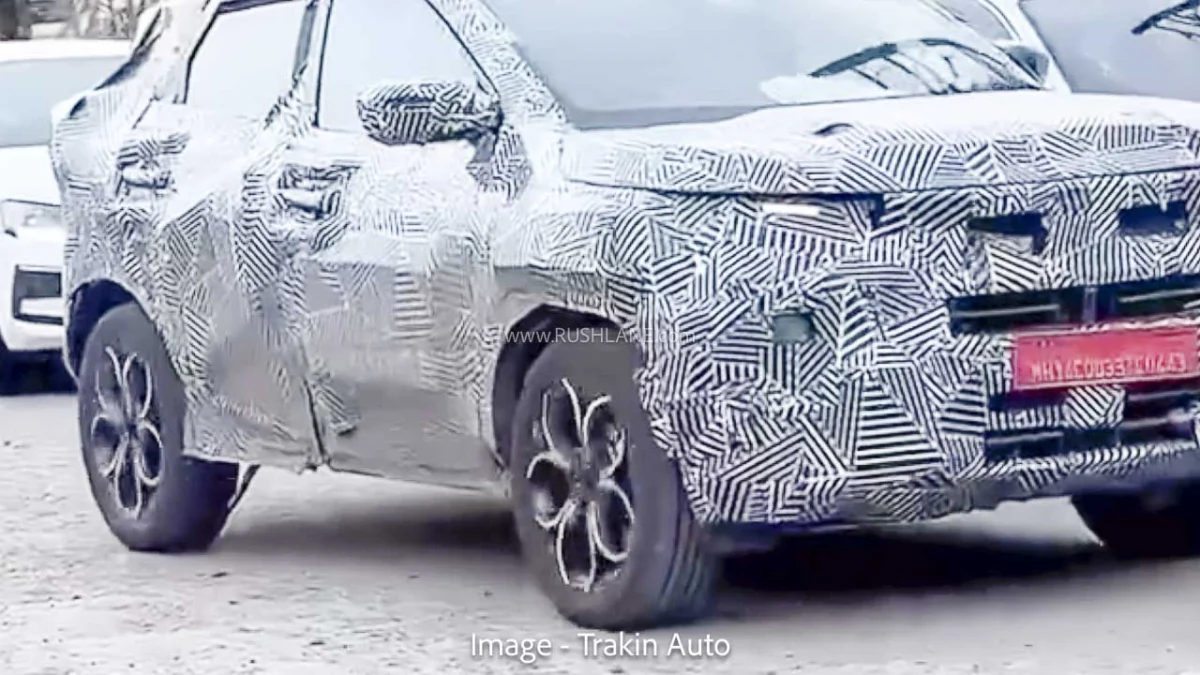
Recent spy photographs of the next-generation 2027 Tata Nexon have surfaced, revealing a detail that has sent ripples through the industry: the prototype was spotted wearing 18-inch alloy wheels borrowed directly from its larger sibling, the Tata Curvv. This development suggests that Tata is not merely planning a cosmetic update but a fundamental shift in the vehicle’s stance, proportions, and premium positioning.
Main Facts: A Bold New Stance for 2027
The latest sightings of the 2027 Tata Nexon prototype, captured during rigorous road testing, provide the clearest indication yet of the vehicle’s design direction. While the test mule remains heavily camouflaged, several key takeaways have emerged:
1. The 18-Inch Alloy Revelation
The most striking feature of the latest prototype is the wheel setup. The vehicle was seen sporting black-and-machined alloy wheels featuring a distinctive petal-like design. This specific aesthetic is a signature of the recently launched Tata Curvv. In the Curvv’s lineup, these wheels are 18-inch units. If Tata successfully integrates this size into the production-spec Nexon, it would mark the first time a sub-four-metre SUV in India offers 18-inch wheels from the factory.

2. A Boxier, More Upright Silhouette
Moving away from the coupe-like sloping roofline that defined the original Nexon, the 2027 model appears to embrace a more traditional, boxy SUV silhouette. The beltline seems flatter, and the rear profile is more vertical, suggesting an emphasis on cabin space, rear-seat headroom, and a more "imposing" road presence.
3. Design Synergy with the "New Age" Tata Lineup
Following the design language established by the Harrier, Safari, and Punch.ev facelifts, the next-gen Nexon will feature a split-headlamp setup, a full-width LED DRL bar, and a more aggressive front fascia. The integration of Curvv-inspired elements suggests a move toward a unified design identity across Tata’s SUV portfolio.
Chronology: The Road to the Third Generation
To understand the significance of the 2027 Nexon, one must look at the timeline of Tata’s testing methodologies and the vehicle’s own evolution.
- 2017 – The Genesis: Tata launches the first Nexon, introducing the "Impact Design" language and securing India’s first 5-star GNCAP safety rating for a domestic car.
- 2020 – The First Major Facelift: The Nexon receives a sharper front end and the introduction of the Nexon.ev, which would go on to dominate the Indian EV market.
- 2023 – The Digital Overhaul: Tata launches a comprehensive facelift featuring a 10.25-inch infotainment system, a new steering wheel, and a futuristic lighting signature. This version bridged the gap between the old X1 platform and modern consumer expectations.
- 2024 (Early Development) – The "Harrier Precedent": During the development of the Harrier facelift, Tata was spotted testing prototypes with 19-inch wheels from the Tata Hexa. While the Hexa wheels were for testing purposes, the production Harrier eventually received its own unique 19-inch alloy option.
- Late 2024/Early 2025 – Current Sightings: The first mules of the "Next-Gen" Nexon appear. Unlike previous facelifts, these mules show significant changes to the body panels and glasshouse, indicating a generational shift rather than a cosmetic refresh.
- 2027 – Anticipated Launch: Tata is expected to debut the production version of this next-generation model, potentially coinciding with more stringent emission and safety regulations.
Supporting Data: The Wheel Size Arms Race
The sub-four-metre SUV segment has historically been the domain of 15-inch and 16-inch wheels. However, as manufacturers seek to differentiate their "top-tier" variants, wheel sizes have steadily increased.

Segment Comparison:
| Model | Standard Wheel Size | Top Variant Size |
|---|---|---|
| Current Tata Nexon | 16-inch Steel/Alloy | 16-inch Alloy |
| Mahindra XUV 3XO | 16-inch Steel | 17-inch Alloy |
| Kia Sonet / Syros | 15-inch Steel | 16/17-inch Alloy |
| Skoda Kylaq | 16-inch Steel | 17-inch Alloy |
| 2027 Tata Nexon (Estimated) | 16-inch Alloy | 18-inch Alloy |
Technical Implications of 18-Inch Wheels
The move to 18-inch wheels is not merely an aesthetic choice; it involves significant engineering recalibration.
- Ground Clearance: Larger wheels can contribute to higher ground clearance, a key selling point for Indian roads.
- Handling: A larger wheel usually allows for a lower-profile tyre with stiffer sidewalls, which can improve cornering stability and steering response.
- Ride Quality: Conversely, larger wheels and thinner sidewalls can result in a firmer ride. Industry experts suggest Tata may be testing the Curvv’s wheels to evaluate how the Nexon’s suspension geometry handles the added unsprung mass and different vibration frequencies.
Official Responses and Industry Analysis
While Tata Motors has remained tight-lipped regarding the specific technical specifications of the 2027 Nexon, the company’s "Premiumization Strategy" provides context.
The "Curvv-ification" Strategy
Industry analysts note that Tata Motors is increasingly leveraging "parts-bin sharing" to elevate its smaller vehicles. By using components from the Curvv or Harrier—such as the 12.3-inch infotainment screens, ventilated seats, and now potentially wheel sizes—Tata can offer features that were previously reserved for vehicles costing ₹20 lakh or more.
Engineering Focus
According to sources close to the development team, the next-gen Nexon is being built to accommodate multiple powertrain architectures more efficiently. The testing of larger wheels suggests that the chassis is being reinforced to handle higher torque outputs, particularly from the upcoming "Symphony" range of engines and high-performance EV variants.

Implications: What This Means for the Consumer and the Market
The introduction of a next-generation Nexon with 18-inch wheels and a boxier design has several far-reaching implications for the Indian automotive market.
1. Redefining "Compact" Luxury
If the Nexon moves to 18-inch wheels, it effectively blurs the line between the sub-compact (B-SUV) and compact SUV (C-SUV) segments. Customers who find the Creta or Seltos too large for city traffic but desire the "big car" look will find the 2027 Nexon an irresistible middle ground.
2. The Multi-Powertrain Advantage
The 2027 Nexon will likely continue Tata’s "Power of Choice" philosophy. We expect:
- Petrol: An updated 1.2L Revotron engine, possibly with GDI (Gasoline Direct Injection) technology.
- Diesel: The reliable 1.5L Revotorq engine, updated for future emission norms.
- CNG: Integration of Tata’s twin-cylinder technology, offering usable boot space.
- EV: A next-gen electric powertrain with a range likely exceeding 450km, utilizing the Acti.ev architecture.
3. Safety and ADAS
With the 18-inch wheels and updated platform, the 2027 Nexon is expected to house a comprehensive Level 2 ADAS (Advanced Driver Assistance Systems) suite. The larger footprint provided by the wider tyres associated with 18-inch rims would offer better mechanical grip for emergency braking and lane-keep maneuvers.

4. Pricing Pressure
A larger, more sophisticated Nexon will inevitably command a premium. While the entry-level trims will remain competitive to take on the Maruti Brezza, the top-end variants—likely those featuring the 18-inch wheels and panoramic sunroof—could push the Nexon’s price bracket toward the ₹16-18 lakh (ex-showroom) mark.
Conclusion: A New Benchmark in Sight
The 2027 Tata Nexon is shaping up to be more than just a replacement for a best-seller; it is a statement of intent. By testing 18-inch alloys and adopting a more rugged, upright stance, Tata Motors is signaling that the next Nexon will prioritize road presence and premium features above all else.
While the launch is still roughly two years away, the "Curvv-inspired" prototypes suggest that the wait will yield a vehicle that challenges the status quo. For the Indian car buyer, this means the next-generation Nexon won’t just be a car that fits into their life—it will be a car that stands out on the road, proving once again that "compact" does not have to mean "compromised." As development continues, all eyes will be on how Tata balances this new-found aggression with the ride comfort and value-for-money that made the Nexon a household name.
