

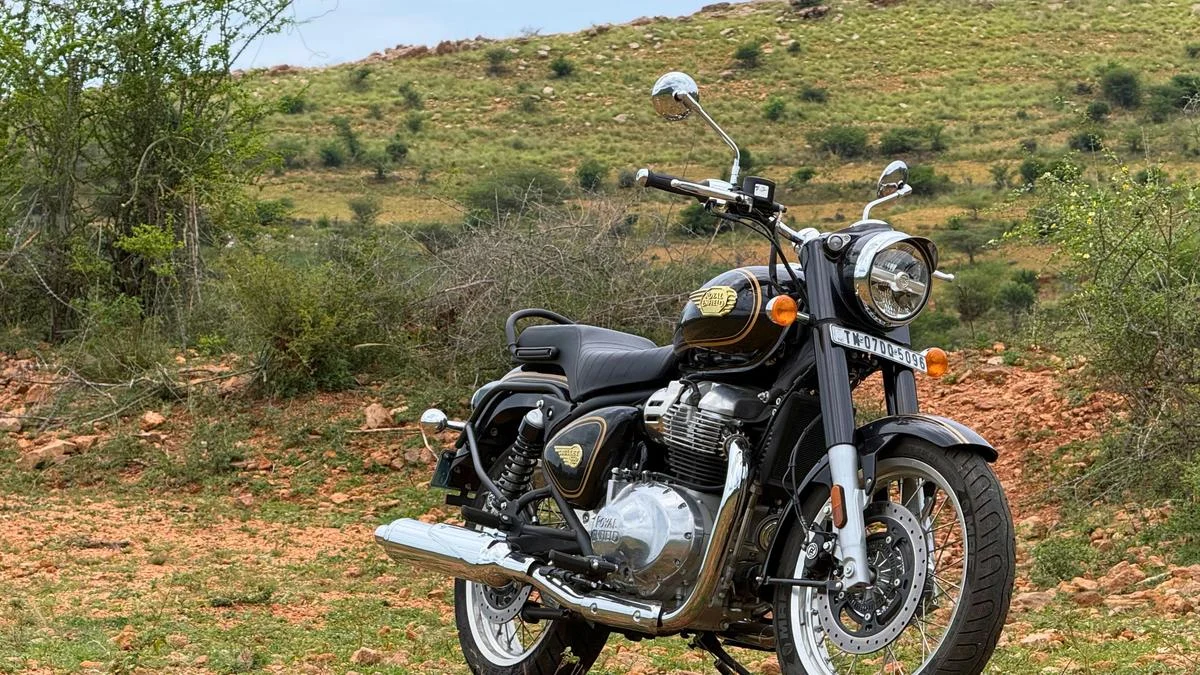
The motorcycling world has long anticipated the marriage of Royal Enfield’s most storied nameplate with its most successful modern engine platform. That anticipation has finally culminated in the release of the Royal Enfield Bullet 650. Positioned as the flagship of the Bullet lineage, this motorcycle represents a significant milestone for the Chennai-based manufacturer, bridging the gap between nearly a century of heritage and the demands of the 21st-century global rider.
Main Facts: The New Standard for Heritage Cruising
The Royal Enfield Bullet 650 enters the market not merely as a new model, but as the most powerful iteration of the "Bullet" brand since its inception in 1932. Built upon the critically acclaimed 648cc parallel-twin platform—which already powers the Interceptor, Continental GT, Super Meteor, Shotgun, and the recently announced Classic 650—the Bullet 650 is designed to offer a blend of old-school aesthetics and modern-day mechanical prowess.
Priced at ₹3.64 lakh (ex-showroom), the Bullet 650 is positioned as a premium offering within the mid-size segment. It aims to capture the hearts of "Bullet Purists" while offering the refinement and highway capability that the previous 350cc and 500cc single-cylinder models lacked. The motorcycle retains the iconic design cues that have made the Bullet a household name in India and abroad: the teardrop fuel tank, the "Tiger Eye" pilot lamps, and the hand-painted pinstripes. However, beneath this nostalgic skin lies a chassis and powertrain capable of sustained high-speed touring and modern safety standards.
Chronology: The Journey from Thumper to Twin
To understand the significance of the Bullet 650, one must look at the developmental trajectory of Royal Enfield over the last decade. The "Bullet" nameplate is the longest-running continuous production motorcycle design in history. For decades, it was defined by its long-stroke, single-cylinder "thumper" engine, known more for its rhythmic exhaust note and low-end torque than for its speed or refinement.

The timeline leading to the Bullet 650 began in 2018 with the global launch of the Interceptor 650 and Continental GT 650. These bikes introduced the 648cc parallel-twin engine, a masterpiece of engineering that moved the company away from its "vibration-heavy" reputation. Following the success of these models, Royal Enfield embarked on a mission to "twin-ify" its most iconic brands.
The Super Meteor 650 brought the engine to the cruiser segment in 2023, and the Shotgun 650 followed as a bobber-style variant. With the core mechanicals proven across diverse terrains and riding styles, the final step was to apply this technology to the "Big Two" of the Royal Enfield stable: the Classic and the Bullet. The Bullet 650 serves as the final piece of this strategic puzzle, ensuring that the brand’s most traditional identity can survive and thrive in an era of stricter emission norms and higher performance expectations.
Supporting Data: Technical Specifications and Performance Metrics
The Bullet 650 is a heavyweight in its class, both in terms of physical presence and technical specifications.
The Powertrain
At the core is the air-oil cooled, 648cc parallel-twin engine.

- Maximum Power: 47 PS at 7,250 rpm.
- Peak Torque: 52.3 Nm at 5,650 rpm.
- Transmission: A 6-speed constant mesh gearbox equipped with a slipper and assist clutch for lighter lever action and smoother downshifts.
Unlike the traditional single-cylinder Bullet, which peaked early in the rev range, the 650 twin offers a broad spread of torque. Approximately 80% of the torque is available from as low as 2,500 rpm, allowing for effortless "lazy" riding in city traffic while providing enough top-end surge to reach speeds well north of 140 km/h.
Chassis and Dimensions
The motorcycle is built on a steel tubular spine frame, optimized for stability.
- Wheelbase: 1,480 mm, providing a planted feel on highways.
- Kerb Weight: 243 kg (with 90% fuel and oil), making it one of the heaviest bikes in the Royal Enfield lineup.
- Seat Height: 800 mm, which is accessible for average-height riders but may pose a challenge for shorter individuals given the bike’s width.
- Suspension: 43mm telescopic front forks (120mm travel) and twin rear shock absorbers (90mm travel).
Braking and Safety
Royal Enfield has equipped the Bullet 650 with a robust braking setup to handle its significant mass.
- Front Brake: 320 mm disc with a twin-piston floating caliper.
- Rear Brake: 300 mm disc with a twin-piston floating caliper.
- ABS: Dual-channel system as standard.
- Wheels/Tyres: Spoke wheels fitted with a 100/90-R19 tyre at the front and a 140/70-R18 tyre at the rear.
Fuel Efficiency and Range
While the official claimed figure stands above 25 kmpl, real-world testing in mixed conditions (city, highway, and spirited riding) suggests an average of 18-22 kmpl. With its 13.8-liter fuel tank, riders can expect a range of approximately 250-280 km between fill-ups.

Official Responses and Design Philosophy
Royal Enfield’s design team has been vocal about the "Bullet DNA." According to the company’s philosophy, the Bullet is not a retro-styled bike; it is an authentic machine that has simply evolved. The decision to maintain the hand-painted gold pinstripes—known as the "Madras Stripes"—is a testament to this. These stripes are still applied by hand by a small team of artisans at the Chennai factory, a detail that remains a major selling point for brand loyalists.
The company has also addressed the shift in the exhaust note. The traditional "thump" of the 350cc single was a result of its long-stroke architecture and heavy flywheel. The 650cc twin uses a 270-degree crank, which produces a "rumble" rather than a "thump." Royal Enfield engineers have stated that while the sound is different, it captures the "soul" of the machine through a deeper, more resonant frequency that aligns with the bike’s increased power.
Implications: Market Impact and the "Classic vs. Bullet" Debate
The introduction of the Bullet 650 creates an interesting internal competition within Royal Enfield’s showroom, specifically against the Classic 650.
Bullet 650 vs. Classic 650
Mechanically, the two are siblings. However, their market implications differ:

- Aesthetics: The Classic 650 features more ornate chrome, different fender shapes, and a distinctive "casquette" with different detailing. The Bullet 650 is more understated, focusing on the iconic "bench" seat look and the squared-off rear mudguard.
- Target Audience: The Classic is aimed at those who want a "lifestyle" statement. The Bullet is aimed at the "purist" and the long-distance tourer who values the heritage of the oldest motorcycle name in the world.
Impact on the Mid-Size Segment
The Bullet 650 effectively kills the "need" for a 500cc single-cylinder engine, a displacement Royal Enfield discontinued due to emissions and refinement issues. By offering a 650cc twin at this price point, Royal Enfield is making "big bike" performance accessible to the masses. This poses a significant threat to international competitors who often price their twin-cylinder heritage models significantly higher.
Touring and Long-Distance Capability
Perhaps the most profound implication of the Bullet 650 is its transformation into a legitimate touring machine. The older Bullets were often restricted to the "slow lane" of the highway, with vibrations becoming unbearable above 80 km/h. The Bullet 650, however, can cruise at 110-120 km/h all day with minimal stress on the engine or the rider. This opens up the "Bullet Life" to a new generation of riders who want to explore cross-country routes without the mechanical compromises of the past.
Verdict: The Legend, Refined
The Royal Enfield Bullet 650 is a masterclass in heritage management. It manages to satisfy the aesthetic requirements of a 90-year-old legacy while delivering the performance expected of a modern 650cc motorcycle.
Strengths:

- Refinement: The 650cc twin is exceptionally smooth, making long rides fatigue-free.
- Presence: The sheer size and chrome detailing of the bike give it an unmatched road presence.
- Build Quality: Significant improvements in switchgear, paint finish, and overall fit-and-finish compared to Bullets of a decade ago.
- Stability: The heavy kerb weight and long wheelbase make it incredibly stable in crosswinds and at high speeds.
Weaknesses:
- Weight Management: At 243 kg, it is a handful in tight parking spots and stop-and-go traffic.
- Ground Clearance: The low-slung peashooter exhausts can be prone to scraping on extra-large speed breakers if the suspension is fully compressed.
- Seat Height/Width: The wide seat profile makes the 800mm height feel taller than it is, potentially alienating shorter riders.
In conclusion, the Bullet 650 is not just a motorcycle; it is a bridge between eras. For those who grew up with the legend of the Bullet but now have the means and the desire for modern performance, this is the definitive answer. It preserves the "Authentic Pure Motorcycling" experience that Royal Enfield prides itself on, ensuring that the Bullet remains relevant for another century.
The Royal Enfield Bullet 650 is available at authorized dealerships starting at ₹3.64 lakh. Motorscribes, in association with The Hindu, continues to track the evolution of the Indian motorcycling landscape. For more updates, follow @motorscribes on social media.
