

For over a decade, the MINI brand in India has occupied a unique, albeit niche, corner of the automotive landscape. To the Indian consumer, a MINI was a statement of style, a "go-kart" for the urban elite, and a symbol of British heritage wrapped in German engineering. However, for all its charm, the brand often struggled with a persistent critique: practicality. The tight rear seats and modest boot space of previous generations meant that a MINI was frequently a household’s second or third car—a luxury toy rather than a primary vehicle.
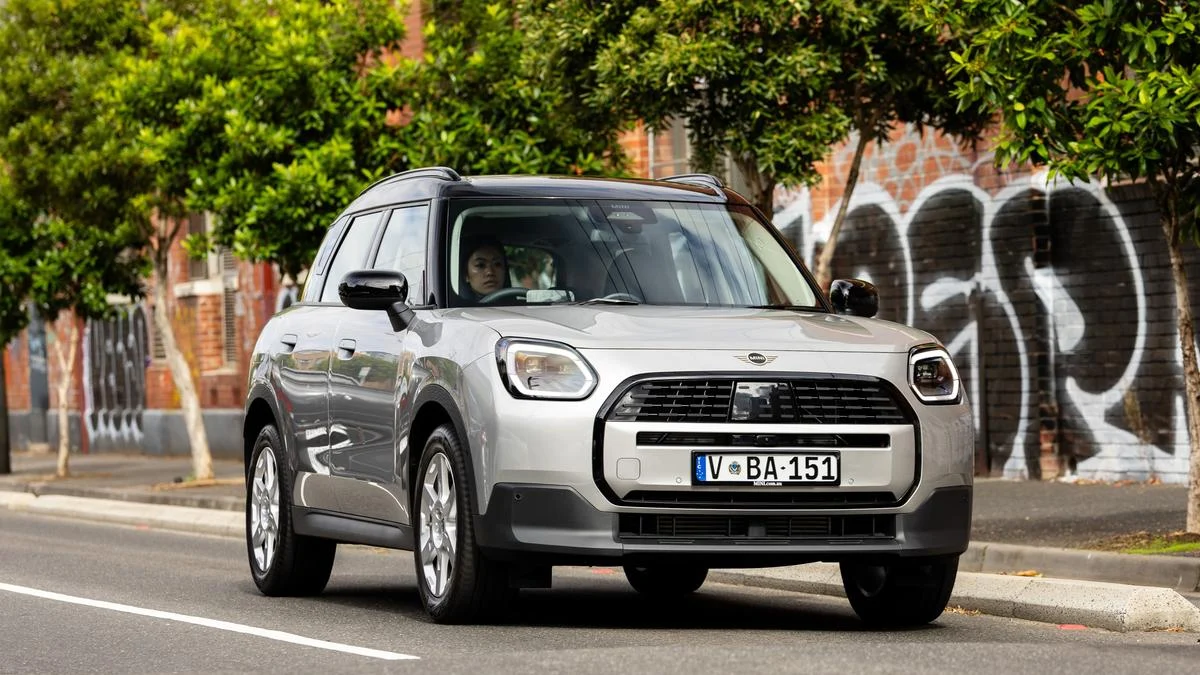
The arrival of the new MINI Countryman C (U25 generation) marks a definitive end to that era. No longer just a "slightly larger hatchback," the new Countryman C has undergone a massive growth spurt, both in physical dimensions and in its market aspirations. As it rolls onto Indian shores, it signals a strategic pivot for the BMW Group, positioning MINI not just as a lifestyle choice, but as a formidable competitor in the cutthroat premium compact SUV segment.
Main Facts: A Departure from the Familiar
The new MINI Countryman C is the largest vehicle ever to wear the winged badge. It represents a complete ground-up redesign, sharing its underpinnings with the BMW X1 (the FAAR platform), which immediately elevates its credentials in terms of ride quality and spatial efficiency.
Dimensions and Presence
The "C" in the name denotes the internal combustion engine (ICE) variant, which, alongside its electric siblings, showcases the brand’s "Charismatic Simplicity" design language. The vehicle has grown significantly: it is roughly 13 centimeters longer and 6 centimeters taller than its predecessor. This increase is not merely cosmetic; it translates directly into a cabin that can finally accommodate five adults comfortably, a feat that previous iterations struggled to achieve.
Powertrain and Performance
Under the hood, the Countryman C features a 1.5-liter three-cylinder turbocharged petrol engine paired with a 48V mild-hybrid system. This setup produces approximately 170 hp and 280 Nm of torque, channeled through a 7-speed dual-clutch transmission. While purists might miss the larger displacement engines of the past, the mild-hybrid integration ensures a smoother start-stop experience and improved fuel efficiency—a critical factor for the Indian market where urban congestion is a daily reality.
The Digital Revolution
The interior is dominated by a world-first: a 240mm circular OLED display. This high-resolution screen replaces the traditional instrument cluster and infotainment stack, running the new MINI Operating System 9. It controls everything from navigation and climate to the "MINI Experience Modes," which change the cabin’s ambient lighting, soundscapes, and throttle response.
Chronology: The Journey to "Big"
The evolution of the Countryman in India mirrors the changing tastes of the country’s luxury car buyers.
- The Introduction (2012): The first-generation Countryman (R60) was launched in India via the CBU (Completely Built-Up) route before eventually seeing local assembly. It was a novelty—an SUV-styled MINI that felt quirky but cramped.
- The Growth Phase (2018): The second-generation (F60) moved to the UKL2 platform. It was a significant step up in quality and size, becoming the backbone of MINI’s sales in India. However, it still sat in the shadow of the BMW X1 and the Mercedes-Benz GLA in terms of "family car" utility.
- The Transformation (2024-2026): The current U25 model represents the third generation. By moving to a shared architecture with the latest BMW X1, MINI has finally closed the gap in utility. The 2024 global reveal set the stage for its Indian debut, where it is now positioned as a legitimate alternative to traditional luxury crossovers.
This chronology shows a brand that has spent fourteen years learning the nuances of the Indian market—a market that demands "road presence" and "rear-seat comfort" above almost all else.
Supporting Data: By the Numbers
To understand the scale of the shift, one must look at the technical specifications and market data that support the Countryman C’s new positioning.
Spatial Improvements
- Length: 4,433 mm (an increase of 130 mm over the previous model).
- Wheelbase: 2,692 mm, providing significantly more legroom for rear passengers.
- Boot Capacity: 450 liters, expandable to 1,450 liters with the rear seats folded. The rear bench also features a sliding function (up to 13 cm), allowing owners to prioritize either legroom or luggage space.
- Ground Clearance: Increased to approximately 202 mm, making it better suited for the unpredictable Indian road infrastructure.
Market Context
In the Indian premium segment (cars priced between ₹45 lakh and ₹65 lakh), SUVs now account for over 60% of total sales. Previously, MINI’s sales were heavily skewed toward the 3-Door Hatch. However, internal projections suggest that with the added practicality of the new Countryman C, this model could soon account for nearly 50% of the brand’s total volume in the country.
Sustainability Metrics
MINI has removed all chrome from the exterior and leather from the interior. The new "Vescin" upholstery is a 100% recyclable synthetic material that mimics the feel of leather but with a significantly lower carbon footprint. Furthermore, up to 70% of the aluminum used in the wheels is recycled, appealing to a younger, more environmentally conscious Indian demographic.

Official Responses: The Brand’s Vision
BMW Group India has been vocal about the strategic importance of the new Countryman. During the lead-up to the launch, executives emphasized that the brand is moving toward a "Digital First" and "Sustainable" future without losing its emotional core.
Vikram Pawah, President of BMW Group India, has often noted that the Indian luxury consumer is evolving. "The new MINI Countryman is not just a car; it’s a companion for all stages of life. We are seeing a shift where customers want the personality of a MINI but the versatility of a family SUV. This new model delivers exactly that."
Oliver Heilmer, Head of MINI Design, explained the "Charismatic Simplicity" philosophy behind the car: "We wanted to strip away the noise. The new Countryman C is cleaner and more reduced, but it has more character. In a market like India, where the streets are busy, a clean, bold design stands out more than a cluttered one."
The company’s focus on the circular OLED interface also reflects a response to the tech-savvy Indian buyer. By partnering with gaming software developers for the UI, MINI is targeting a generation that views their car as an extension of their smartphone.
Implications: A New Era for MINI in India
The launch of the Countryman C has several far-reaching implications for the brand and the wider luxury car market in India.
1. From "Second Car" to "Primary Car"
The most significant implication is the shift in consumer behavior. With its increased dimensions and BMW-level refinement, the Countryman C can now serve as the primary vehicle for a small urban family. This expands MINI’s "Total Addressable Market" (TAM) significantly. No longer restricted to driving enthusiasts, the brand can now target young professionals with children who need a practical daily driver but refuse to drive a "boring" SUV.
2. Competitive Pressure on the "Big Three"
The Countryman C enters a segment dominated by the BMW X1, Mercedes-Benz GLA, and Audi Q3. Traditionally, these German stalwarts offered more space, while MINI offered more "fun." Now that MINI offers comparable space, its unique design language and heritage become powerful "tie-breakers." The Countryman C is likely to cannibalize some sales from its own cousin, the X1, but more importantly, it offers a stylish alternative to the more conservative designs of Mercedes and Audi.
3. The Path to Electrification
The Countryman C serves as a bridge. While the MINI Countryman Electric is also being introduced, the "C" variant ensures that the brand remains accessible in regions where charging infrastructure is still developing. It allows MINI to maintain high volumes while transitioning its customer base toward the brand’s goal of becoming fully electric by the early 2030s.
4. Resale Value and Brand Equity
Historically, MINIs in India held their value well due to their niche status and iconic design. By making the Countryman more practical, MINI is likely to increase the car’s desirability in the pre-owned market. A car that can actually fit a family is much easier to resell than a cramped enthusiast’s car, which will, in turn, lower the total cost of ownership for new buyers.
Conclusion
The new MINI Countryman C is a calculated gamble that appears poised to pay off. By leaning into its SUV identity, the brand has addressed its longest-standing weakness—lack of space—without sacrificing the "Go-Kart" DNA that makes a MINI a MINI. For the Indian market, this represents the arrival of a vehicle that is finally as sensible as it is stylish. As the brand moves forward, the Countryman C will likely be remembered as the model that transformed MINI from a boutique luxury nameplate into a mainstream premium powerhouse.
