

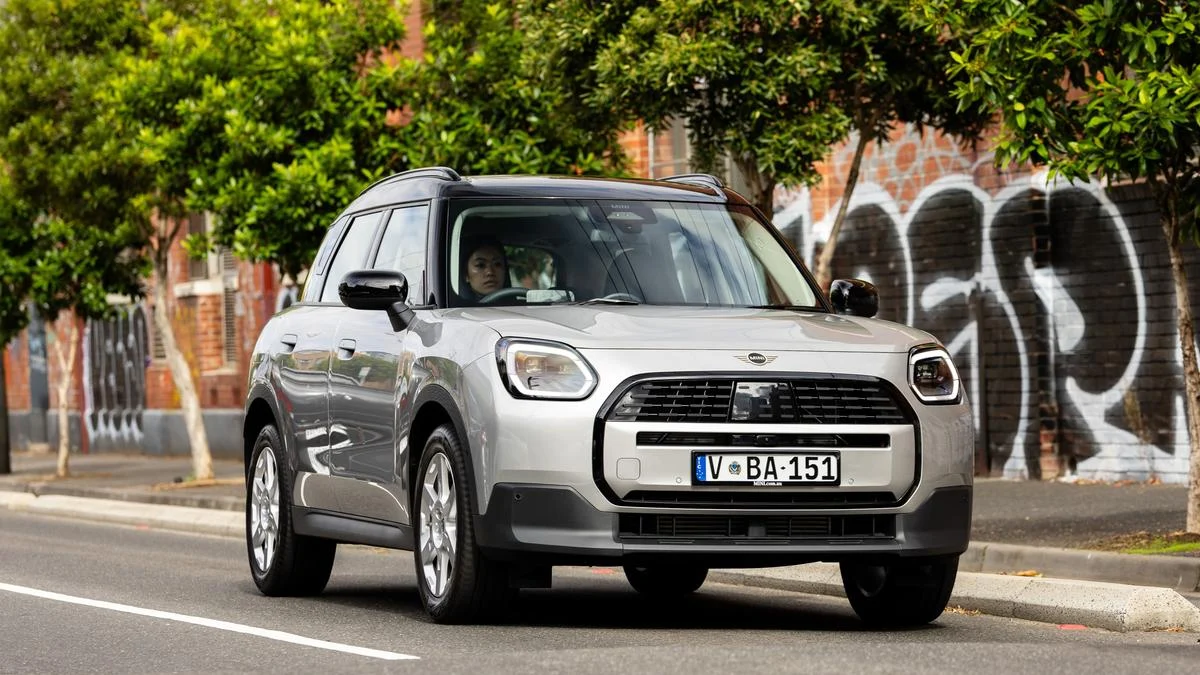
The automotive landscape in India has long associated the MINI brand with a specific set of characteristics: compact dimensions, "go-kart" handling, and a retro-chic aesthetic that prioritized personality over practicality. However, the arrival of the new MINI Countryman C represents the most significant strategic pivot in the brand’s history since its introduction to the subcontinent. No longer just a "lifestyle accessory" for the urban elite, the latest iteration of the Countryman C has grown—literally and figuratively—into a formidable contender in the premium compact SUV segment.
By shedding its image as a slightly oversized hatchback and embracing its identity as a full-scale SUV, MINI is making a bold play for the heart of the Indian luxury market. This transformation is not merely skin-deep; it involves a complete overhaul of the vehicle’s architecture, digital ecosystem, and mechanical philosophy.
Main Facts: A Paradigm Shift in Dimensions and Design
The new MINI Countryman C arrives at a time when Indian luxury car buyers are increasingly demanding "do-it-all" vehicles. The "C" designation, traditionally representing the core internal combustion engine (ICE) variant, now sits alongside the brand’s aggressive push toward electrification. However, for the Indian market, the Countryman C remains the volume driver, offering a bridge between traditional driving dynamics and futuristic technology.
A New Scale of Presence
The most immediate change is the vehicle’s physical footprint. The new Countryman C is approximately 13 centimeters longer and 6 centimeters taller than its predecessor. This growth spurt is a calculated move to address the primary criticism of previous generations: a lack of rear-seat legroom and cargo capacity. With a length now exceeding 4.4 meters, the Countryman C moves out of the shadow of the MINI Cooper and stands toe-to-toe with established rivals like the BMW X1, Audi Q3, and Mercedes-Benz GLA.
"Charismatic Simplicity"
Design-wise, the vehicle introduces MINI’s new design language, termed "Charismatic Simplicity." The exterior has been cleaned of unnecessary chrome and clutter. The octagonal grille is more pronounced, and the signature circular headlights have been replaced with a more angular, modern LED signature that offers three different light patterns. The short overhangs and contrasting roof remain, but the overall silhouette is more rugged, featuring wider wheel arches and a higher ground clearance that appeals directly to India’s rough-road realities.
The Digital Revolution Inside
Inside, the cabin is a radical departure from the toggle-heavy cockpits of the past. The centerpiece is a world-first: a 240mm-diameter circular OLED display. This high-resolution screen, running the MINI Operating System 9, controls everything from climate to navigation. By moving most physical buttons into the digital interface, MINI has created a minimalist dashboard wrapped in sustainable, recycled polyester textiles—a move toward "vegan" luxury that is gaining traction among younger Indian HNIs (High Net-Worth Individuals).
Chronology: The Journey of the Countryman in India
To understand the significance of the new Countryman C, one must look at the brand’s trajectory in the Indian market over the last decade.
- 2012: The Arrival: MINI officially enters the Indian market. While the 3-door Hatch steals the headlines, the first-generation Countryman is introduced as a niche offering for those who find the standard MINI too small but want to remain within the brand’s ecosystem.
- 2013: Local Assembly Begins: Recognizing the potential of the SUV form factor, BMW Group India begins local assembly of the Countryman at its Chennai plant. This move makes the Countryman the most accessible and practical MINI in the portfolio.
- 2018: The Second Generation: The second-generation Countryman launches in India, based on the UKL2 platform shared with the BMW X1. It offers more space and a more refined engine lineup, establishing itself as the brand’s best-seller in India, often accounting for over 40% of total sales.
- 2021-2023: The Shadow Edition and Facelifts: MINI keeps the model fresh with various special editions and a mid-life facelift, introducing LED Union Jack tail lights and a digital instrument cluster. However, the competition in the entry-level luxury SUV space intensifies.
- June 2024 (The Current Launch): The third-generation Countryman C is unveiled. It marks a total departure from the "small car" philosophy. It is the first MINI to be produced in Germany (Leipzig), highlighting a shift toward higher manufacturing standards and global consistency.
Supporting Data: Specifications and Market Positioning
The "C" in Countryman C serves as the entry point into the new generation’s ICE lineup, but its specifications suggest it is anything but "entry-level."
Performance and Powertrain
Under the hood, the India-spec Countryman C features a 1.5-liter three-cylinder turbocharged petrol engine paired with a 48V mild-hybrid system.
- Power Output: Approximately 170 hp.
- Torque: 280 Nm.
- Transmission: 7-speed dual-clutch transmission (DCT).
- Efficiency: The mild-hybrid system provides an electric boost during acceleration and improves fuel economy by allowing for smoother start-stop transitions, a critical feature for congested Indian metros like Mumbai and Bengaluru.
Utility Metrics
The increase in dimensions translates directly to class-leading utility:
- Boot Space: 450 liters, expandable to 1,450 liters with the rear seats folded down.
- Rear Seating: The rear bench can slide forward or backward by up to 13 centimeters, allowing owners to choose between maximum legroom or maximum luggage space.
- Ground Clearance: Increased to nearly 200mm (unladen), making it more capable of handling monsoon-damaged roads and high speed-breakers.
Market Context
The premium compact SUV segment in India currently sees annual volumes of approximately 15,000 to 18,000 units. While BMW and Mercedes-Benz dominate this space, MINI’s growth strategy with the Countryman C is to capture the "creative class"—buyers who find the X1 too conservative and the GLA too cramped.

Official Responses: The Brand’s Vision
Representatives from BMW Group India have emphasized that the new Countryman C is not just a replacement for an old model, but a repositioning of the MINI brand itself.
In a recent press briefing, a senior executive noted, "The new MINI Countryman C is the largest and most versatile member of the MINI family to date. In India, our customers are looking for a car that can handle the daily commute but is equally capable of a weekend getaway to the hills. We have listened to the feedback regarding rear-seat comfort and technology. With the new OLED display and the increased cabin volume, we are offering a product that no longer requires a compromise on practicality."
The brand’s marketing focus has also shifted. "We are moving toward ‘Sustainable Premium Mobility,’" the official added. "The use of recycled materials in the interior and the removal of all chrome elements on the exterior are not just design choices; they are statements of our commitment to the environment. The Countryman C is for the conscious consumer."
Furthermore, dealership sources indicate a strong pre-launch interest, with a significant number of enquiries coming from existing owners of premium mid-size SUVs (like the Jeep Compass or Hyundai Tucson) looking to upgrade to a luxury badge that offers a distinct personality.
Implications: What This Means for the Indian Luxury Market
The introduction of the larger, more mature Countryman C has several long-term implications for the brand and the wider industry.
1. Cannibalization vs. Expansion
The Countryman C now sits very close to the BMW X1 in terms of dimensions and price. While some might fear cannibalization within the BMW Group, the two vehicles cater to different psychographics. The X1 remains the choice for the traditional corporate executive, while the Countryman C targets the "unconventional" buyer—entrepreneurs, designers, and young families who value aesthetics and "Experience Modes" (which change the ambient lighting and engine sound) over traditional status symbols.
2. The Death of the "Small" MINI?
As the Countryman grows, it leaves a larger gap between itself and the 3-door Cooper. This suggests that MINI is diversifying its portfolio to become a full-range premium brand. By having a "proper" SUV, MINI can finally compete for the "primary car" spot in an Indian household, rather than being the "second or third car" used only for short city runs.
3. Setting a Tech Benchmark
The circular OLED screen and the MINI Operating System 9 set a new bar for infotainment in this segment. As Indian consumers become more tech-savvy, the high-speed connectivity, "Spike" (the MINI intelligent personal assistant), and cloud-based navigation will become significant differentiators. This move forces other luxury manufacturers to rethink their interior layouts, which often feel dated compared to the vibrant, smartphone-like interface of the new MINI.
4. Resale Value and Brand Longevity
Historically, MINIs in India faced steeper depreciation than their BMW counterparts due to their niche appeal. However, a more practical, SUV-bodied Countryman is likely to hold its value much better in the pre-owned market. A vehicle that can comfortably seat four adults and their luggage is a much more attractive second-hand proposition in India than a cramped hatchback.
Conclusion
The new MINI Countryman C represents a "coming of age" for the brand in India. It successfully bridges the gap between the whimsical heritage of the 1960s and the rigorous demands of the 2020s. By offering more space, cutting-edge technology, and a more commanding road presence, MINI has ensured that the Countryman is no longer just a "big MINI," but a serious, competitive SUV that can hold its own in one of the most demanding automotive markets in the world. For the Indian consumer, the message is clear: you can finally have your go-kart-inspired cake and eat it too—in a much larger, more comfortable cabin.
