

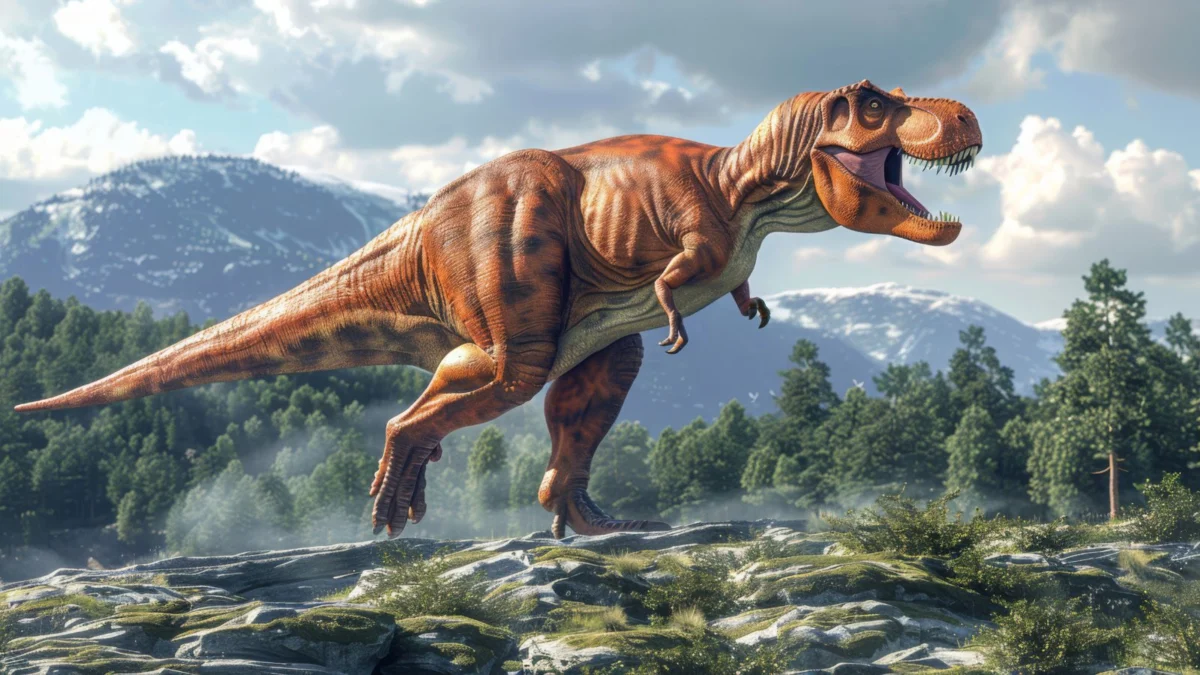
For decades, the Tyrannosaurus rex has been the subject of both awe and ridicule. While its massive frame and terrifying serrated teeth cemented its status as the "king of the dinosaurs," its disproportionately small, two-fingered arms have remained one of paleontology’s most enduring mysteries—and a frequent punchline in popular culture. However, a groundbreaking new study suggests that the T. rex was far from an evolutionary fluke. Instead, the reduction of forelimbs was a calculated biological trade-off that occurred repeatedly across the dinosaur kingdom.
A comprehensive study led by Charlie Roger Scherer of University College London (UCL), published in the prestigious journal Proceedings of the Royal Society B: Biological Sciences, has unveiled a startling correlation in dinosaur evolution: as theropod dinosaurs developed more massive, powerful skulls and devastating bite forces, their arms began to shrink. The research suggests that in the high-stakes world of Mesozoic predation, the head became the primary weapon, rendering the arms an unnecessary metabolic expense.
Main Facts: The "Use It or Lose It" Paradigm of Theropod Evolution
The core finding of the UCL study is rooted in the principle of compensatory evolution. By analyzing a massive dataset of 82 different theropod species, the research team established that the shrinking of forelimbs was not a random mutation but a systematic response to the enhancement of the cranium.
As these bipedal carnivores evolved, their hunting strategies shifted. Rather than using their arms to grapple with or pin down prey—a tactic used by earlier, more primitive theropods—apex predators began to rely almost exclusively on their jaws to deliver lethal blows. This shift created a biological "arms race" centered entirely on the skull.
The study highlights that maintaining muscular, functional arms requires significant energy and biological resources. In an environment where every calorie counts, "using" the head for hunting meant "losing" the utility of the arms. Scherer’s research indicates that at least five distinct groups of theropods independently arrived at this same evolutionary conclusion, a phenomenon known as convergent evolution.
Chronology: Millions of Years of Independent Reduction
The story of shrinking arms did not happen overnight, nor did it happen in a single lineage. The chronological data suggests a pattern of independent evolution across various continents and geological epochs.
- The Rise of the Abelisaurids (Mid-to-Late Cretaceous): In the southern hemisphere (Gondwana), groups like the Majungasaurus and Carnotaurus began exhibiting extreme arm reduction nearly 100 million years ago. These predators were dominant in what is now South America, Africa, and Madagascar.
- The Tyrannosaurid Surge (Late Cretaceous): In the northern hemisphere (Laurasia), the lineage leading to T. rex followed a similar path, reaching its peak arm reduction roughly 66 to 68 million years ago.
- Convergent Timelines: The study identifies that these reductions occurred across five separate clades. This means that nature "invented" the short-armed, heavy-headed predator multiple times in different parts of the world, proving that this body plan was an incredibly successful ecological strategy for top-tier hunters.
Supporting Data: Quantifying the Bite Force and Limb Length
To reach these conclusions, Scherer and his team didn’t just look at bone length; they analyzed the biomechanical capabilities of each species. The researchers examined skull strength, bone density, and muscle attachment points to estimate the "bite-force-related features" of the 82 species in the study.
The Bite Force Hierarchy
The data revealed a clear hierarchy in predatory power:
- Tyrannosaurus rex: Unsurprisingly, the T. rex ranked highest in estimated bite force. Its skull was designed to withstand the immense pressure of crushing bone, with a bite force estimated at nearly 12,000 pounds per square inch (psi).
- Tyrannotitan: Close behind was the Tyrannotitan, a massive carcharodontosaurid that lived in present-day Argentina approximately 90 to 100 million years ago. While it belonged to a different family than the T. rex, it exhibited the same correlation: a colossal head paired with reduced forelimbs.
- Majungasaurus: This Madagascan predator served as a key case study. Despite being smaller than the T. rex, its skull was exceptionally robust, and its arms were notably stunted, reinforcing the link between cranial power and limb reduction.
The Correlation Coefficient
The researchers found a statistically significant inverse relationship between the "Skull Strength Index" and the "Forelimb-to-Body Ratio." As the skull grew more robust to accommodate larger jaw muscles and handle the stress of high-impact biting, the forelimbs consistently decreased in size and complexity.
Official Responses and Expert Commentary
Lead researcher Charlie Roger Scherer provided a blunt assessment of the findings. "It’s a case of ‘use it or lose it,’" Scherer stated. He explained that in the context of evolution, "useless" limbs are not just neutral; they are a liability. Large arms are heavy, they can be injured in combat, and they require blood flow and nutrients that could otherwise be directed toward the development of a more powerful neck and head.
Paleontologists have long debated the purpose of T. rex arms, with theories ranging from "mating stabilizers" to "tools for pushing off the ground." While this study does not rule out minor secondary uses, it provides the most compelling evidence yet that the primary driver for their size was the redirection of evolutionary energy toward the jaws.
Scherer also highlighted the extreme nature of some of these reductions. While T. rex arms are small, the abelisaurid Carnotaurus took the trend to its logical extreme. Scherer described the arms of Carnotaurus as "ridiculously tiny," noting that they had lost almost all functionality in the lower arm and hand, appearing as little more than vestigial nubs.
Anatomical Divergence: How Different Groups "Shrank"
One of the most fascinating aspects of the study is the discovery that different dinosaur families evolved their tiny arms in distinct ways. This suggests that while the result was the same, the genetic pathways were different.
Tyrannosaurids: Proportional Reduction
In the Tyrannosaurus rex and its close relatives, the reduction of the arms was relatively "even." Both the humerus (upper arm) and the radius/ulna (lower arm) shrank in proportion to one another. They retained two functional fingers with sharp claws, suggesting that while the arms were small, they might have still possessed some limited, specialized function.
Abelisaurids: The Hand-First Approach
Conversely, the abelisaurids, such as Carnotaurus and Majungasaurus, followed a different evolutionary blueprint. In these species, the lower arms and hands underwent the most dramatic reduction. Their forearms were incredibly short, and their fingers were often fused or lacked claws entirely. This suggests a more rapid or aggressive evolutionary abandonment of the forelimbs compared to the tyrannosaurs.
Implications: Rethinking the Mesozoic Apex Predator
The implications of this research extend far beyond just solving a mystery about dinosaur anatomy. It changes how scientists and the public perceive the ecology of the Cretaceous period.
1. Specialization Over Versatility
The study suggests that evolution favors extreme specialization in apex predators. Rather than being a "jack-of-all-trades" that could both grab and bite, the most successful theropods became "specialized killing machines" that put all their evolutionary "points" into a single, devastating weapon: the mouth.
2. Energy Budgets in Evolution
This research provides a clear example of "energy budgeting" in biology. Developing a skull capable of crushing a Triceratops shield requires massive amounts of calcium, protein, and energy. By shrinking the arms, dinosaurs like the T. rex freed up the biological capital necessary to build their world-class weaponry.
3. Understanding Modern Vestigiality
The study offers a window into how vestigial structures—like the human appendix or the pelvic bones of whales—come to be. When a body part no longer contributes to the survival or reproductive success of an organism, natural selection often works to minimize it to save energy.
4. Future Paleontological Research
By establishing a clear link between bite force and limb size, this study provides a new framework for paleontologists. When new theropod fossils are discovered with incomplete remains, scientists may now be able to predict the size of the skull based on the limbs, or vice versa, with greater accuracy.
In conclusion, the tiny arms of the Tyrannosaurus rex were not a sign of weakness or an evolutionary mistake. They were the price the "king" paid for the most powerful bite in the history of terrestrial life. As Scherer’s team has demonstrated, in the brutal competition of the prehistoric world, the most successful hunters were those willing to trade their hands for the ultimate crown: a skull that could shatter bone.
