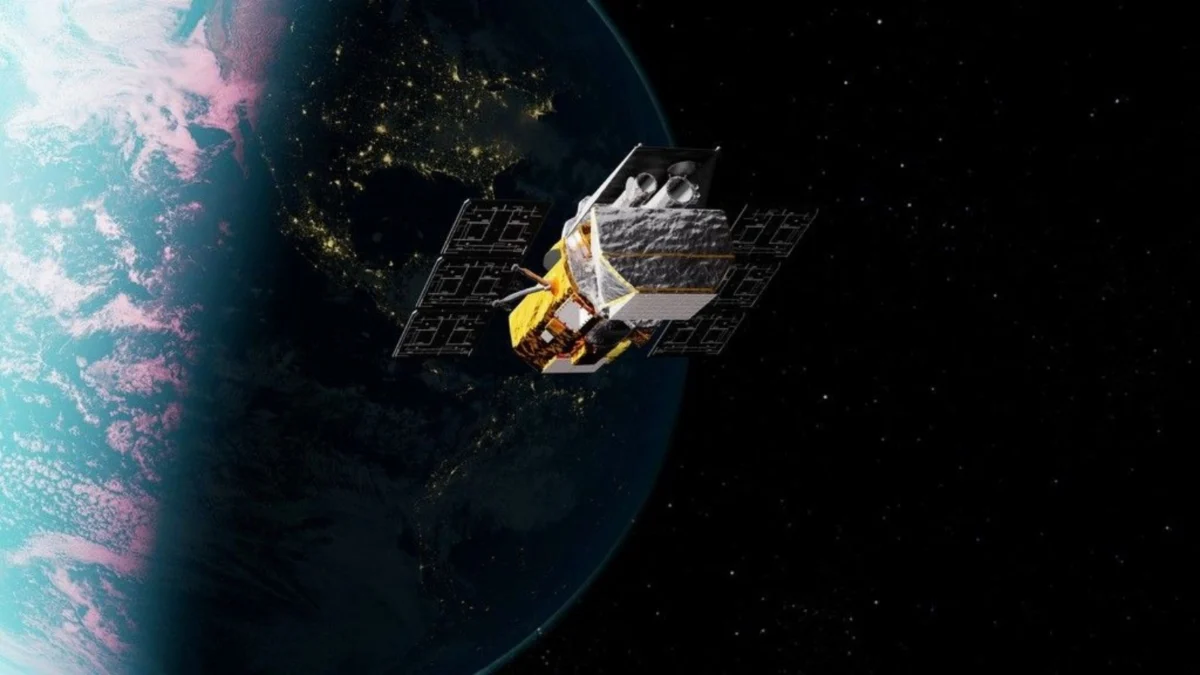
WASHINGTON D.C. — In a somber development for the global astronomical community, NASA has officially announced the end of its efforts to save the Neil Gehrels Swift Observatory. After a daring but ultimately unsuccessful private-sector mission to boost the aging telescope into a higher orbit, the spacecraft is now on an irreversible trajectory toward Earth’s atmosphere. The $30 million "Swift Boost" mission, which represented a landmark experiment in public-private satellite servicing, fell victim to technical malfunctions shortly after launch, marking the final chapter for one of the most productive space telescopes in history.
Main Facts: The End of an Era in Gamma-Ray Astronomy
The Neil Gehrels Swift Observatory, a cornerstone of NASA’s astrophysics fleet since its launch in 2004, is expected to re-enter Earth’s atmosphere and incinerate later this year. The decision to abandon rescue efforts comes after the LINK spacecraft—a robotic service vehicle developed by the Arizona-based aerospace startup Katalyst Space—suffered catastrophic electrical failures that prevented it from performing its primary objective.
The mission, known as Swift Boost, was a high-stakes gamble designed to counteract the natural orbital decay that has plagued Swift for over two decades. Due to its low-Earth orbit (LEO), the observatory has been subject to atmospheric drag, a force that has been significantly amplified by the current peak in solar activity. While NASA had hoped the LINK mission would extend Swift’s operational life by another decade, the failure of the spacecraft’s orientation systems has left the observatory without a means of propulsion.
Despite the loss of the primary objective, NASA officials have emphasized that the mission was not a total loss. The agency intends to utilize the remaining functionality of the LINK spacecraft to conduct proximity operations and test docking sensors, gathering vital data for future satellite-servicing endeavors. However, for the Swift Observatory itself, the clock has run out.
Chronology: From Launch to the Final Failed Intervention
To understand the gravity of the current situation, one must look back at the twenty-year odyssey of the Swift mission and the rapid, eleventh-hour attempt to save it.
- November 20, 2004: NASA launches the Swift Gamma-Ray Burst Mission. Designed for a two-year primary mission, the telescope exceeded all expectations, operating for over 20 years and revolutionizing our understanding of high-energy transients.
- 2024 – Early 2025: As Solar Cycle 25 approached its maximum, NASA engineers noted a significant increase in Swift’s orbital decay. The Sun’s increased ultraviolet output heated Earth’s upper atmosphere, causing it to expand and increasing the density of the medium through which Swift traveled.
- Late 2025: NASA enters into a $30 million contract with Katalyst Space. The "Swift Boost" mission is fast-tracked, giving the startup less than a year to design, build, and launch a rescue craft.
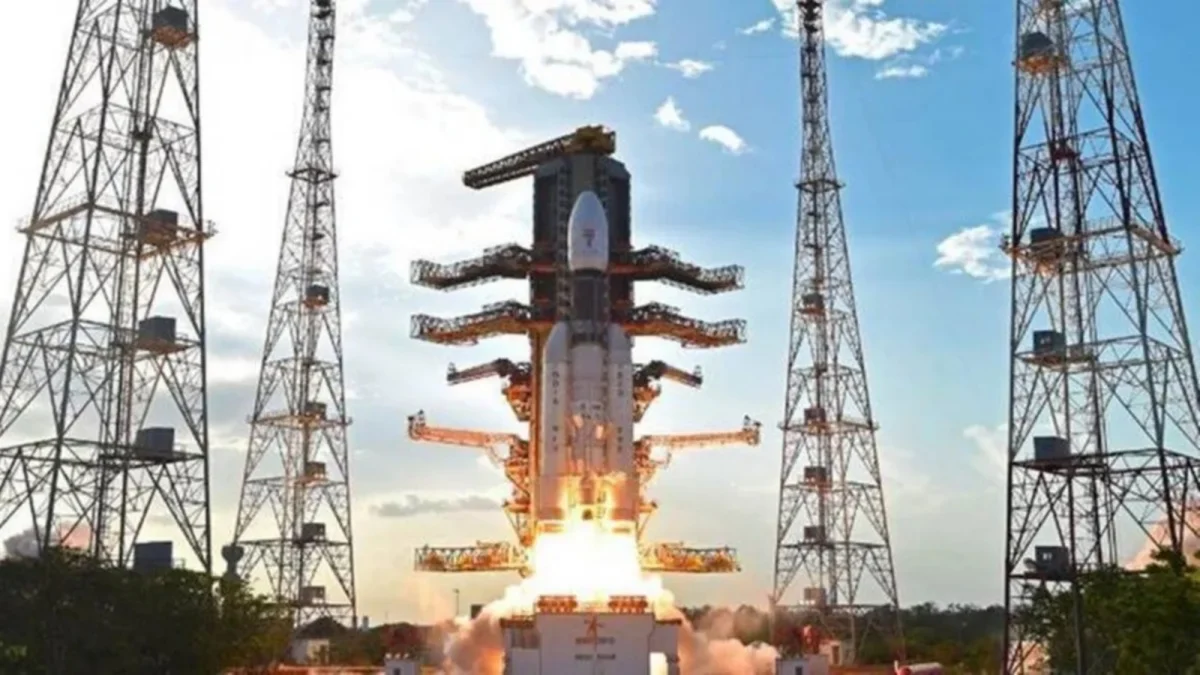
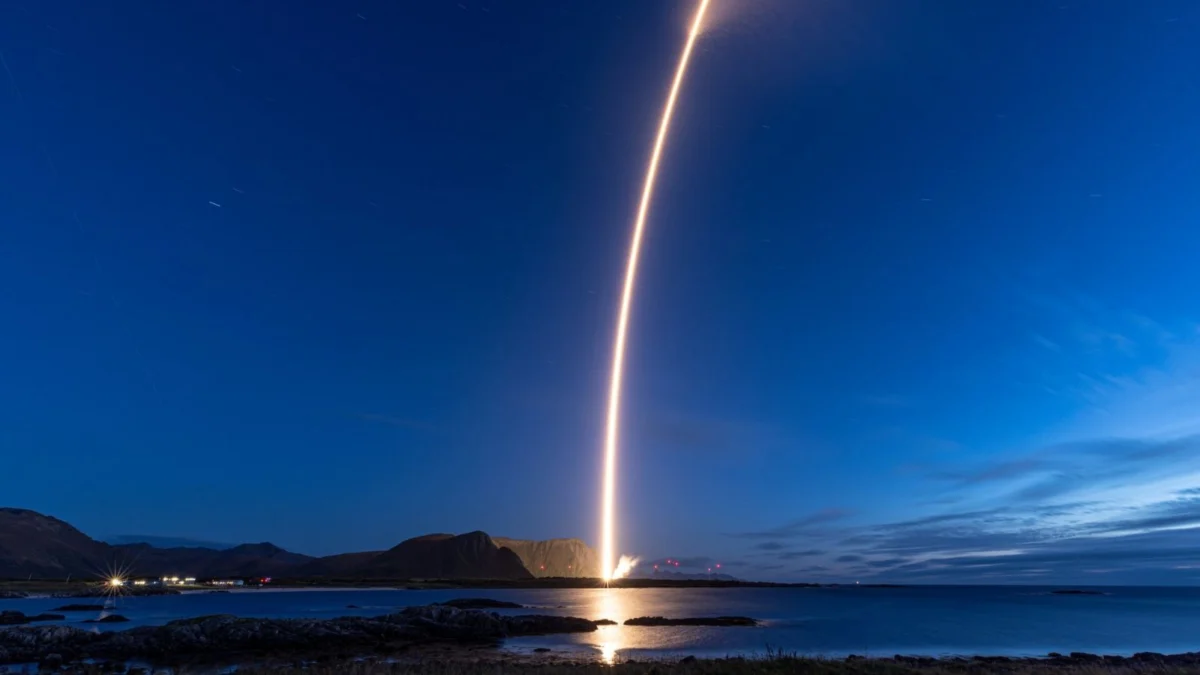
- July 3, 2026: The LINK spacecraft launches successfully. The initial stages of the mission proceed according to plan, with the craft reaching its parking orbit and beginning its approach toward Swift.
- Late July 2026: Disaster strikes. Electrical anomalies are detected within LINK’s Attitude Control System (ACS). Two critical systems responsible for stabilizing the craft’s orientation fail, causing the spacecraft to enter an uncontrollable spin. Engineers at Katalyst Space spend weeks attempting to stabilize the craft, but the mechanical failures prove insurmountable for a docking maneuver.
- August 19, 2026: NASA officially terminates the rescue portion of the mission. The agency announces that Swift will be allowed to de-orbit naturally.
- Expected Late 2026: The Neil Gehrels Swift Observatory will enter the dense layers of the atmosphere, where most of the craft will burn up upon re-entry.
Supporting Data: The Science of Orbital Decay and Solar Influence
The demise of the Swift Observatory is a textbook case of the challenges facing satellites in Low Earth Orbit (LEO). While space is often thought of as a vacuum, the region between 300 and 600 kilometers above Earth contains a thin layer of atmospheric gases.
The Role of Atmospheric Drag
For twenty years, Swift has been colliding with these residual gas molecules. Each collision results in a microscopic loss of kinetic energy. Over time, this cumulative loss reduces the satellite’s velocity, causing its orbit to drop closer to Earth. Once a satellite drops below a certain altitude threshold, the atmosphere becomes dense enough that the decay becomes exponential.
Solar Cycle 25: The Accelerant
The timing of Swift’s decay was exacerbated by the Sun. Solar activity follows an 11-year cycle of "minimums" and "maximums." During a solar maximum, the Sun emits intense bursts of radiation and charged particles. This energy is absorbed by Earth’s thermosphere, causing it to heat up and expand outward.
Data from the past 18 months showed that the atmospheric density at Swift’s altitude had tripled compared to the solar minimum of 2019. This "atmospheric swelling" acted like a brake on the observatory, pulling it down years earlier than initial projections from the mid-2010s had suggested.
Swift’s Scientific Legacy by the Numbers
- Gamma-Ray Bursts (GRBs): Swift detected over 1,500 GRBs, providing the first real-time data on the birth of black holes.
- Multi-wavelength Capability: It was the only telescope capable of autonomously slewing within seconds to observe a burst in Gamma-rays, X-rays, and Ultraviolet/Visible light simultaneously.
- Kilonovae: Swift played a pivotal role in the 2017 detection of a kilonova—the collision of two neutron stars—which confirmed that such events are the source of heavy elements like gold and platinum.
Official Responses: A "High-Risk, High-Reward" Philosophy
The reaction from NASA and its partners has been one of pragmatic disappointment. The mission was part of a newer agency philosophy that embraces higher risk in exchange for rapid innovation and lower costs.
NASA Administrator Jared Isaacman addressed the failure with a focus on the bravery of the attempt. "This is not the outcome we were working toward, but it does not change why this mission was worth attempting," Isaacman stated. "In the New Space era, we must be willing to push the boundaries of what is possible on shortened timelines. Every failure in satellite servicing provides the blueprints for the successes of tomorrow."
Shawn Domagal-Goldman, the Director of NASA’s Astrophysics Division, echoed these sentiments, highlighting the unprecedented nature of the timeline. "We knew this was a high-risk, high-reward mission—a first-of-its-kind attempt, developed on an unprecedented timeline driven by the Sun’s activity," he said. "The engineering team at Katalyst Space worked miracles to get LINK to the launchpad. While we couldn’t save Swift, the data we are gathering from LINK right now—even in its compromised state—is invaluable for the future of orbital logistics."
Katalyst Space issued a technical brief noting that while the electrical failure was "deeply regrettable," the spacecraft’s ability to reach the vicinity of the observatory was a "partial victory" for their proprietary propulsion and navigation software.
Implications: The Future of Satellite Servicing and Orbital Management
The failure of the Swift Boost mission has significant implications for both the scientific community and the burgeoning commercial space industry.
1. The "Service or Die" Paradigm
The Swift mission proves that the ability to service, refuel, and boost satellites is no longer a luxury but a necessity. As we move into an era of massive satellite constellations (like Starlink) and multi-billion dollar flagships (like the James Webb Space Telescope), the industry must perfect the art of robotic rendezvous. The failure of LINK’s orientation system highlights that "proximity operations" (the act of one satellite approaching another) remain one of the most difficult maneuvers in aerospace engineering.
2. A Gap in High-Energy Astrophysics
The loss of Swift creates a significant "blind spot" in the global network of space observatories. Swift was the "first responder" of the cosmos. Its ability to detect a flash of gamma rays and immediately point its X-ray and UV telescopes at the source allowed other, larger telescopes like Hubble or Chandra to follow up. Without Swift, astronomers will find it much harder to catch the fleeting afterglows of the universe’s most violent explosions.
3. Public-Private Risk Allocation
The $30 million price tag for Swift Boost was a fraction of what a traditional, government-led rescue mission would have cost. However, the failure may lead to a re-evaluation of how much risk NASA is willing to delegate to startups. While the "fail fast" mentality works for software, it is a harder pill to swallow when a billion-dollar scientific asset is on the line.
4. Space Sustainability
Finally, the re-entry of Swift serves as a reminder of the "cleansing" nature of the atmosphere. While the loss of the telescope is a scientific tragedy, its natural de-orbiting prevents it from becoming a piece of long-term space debris. NASA’s commitment to allowing the craft to burn up rather than leaving it in a "zombie" state reflects a growing international consensus on space sustainability and the mitigation of the Kessler Syndrome (a runaway chain reaction of satellite collisions).
As the Neil Gehrels Swift Observatory prepares for its final plunge, the global scientific community watches with a mix of gratitude for two decades of discovery and caution for the future of orbital rescue. Swift taught us how the universe dies in flashes of light; now, it prepares to provide one final flash of its own in the night sky.