

KOTHIGAL, TAMIL NADU — In the coastal village of Kothigal, nestled within the Ramanathapuram district of Tamil Nadu, 30-year-old V. Kalaiselvi lives her life by a clock that is being aggressively recalibrated by a changing climate. For generations, the rhythms of agriculture here—the cultivation of green gram, cotton, and urad dal across the family’s three-acre plot—were predictable. Even during the height of the traditional summer, Kalaiselvi could labor in the fields until 10:00 a.m. before the sun became overbearing.
Today, that window of productivity is slamming shut. With the arrival of the monsoon, the air has transformed. It is no longer just hot; it is heavy, wet, and physically suffocating. By 9:00 a.m., the atmospheric moisture reaches a saturation point that forces Kalaiselvi and her family to retreat.
"We cannot stay in the field after 9:00 a.m.," Kalaiselvi explains, her voice reflecting a mixture of exhaustion and anxiety. "We keep sweating relentlessly and suffer from itching and skin allergies. I frequently feel dizziness, headaches, and sinus pressure. Our children get eye sores."
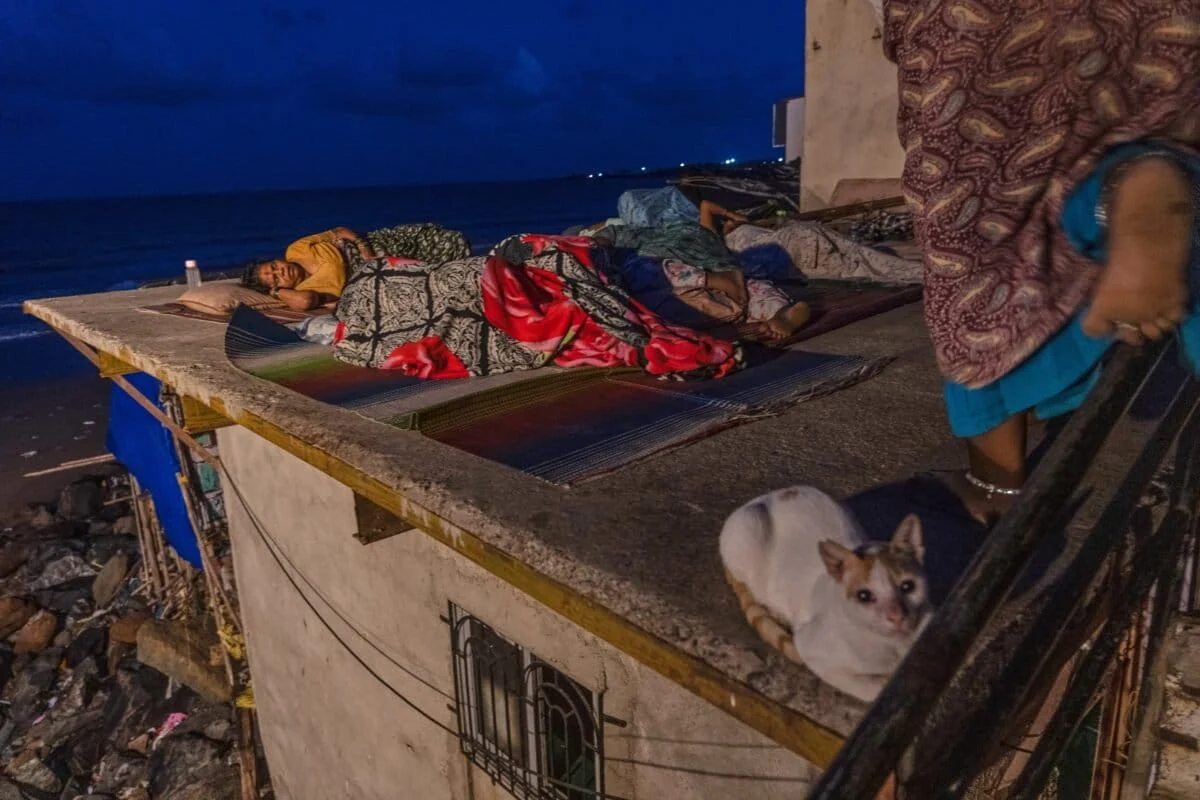
The family’s solution is a desperate adaptation: a split shift. They work from 6:00 a.m. to 9:00 a.m., then retreat indoors to huddle under ceiling fans during the peak hours of 9:00 a.m. to 3:00 p.m., before returning to the fields until dusk. But even the indoors offers little sanctuary; the radiant heat trapped within their home makes the "respite" nearly as grueling as the labor.

Kalaiselvi’s ordeal is not an isolated weather anomaly. It is the frontline of a dangerous climate transition that experts warn is being ignored by India’s current public health frameworks.
Main Facts: The Rise of "Uncompensable" Heat
For decades, India’s public health policies and Heat Action Plans (HAPs) have operated under a singular assumption: extreme heat is a summer phenomenon. It is viewed as a dry, scorching emergency confined to May and June, which miraculously dissipates once the monsoon clouds arrive in July. Consequently, when the rains begin, heat alerts are deactivated, and emergency protocols are mothballed.
However, a groundbreaking study recently published in AGU Advances reveals that this seasonal distinction is becoming obsolete. As global temperatures rise, India is facing an emerging hazard: Uncompensable Heat Stress (UHS).
UHS represents a critical physiological threshold where the human body, regardless of how much water it consumes or how much it sweats, loses the ability to cool itself. In high-humidity environments, sweat cannot evaporate off the skin—the body’s primary mechanism for heat dissipation. When evaporation stops, core body temperatures soar, leading to rapid organ strain and, eventually, death.
The study indicates that what Kalaiselvi experiences in coastal Tamil Nadu is a harbinger for the rest of the subcontinent. If global temperatures exceed a 2°C rise relative to pre-industrial levels, more than half of India will experience these lethal "hot-and-humid" conditions during the monsoon season—a period previously considered a time of relief.

Chronology: Four Decades of Escalation
The transition from manageable seasonal heat to life-threatening humid stress has been decades in the making. By analyzing weather and mortality records from 1979 to 2021, researchers have mapped a disturbing trend:
- The 1980s Baseline: During this period, UHS was relatively rare. It affected approximately 8% of India’s landmass during the summer and a negligible 1% during the monsoon season.
- The Present Day: The land area experiencing uncoolable heat has already grown fourfold since the 1980s. Intense precipitation variations, such as cloudbursts followed by sudden dry spells, have created "compound" hazards where high moisture meets high temperature.
- The 2°C Scenario: Under a 2°C warming trajectory, humid heat stress during the monsoon will surge to affect 50% of the country. This nearly matches the 60% of the country projected to be affected by dry heat during the summer.
- The 4°C Extremity: Should global warming reach 4°C, the northern Gangetic Plain is projected to suffer 75% more "uncoolable" days during the rainy season (28 days) than in the peak of summer (18 days).
"Until now, our Heat Action Plans issued warnings based strictly on dry air temperatures," says Aditya Valiathan Pillai, a doctoral researcher at King’s College London and a visiting fellow at the Sustainable Futures Collaborative. "However, the rate of climate change has accelerated… We are witnessing an emerging hazard in the form of compound hot and humid conditions."
Supporting Data: The Mechanics of the "Monsoon Break"
The science behind why the monsoon is becoming more dangerous than the summer lies in the relationship between relative humidity and air temperature. Vimal Mishra, co-author of the AGU Advances study and a professor at IIT Gandhinagar, explains that the danger peaks during "monsoon breaks."
During the rainy season, relative humidity is inherently high. When a dry spell occurs mid-monsoon, air temperatures shoot up, particularly in the Indo-Gangetic Plain and Western India. Crucially, the moisture stored in the soil from previous rains continues to evaporate. This "pumps" additional humidity into the air even while the skies remain clear.
"If high humidity occurs when temperatures are lower, such as late August, the wet-bulb temperature remains manageable," Mishra explains. "But in June and July, when high temperatures collide with elevated soil moisture, wet-bulb levels easily cross 30°C, creating unbearable, life-threatening heat stress."

The Occupational Toll
The impact of this shift is most acute for those in "high-exertion" sectors like agriculture and construction. Dr. Vidhya Venugopal, Professor and Head of Occupational and Environmental Health at Sri Ramachandra Institute, notes that for continuous heavy work, the recommended Wet-Bulb Globe Temperature (WBGT) limit is around 28°C for acclimatized workers.
When humidity spikes past 60%, the physiological breakdown is systematic:
- Evaporative Failure: Sweat remains on the skin.
- Circulatory Strain: The heart pumps frantically to move blood to the skin’s surface for cooling.
- Dehydration: Continuous sweating depletes fluids, causing blood volume to fall.
- Organ Damage: Repeated exposure leads to chronic kidney disease (CKD) and systemic immune decline.
Official Responses: A Systemic Policy Gap
Despite the mounting scientific evidence, India’s administrative response remains tethered to an outdated model. In 2023, an assessment by the Centre for Policy Research (CPR) evaluated 37 Indian Heat Action Plans and found them severely lacking.
Most HAPs are:
- Seasonally Siloed: They shut down at the end of June, leaving citizens unprotected during the humid months of July through October.
- Temperature-Centric: They rely on "dry-bulb" temperatures rather than the more accurate "wet-bulb" or WBGT indices that account for humidity.
- Legally Weak: HAPs are currently guidelines rather than mandates. "The lack of a legislative structure does not bind HAPs as a legal duty of state governments," Pillai notes. He suggests they be integrated into the National Disaster Management Act to ensure accountability.
Dr. Rajendran Krishnan, a scientist at the ICMR-National Institute for Research in Tuberculosis, points out that while developed nations integrated climate-health studies into policy decades ago, India is only now beginning to bridge the gap between climate modeling and public health protocols.

Implications: The Data Gap and the "Invisible" Dead
One of the most significant hurdles in addressing humid heat is the "invisibility" of its victims. India lacks a comprehensive system to track heat-attributable deaths.
"Heat-related deaths are very complicated because we don’t have cause-based mortality data in our country," says Professor Mishra. Most victims—particularly the elderly or those with comorbidities—succumb to cardiac or respiratory failure triggered by heat, but their deaths are rarely recorded as "heatstroke."
Dileep Mavalankar, former director of the Indian Institute of Public Health, points to the 2010 Ahmedabad heatwave as a cautionary tale. While official records initially showed only 75 heatstroke deaths, a later analysis of "all-cause mortality" revealed nearly 800 excess deaths during that period.
"That stark gap is precisely why Ahmedabad launched the country’s first Heat Action Plan in 2013," Mavalankar says. He argues that for the monsoon threat to be taken seriously, municipalities must release daily death counts in real-time to establish local thresholds for emergency intervention.
Conclusion: A Call for Urgent Restructuring
The transition from dry heatwaves to humid heat stress represents a fundamental shift in the climate risks facing the Indian subcontinent. Tackling this will require a multi-pronged approach:

- Early Warning Systems: Moving beyond simple temperature alerts to "Heat Stress" warnings that incorporate humidity and soil moisture data.
- Medical Preparedness: Primary Health Centers (PHCs) must be equipped with ice packs, IV fluids, and cooling rooms specifically during the monsoon months.
- Labor Reform: Legally mandated "rest and shade" protocols that adjust work hours based on real-time WBGT readings, rather than the calendar.
- Infrastructure: Recognizing that ceiling fans and evaporative coolers (swamp coolers) fail in high humidity, necessitating public "cooling centers" with air conditioning for vulnerable populations.
As Pillai reflects, "We did a good job dealing with dry heat once we understood its economic and physical impacts. That same knowledge gap now exists with humid heat."
For farmers like Kalaiselvi in Kothigal, the luxury of waiting for policy to catch up with science does not exist. Every morning at 9:00 a.m., the air becomes a wall, and the fields—once a source of life—become a theater of survival. The monsoon, once celebrated as the bringer of life, has become a season of silent, stifling danger.
