

THIRUVANANTHAPURAM — On a humid afternoon in July, a phone call from the coastal village of Marianad sparked a scientific inquiry that challenges the simplified narratives of global climate change. The caller, a veteran fisherman whose relationship with the sea dates back decades, shared an observation that seemed to defy the logic of global warming: while the world spoke of record-breaking heat and the arrival of El Niño, the waters off the coast of Kerala felt unusually, piercingly cold.
This local observation serves as the starting point for a deeper investigation into the complex mechanics of the Arabian Sea, the reliability of traditional ecological knowledge, and the sophisticated oceanographic processes that sustain one of India’s most productive fishing zones. As climate change alters the rhythm of the monsoons, the gap between global models and local realities is becoming a critical frontier for both scientists and the communities whose livelihoods depend on the tide.
1. Main Facts: The Conflict of Scale
The central tension in modern oceanography lies in the conflict between "basin-wide" phenomena and "local-scale" events. In 2024, as the world grappled with the effects of El Niño—a climate pattern originating in the Pacific Ocean that typically correlates with warmer sea surface temperatures and weakened monsoons in India—fishers in southern Kerala reported a contradictory chill in the water.
This cooling is not a sign that global warming is a myth, but rather a testament to the power of coastal upwelling. While the Pacific Ocean may be warming, local monsoon winds along the Kerala coast drive a process where warm surface water is pushed away from the shore, allowing deep, nutrient-rich, and significantly colder water to rise to the surface.
Key Findings:
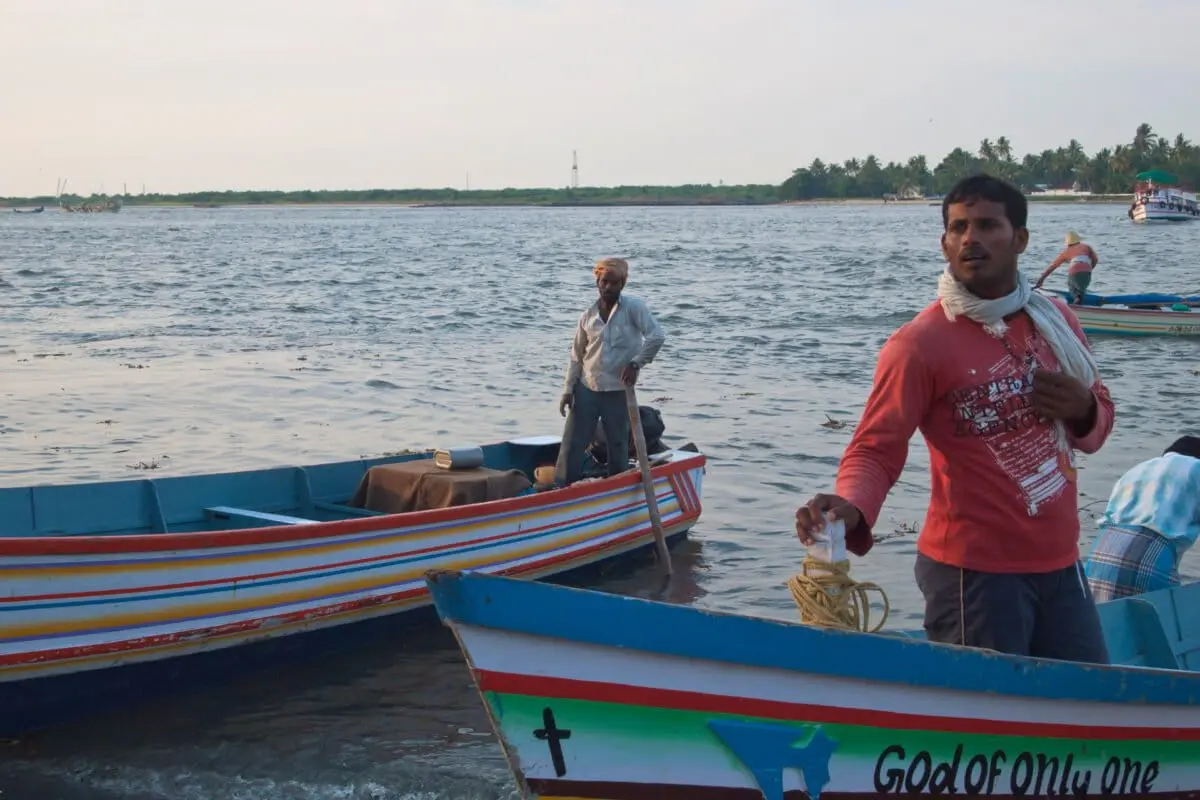
![El Niño, the monsoon, and the confusion of Kerala’s fishers [Commentary]](https://imgs.mongabay.com/wp-content/uploads/sites/30/2026/09/24232735/Kochi_Fishing_Fishermen_Kerala_India-1200x800.jpg)
- The El Niño Factor: Named by South American fishers as "The Little Boy," this phenomenon shifts global pressure belts but does not always dictate local sea temperatures in the Indian Ocean.
- The Upwelling Effect: Along the 8° to 10° North latitude band (where Marianad is located), the southwest monsoon winds blow parallel to the coast, creating a vacuum that pulls cold water from the depths.
- Economic Paradox: Despite the "good" catch potential caused by nutrient-rich waters, the turbulence of the monsoon sea limits the number of vessels able to launch, driving shore-side prices to record highs.
- Knowledge Erosion: Traditional signs used by fishers—cloud formations, wind direction, and bird migrations—are becoming increasingly decoupled from actual weather outcomes due to the volatile climate.
2. Chronology: From 1973 to the Present
The relationship between researchers and the Marianad fishing community began in 1973, a period when the mechanization of Indian fisheries was in its infancy. For five decades, development practitioners and oceanographers have used this stretch of the Thiruvananthapuram coast as a living laboratory to understand the intersection of sociology and marine biology.
The Evolution of the "Little Boy":
Centuries ago, fishers off the coast of Peru and Ecuador noticed that every few years, around Christmas, the sea would warm and the anchovy catch would disappear. They named it El Niño (the Christ Child). By the mid-20th century, meteorologists realized this wasn’t just a Peruvian problem; it was a global engine.
The July Call:
In July of a recent El Niño year, the author received a report from the field. The fisherman from Marianad noted that the sea was "turbid" and "rough," conditions that usually favor the catch because fish cannot easily see the nets. However, his primary observation was the temperature. According to his "body memory"—the internal database fishers use to compare seasons across decades—the water was colder than any July in recent memory.
The Shift in the 2020s:
In the last five years, the frequency of these "anomalous" reports has increased. The traditional calendar of the Chakara (the formation of mudbanks and fish schools) has become erratic. What was once a predictable seasonal cycle is now a series of "short, sharp departures" from the norm, leaving fishers to recalibrate their inherited wisdom in real-time.
3. Supporting Data: The Science of the Cold Current
To understand why a fisherman in Marianad feels cold while the planet burns, one must look at the specific geography of the Kerala coastline.
![El Niño, the monsoon, and the confusion of Kerala’s fishers [Commentary]](https://india.mongabay.com/wp-content/uploads/sites/30/2026/09/9509601840_51fa3afb80_k-768x512.jpg)
The Mechanics of Upwelling
The Indian monsoon is driven by the pressure differential between the heating landmass and the cooler Indian Ocean. As the southwest monsoon winds strike the coast, they don’t just bring rain; they move the ocean. Because the Kerala coast runs roughly north-to-south, the monsoon winds blow parallel to the shoreline.
Through a process known as Ekman Transport, this alongshore wind pushes the top layer of water westward, away from the land. To replace this displaced water, cold water from the deep ocean (often 100 to 200 meters down) rises. This water is:
- Colder: Often 3-5 degrees Celsius lower than surface temperatures.
- Nutrient-Rich: Packed with nitrates and phosphates that have settled on the seabed.
- Oxygen-Poor: Initially low in oxygen, forcing fish to move into specific "bands" where they are easier to catch for those brave enough to weather the rough seas.
The Latitude of Plenty
Research indicates that upwelling is not uniform. It is most intense between 8° and 10° North. Marianad, situated at 8.6° North, sits in the "Goldilocks zone" of this phenomenon.
| Feature | Description | Impact on Fisheries |
|---|---|---|
| Phytoplankton Diversity | Over 100 species recorded in southern Kerala shelf waters. | Forms the base of a massive food web, supporting sardines and mackerel. |
| Coastline Orientation | North-South alignment until Enayam, then bends East-West. | The bend at Enayam creates a "cross-shore" push, making the Cape Comorin area the most intense upwelling zone. |
| Backwater Nutrients | Outflow from Kerala’s lagoons. | Adds a secondary layer of nutrients, enriching the coastal "soup." |
4. Official Responses and Scientific Perspective
While fishers provide the "on-the-ground" data, national agencies like the Indian National Centre for Ocean Information Services (INCOIS) and the Central Marine Fisheries Research Institute (CMFRI) have been working to reconcile these observations with satellite imagery.
The "Indian Ocean Dipole" (IOD) Defense
Scientists note that El Niño does not act alone. The Indian Ocean has its own internal thermostat called the Indian Ocean Dipole. When the IOD is in a "positive" phase, it can effectively cancel out the drying effects of El Niño. This explains why some El Niño years still result in a healthy monsoon and strong upwelling.
![El Niño, the monsoon, and the confusion of Kerala’s fishers [Commentary]](https://india.mongabay.com/wp-content/uploads/sites/30/2026/09/3261240396_debca34c04_o-768x512.jpg)
Bridging the Gap
Official responses from the scientific community have increasingly emphasized the need for "Fisher-Integrated Science." In recent symposiums, CMFRI officials have acknowledged that satellite sensors often struggle to capture the nuances of "turbid" coastal waters during the monsoon due to heavy cloud cover. Consequently, the tactile experience of the fisher—feeling the water temperature on their skin—remains a vital, albeit qualitative, data point that instruments sometimes miss.
Government advisories have also become more cautious. While they may forecast a "weak monsoon" based on Pacific El Niño data, they now issue localized "Potential Fishing Zone" (PFZ) advisories that account for the upwelling-driven nutrient surges, recognizing that a bad year for the monsoon isn’t always a bad year for the net.
5. Implications: The Future of Inherited Knowledge
The "July Paradox" in Marianad is more than a scientific curiosity; it represents a looming crisis for the culture of fishing.
The Erosion of Traditional Ecological Knowledge (TEK)
For generations, the fishers of Thiruvananthapuram have used a sophisticated system of "signs" to navigate the sea. This includes:
- The Portuguese Legacy: The use of specific boat seines (large nets) found nowhere else in Kerala, adapted specifically for the diverse species found in the upwelling zones.
- Celestial Navigation: Reading the position of stars and the hue of the sunset to predict the next day’s swell.
However, as climate change introduces "new" variables—such as unprecedented sea-level rises and shifting wind patterns—this inherited knowledge is being tested. When the sea behaves in ways that contradict the "old stories," the risk factor for small-scale fishers increases exponentially.
![El Niño, the monsoon, and the confusion of Kerala’s fishers [Commentary]](https://india.mongabay.com/wp-content/uploads/sites/30/2026/09/pexels-manoo-media-65214113-37743684-768x512.jpg)
The Diversity of Gear and Species
The intense upwelling off southern Kerala has historically supported a vast array of species. This biodiversity led to a corresponding diversity in fishing gear. The fact that Marianad fishers use a wider range of nets and boat styles than their northern counterparts is a direct evolutionary response to the complex oceanography of their home waters. If the upwelling patterns shift or weaken due to warming deep-sea temperatures, this entire technological and cultural heritage is at risk of becoming obsolete.
Conclusion: Listening to the Shoreline
The phone call from Marianad serves as a reminder that the most accurate "sensors" of climate change are often the people whose lives are intertwined with the environment. While global models provide the "macro" view, the fishers provide the "micro" reality.
As we move deeper into an era of climate instability, the lesson from the Kerala coast is clear: we must listen to the local. The cooling of the sea in a warming world is not a contradiction, but a complex local rhythm. To ignore the observations of the fisherman is to ignore the most nuanced data we have. In the battle to understand our changing planet, the "body memory" of the fisher is just as essential as the silicon memory of the supercomputer.
About the Author: The contributor is a veteran development practitioner with over 50 years of experience working alongside small-scale fishing communities in Asia. He formerly served as a professor at the Centre for Development Studies (CDS), Thiruvananthapuram, specializing in the socio-economics of coastal ecosystems.
