

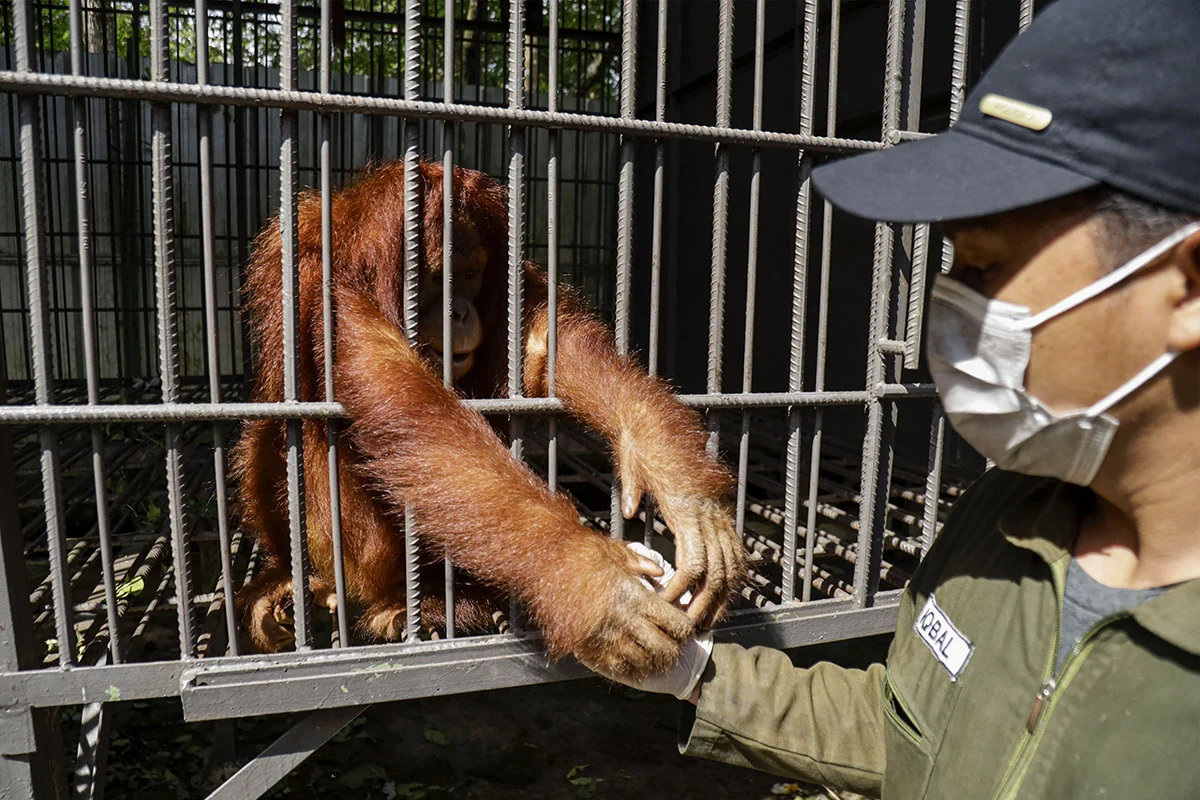
BHUBANESWAR, INDIA – The discovery of five infant orangutans wandering in a remote woodland in Odisha has pulled back the curtain on a sophisticated, multi-national trafficking syndicate that spans the breadth of Southeast Asia and the Indian subcontinent. Found on September 8 near the Bichitrapur forest area in Balasore district, the infants—orphaned by the very trade that transported them—now face a precarious future as they become the center of a complex legal and diplomatic tug-of-war between India and Indonesia.
Conservationists and wildlife crime experts warn that these five primates are not merely lost animals but are victims of a brutal "harvesting" process that begins with the slaughter of mother orangutans in the rainforests of Sumatra and ends in the lucrative, shadowy world of exotic pet ownership in India.
Main Facts: A Transnational Crime Unfolds
The five orangutans, all estimated to be in their infancy, were discovered by locals in a region far removed from their natural habitat. Orangutans are native only to the islands of Sumatra and Borneo in Indonesia and Malaysia. The Bichitrapur forest in Odisha is more than 2,000 kilometers across the Indian Ocean from the nearest wild population.
The presence of these animals in eastern India highlights a growing trend of "exotic" wildlife being smuggled into the country. According to M. Indra Kurnia, director of conservation at the Sumatran Orangutan Lestari Foundation-Orangutan Information Center (YOSL-OIC), the process is inherently violent.
“This starts with hunting in the wild, separating babies from their mothers, and transporting them across various regions, then selling them or keeping them as exotic pets,” Kurnia stated. Because infant orangutans cling to their mothers for the first seven to nine years of their lives, poachers almost invariably kill the mother to retrieve the offspring.

The infants are currently being housed at the Nandankanan Zoological Park in Bhubaneswar, where they are undergoing medical evaluations. While they are receiving professional care, the ultimate goal for Indonesian authorities and international NGOs is repatriation—a process fraught with bureaucratic and legal hurdles.
Chronology: A Pattern of Increasing Trafficking
The September 8 discovery is not an isolated incident. It is the latest in a string of high-profile seizures that suggest India is becoming a major destination or transit hub for the illegal trade in Great Apes.
- September 2022: Authorities in Mizoram, a state in Northeast India bordering Myanmar, recovered two juvenile Sumatran orangutans. Forestry officials at the time noted the animals were likely less than a year old and had been moved across the porous border with Myanmar.
- October 2023: Another Sumatran orangutan was rescued from a vehicle in Seling village, Mizoram, just 55 kilometers from the Myanmar border.
- September 2024: The discovery of five infants in Odisha represents a significant escalation in the volume of a single "shipment," suggesting that trafficking networks are becoming bolder and more organized.
The Odisha state government has formally requested the Wildlife Crime Control Bureau (WCCB) to spearhead the investigation. The focus is no longer just on the recovery of the animals, but on dismantling the "Aceh route"—a specific trafficking pipeline identified by conservation groups.
Supporting Data: Unmasking the "Aceh-to-India" Pipeline
Research conducted by SCENTS (an Indonesian conservation organization specializing in wildlife trafficking) and the YOSL-OIC suggests a highly coordinated route. The latest batch of orangutans is believed to have originated in the Aceh Tamiang district of Indonesia’s Aceh province.
The suspected journey involves several international borders:
- Origin: Aceh, Sumatra (Indonesia)
- Transit 1: Malaysia (via sea routes)
- Transit 2: Thailand and Myanmar (overland)
- Transit 3: Bangladesh (cross-border)
- Entry Point: Mizoram or West Bengal (India)
- Final Destination: Odisha (often used as a transit point for domestic buyers in major Indian metros)
Dwi Nugroho Adhiasto, a wildlife trade expert and senior adviser at SCENTS, notes that Odisha and Mizoram serve as critical nodes in this network. "Odisha or Mizoram generally serve as transit points before animals are shipped to final buyers or international markets," Adhiasto explained.

The demand is driven by a burgeoning market for exotic pets among the wealthy, often fueled by social media trends where owning a rare primate is seen as a status symbol. However, the survival rate for these infants is low. Separated from their mothers and subjected to the stress of cramped, clandestine transport, many die before reaching their destination.
Scientific Verification: The Role of DNA and Morphology
While initial physical assessments by Indonesian and Indian experts suggest the five infants are Sumatran orangutans (Pongo abelii), definitive proof is required for legal repatriation under CITES (Convention on International Trade in Endangered Species of Wild Fauna and Flora) protocols.
Morphological examinations—looking at hair color, facial structure, and limb proportions—provide a preliminary identification. Sumatran orangutans typically have narrower faces and paler, longer hair than their Bornean counterparts. However, DNA analysis is the "gold standard" for the investigation.
“DNA analysis can provide stronger evidence by comparing the five young orangutans’ genetic profiles with reference samples from known populations,” said Indra Kurnia. This genetic fingerprinting can pinpoint the exact forest block the animals were stolen from, providing investigators with the "crime scene" evidence needed to prosecute the poachers at the source.
Official Responses: Navigating Bilateral Red Tape
The Indonesian government has been proactive in its response, but the path to bringing the infants home is blocked by "legal and bureaucratic systems" that often clash.
Ristianto Pribadi, a spokesperson for Indonesia’s Ministry of Forestry, confirmed that the government is coordinating with Indian counterparts and CITES officials. "Our goal is the repatriation of the five young orangutans in compliance with prevailing laws and regulations," Pribadi said. He further warned that "if any Indonesian citizen is found to be involved, we will take firm legal action."

However, history suggests repatriation is rarely swift. Panut Hadisiswoyo, director of Green Justice Indonesia, pointed out that previous attempts to return wildlife have often hit "dead ends." Differences in quarantine laws, evidentiary requirements for criminal trials, and the sheer cost of international animal transport create significant delays. In some cases, animals spend years in foreign zoos while their "case" winds through the courts, often losing the ability to ever be rehabilitated back into the wild.
The Indonesian Ministry of Forestry is currently working with a coalition of NGOs, including the Center for Orangutan Protection (COP) and the Orangutan Indonesia Forum (Forina), to provide the technical expertise needed to facilitate the move.
Implications: A Species on the Brink
The trafficking of these five infants is a devastating blow to a species already teetering on the edge of extinction. All three species of orangutan—the Bornean (Pongo pygmaeus), the Sumatran (Pongo abelii), and the recently discovered Tapanuli (Pongo tapanuliensis)—are listed as Critically Endangered on the IUCN Red List.
The statistics are grim:
- Sumatran Orangutans: A 2026 study estimated only 11,694 remain in the wild, a nearly 20% decline since 2011.
- Bornean Orangutans: While numbering roughly 104,700 as of 2016, the population is projected to decline by 86% between 1950 and 2025 due to habitat loss and hunting.
- Tapanuli Orangutans: With only an estimated 716 individuals remaining, they are the rarest great ape species on Earth.
The loss of five infants represents more than just five individuals; it represents the loss of future generations. Because orangutans have one of the slowest reproductive rates of any mammal—females give birth only once every 7 to 9 years—the removal of infants from the wild has a disproportionate impact on population viability.
The Shift to "Crime Network-Oriented" Conservation
The discovery in Odisha has prompted a call for a paradigm shift in how wildlife crime is handled. Conservationists argue that the international community must move beyond a "rescue-oriented" approach, which focuses on the welfare of the individual animal, toward a "crime network-oriented" strategy.

“The approach to orangutan trafficking must evolve,” Indra Kurnia insisted. This means treating wildlife smuggling with the same gravity as drug or human trafficking. It requires intelligence sharing between India, Myanmar, and Indonesia, and the prosecution of the high-level financiers who bankroll the trade, rather than just the low-level poachers.
As the five infants recover at Nandankanan Zoological Park, their journey is far from over. They remain symbols of a global crisis—a reminder that as long as there is a market for the exotic, the world’s most vulnerable species will continue to be snatched from their homes, one motherless infant at a time. The eyes of the international conservation community are now on India and Indonesia, waiting to see if the legal systems can finally align to bring these forest dwellers home.
