

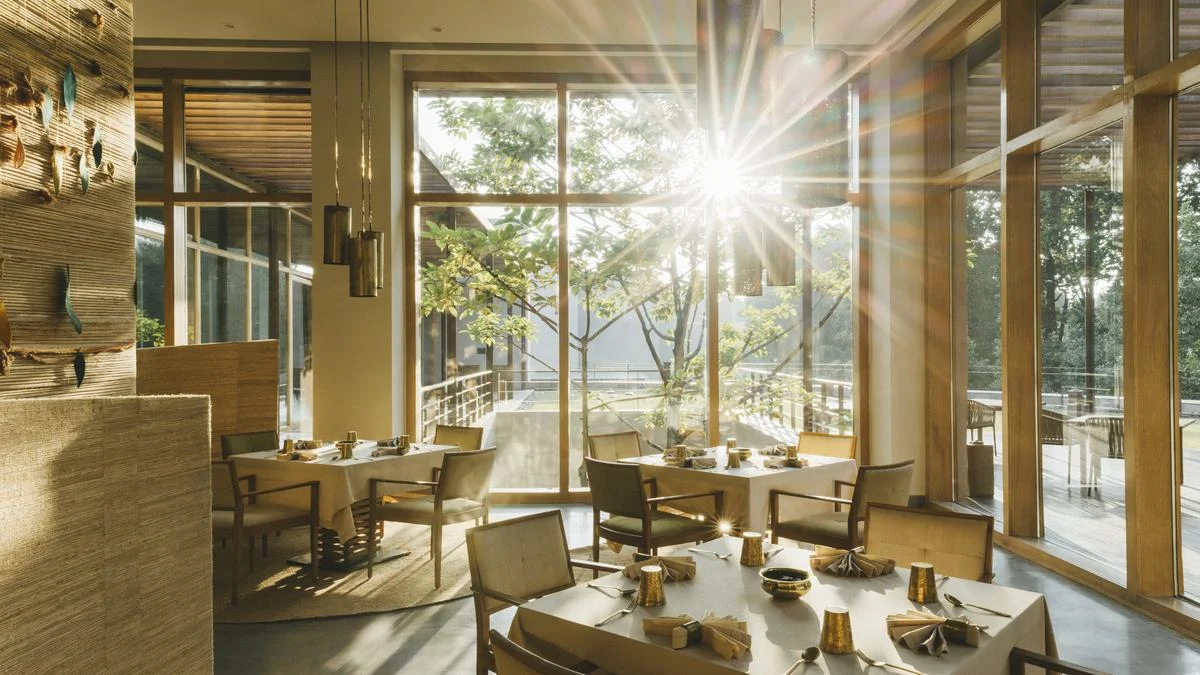
New Delhi, October 2025 — The global hospitality landscape witnessed a seismic shift this month as the Michelin Guide released its latest distinctions for the world’s most exceptional hotels. In a move that mirrors the prestige of its storied culinary stars, Michelin awarded "Keys" to 2,457 hotels worldwide. Among this elite global selection, India emerged as a burgeoning powerhouse of high-end travel, with 36 properties securing the coveted recognition.
This announcement marks a pivotal moment for the Indian tourism sector. While the country has long been celebrated for its "Atithi Devo Bhava" (The Guest is God) philosophy, the Michelin Keys provide a standardized, rigorous, and internationally recognized validation of excellence that moves beyond traditional star ratings.
1. Main Facts: The Michelin Key Framework
For decades, the hospitality industry has relied on self-determined benchmarks. Hotels typically aim for a four- or five-star classification, a process largely within a property’s control provided they meet specific thresholds of infrastructure, polish, and service amenities. The Michelin Key, however, represents the second, far more elusive category of accolade: an external, independent judgment of "the best among the best."
While Michelin has recommended hotels since the early 1900s, it formalised the "Key" system in 2024 to distinguish properties that offer experiences far beyond the ordinary. The 2025 awards for India are distributed across three distinct tiers:
- One Michelin Key (14 properties): A very special stay.
- Two Michelin Keys (20 properties): An exceptional stay.
- Three Michelin Keys (2 properties): An extraordinary stay, worthy of a dedicated journey.
The Five Pillars of Evaluation
Unlike traditional ratings that may focus on the square footage of a room or the number of elevators, Michelin inspectors assess properties based on five qualitative criteria:

- Architecture and Interior Design: The aesthetic integrity and visual narrative of the property.
- Quality and Consistency of Service: The "invisible" excellence of staff and operations.
- Overall Personality and Character: The unique "soul" of the hotel that prevents it from being a cookie-cutter luxury space.
- Value for Price: Whether the experience justifies the financial investment.
- Meaningful Contribution to the Setting: How the hotel interacts with and elevates its local environment.
2. Chronology: From Roadmaps to Royal Suites
The evolution of the Michelin Guide is a study in brand transformation. Originally conceived in 1900 by the Michelin tire company as a way to encourage French motorists to travel further (and thus wear out their tires), the guide initially focused on mechanics, gas stations, and basic lodgings.
- 1920s: The guide introduced the star system for restaurants, which eventually became the world’s most respected culinary benchmark.
- Early 2000s: Michelin began expanding its hotel recommendations globally, though without a tiered award system similar to its stars.
- 2024: Recognizing a gap in the market for a trusted, independent hotel ranking, Michelin launched the "Michelin Key" in select markets.
- October 2025: The full integration of the Indian hospitality market into the Key system, with 36 hotels recognized, signaling India’s maturity as a luxury destination.
This chronology reflects a shift in global travel trends. Today’s luxury traveler is less interested in "gilded cages" and more focused on "transformative experiences"—a shift that India, with its rich heritage and diverse geography, is uniquely positioned to exploit.
3. Supporting Data: A Deep Dive into the Tiers
To understand the practical application of the Michelin criteria, we examine three flagship Indian properties that represent each of the three Key tiers.
The One-Key Experience: Six Senses Vana, Dehradun
Located in the foothills of the Himalayas, Six Senses Vana exemplifies the "One Key" philosophy: doing one thing with absolute conviction. Vana is not a hotel in the traditional sense; it is a controlled ecosystem of wellness.
- The Experience: Upon arrival, guests (referred to as vanavasis) exchange their clothes for identical white kurta pyjamas. This removes "decision fatigue" and reinforces a sense of equality.
- The Data Point: With a nightly rate of approximately ₹95,000 (USD $1,000), the value is found in the holistic inclusion of Ayurvedic, Tibetan, and natural healing therapies.
- Inspector’s View: The property earns its key through its "personality and character." It is a modern, restrained architectural marvel that provides a digital detox and spiritual reset, achieving its specific ambition of "inward transformation" with surgical precision.
The Two-Key Experience: The Imperial, New Delhi
The Imperial represents the "Two Key" standard: a property that serves as a custodian of cultural memory. Situated in the heart of the capital, it is often called the "Grand Dame" of Indian hotels.

- The Heritage Factor: The hotel houses over 5,500 works of art and maintains "The Gandhi Table" (Table No. 14), where the Mahatma once sat during pivotal political negotiations.
- The Design: A seamless blend of Victorian, Art Deco, and colonial styles.
- The Data Point: Owned independently by the Akoi family since the 1930s, the hotel avoids the standardized feel of global chains, offering a "family-run warmth" that Michelin inspectors highly value. It is recognized for its "meaningful contribution to its setting," acting as a living museum of India’s journey to independence.
The Three-Key Experience: Taj Lake Palace, Udaipur
The "Three Key" designation is reserved for properties that are irreplaceable. The Taj Lake Palace, an 18th-century marble marvel floating on Lake Pichola, is the epitome of this tier.
- Architecture: A breathtaking amalgamation of Mughal and Rajasthani influences, reachable only by boat.
- Exclusivity: The palace is restricted entirely to residents, creating an atmosphere of absolute privacy.
- The Verdict: At roughly ₹95,000 per night, the experience is described as "suspended time." Michelin awards Three Keys when the hotel’s existence is inseparable from its location. If you moved the Lake Palace to a different city, its essence would vanish. It is a "living heritage site" that safeguards local architectural traditions.
4. Official Responses and Industry Perspectives
While Michelin inspectors remain anonymous, the guide’s leadership has emphasized that these awards are intended to "celebrate the craft of hospitality."
Industry analysts suggest that the inclusion of 36 Indian properties will have a "halo effect" on Indian tourism. "The Michelin Key is a signal to the high-net-worth global traveler that India offers a level of sophistication that rivals the traditional luxury hubs of Paris, Tokyo, or London," says a spokesperson for a leading hospitality consultancy.
The response from the awarded properties has been one of "validated pride." For independent hotels like The Johri in Jaipur or The Kumaon in Almora, the One Key award provides a marketing reach that was previously unattainable. Conversely, for established giants like the Taj and Oberoi groups, the multi-key recognitions solidify their status as global leaders in heritage preservation.
5. Implications: The Future of Luxury in India
The introduction of Michelin Keys in India carries three major implications for the future of the industry:

1. From Excess to Inevitability:
The Michelin criteria suggest a shift away from "luxury as excess" (gold-plated faucets and massive buffets) toward "luxury as inevitability." This is the sense that a hotel has become the best possible version of itself. Whether it is a rugged retreat in Almora or a palace in Hyderabad, the focus is now on soul and consistency.
2. Economic and Heritage Preservation:
Properties like the Taj Lake Palace and The Imperial are not just businesses; they are employers of traditional craftsmen and curators of history. The Michelin recognition provides a financial incentive for owners to continue the expensive work of heritage conservation rather than modernizing for the sake of convenience.
3. The Rise of the "Niche" Destination:
The list of winners includes properties in relatively remote areas like Sawai Madhopur, Bikaner, and Patiala. This indicates that the Michelin Key will drive high-end tourism into India’s interior, diversifying the economic benefits of the travel sector beyond the "Golden Triangle" of Delhi, Agra, and Jaipur.
Full List of Michelin Key Recipients in India (2025)
Three Michelin Keys (The Pinnacle)
- Taj Lake Palace, Udaipur
- Taj Falaknuma Palace, Hyderabad
Two Michelin Keys (Exceptional)
- The Oberoi Amarvilas, Agra
- Amanbagh, Alwar
- Sujan Jawai, Bisalpur
- Raffles Jaipur
- The Leela Palace, Jaipur
- Sitara Himalaya, Manali
- The Imperial, New Delhi
- The Leela Palace, New Delhi
- Aman-i-Khas, Ranthambhore
- Six Senses Fort Barwara, Sawai Madhopur
- Raffles Udaipur
- The Oberoi Udaivilas, Udaipur
One Michelin Key (Special)
- The Kumaon, Almora
- Narendra Bhawan, Bikaner
- The Leela Palace, Chennai
- Six Senses Vana, Dehradun
- The Oberoi Gurgaon, Gurugram
- Taj Usha Kiran Palace, Gwalior
- Rajmahal Palace RAAS, Jaipur
- Taj Devi Ratn Resort & Spa, Jaipur
- The Johri, Jaipur
- The Oberoi Rajvilas, Jaipur
- Villa Palladio, Jaipur
- Soho House, Mumbai
- Taj Mahal Palace, Mumbai
- Taj Mahal Tower, Mumbai
- Taj Mahal, New Delhi
- The Lodhi, New Delhi
- Ran Baas – The Palace, Patiala
- Taj Rishikesh Resort & Spa, Uttarakhand
- Sujan Sher Bagh, Sawai Madhopur
- The Oberoi Vanyavilas, Sawai Madhopur
- RAAS Devigarh, Udaipur
- Nadesar Palace, Varanasi
In conclusion, the 2025 Michelin Key awards confirm that India is no longer just a destination for "budget backpacking" or "cultural curiosity." It has firmly established itself as a global titan of luxury hospitality, where history, service, and architectural soul converge to create experiences that are, quite literally, key to understanding the modern world of travel.
