

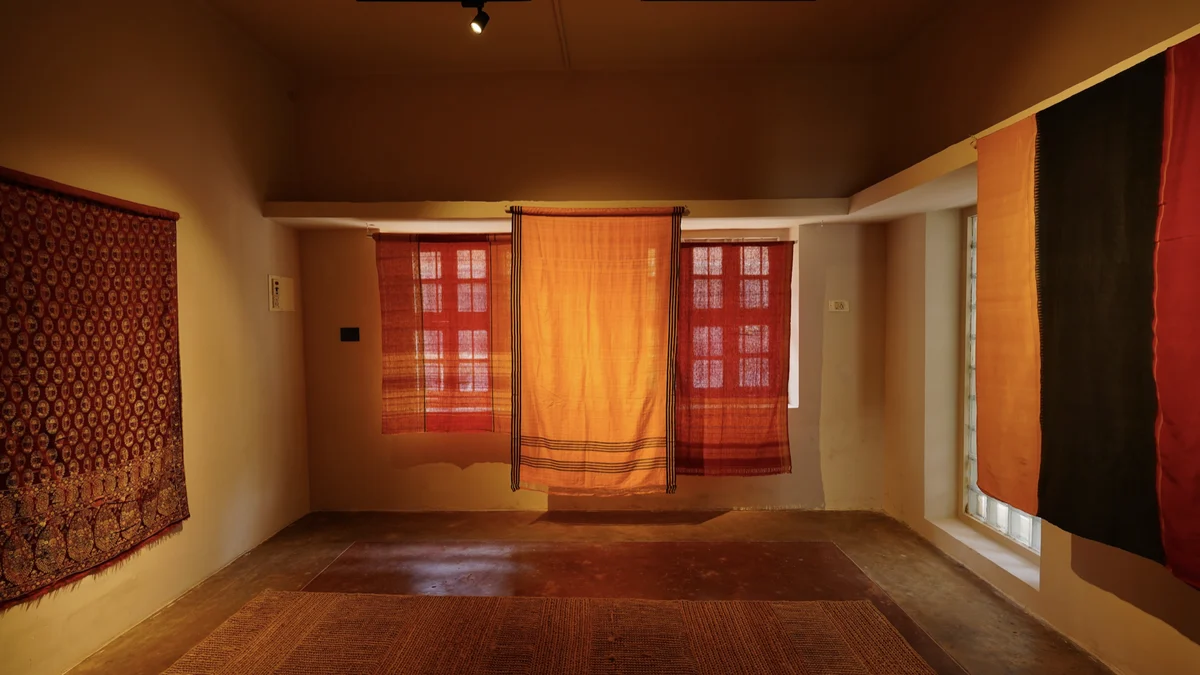
Bengaluru, India – In a city increasingly recognized as a hub for innovation and design, a new cultural landmark has emerged. The Registry: Centre for Design, housed within the beautifully restored 1932 bungalow "Prithvi" in Bengaluru’s historic Richmond Town, has officially opened its doors with its inaugural exhibition, "Perched Upon a Woven Sky." This captivating showcase, curated by Aayushi Jain and presented by The Registry of Sarees (Trust), transcends a mere display of textiles, offering a profound and immersive experience that explores the intricate relationship between fabric, light, and human perception. The exhibition marks a significant milestone, commemorating a decade of The Registry of Sarees, an initiative helmed by the visionary Ally Mathan.
The Registry: Centre for Design aims to be a vibrant multidisciplinary space, fostering a rich dialogue between architecture, art, ceramics, music, theatre, history, and design. This ambitious vision is brought to life within the elegant confines of Prithvi, a testament to architectural preservation and adaptive reuse. Beyond its exhibition spaces, the Centre will also host the flagship store of Ally Mathan’s textile label, Yali, the artisanal bodycare brand Pekko, and a charming cafe named Indulge, creating a holistic destination for creativity, community, and thoughtful engagement.
A Spectrum of Inspiration: The Genesis of "Perched Upon a Woven Sky"
"Perched Upon a Woven Sky" draws its conceptual inspiration from the very title of the exhibition, exploring the notion of textiles being suspended, or "perched," within the ever-shifting tapestry of light that defines our days. The exhibition features a meticulously curated selection of 45 textiles from The Registry’s extensive archives, each chosen not for its geographical origin or a specific weaving technique alone, but for its intrinsic dialogue with colour and how light interacts with its intricate structure.
Aayushi Jain, the curator, elaborates on this unique approach, stating, "We wanted the weaves to be perceived beyond just ‘an object to be worn or owned.’ Instead, we aimed to highlight the comparison between textiles and the landscapes they draw from. We wanted to see them as an environment shaped by light, colour, and the perception of the person standing before it." This philosophy is elegantly realized through an exhibition design that "stages handwoven cloth within shifting conditions of natural and artificial light across the hours of a day."

The exhibition is organized into distinct thematic sections, each representing a different chromatic phase of the day. As visitors journey through the space, they encounter weaves that evoke the soft, ethereal glow of dawn, characterized by an exquisite palette of golds, purples, and delicate pinks. This transitions into the vibrant intensity of the afternoon, where textiles burst forth in brilliant yellows, fiery reds, and deep blacks, mirroring the sun’s zenith and its scorching embrace. As evening descends, the exhibition space is bathed in cooler, contemplative hues of blue, culminating in a breathtaking 90-year-old Jamdani weave adorned with copper zari, its intricate patterns seemingly illuminated by the fading light.
A Celestial Dialogue: Weaves as Celestial Narratives
One of the exhibition’s most poignant highlights is a Kanjeevaram weave crafted from mulberry silk and silver zari. This particular sari is not just a masterpiece of craftsmanship but also a vessel of history. It was commissioned by Mrs. Medapa, the wife of the Chief Justice of the erstwhile state of Mysore, to commemorate a celebratory function honoring her husband’s appointment to the court. The sari, with its luminous silver zari against the rich mulberry silk, is presented as a representation of the moon, its understated elegance reflecting the serene beauty of the night sky.
The selection process for these exceptional textiles was a rigorous undertaking, spanning approximately seven months. Aayushi Jain explains, "We wanted to display textiles that we had not displayed before. In addition, we removed fragile weaves, and those in restoration from the list. We also acquired a few solely for the exhibition." This dedication to showcasing fresh perspectives and preserving delicate heritage underscores the curatorial team’s commitment to both innovation and conservation.
The Art of Illumination: Crafting an Experiential Journey
The deliberate manipulation of light is a cornerstone of "Perched Upon a Woven Sky." Vishvesh Surve, the exhibition designer, has masterfully orchestrated the interplay of natural and artificial light to enhance the visual narrative of the textiles. "We had to experiment with different lights and tonalities to understand how textiles react to them, and their reflections and shadows," Surve shares, highlighting the scientific precision behind the artistic execution. This meticulous attention to detail ensures that each weave is presented in its most evocative state, allowing its colours, textures, and intricate patterns to resonate deeply with the viewer.

The exhibition’s unconventional structure further adds to its immersive quality. Departing from the traditional curatorial approach, "Perched Upon a Woven Sky" places the curatorial note at the end of the exhibition. This deliberate choice is intended to encourage visitors to engage with the textiles on a personal and intuitive level, allowing their own interpretations and emotional responses to take precedence. "We wanted to challenge the traditional exhibition walkthrough," Aayushi Jain explains. "Our note is not the first thing visitors see; it is at the end of the exhibition. We want visitors to interpret the displays in their own way." This departure fosters a more active and personal connection with the art on display, transforming the viewing experience into a journey of discovery.
The Registry: A Decade of Dedication and a Future of Design
The opening of The Registry: Centre for Design marks a significant milestone in Ally Mathan’s decade-long dedication to the preservation and promotion of Indian textiles, particularly the saree. The Registry of Sarees, founded with a mission to document, conserve, and celebrate the rich heritage of Indian weaving, has become a vital institution for researchers, designers, and textile enthusiasts alike. The establishment of a physical centre in Bengaluru signifies a bold step forward, expanding its reach and impact.
The Centre’s multidisciplinary approach is a forward-thinking vision, recognizing that design is not an isolated discipline but a holistic ecosystem that thrives on cross-pollination of ideas. By bringing together diverse creative fields under one roof, The Registry aims to foster an environment of collaboration and innovation, sparking new conversations and inspiring future generations of designers and artists.
Supporting Data and Implication for the Design Landscape
The success of "Perched Upon a Woven Sky" has significant implications for the broader design and cultural landscape in India. It underscores a growing appreciation for traditional crafts, not merely as historical artifacts, but as dynamic and relevant forms of artistic expression that can be reinterpreted for contemporary audiences. The exhibition’s focus on the scientific principles behind colour perception in natural materials, such as the peacock feather example, also highlights the potential for interdisciplinary research that bridges art, science, and traditional knowledge.

The Registry’s commitment to showcasing textiles through the lens of light and environmental context provides a new framework for understanding and appreciating woven art. This approach can influence how museums and galleries curate textile exhibitions, moving beyond static displays to create more dynamic and engaging experiences. Furthermore, the integration of retail spaces like Yali and Pekko within the Centre demonstrates a viable model for sustainable cultural enterprises, where artistic expression is directly linked to economic viability.
The restored bungalow, "Prithvi," itself serves as a powerful example of heritage conservation and adaptive reuse, demonstrating how historic structures can be revitalized to serve contemporary cultural purposes. This model can inspire similar initiatives in other cities, preserving architectural heritage while fostering vibrant cultural hubs.
A Look Ahead: The Future of The Registry
As "Perched Upon a Woven Sky" captivates visitors, The Registry: Centre for Design embarks on its mission to become a nexus of creative exchange. The Centre’s commitment to a multidisciplinary approach, coupled with its dedication to showcasing the richness of Indian textiles and design, positions it as a vital institution for the future. Future exhibitions, workshops, and public programs are anticipated to further solidify its role as a beacon of design innovation and cultural dialogue in Bengaluru and beyond. The Registry is not just a new space; it is a testament to the enduring power of craft, the transformative influence of light, and the boundless potential of human creativity.
The exhibition is located at 7, Cornwell Road, Langford Gardens, Bengaluru.
