

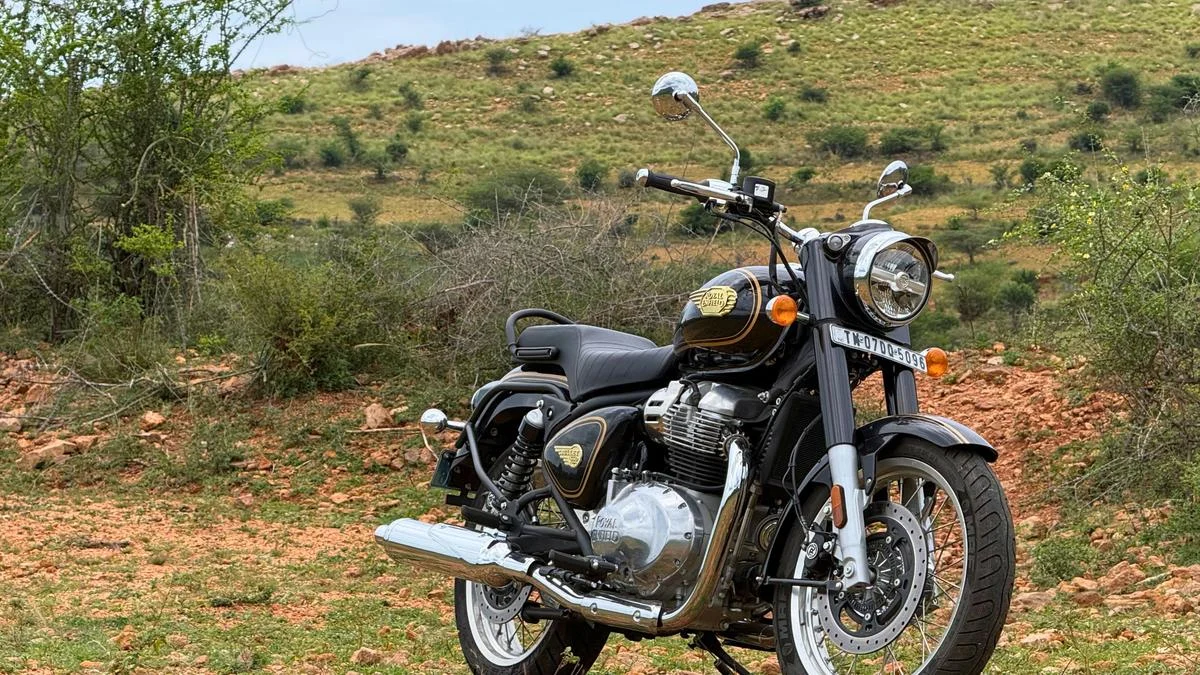
The landscape of middleweight motorcycling has undergone a seismic shift with the official arrival of the Royal Enfield Bullet 650. For nearly a century, the "Bullet" moniker has stood as a symbol of endurance, simplicity, and rugged charm. Now, Royal Enfield has married its most storied nameplate with its most acclaimed modern engineering feat: the 648cc parallel-twin platform. Priced at ₹3.64 lakh (ex-showroom), the Bullet 650 is not merely a new model; it is a strategic bridge between the brand’s analog past and its high-performance future.
Main Facts: The Core Identity of the Bullet 650
The Bullet 650 represents the fifth iteration of Royal Enfield’s 650cc twin-cylinder family, following the Interceptor, Continental GT, Super Meteor, and the Shotgun. However, unlike its siblings, which lean into roadster, cafe racer, or cruiser archetypes, the Bullet 650 is designed to be the "purest" expression of the brand’s DNA.
At its heart lies the 648cc air-oil cooled parallel-twin engine, producing 47 PS of power and 52.3 Nm of torque. While these figures are familiar to the Enfield community, the application here is unique. The motorcycle retains the iconic silhouette—the teardrop tank, the "Madras" hand-painted gold pinstripes, and the massive squared-off rear mudguard—but upgrades the mechanical soul to a level of refinement previously unseen in the Bullet line.
The motorcycle enters the market with a kerb weight of 243 kg, making it a substantial machine that demands respect. Yet, with a seat height of 800mm and a focus on neutral ergonomics, Royal Enfield has positioned it as an accessible "big bike" for those transitioning from smaller displacements or returning to motorcycling after a hiatus.

Chronology: The Evolution of the Bullet Nameplate
To understand the significance of the 650cc variant, one must look at the timeline of the Bullet’s 90-year history.
- 1932 – The Genesis: The Bullet name first appeared on a high-performance overhead-valve single-cylinder engine.
- 1948 – The Post-War Revolution: The introduction of the swing-arm rear suspension changed the Bullet’s geometry, setting the template for the silhouette we see today.
- 1950s-2010s – The Indian Icon: The Bullet became the backbone of the Indian Army and a cultural staple. Despite various engine updates—from the original Cast Iron to the Lean Burn and eventually the Unit Construction Engine (UCE)—the bike remained a single-cylinder "thumper."
- 2018 – The Twin-Cylinder Renaissance: Royal Enfield launched the Interceptor 650, proving they could build a world-class, vibration-free parallel twin.
- Present Day – The Integration: The arrival of the Bullet 650 completes the cycle. It takes the most modern, reliable engine in the company’s history and places it inside the frame of its most traditional aesthetic.
This chronological progression highlights a shift from a motorcycle defined by its mechanical limitations (vibrations and oil leaks) to one defined by its mechanical prowess, without losing the visual "soul" that made it famous.
Supporting Data: Engineering and Performance Metrics
The Bullet 650 is a study in "heavyweight" engineering. Below is a breakdown of the technical specifications that define its road manners:
The Powertrain
The 648cc parallel-twin utilizes a 270-degree crank, a design choice that mimics the firing order and character of a V-twin while maintaining the compactness of a parallel unit. The 47PS output is delivered linearly, making it "A2 license compliant" in European markets—a key data point for global sales. The six-speed gearbox is assisted by a slipper clutch, which reduces the effort required at the lever and prevents rear-wheel hop during aggressive downshifts.

Chassis and Suspension
The bike is built around a steel tubular spine frame. The suspension duties are handled by 43mm telescopic front forks (120mm travel) and twin rear shock absorbers (90mm travel). While the travel figures are modest, the damping is tuned for "plushness." The wheelbase of 1,480mm and a total length of 2,260mm provide the stability required for high-speed cruising, preventing the "skittishness" often associated with lighter retro bikes.
Braking and Safety
For a 243kg machine, stopping power is critical. Royal Enfield has equipped the Bullet 650 with:
- Front: 320mm disc with a twin-piston floating calliper.
- Rear: 300mm disc with a twin-piston floating calliper.
- ABS: Dual-channel system as standard.
The inclusion of a side-stand cut-off switch and a robust headlight spread (essential for night touring) rounds out the safety package.
Fuel Dynamics
In real-world testing, the Bullet 650 shows a variance in efficiency. While the official claim suggests figures above 25kmpl, intensive testing—involving hill climbs and spirited highway bursts—yielded approximately 18kmpl. For the average tourer maintaining a steady 90-100kmph, a figure of 22-24kmpl is realistically achievable.
Bullet 650 vs. Classic 650: A Strategic Distinction
One of the most frequent questions from consumers is the distinction between the Bullet 650 and the recently showcased Classic 650. While they share the same chassis and engine, the differences are aesthetic and philosophical:

- Visual Elements: The Bullet 650 features the single-piece "bench" seat, hand-painted pinstripes, and the iconic "Tiger Eye" pilot lamps. The Classic 650 tends to use more chrome, different fender shapes, and often a split-seat configuration.
- The "Thump" vs. The "Roar": Both bikes share the same exhaust note—a deep, throaty growl from the peashooter pipes. However, the Bullet brand carries a heavier "nostalgia" tax. It is marketed toward the purist who wants the 1950s look with 2020s reliability.
Official Responses and Market Positioning
Royal Enfield’s leadership has frequently emphasized that the 650 platform is the company’s "global" engine. By placing this engine in the Bullet, they are making a play for the "heritage" segment currently occupied by much more expensive machines like the Triumph Bonneville T100 or the Kawasaki W800.
Company spokespeople have noted that the Bullet 650 is designed for "longevity and legacy." The use of metal over plastic, the insistence on hand-painted details, and the "over-engineered" feel of the engine are intentional choices meant to reassure buyers that this is a "forever bike."
Furthermore, the partnership with Motorscribes and The Hindu in disseminating these reviews suggests a targeted push toward a more discerning, mature audience—riders who value the "experience" of the journey over raw 0-60mph statistics.
Implications: The Future of the Middleweight Cruiser
The launch of the Bullet 650 has several long-term implications for the motorcycling industry:

1. The Democratization of Twin-Cylinder Touring
Previously, owning a "heavy" twin-cylinder cruiser with heritage styling required a significant financial leap into the luxury segment. At ₹3.64 lakh, Royal Enfield has made this experience accessible to the upper-middle-class rider in India and budget-conscious enthusiasts globally.
2. The End of the "Vibration" Era
For decades, the Bullet was synonymous with "character," which was often code for excessive vibration. The 650 twin effectively kills this narrative. By providing a smooth, refined ride at 110kmph, Royal Enfield is shifting the brand’s identity from a "neighborhood icon" to a "cross-continental tourer."
3. Challenges for Shorter Riders
The 243kg kerb weight remains a point of contention. While the weight disappears once the bike is in motion, the physical effort required to manhandle the machine in parking lots or heavy traffic is non-trivial. This implies that the Bullet 650 may carve out a niche for taller, more experienced riders, potentially leaving the lighter 350cc segment to handle the urban commuter demographic.
4. Customization and Aftermarket Growth
The Bullet has always been a canvas for customization. With the 650cc platform, we can expect a surge in high-end aftermarket parts—from touring seats and panniers to performance exhausts—further fueling the "cult of Enfield."

Verdict: The Evolution of a Legend
The Royal Enfield Bullet 650 is a triumph of restraint. It would have been easy for the company to add digital screens, riding modes, and aggressive styling to "modernize" the bike. Instead, they chose to keep it simple. They focused on the three things that matter most to a Bullet enthusiast: the stance, the sound, and the "metal-heavy" feel.
While purists may mourn the loss of the slow-revving single-cylinder "thump," they are gained a motorcycle that can actually travel across the country without a mechanical hiccup. It is faster, safer, and infinitely more refined than its predecessors. In a world of increasingly complex motorcycles, the Bullet 650’s greatest strength is its authenticity. It is a machine that knows exactly what it is: a legend, evolved for the modern age.
