

[Main Facts]
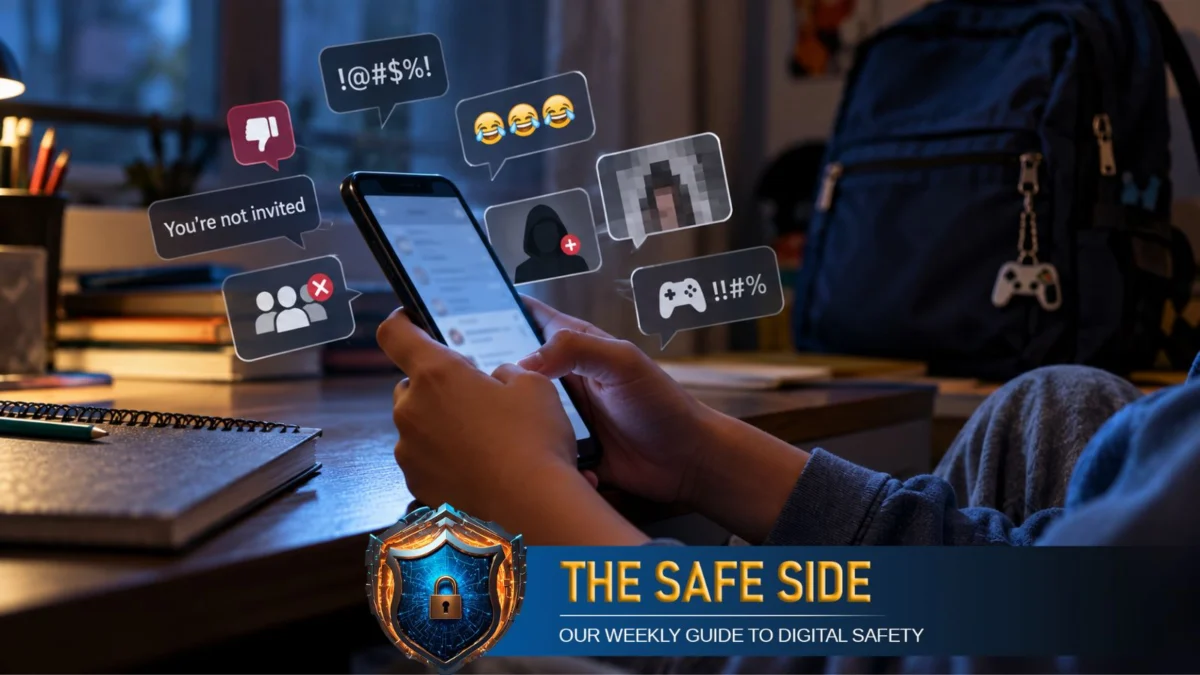
In an era where smartphones are extensions of young lives, and social media platforms serve as virtual playgrounds, the traditional boundaries of childhood experiences have irrevocably blurred. For children growing up immersed in digital landscapes, the school day no longer concludes with the sound of the dismissal bell. A disagreement sparked in the classroom can effortlessly migrate and escalate within a WhatsApp group. A fleeting joke made during recess can be immortalized and amplified as a viral meme shared amongst classmates. The insidious nature of this new reality means a child can be deliberately excluded from an online group, relentlessly targeted during an online gaming session, or find their identity hijacked through a fake social media account created in their name. Unlike the physical bullying of previous generations, this digital torment often has no discernible end point, casting a perpetual shadow over a child’s life.
[Supporting Data]
The alarming prevalence of this phenomenon was starkly highlighted by a 2022 report from McAfee, a leading cybersecurity firm. Their findings revealed that a staggering 85 per cent of surveyed Indian children had experienced cyberbullying, marking the highest proportion reported among all countries covered in the study. The report further dissected the perpetrators and methods, indicating that 45 per cent of children were bullied by complete strangers, while a slightly higher 48 per cent endured abuse from individuals they knew. The forms of abuse identified were diverse and deeply damaging, ranging from persistent trolling and vicious personal attacks to sexual harassment and the terrifying practice of doxing, where private personal information is publicly exposed. These statistics paint a grim picture of a digital environment that, while offering connection and entertainment, simultaneously harbours significant threats to the psychological safety and well-being of young people.
[Chronology & Main Facts]
The evolution of bullying from the schoolyard to the digital realm represents a significant shift in its dynamics and impact. Historically, bullying was largely confined to physical spaces and school hours, often ceasing once a child left the premises. Today, however, the ubiquity of digital devices and internet connectivity has fundamentally altered this landscape. Bikash Barai, founder of FireCompass, an organisation actively involved in cyber-education initiatives across more than 100 schools, succinctly captures this transformation: "The biggest change is that bullying does not stop at school anymore."
This continuous exposure stems from the inherent nature of how children interact with technology. Unlike many adults who consciously delineate their online and offline existences, children often perceive their worlds as seamlessly integrated. Their friendships, their games, their conversations – all exist fluidly across both physical and digital spaces. A friend from school is also a friend on Instagram, a gaming buddy, and a participant in a WhatsApp group. This lack of separation means that conflicts, rivalries, and social hierarchies established in the physical world are effortlessly replicated and amplified online, extending their reach and duration.
[Implications: The AI Frontier]
Adding another layer of complexity and danger to this already fraught environment is the rapid advancement of Artificial Intelligence (AI). What was once a relatively straightforward, albeit malicious, act of creating a fake social media account, has now become a far more sophisticated and perilous endeavour. Barai warns, "Now AI has added another problem. Creating a fake account was already easy. Now creating a fake photograph, voice or video is also becoming easy. You don’t need a lot of technical knowledge to do this anymore."
This means that a child’s image or voice can be manipulated to create convincing deepfakes, used to spread misinformation, or even frame them for actions they never committed. The ease with which such deceptive content can be generated democratises the tools of digital harassment, putting powerful, harmful capabilities into the hands of individuals with minimal technical expertise. The implications for identity theft, reputation damage, and the psychological distress caused by encountering a fabricated version of oneself online are profound and deeply disturbing. The digital playground is not just expanding; it is evolving with increasingly potent weapons for those intent on harm.
Beyond the Obvious: The Nuances of Digital Torment
[Main Facts & Implications]
For parents, one of the most formidable challenges in this new landscape is simply recognising cyberbullying in the first place. The traditional image of a bully physically intimidating a victim is far removed from the often-subtle, insidious forms that online harassment can take. While an overtly abusive message or an explicit threat is relatively easy to identify, much of cyberbullying is cleverly disguised as ordinary online behaviour, making it difficult for adults to discern malice from typical peer interaction.
Consider the subtle, yet deeply wounding, acts: a child repeatedly removed from a WhatsApp group, while a separate, exclusive group is created specifically to mock them. A private conversation, shared in confidence, suddenly circulated widely, shattering trust and privacy. Someone creating a fake social media account to impersonate or defame a child, or the relentless targeting of a child during online gaming sessions with insults and harassment. These actions, while seemingly less aggressive than physical altercations, can inflict profound psychological damage.
Bikash Barai underscores the deceptive nature of this phenomenon: "Even a meme can become bullying. Somebody takes a photograph of a child. Edits it. It starts circulating in the class. Everybody else may think it is funny. The child at the centre of it may not find it funny at all." This highlights the critical difference in perception: what one group finds humorous, another, particularly the victim, can find deeply humiliating and traumatic. The public nature of these shared images or videos ensures that the humiliation is not just experienced, but often witnessed by a broad audience, amplifying the sense of shame and isolation.
Harish Kumar, CEO of Quick Heal Technologies, further advises parents to be vigilant about a broader spectrum of behaviours. He points to repeated trolling, which involves sending inflammatory or offensive messages with the intent to provoke or upset. Public shaming, where a child’s perceived flaws or mistakes are broadcast for ridicule, is another potent form. The spread of malicious rumours, often baseless and designed to damage a child’s reputation, can be devastating. Impersonation, especially through fake accounts, can lead to identity theft and misrepresentation. Crucially, he also warns against the sharing of photographs or screenshots without consent, an act that violates privacy and can have long-lasting consequences.
"Gaming-related harassment is another area parents may overlook," Kumar adds. In the immersive world of online gaming, children can face repeated insults, targeted attacks, or humiliation based on their performance, gender, or other personal characteristics. This constant barraging within a space meant for recreation can turn a source of enjoyment into a source of immense stress and anxiety, leading to withdrawal from activities they once loved. The competitive and often anonymous nature of online gaming environments can foster a culture where aggression and abuse are normalised, making it challenging for victims to report or escape.
The Unyielding Grip: Why Cyberbullying Feels Inescapable
[Implications]
One of the most harrowing aspects of cyberbullying is its pervasive, inescapable nature. While traditional bullying typically concludes when a child leaves the school premises, cyberbullying possesses an unsettling ability to follow them home, infiltrating the sanctity of their personal space and time. This relentless intrusion is a key factor in its profound psychological impact.
A malicious message can arrive at any hour, day or night, disrupting sleep and peace of mind. A humiliating photograph or video, once uploaded, can be forwarded from one group to another, transcending its original audience. Someone can easily screenshot a post and reshare it, taking the content far beyond the people who originally saw it, making it virtually impossible to contain or delete. The digital footprint, once created, is notoriously difficult to erase.
Bikash Barai starkly contrasts the limited reach of traditional bullying with the exponential spread of its digital counterpart: "What happens inside a classroom – maybe 20 or 30 people see it. Put the same thing in a WhatsApp or Instagram group, and it can reach hundreds of people." This amplification of reach means that an incident that might have been a minor embarrassment in a physical setting can become a widespread public humiliation online. Crucially, once content is copied and forwarded, the child at the centre of the abuse has very little, if any, control over where it goes, who sees it, or how long it persists. This loss of control can be incredibly disempowering and contribute significantly to feelings of helplessness and despair.
Harish Kumar similarly notes that the sheer scale and permanence of digital content can profoundly intensify the victim’s experience. The constant exposure to online harassment, whether through direct messages, public posts, or shared content, can have severe and lasting effects. This sustained psychological assault can contribute to a range of emotional distress, including anxiety, depression, social withdrawal, and significant sleep disturbances. The feeling of being perpetually "on display" or "under attack" can erode a child’s self-esteem, leading to a profound sense of isolation and, in severe cases, even self-harm ideation. The home, once a sanctuary, can become an extension of the torment, leaving children with no safe haven from their abusers.
Detecting the Distress: A Parent’s Guide to Warning Signs
[Guidance & Implications]
Given the varied and often subtle nature of cyberbullying, parents cannot rely on a simple checklist of behaviours to identify if their child is a victim. Instead, experts universally advise focusing on a more holistic approach: looking for significant changes from the child’s normal behaviour and patterns. These shifts often serve as the most telling indicators of underlying distress.
A child who once eagerly played a particular online game every day might suddenly lose all interest and stop playing it altogether. Someone who was previously an active and engaged member of a specific online group might become inexplicably reluctant to open it or participate. Conversely, a child might begin checking their phone repeatedly and compulsively, driven by an acute anxiety about what somebody might have posted, or fear of missing out on crucial social interactions (FOMO) that could exacerbate their exclusion.
Beyond digital interactions, a range of other behavioural and emotional changes can serve as critical warning signs. Parents should be alert to alterations in sleep patterns, such as difficulty falling asleep, nightmares, or excessive sleepiness. Noticeable shifts in mood, including increased irritability, sadness, or withdrawal, are red flags. A sudden decline in school attendance or academic performance, changes in friendships (losing friends, becoming isolated), difficulty concentrating, or a general loss of interest in activities the child once enjoyed, all warrant attention. An increased secrecy around devices, such as hiding their phone, changing passwords frequently, or becoming agitated when parents ask about their online activities, is another possible indicator.
Sandeep Kumar, founder of the COP child online protection app, emphasises that sometimes, a sudden change in a child’s relationship with their phone can reveal more than simply monitoring screen time. A child who previously used their device for entertainment and connection, but now displays withdrawal, anxiety, poor sleep, heightened secrecy, or suddenly loses interest in apps and games they once enjoyed, may be silently struggling. While none of these signs, on its own, definitively proves that cyberbullying has occurred, a noticeable and persistent change in behaviour is always a compelling reason to initiate a gentle, open conversation with the child.
The Critical First Response: Building Trust, Not Barriers
[Guidance & Official Responses]
Perhaps one of the most significant barriers to addressing cyberbullying effectively is the child’s reluctance to report it. Harish Kumar, CEO of Quickheal Technologies, highlights that this hesitation often stems from a deep-seated fear of the consequences that might follow once an adult is informed. Children may worry that their parents will immediately confiscate their phone, severely restrict their internet access, or directly confront the person responsible, potentially escalating the situation and making things worse. They may also feel immense embarrassment or shame about something they shared online, or fear being blamed for talking to someone they were explicitly told not to.
This fear of adverse reactions means that the very first response a parent or trusted adult provides can be determinative, shaping whether a child feels empowered to speak up again in the future, or whether they retreat further into silence and isolation. A judgmental or punitive initial reaction can effectively shut down all future communication, leaving the child to navigate their distress alone.
Bikash Barai advises strongly against an accusatory opening: "Don’t start with, ‘Why did you send this?’" This immediate blame shifts the focus from the child’s distress to their perceived transgression, reinforcing their fears and making them less likely to share crucial details. Instead, the priority must be to create a safe, non-judgmental space.
[Guidance]
Parents should, above all, listen before reacting. The objective is to understand the child’s experience and feelings without interruption or judgment. Avoid blaming the child for the situation they find themselves in, and resist the immediate, instinctual urge to confiscate their device. While setting boundaries is important, an initial punitive action can communicate that the child’s honesty will be met with punishment, rather than support. The primary goal in that crucial first conversation is to reassure the child that speaking up was the right thing to do, that they are not alone, and that the problem can and will be addressed together, as a team. This approach builds trust, empowers the child, and lays the groundwork for effective intervention.
A Collective Shield: Beyond Parental Responsibility
[Official Responses & Implications]
While parental vigilance and a supportive home environment are undeniably crucial, the burden of keeping children safe online cannot, and should not, fall solely on the shoulders of parents. The complexities and rapidly evolving nature of the digital world demand a multi-faceted approach involving a wider ecosystem of stakeholders. Amit Relan, co-founder and CEO of mFilterIt, an online safety and fraud detection company, firmly argues that schools, technology companies, gaming platforms, and policymakers all have an indispensable role to play in creating safer digital environments for children.
He stresses that digital safety should not be relegated to a one-time awareness programme or an annual workshop. Instead, it must be an ongoing, integrated component of children’s education, continually adapted to address emerging threats. This is particularly pertinent now, as AI makes the creation of convincing fake identities and manipulated content increasingly easy and accessible.
Schools, as critical institutions in a child’s development, must integrate comprehensive digital literacy and cyber safety into their curriculum. This includes teaching children about responsible online behaviour, critical thinking skills to evaluate online content, privacy settings, and how to report abuse. Schools also need clear, well-communicated anti-bullying policies that explicitly extend to online harassment, providing a framework for intervention and support. Training for teachers and staff is vital, enabling them to recognise signs of cyberbullying and respond appropriately. Access to counselling services for affected students is also paramount.
Technology companies and gaming platforms, the architects of these digital spaces, bear a significant ethical and corporate responsibility. They must develop and implement robust reporting mechanisms that are easily accessible and responsive. Proactive content moderation, increasingly aided by AI-driven solutions, is essential to identify and remove harmful content swiftly. Platforms should design age-appropriate safety features, default privacy settings that protect minors, and ensure transparency in how they handle reports of abuse. Collaboration with law enforcement and child protection agencies is also key to addressing serious incidents.
Policymakers and governments have a vital role in establishing and enforcing legal frameworks. This includes enacting and updating legislation that specifically addresses cyberbullying, doxing, and online harassment, providing legal recourse for victims. Effective enforcement mechanisms are necessary to ensure accountability. Furthermore, public awareness campaigns can educate parents, children, and the wider community about the risks and solutions associated with online safety. Funding for research into digital well-being and for support services for victims of cyberbullying is also a crucial governmental responsibility.
For parents, however, the starting point remains relatively simple yet profoundly impactful: remain approachable. A child must grow up knowing that reporting an uncomfortable or threatening online interaction will not automatically result in the loss of their phone, being blamed for the incident, or facing a public confrontation that could exacerbate their distress. The ultimate goal is to cultivate an environment of sufficient trust and open communication such that when something goes wrong online, the child instinctively thinks of a parent, a teacher, or another trusted adult as the first person to approach for help – rather than someone from whom to hide the problem out of fear or shame. This collective commitment, from homes to schools to corporations and governments, is the only sustainable path to creating a genuinely safe and nurturing digital future for the next generation.
Navigating the Digital Future Together
[Implications]
As the world continues its rapid digital evolution, the landscape of childhood irrevocably transforms, bringing forth unprecedented opportunities for learning, connection, and creativity, but also presenting a growing array of complex and insidious risks. Cyberbullying, in its evolving forms, from subtle exclusion to AI-generated deception, stands as a stark reminder of the dark underbelly of our interconnected lives. Scammers and malicious actors are becoming increasingly sophisticated, perpetually exploiting vulnerabilities to their advantage, leaving a trail of emotional distress and shattered trust.
To navigate this intricate digital future, vigilance must be matched with empathy, and individual efforts must be bolstered by collective action. The insights shared by experts like Bikash Barai, Harish Kumar, Sandeep Kumar, and Amit Relan underscore a fundamental truth: digital safety is a shared responsibility. It requires parents to be observant and approachable, schools to educate and protect, technology companies to innovate with safety at their core, and policymakers to legislate with foresight.
In this ongoing journey, staying informed is paramount. Understanding the latest cybercrime trends, recognising the nuanced signs of distress, and knowing how to respond effectively are not just parental duties but societal imperatives. By fostering open communication, building trust, and implementing robust protective measures across all layers of society, we can collectively work towards creating a digital environment where children can explore, learn, and grow securely, free from the relentless shadow of online harassment. The goal is not to demonise technology, but to harness its power responsibly, ensuring that the digital world becomes a space of empowerment, not peril, for the generations to come.
