Introduction: A Monarch in Exile
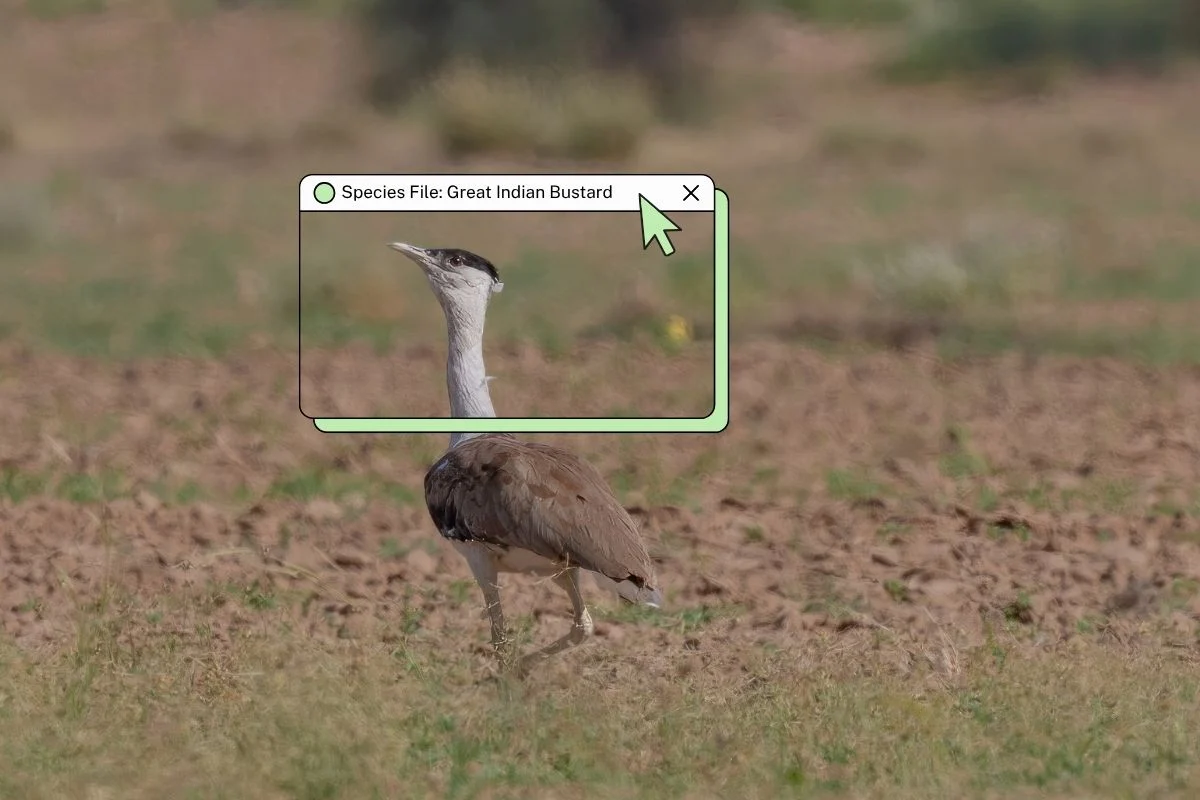
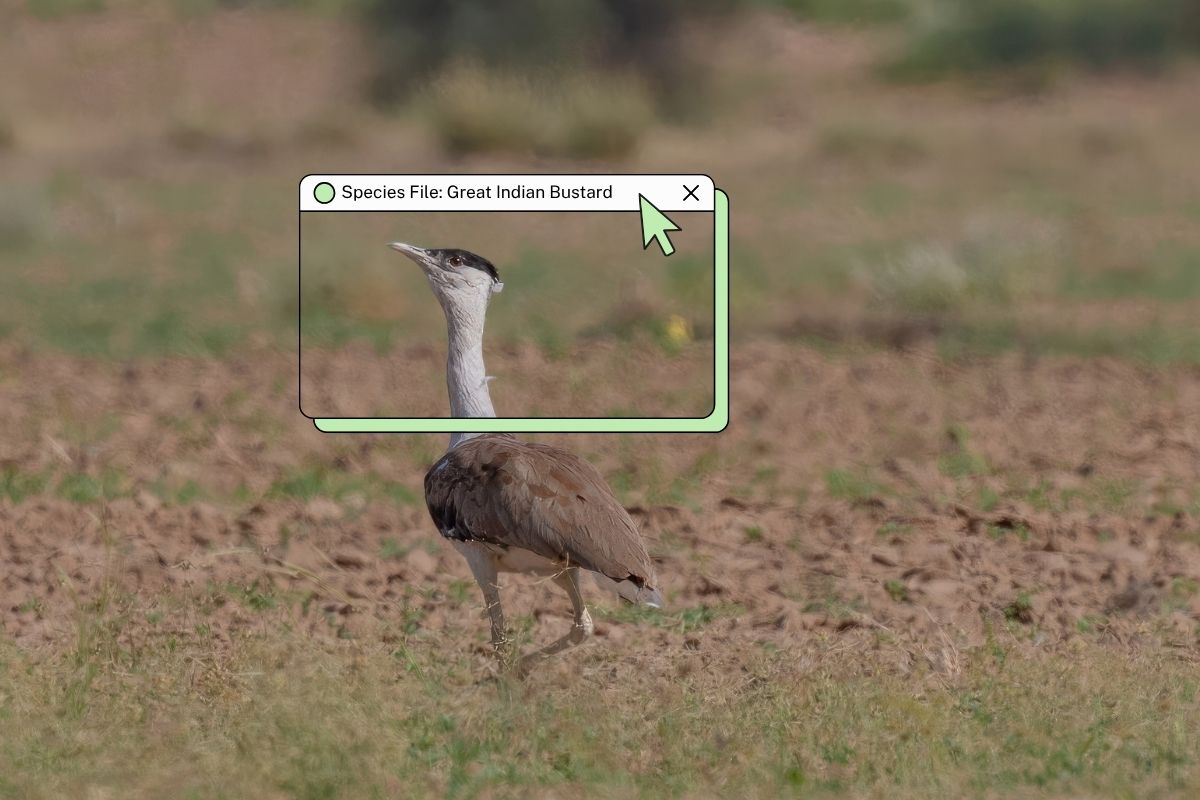
In the sprawling, sun-drenched grasslands of the Indian subcontinent, a regal figure once dominated the horizon. Standing nearly a meter tall with a stately gait and a wingspan that commands the air, the Great Indian Bustard (Ardeotis nigriceps)—locally known as the Godawan—is a testament to the evolutionary brilliance of the arid plains. Once a frontrunner to be named India’s national bird, a title eventually bestowed upon the peacock, the Great Indian Bustard (GIB) now faces a far more somber distinction: it is one of the most critically endangered birds on the planet.
As of 2024, the global population of this species has plummeted to fewer than 150 individuals. This avian giant, one of the heaviest flying birds in existence, finds itself trapped between the gears of modern development and the inherent fragility of its biological makeup. The story of the GIB is not merely a tale of a disappearing species; it is a profound narrative about the systematic neglect of grassland ecosystems and the complex challenges of balancing India’s ambitious renewable energy goals with the non-negotiable requirements of biodiversity.
The Great Indian Bustard: A Profile in Resilience and Fragility
The Great Indian Bustard is an iconic species of the dry, arid, and semi-arid grasslands. Endemic to the Indian subcontinent, it is a large bird with a horizontal body and long, bare legs, giving it an appearance somewhat reminiscent of an ostrich. Adult males are distinguished by their black caps and a pale neck and underparts, while their upper bodies are a mottled brown.
Ecological Role and Habitat
The GIB is an "umbrella species" for the grassland ecosystem. By protecting the bustard, conservationists effectively protect a myriad of other species that inhabit these often-overlooked biomes, including the Indian fox, the desert cat, and various species of raptors and reptiles. Historically, the bird’s range spanned across eleven states in India and parts of Pakistan. Today, its presence is restricted to isolated pockets, primarily in Rajasthan’s Desert National Park and the Kutch region of Gujarat, with precarious, dwindling populations in Maharashtra, Karnataka, and Andhra Pradesh.
Biological Vulnerability
Part of the GIB’s struggle lies in its reproductive biology. They are slow breeders; a female typically lays only one egg per year, and that too only if the monsoon provides sufficient forage. The nests are simple scrapes in the ground, making the eggs and chicks highly vulnerable to predators. This low recruitment rate means that every single adult death is a catastrophic blow to the survival of the species.
A Chronicle of Conservation: From National Contender to Critical Crisis
The trajectory of the Great Indian Bustard has been a downward spiral for decades, punctuated by belated attempts at intervention.
- The 1960s: During the selection process for India’s national bird, the GIB was a top contender. Legend has it that the name was passed over due to the potential for its name to be mispronounced, leading to the selection of the Indian Peafowl.
- 1972: The GIB is granted the highest level of legal protection under Schedule I of India’s Wildlife Protection Act.
- 2010-2015: As the population dropped below 250, international conservation bodies like the IUCN upgraded its status to "Critically Endangered."
- 2016: The Bustard Recovery Programme is launched, a collaborative effort between the Ministry of Environment, Forest and Climate Change (MoEFCC), the Wildlife Institute of India (WII), and state forest departments.
- 2019-2021: Captive breeding centers are established in Sam and Ramdevra in Rajasthan. These centers focus on collecting eggs from the wild, hatching them in controlled environments, and raising a founder population.
- March 2026: A rare milestone is achieved in the Abdasa grasslands of Kutch, Gujarat. After over a decade without a successful hatching in the state, a GIB chick is born. The egg had been transported over 700 kilometers from a breeding center in Rajasthan to revive the Gujarat lineage.
However, the 2026 milestone quickly turned into a sobering lesson on the difficulties of wild conservation. Despite the constant surveillance of 50 forest guards, the chick vanished three weeks after hatching. While the cause of its disappearance remains a subject of investigation—ranging from predator attacks to the harsh environment—the incident highlighted the extreme difficulty of transitioning from captive success to wild survival.
Supporting Data: The Anthropogenic Obstacle Course
The decline of the GIB is not a natural phenomenon; it is the result of specific, identifiable human pressures.
The "Green vs. Green" Conflict
The most pressing modern threat to the GIB is the expansion of high-voltage power lines and wind turbines. The birds possess poor frontal vision and a heavy body, making it difficult for them to maneuver quickly when they encounter obstacles. When flying between foraging grounds, they often collide with power lines associated with the massive solar and wind farms being built in Rajasthan and Gujarat.
Research by the Wildlife Institute of India (WII) has indicated that approximately 15% of the GIB population is lost annually due to power line collisions. This creates a "Green vs. Green" paradox: the very infrastructure intended to combat climate change is accelerating the extinction of a species already on the brink.
The Myth of "Wastelands"
For decades, Indian land policy has classified grasslands as "wastelands." This misclassification has made these areas prime targets for industrialization, mining, and the conversion to intensive agriculture. As the grasslands shrink, the GIB loses its breeding and lekking (mating) grounds. The introduction of irrigation in arid regions has also changed the vegetation profile, favoring invasive species and agriculture over the native grasses the GIB requires.
Predation and Poaching
While large-scale habitat loss is the primary driver, secondary threats compound the issue. Stray dogs, which thrive near human settlements and renewable energy project sites, are a major predator of GIB eggs and chicks. Additionally, while illegal, occasional poaching for meat continues to haunt the species in remote border areas.
Official Responses and the Legal Battle for the Skies
The crisis of the Great Indian Bustard has reached the highest echelons of the Indian judiciary. In a landmark intervention, the Supreme Court of India has played a pivotal role in dictating conservation policy.
The Supreme Court Mandate
In 2021, the Supreme Court ordered that all overhead power lines in "priority" and "potential" GIB habitats be moved underground. This ruling was met with significant resistance from power companies and the Ministry of New and Renewable Energy, citing the immense cost and technical feasibility of undergrounding high-voltage lines.
In 2024, the court nuanced its stance, creating an expert committee to determine which lines must be undergrounded and where "bird diverters" (flappers that make lines more visible) might suffice. This ongoing legal tug-of-war reflects the tension between India’s international commitments to renewable energy and its domestic obligations to biodiversity.
The Breeding Success
On the institutional side, the captive breeding program has seen significant success. Currently, 73 birds reside in conservation breeding centers, with five new chicks born in the most recent season. "The long-term goal is wild release," says a WII scientist involved in the project. "But we cannot release these birds into a landscape that is essentially a death trap of wires and predators."
Implications: The Grassland Ecosystem at a Crossroads
The loss of the Great Indian Bustard would signify more than the disappearance of a single bird; it would signal the collapse of the Indian grassland ecosystem.
Ecological Consequences
Grasslands are vital for carbon sequestration and serve as the primary grazing grounds for millions of livestock owned by pastoral communities. The GIB acts as a natural pest controller, feeding on locusts and grasshoppers that can otherwise devastate crops. Its extinction would disrupt the delicate balance of these semi-arid regions, leading to unforeseen ecological cascades.
The Awareness Gap
Conservationists point out a stark disparity in public and political attention between "charismatic megafauna" like tigers and the GIB. Govind Sagar Bharadwaj, former Chief Conservator of Forests in Jodhpur, notes, “The GIB does not get as much attention to be saved as, say, the tiger. Awareness is vital—not just about the bird, but about the grassland ecosystem it represents.”
Unlike forests, which are protected by robust legislation and public sentiment, grasslands are often seen as "empty" spaces. This lack of value leads to a lack of funding and political will, making the GIB’s fight for survival an uphill battle against systemic indifference.
Conclusion: A Final Call for Stewardship
The Great Indian Bustard stands at a historical crossroads. The disappearance of the chick in Gujarat in 2026 serves as a haunting reminder that technology and surveillance can only go so far if the fundamental habitat is compromised.
To save the GIB, a multi-pronged approach is required:
- Landscape-Level Protection: Moving beyond small "protected areas" to manage the entire landscape, including private agricultural lands.
- Infrastructure Reform: Prioritizing the undergrounding of power lines in critical corridors, regardless of the cost.
- Community Engagement: Empowering local communities to act as guardians of the bird, incentivizing "bustard-friendly" farming practices.
The survival of the Great Indian Bustard is a litmus test for India’s environmental conscience. It asks a difficult question: Can a nation striving for superpower status and green energy leadership make room for a bird that has shared its land for millennia? If the answer is no, the silence that follows the GIB’s final flight will be a permanent stain on India’s natural heritage.