

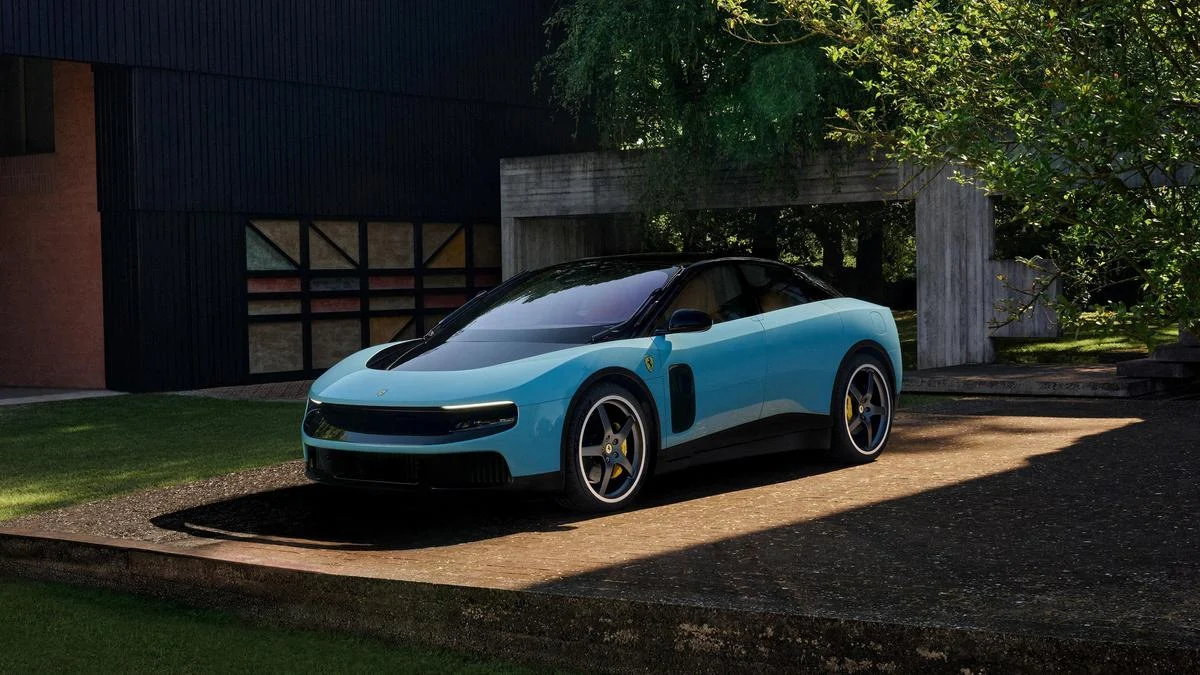
MARANELLO, ITALY — For eight decades, the identity of Ferrari has been forged in the crucible of internal combustion. The scream of a V12 engine and the mechanical symphony of a high-revving V8 have served as the acoustic signature of the world’s most famous automotive brand. However, on Monday evening, the Prancing Horse entered a new, silent era.
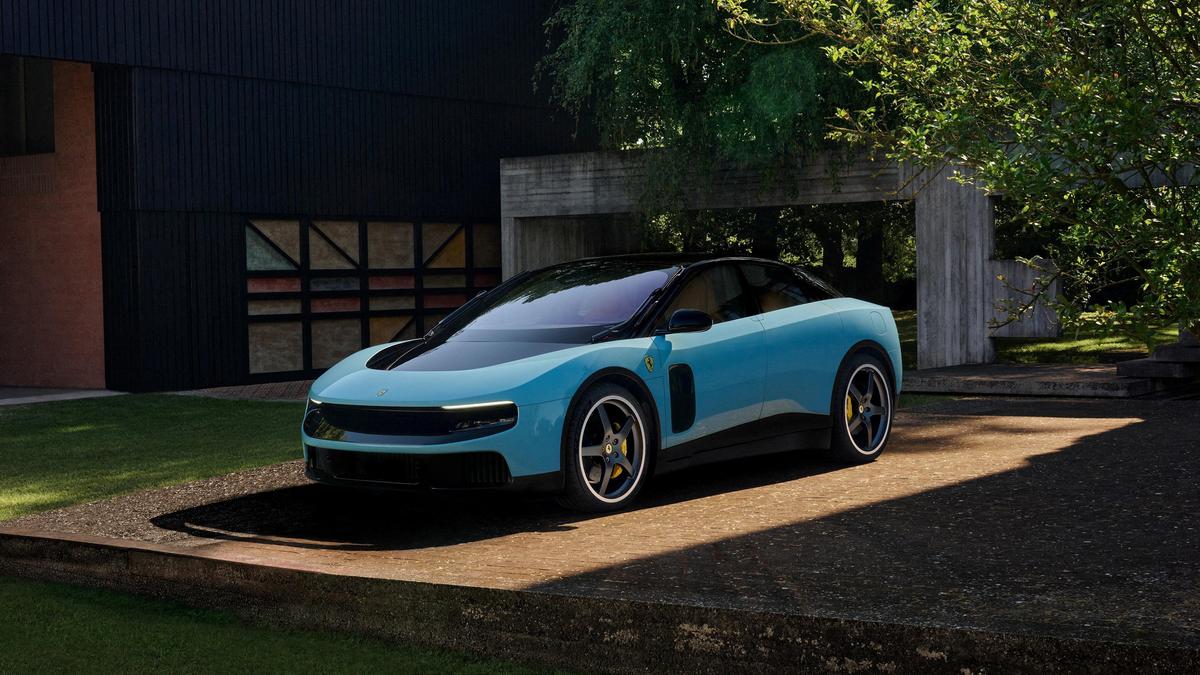
Ferrari has officially unveiled the "Luce" (Italian for "Light"), its first-ever fully electric vehicle (EV). This landmark release marks a definitive pivot for the Maranello-based manufacturer as it navigates the complex transition from fossil fuels to high-performance electrification. While the move follows years of speculation and strategic hedging, the Luce arrives as a bold statement of intent, blending record-breaking performance with a radical departure from the brand’s traditional design philosophy.
I. Main Facts: Engineering the Electric Prancing Horse
The Ferrari Luce is not merely a battery-powered version of an existing model; it is a ground-up reimagining of what a grand tourer can be in the 21st century. The technical specifications released by the company late Monday suggest that Ferrari has prioritized performance parity with its most potent internal combustion engine (ICE) models.
Performance and Powertrain
The Luce is capable of a top speed exceeding 310 kilometers per hour (approximately 192 mph), placing it firmly in the upper echelon of electric performance vehicles. Perhaps more impressive is its acceleration: the vehicle can sprint from 0 to 100 kph (62 mph) in a staggering 2.5 seconds. This puts it in direct competition with the SF90 Stradale, Ferrari’s flagship plug-in hybrid.
Powering this performance is a massive 122 kWh battery pack, one of the largest ever fitted to a passenger vehicle in this class. Ferrari claims the Luce offers a range of over 530 kilometers (330 miles) on a single charge, addressing the "range anxiety" that has long been a hurdle for high-performance EVs.
A Departure in Form
In a move that may surprise purists, the Luce is only the second four-door model in Ferrari’s history, following the recent success of the Purosangue. Furthermore, it is the brand’s first-ever five-seater. This configuration suggests that Ferrari is targeting a broader lifestyle demographic—wealthy tech entrepreneurs and families who demand the prestige of a Ferrari but require the utility of a larger cabin.
However, this utility comes with a physical cost. The Luce weighs in at 2.26 tonnes (approx. 4,982 lbs), making it the heaviest vehicle ever to wear the Ferrari badge. Managing this mass while maintaining the agile handling characteristics synonymous with the brand represents the greatest engineering challenge Ferrari’s "e-building" team has faced to date.
II. Chronology: The Road to Maranello’s Electric Revolution
The journey to the Luce has been a decade-long exercise in strategic evolution. For years, the late Sergio Marchionne and current leadership insisted that a fully electric Ferrari was not an immediate priority, arguing that battery technology had not yet reached the "soulful" requirements of the brand.
- 2013: The Hybrid Dawn: The journey began with the LaFerrari, the brand’s first mild hybrid. Using a KERS (Kinetic Energy Recovery System) derived from Formula 1, Ferrari proved that electrification could enhance, rather than dilute, the performance of a V12 engine.
- 2019: The Plug-in Pivot: The launch of the SF90 Stradale marked Ferrari’s first series-production plug-in hybrid (PHEV). It demonstrated that the marque was willing to allow cars to drive in "silent mode" for short distances, acclimating the client base to the absence of engine noise.
- 2021: The Commitment: Under the leadership of CEO Benedetto Vigna—a veteran of the semiconductor industry—Ferrari officially confirmed that its first fully electric car would arrive in 2025/2026.
- 2024: Infrastructure Readiness: Ferrari inaugurated its "e-building" in Maranello, a state-of-the-art facility dedicated to the production of electric motors, battery packs, and power inverters. This vertical integration ensured that the Luce’s core components would be "Made in Maranello."
- May 2026: The Unveiling: The Luce is revealed to the world, signaling the end of the research phase and the beginning of the commercial electric era.
III. Supporting Data: The Luxury EV Landscape
The Luce enters a market that is currently experiencing a period of profound volatility. While the initial rush toward EVs was aggressive, the luxury segment has seen a cooling of demand as infrastructure struggles to keep pace with vehicle technology.
Competitive Benchmarking
Ferrari’s entry comes significantly later than its rivals. Porsche has found immense success with the Taycan, which has sold over 150,000 units since its debut. Lamborghini, Ferrari’s cross-town rival, has already previewed its "Lanzador" concept, an electric GT slated for 2028.
| Feature | Ferrari Luce | Porsche Taycan Turbo GT | Tesla Model S Plaid |
|---|---|---|---|
| 0-100 kph | 2.5 Seconds | 2.3 Seconds | 2.1 Seconds |
| Top Speed | 310+ kph | 305 kph | 322 kph |
| Battery Size | 122 kWh | 97 kWh | 100 kWh |
| Weight | 2,260 kg | 2,290 kg | 2,162 kg |
Market Sentiment and Strategy
The launch of the Luce arrives at a time when Ferrari has actually scaled back its long-term electrification targets. In late 2023, the company adjusted its 2030 outlook. Previously, Ferrari aimed for 40% of its sales to be fully electric by the end of the decade. That target has now been revised downward to 20%, with the remaining 80% split between hybrids and traditional internal combustion engines.
This pragmatism reflects a broader industry trend. Mercedes-Benz and Bentley have similarly walked back "EV-only" pledges, citing a "lower than expected demand" for high-end battery-electric vehicles in key markets like North America and Europe.
IV. Official Responses: Leadership and Vision
The unveiling of the Luce was accompanied by high-level rhetoric intended to reassure investors and enthusiasts alike that the soul of Ferrari remains intact, even if the pistons are gone.
John Elkann, President of Ferrari, emphasized the Luce as a bridge between the brand’s storied past and an inevitable technological future. "We are inaugurating a chapter that turns our vision into reality," Elkann stated during the reveal. "The Luce is not just a car; it is a manifestation of Ferrari’s tradition of anticipating and shaping the future. We are proving that the thrill of the drive is not dependent on the fuel source, but on the emotion of the engineering."
CEO Benedetto Vigna has been vocal about the "sound" of the Luce. Recognizing that the auditory experience is vital to Ferrari owners, Vigna noted that the company has spent thousands of hours developing a "unique sound signature" for the Luce. Rather than a fake engine roar pumped through speakers, Ferrari engineers have reportedly worked on the harmonics of the electric motors themselves to create a "crescendo" that corresponds to speed and torque.
"Our electric cars will have their own ‘voice’," Vigna said in a previous investor call. "We will not copy the past. We will create a new emotion."
V. Implications: Brand Dilution or Necessary Evolution?
The introduction of the Luce carries significant implications for Ferrari’s brand equity and the wider automotive industry.
1. The Weight of Tradition
The most immediate concern for enthusiasts is the vehicle’s weight. At 2.26 tonnes, the Luce is nearly 700kg heavier than a Ferrari Roma. This added mass affects braking distances, tire wear, and, most importantly, the "flickability" of the car on winding roads. Ferrari’s ability to mask this weight through advanced torque vectoring and active suspension will determine if the Luce is perceived as a "true" Ferrari or merely a very fast luxury cruiser.
2. The Five-Seater Gamble
By offering five seats and four doors, Ferrari is encroaching on the territory of the SUV and luxury sedan. While this will undoubtedly increase sales volume and appeal to the "new money" markets in Asia and the Middle East, it risks diluting the exclusivity of the brand. Ferrari must balance the high-volume potential of the Luce with the scarcity that maintains its sky-high resale values.
3. Supply Chain and Sovereignty
The Luce represents a massive investment in "vertical integration." By manufacturing its own batteries and motors in the new e-building, Ferrari is shielding itself from the supply chain shocks that have plagued other manufacturers. However, this also makes Ferrari more dependent on the volatile market for rare earth minerals like lithium and cobalt.
4. The Future of the ICE
The Luce does not signal the end of the Ferrari V12. On the contrary, Ferrari has committed to continuing the development of internal combustion engines for as long as regulations allow, potentially utilizing carbon-neutral e-fuels. The Luce is positioned as a "third pillar"—offering a different kind of driving experience rather than replacing the old one.
Conclusion
The Ferrari Luce is a calculated risk. It is a car that attempts to reconcile the visceral passion of Italian racing heritage with the clinical efficiency of the digital age. While the 2.26-tonne weight and the silent powertrain may alienate some traditionalists, the Luce’s performance figures and 530km range suggest that Maranello is not entering the EV race to participate, but to lead.
As the first units are expected to reach customers in early 2027, the world will soon find out if "Light" is a fitting name for a car that carries the heavy burden of Ferrari’s future on its shoulders. For now, the Luce stands as a testament to a brand that, even after 80 years, refuses to be left behind by the tides of history.
