

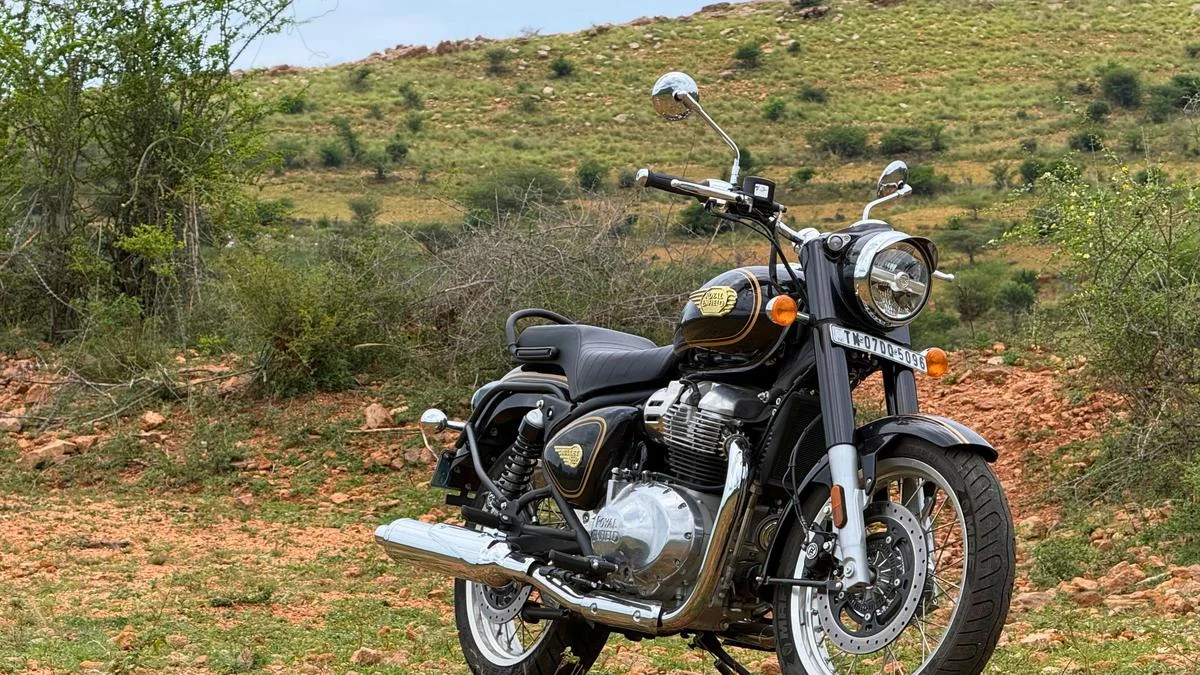
The motorcycling world has long anticipated the marriage of Royal Enfield’s most iconic nameplate with its most refined modern engine. That anticipation has finally culminated in the launch of the Bullet 650. Priced at ₹3.64 lakh (ex-showroom), this motorcycle represents more than just a new model; it is a strategic bridge between nearly a century of heritage and the demands of the 21st-century long-distance tourer.
By transplanting the acclaimed 648cc parallel-twin engine into the Bullet’s timeless silhouette, Royal Enfield has created a machine that seeks to satisfy both the nostalgia of the purist and the performance requirements of the modern enthusiast.
I. Main Facts: The Intersection of Heritage and Horsepower
The Royal Enfield Bullet 650 is the latest entrant into the company’s burgeoning 650cc twin-cylinder lineup, joining the likes of the Interceptor, Continental GT, Super Meteor, Shotgun, and the closely related Classic 650.

Core Specifications at a Glance:
- Engine: 648cc, air-oil cooled, SOHC, parallel-twin.
- Performance: 47 PS at 7,250 rpm and 52.3 Nm of torque at 5,650 rpm.
- Transmission: 6-speed gearbox with a slipper and assist clutch.
- Chassis: Steel tubular spine frame.
- Weight: 243 kg (kerb).
- Braking: 320mm front disc, 300mm rear disc with dual-channel ABS.
- Pricing: ₹3.64 lakh (ex-showroom).
The Bullet 650 distinguishes itself by maintaining the "Standard" look that has defined the brand since the 1930s. Key visual markers include the hand-painted gold pinstripes on a teardrop fuel tank, the signature squared-off rear mudguard, and the "casquette" headlamp housing featuring the iconic "tiger eye" pilot lamps.
II. Chronology: The Road to the Twin-Cylinder Bullet
To understand the significance of the Bullet 650, one must look at the timeline of Royal Enfield’s modern era.
- The Single-Cylinder Dominance: For decades, the Bullet was synonymous with the 350cc and 500cc Cast Iron, AVL, and later, UCE (Unit Construction Engine) platforms. These engines were famous for their heavy flywheels and rhythmic "thump."
- 2018 – The Twin Revolution: Royal Enfield disrupted the mid-size segment with the launch of the Interceptor 650 and Continental GT 650. This marked the transition from "characterful but vibratory" singles to "smooth and globally competitive" twins.
- 2023-2024 – Platform Expansion: After the success of the cruiser-spec Super Meteor 650, the company began diversifying the platform to include more accessible models.
- The Present – The Bullet’s Ascension: Recognizing that the Bullet remains the emotional heartbeat of the brand, the company finally integrated the 650cc twin into the Bullet’s frame. This move effectively replaces the discontinued Bullet 500, offering a significant leap in power, reliability, and refinement.
III. Supporting Data: Technical Depth and Performance Metrics
The Bullet 650 is a study in "heavyweight" engineering, both literally and figuratively.

Engine Dynamics and Refinement
The 648cc parallel-twin is widely regarded as one of the most balanced engines in its class. In the Bullet 650, this motor provides a level of refinement that transforms the riding experience. Unlike the older 500cc singles that became harsh above 80 kmph, the Bullet 650 remains composed well into triple-digit speeds.
- Vibration Management: Mechanical feedback is present at idle to maintain "soul," but once the bike crosses 50 kmph, the counter-balanced crank ensures a butter-smooth delivery.
- The Soundscape: The traditional "thump" of the single-cylinder has been replaced by a "throaty roar" from the twin chrome peashooter exhausts. This 270-degree firing order provides a rumbling cadence that sounds more mature and purposeful.
Chassis and Handling
Despite its 243 kg kerb weight, the Bullet 650 is designed for stability.
- Dimensions: A long 1,480mm wheelbase and an overall length of 2,260mm provide a "planted" feel on the highway.
- Suspension: The 43mm telescopic front forks (120mm travel) and twin rear shocks (90mm travel) are tuned for plushness. While not meant for aggressive cornering, the setup excels at absorbing road undulations and broken tarmac.
- Braking Safety: The inclusion of a 320mm front disc and dual-channel ABS is a necessary upgrade for a bike capable of reaching speeds near 160 kmph.
Fuel Economy and Practicality
In real-world testing, the Bullet 650 shows a variance in efficiency:

- Manufacturer Claim: >25 kmpl.
- High-Intensity Testing: ~18 kmpl (under heavy acceleration and hill climbs).
- Expected Touring Average: 22-24 kmpl.
With a generous fuel tank, this provides a respectable range for long-distance journeys.
IV. Official Philosophy and Design Language
While Royal Enfield has not issued a singular "official response" in the form of a press quote for this specific review, the design and engineering choices reveal the company’s strategic philosophy: Authentic Evolution.
Design Preservation
Royal Enfield’s design team has resisted the urge to add digital TFT screens or aggressive LED sharp-lining. The "Tiger Eye" lamps and the winged 3D badging are deliberate nods to the 1950s. The company’s stance is clear: the Bullet is an heirloom, and its visual identity is sacrosanct.
Ergonomic Strategy
The "rider triangle"—the relationship between the handlebars, seat, and footpegs—is tuned for an upright, commanding posture. The single-piece step-up seat is a modern interpretation of the classic bench, offering better foam density for long-duration comfort. However, the 800mm seat height combined with the bike’s width means that riders under 5’9” may find low-speed maneuvers and parking a physical challenge.

V. Implications: The Bullet 650 vs. The Classic 650
One of the most significant implications of this launch is the internal competition with the Classic 650. Both bikes share the same chassis and engine, leading many to ask: Which one should I buy?
The Aesthetic Divide
- The Bullet 650: Focuses on the "Standard" look. It features the squared mudguard and a more understated, utilitarian sense of royalty. It appeals to those who view the motorcycle as a rugged, timeless tool.
- The Classic 650: Leans into the "Post-War" aesthetic with more chrome, different fender shapes, and more ornate detailing. It is positioned as the more "premium" and "lifestyle" oriented sibling.
Market Impact
The Bullet 650 effectively democratizes the 650cc platform for those who found the Interceptor too sporty or the Super Meteor too low-slung. It provides a "neutral" canvas that is likely to become a favorite for customizers and long-distance tourers who want a bike that looks "old-school" but runs with modern precision.
VI. Verdict: A New Chapter for a Legend
The Royal Enfield Bullet 650 is a triumph of restraint. It would have been easy to over-modernize the bike, but by focusing on refinement rather than radical change, Royal Enfield has preserved the soul of the machine.

The loss of the "thump" will undoubtedly be a point of contention for purists. However, the trade-off—a motorcycle that can cruise at 110 kmph all day without stress, stop on a dime, and look stunning under a streetlamp—is one that most modern riders will gladly accept.
For the veteran rider, it is a more capable version of the bike they grew up with. For the new rider, it is an approachable entry into the world of "big bikes." At ₹3.64 lakh, it isn’t just a purchase; it is an investment in a legacy that has now been successfully future-proofed for the next generation of the road.
This report was enriched with data provided by Motorscribes and The Hindu. For further automotive updates, follow @motorscribes on Instagram.
