

For nearly eight decades, the name Ferrari has been synonymous with the visceral, high-octane scream of internal combustion. From the legendary V12s that powered the 250 GTO to the turbocharged V8s of the modern era, the "soundtrack" of Maranello has been as much a part of the product as the Rosso Corsa paint. However, the unveiling of the Ferrari Luce in Rome marks a definitive, and perhaps irreversible, pivot in the brand’s history.
The Luce—meaning "Light" in Italian—is not merely Ferrari’s first foray into the world of battery electric vehicles (BEVs). It is a radical reimagining of the Prancing Horse’s DNA. A five-seat, four-door grand tourer, the Luce challenges every established convention of what a Ferrari should look, sound, and feel like. As the covers were pulled back, the automotive world found itself at a crossroads: is this the beginning of a brilliant new chapter, or a departure so great that it risks diluting the very essence of the brand?
Main Facts: The Luce at a Glance
The Ferrari Luce enters the market as a high-performance luxury grand tourer, positioned at the pinnacle of the burgeoning electric hyper-GT segment. Unlike previous hybrid efforts like the LaFerrari or the SF90 Stradale, which used electricity to augment a petrol engine, the Luce is built on a bespoke, dedicated EV architecture developed entirely in-house.
Key Specifications:
- Powertrain: Four independent electric motors (one per wheel).
- Total Output: 1,050 horsepower.
- Performance: 0-100 km/h in 2.5 seconds; 0-200 km/h in 6.8 seconds.
- Top Speed: In excess of 310 km/h.
- Battery Capacity: 122 kWh integrated structural pack.
- Range: Over 530 kilometers (WLTP cycle).
- Charging: 350 kW DC fast-charging capability (70 kWh added in 20 minutes).
- Price Point: Approximately €500,000 (est. ₹5 crore+ in India before taxes).
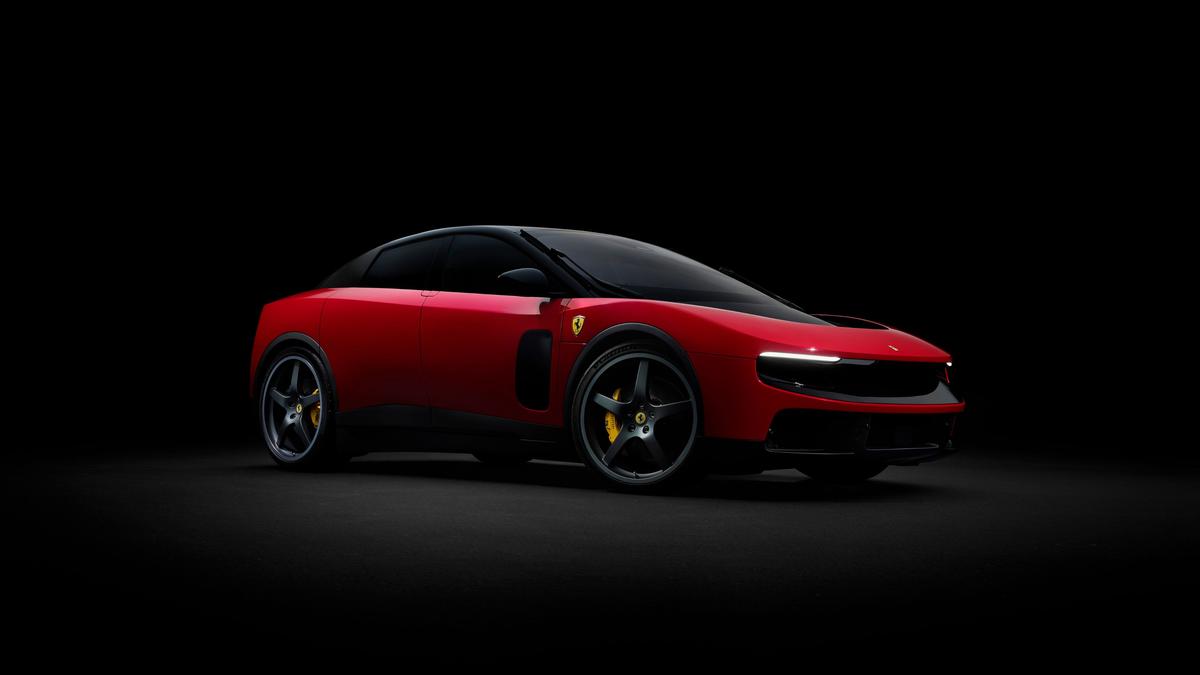
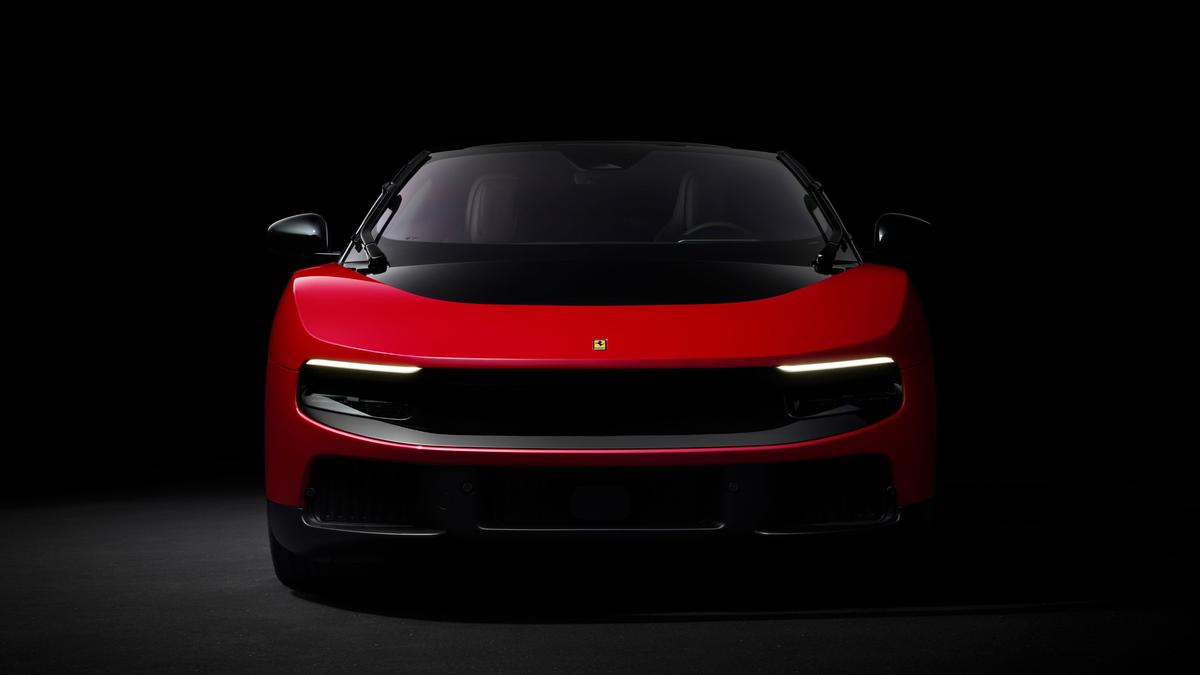
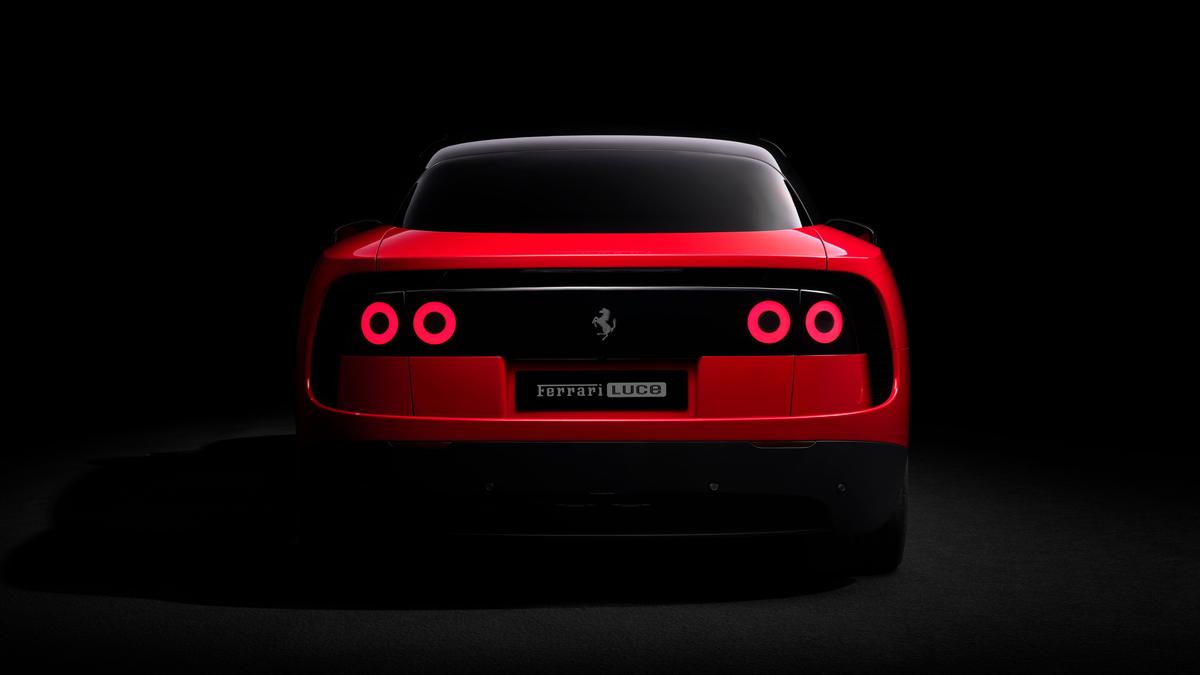
The vehicle’s design is the result of a high-profile collaboration between Ferrari’s internal styling center and LoveFrom, the creative collective led by former Apple design chief Sir Jony Ive and renowned industrial designer Marc Newson. This partnership has resulted in a "shell-like" aesthetic that prioritizes minimalist surfacing and aerodynamic efficiency over the aggressive, vent-heavy language of Ferrari’s mid-engined supercars.
Chronology: The Road to Electrification
The path to the Luce was not an overnight decision but the culmination of a decade-long "multi-energy" strategy. Ferrari’s leadership has long maintained that they would only produce an electric vehicle when the technology was mature enough to deliver "Ferrari-level" emotion and performance.
- 2013: The launch of the LaFerrari introduced the HY-KERS system, proving that electrification could enhance the performance of a V12 flagship.
- 2019: The SF90 Stradale debuted as Ferrari’s first series-production plug-in hybrid (PHEV), allowing for short bursts of silent, electric-only driving.
- 2021: Ferrari officially announced its partnership with LoveFrom, signaling a shift toward a new design philosophy for its future "special projects" and upcoming EV.
- 2022-2023: Ferrari began construction on its "e-building" in Maranello, a dedicated facility for the production of electric motors, battery packs, and power inverters.
- 2024: The Luce is unveiled in Rome, marking the official entry into the BEV era.
This timeline demonstrates that while the Luce feels like a sudden shock to the system, it is the result of a calculated, incremental integration of electric technology designed to future-proof the brand against tightening global emissions regulations.
Supporting Data: Engineering the "Electric Emotion"
The primary criticism of performance EVs is their perceived "clinical" nature—the lack of mechanical soul. Ferrari has attempted to solve this through a series of proprietary engineering innovations.

The Quad-Motor System and Dynamics
By utilizing four motors, Ferrari has achieved a level of torque vectoring that is impossible with a traditional internal combustion engine (ICE). Each wheel can be controlled independently with millisecond precision, allowing the car to pivot around corners and mitigate its substantial 2,260-kilogram kerb weight. To put this in perspective, while the Luce is significantly heavier than a 296 GTB, its active suspension and four-wheel steering are designed to make it feel as agile as a car 500 kilograms lighter.
The "Authentic" Soundscape
Perhaps the most controversial technical feature is the sound philosophy. Ferrari rejected the idea of "fake" engine noises played through speakers. Instead, they developed a system that captures the natural acoustic frequencies and vibrations of the electric motors and the drivetrain. These vibrations are amplified and transmitted into the cabin, creating a hum that rises in pitch and intensity with speed. This "mechanical honesty" is Ferrari’s answer to the silence of the EV, though it remains to be seen if it can satisfy those who crave the roar of a V12.
The Digital Sanctuary
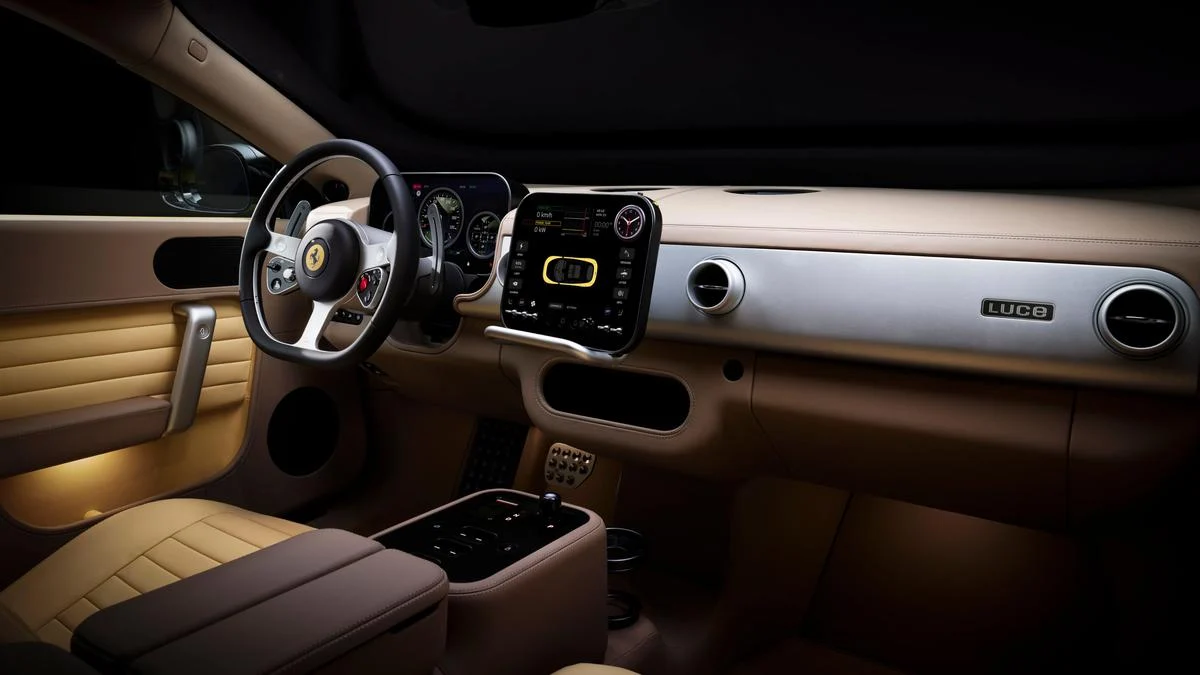
Inside, the Luce represents a massive leap in cabin technology. Working with Samsung for the OLED displays and utilizing Corning Gorilla Glass for touch interfaces, Ferrari has created a cockpit that feels more like a high-end lounge than a race car. The inclusion of an E Ink key—which changes its visual display based on the car’s status—and a 3,000-watt, 21-speaker audio system underscores the shift toward "performance luxury" rather than raw track focus.
Official Responses and Market Reaction
The unveiling of the Luce has triggered a "tale of two cities" in terms of reception. On one hand, the tech and design communities have lauded the Luce as a masterpiece of modern industrial design. On the other, the Tifosi (Ferrari’s hardcore fans) and the financial markets have expressed notable skepticism.
The Stock Market Shiver
Following the reveal, Ferrari’s stock (RACE) reportedly saw a dip of nearly seven percent. Market analysts suggest this wasn’t necessarily a rejection of the car’s quality, but rather a reflection of investor anxiety. Ferrari’s high margins are built on exclusivity and the emotional pull of its heritage. There is a fear that by entering the EV space—where every manufacturer from Tesla to Lucid can claim 0-100 km/h times under 3 seconds—Ferrari may struggle to maintain its unique value proposition.
Management’s Stance
Ferrari CEO Benedetto Vigna has been firm in his defense of the Luce. In various statements, the company has emphasized that the Luce is an "addition" to the lineup, not a replacement for the ICE models. "Electrification is a new way to provide our customers with a different kind of thrills," Vigna has noted, suggesting that the Luce is intended to capture a new demographic—younger, tech-savvy buyers who may find a traditional V12 too "analog" for their lifestyle.
Implications: Redefining the Prancing Horse
The Luce is more than just a car; it is a test case for the survival of ultra-luxury brands in a post-combustion world. Its success or failure will have several long-term implications for the industry.
1. The Dilution of Brand Heritage vs. Evolution
The biggest risk Ferrari faces is the "homogenization" of performance. If a Ferrari no longer sounds like a Ferrari, does it remain a Ferrari? The Luce relies on design and "digital emotion" to fill the void left by pistons and valves. If this transition is successful, it will provide a blueprint for brands like Lamborghini and McLaren to follow. If it fails, it may force these brands to retreat into synthetic fuels (e-fuels) as their only path forward.
2. A New Competitive Landscape
By positioning the Luce as a €500,000 GT, Ferrari is moving away from competing with the Porsche Taycan and moving toward competing with high-end luxury icons and even bespoke coachbuilders. The Luce isn’t just competing with other cars; it’s competing with luxury watches, yachts, and high-end real estate. The collaboration with Jony Ive is a clear signal that Ferrari now views itself as a "luxury house" first and an automotive manufacturer second.
3. The Future of the "Multi-Energy" Strategy
The Luce proves that Ferrari is capable of building a world-class EV. However, the company has also been one of the most vocal supporters of e-fuels in the EU. This suggests a bifurcated future: electric vehicles for daily luxury and grand touring (like the Luce), and e-fuel-powered combustion engines for "special series" and track-focused supercars.
Conclusion: A Landmark or a Misstep?
The Ferrari Luce is a polarizing monument to the current state of the automotive industry. It is a car of immense technical achievement, boasting 1,050 horsepower and a cabin that redefines the luxury experience. Yet, it sits in the shadow of its own legacy. For the first time in Maranello’s history, the brand is asking its customers to value "purity of design" and "digital innovation" over the raw, mechanical theatre that built the company’s mythos.
Whether the Luce becomes a legendary landmark—similar to how the 125 S started it all in 1947—or a controversial footnote depends entirely on the next generation of buyers. As the car prepares to hit the streets with a price tag exceeding ₹5 crore in markets like India, the world is watching to see if the "Light" of the Luce will lead Ferrari into a prosperous new era, or if the Tifosi will remain forever in love with the sound of the past.
