

What compels us? Beyond the spontaneous whims of the moment, nearly every action we undertake, every decision we make, is underpinned by a tapestry of motivations. This intrinsic drive is an all-encompassing force, dictating everything from the seemingly trivial habits that punctuate our daily lives to the monumental aspirations that define our very existence. Consider the simple acts: we brush our teeth and bathe for personal well-being; we navigate social interactions, shaping our behavior with friends and family, guided by our self-perception and relational goals. Our pursuits in education and career are meticulously orchestrated efforts to fulfill deeply ingrained goals, objectives, and ambitions. The thread of motivation, it becomes clear, runs through the entire fabric of human experience.
This universal principle applies equally to the individual immersed in a casual read as it does to the aspiring statesman eyeing the highest office. Scientists and inventors, often elevated to pedestals of genius after their breakthroughs, are no exception. Even in instances hailed as serendipitous discoveries, the individuals involved invariably placed themselves in positions to observe, interpret, and capitalize on unforeseen phenomena. This capacity is often the culmination of a lifetime of conditioning, an acute sensitivity honed to spot the very things others might overlook. Then there are those who dedicate their lives to a singular, overarching goal, pushing forward without any guarantee of its eventual realization. French-born German engineer and inventor Rudolf Diesel, a name synonymous with one of the most transformative technologies of the modern age, perfectly embodies this latter category. His journey, marked by both brilliance and profound social vision, stands as a testament to the enduring power of motivation.
Rudolf Diesel: A Visionary Beyond Engineering
Early Life and Intellectual Genesis
Born in Paris in 1858 to Bavarian parents, Rudolf Diesel was a man of extraordinary breadth, far more than merely the inventor of the engine that bears his name. His early life was characterized by a diverse range of interests and an insatiable intellectual curiosity. He possessed a remarkable aptitude for languages, cultivating fluency in French, German, and English, a skill that would later prove invaluable in his international collaborations and patent pursuits. Beyond the sciences, Diesel harbored a profound admiration for the arts, suggesting a sensibility that extended beyond the purely mechanical. Crucially, he was also a keen social theorist, deeply engaged in studying and understanding the complex social phenomena of his era. This multidimensional intellect, blending scientific rigor with humanistic insight, set the stage for his revolutionary contributions.
Diesel’s academic journey saw him excel, particularly in the realm of mechanical engineering. His studies at the Royal Bavarian Polytechnic of Munich, under the tutelage of Carl von Linde, a pioneer in refrigeration technology, profoundly shaped his understanding of thermal processes. It was during this period that he became captivated by the theoretical limits of efficiency in heat engines, a concept rooted in the principles of thermodynamics, particularly the Carnot cycle. This intellectual fascination, coupled with his burgeoning social consciousness, became one of his prime motivators as an inventor. Indeed, his concept of addressing sociological needs – ensuring technology served the broader populace, not just an elite few – along with his penchant for creative mechanical designs and a deep understanding of heat transference, formed the three underlying commonalities across most of his inventions.
The Industrial Canvas of the Late 19th Century
The Reign of Steam and Emerging Internal Combustion
To fully appreciate the magnitude of Diesel’s ambition, it is essential to clock back to the second half of the 19th century and immerse ourselves in the prevailing industrial landscape. It was an age largely driven by steam. Colossal steam engines, rumbling with immense power, were the undisputed workhorses of industry, powering vast factories, mills, and mines. On the burgeoning railway networks, steam locomotives ferried goods and passengers across continents, shrinking distances and fueling economic expansion. Yet, this dominance came with significant limitations. Steam engines were inherently bulky, requiring large boilers, extensive water supplies, and considerable operational infrastructure. Their efficiency was also notoriously low, converting only a minuscule fraction of the fuel’s energy into useful work. Furthermore, their sheer scale and operational complexity confined them primarily to large-scale industrial setups and railway networks.
Road transport, a sector ripe for innovation, remained largely dependent on horsepower, a slow, inefficient, and often unsanitary solution for urban environments. While early versions of internal combustion engines, running on petrol and gas, were beginning to emerge, they too suffered from significant drawbacks. These nascent engines were often unreliable, difficult to start, and, critically, even less efficient than steam engines, typically converting only about 10% of their fuel’s heat into usable mechanical energy. This panorama of inefficient, cumbersome, and often inaccessible power sources presented a formidable challenge, but for a mind like Diesel’s, it was an irresistible call to innovation. He saw not just engineering problems, but societal inequities perpetuated by the existing technological paradigm.
The Quest for Efficiency: Diesel’s Driving Ambition
A Spark from Thermodynamics
As a diligent student, Rudolf Diesel was profoundly drawn to the burgeoning field of thermodynamics, the branch of physics concerned with heat and its relation to other forms of energy and work. He was particularly captivated by the theoretical possibility, derived from the work of Sadi Carnot, of constructing an internal combustion engine that could convert a far greater proportion of heat into useful work. This theoretical ideal, promising efficiencies vastly superior to anything then available, ignited a powerful conviction within him. Armed with this profound knowledge, and acutely aware that both existing steam and nascent gasoline engines were woefully inefficient, often converting only about 10% of heat to useful work, Diesel committed himself to a monumental task.
For Diesel, the problem he was trying to solve transcended mere engineering. Looking around, it was glaringly obvious that the behemoth steam-powered engines were confined to industrial strongholds and the coffers of the wealthy. The power that drove progress was largely inaccessible to the common artisan, the small entrepreneur, or the developing agricultural community. Diesel harbored a fervent dream: to create an engine that would not only be dramatically more efficient than its contemporaries but, by virtue of that efficiency, would also become more accessible and affordable. He envisioned a democratic engine, one that could empower smaller players with lower budgets, thereby fostering broader economic participation and social upliftment. This deep-seated belief in technology as a tool for social progress became the bedrock of his relentless pursuit.
Perilous Path to Innovation
Diesel soon fully devoted his efforts towards this ambitious dream, embarking on a decade of intense experimentation throughout the 1880s. His journey was far from smooth; it was fraught with technical challenges, financial strain, and personal danger. One such early engine design, which employed ammonia in its power-making process, nearly cost him his life. During a test, the experimental steam engine violently exploded. Diesel miraculously survived, but the incident left him with permanent vision damage, a constant reminder of the high stakes involved in pushing the boundaries of engineering.
Despite this harrowing setback and the lingering physical impairment, Diesel’s vision remained undimmed. Once he had recovered, he returned to his work with an almost obsessive dedication, churning out innovative designs and meticulously refining his theoretical concepts. His workshop became a crucible of innovation, where perseverance battled against the inherent complexities of thermodynamics and material science. Each failed experiment, each setback, only seemed to fortify his resolve, pushing him closer to the breakthrough that would ultimately reshape global industry.

The Birth of a Revolution: The Diesel Engine’s Genesis
The Breakthrough in Augsburg (August 10, 1893)
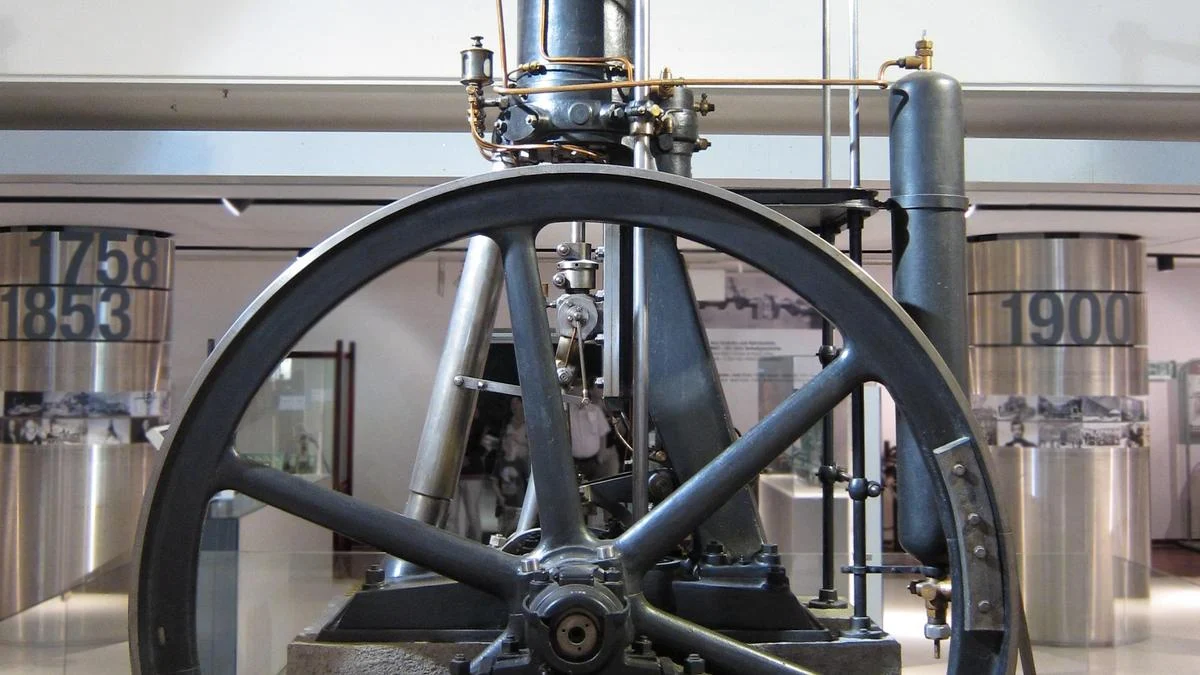
After years of tireless work, relentless experimentation, and numerous near-fatal incidents, Rudolf Diesel finally achieved his momentous success in 1893. The date of August 10, 1893, is etched in the annals of industrial history. On that pivotal day, in Augsburg, Germany, his prime model — a formidable 10-foot iron cylinder anchored by a heavy flywheel at its base — sprang to life and ran on its own power for the very first time. It was a crude, noisy, and somewhat temperamental machine, but it worked. This was not merely an incremental improvement; it was a fundamental shift, demonstrating the viability of a completely new principle of internal combustion. The event, witnessed by a small group of engineers and investors, marked the definitive birth of the diesel engine, a machine that would eventually power the world.
Refinement, Patents, and Global Recognition
The initial success was merely the first step. Diesel spent the subsequent couple of years in intense refinement, meticulously improving the design, enhancing its reliability, and optimizing its performance. His dedication culminated in the filing of a U.S. patent application titled "Internal-combustion engine" on July 15, 1895. This legal protection was crucial for commercialization and global dissemination. By the time the patent was officially granted on August 9, 1898, Diesel, with the crucial aid and investment of several prominent German firms, had already demonstrated a far more powerful and practical four-stroke engine.
This refined engine was a marvel of engineering. Theoretically, it boasted a mechanical efficiency of 75.6%, a figure that dwarfed anything previously conceived. While in reality, it converted only 26.8% of the heat contained in the fuel into effective power, this actual efficiency was still an astounding two and a half times better than its closest rivals—the most advanced steam and gasoline engines of the era. This dramatic leap in efficiency meant lower fuel consumption, reduced operational costs, and a significant increase in the power-to-weight ratio, making the diesel engine an incredibly attractive proposition for industrial and commercial applications.
The Core Principle: Compression Ignition
Part of the reason for the diesel engine’s unparalleled efficiency lies in its ingenious method of igniting fuel, a fundamental departure from the spark-ignition engines of the time. In conventional petrol (gasoline) engines, a mixture of air and fuel is compressed and then ignited by a precisely timed electrical spark from a spark plug. This requires a specific fuel-air ratio and a delicate ignition system.
Diesel’s innovation was elegant in its simplicity and effectiveness. His engine compresses only air, not a fuel-air mixture. This compression is so intense that it generates extremely high temperatures within the cylinder—hot enough, in fact, to cause auto-ignition. When fuel (diesel) is then injected into this superheated, highly compressed air, it instantly ignites without the need for an external spark. This compression-ignition process is inherently more efficient, allowing for higher compression ratios and enabling the engine to burn fuel more completely and effectively, thus extracting more usable energy per unit of fuel.
Beyond Petroleum: Diesel’s Vision for Fuel Versatility
A Multifaceted Fuel Future
While today we predominantly associate the diesel engine with petroleum diesel—a crude oil derivative known for its cost-effectiveness compared to petrol—Rudolf Diesel himself designed his revolutionary engine to be far more versatile. He envisioned it running on a wide array of fuels, a testament to his foresight and his commitment to accessibility and sustainability. This vision was powerfully demonstrated at the Paris World Fair in 1900, where Diesel showcased a model of his engine that ran successfully on peanut oil. His engine, in theory and practice, could operate on numerous other combustible substances, from finely pulverized coal dust to various vegetable oils.
Diesel firmly believed that vegetable oils, derived from agricultural crops, held immense potential to become an important, perhaps even dominant, source of fuel, directly rivalling petroleum products. This was not merely a technical observation; it was deeply intertwined with his social vision. He was immensely excited by the prospect of his engine helping to develop poor, agricultural economies around the world. By enabling local communities to produce their own fuel from readily available crops, the diesel engine could foster energy independence, stimulate rural development, and provide economic opportunities, fulfilling his long-held desire for technology to serve the many, not just the privileged few. His insights into alternative fuels were remarkably ahead of their time, echoing contemporary debates about biofuels and energy diversification.
The Enduring Legacy and Unforeseen Realities
Industrial Adoption and Personal Fortune
Despite Rudolf Diesel’s initial aspirations to create a technology that would primarily benefit local artisans and smaller enterprises, his invention, like many groundbreaking innovations before and after, ultimately found its most immediate and widespread success among large-scale industrialists. The engine’s superior efficiency, reliability, and robust nature made it an ideal power source for heavy machinery, factories, power generation plants, and eventually, the burgeoning shipping industry. Industries across various fields rapidly adopted diesel engines, recognizing their transformative potential. This widespread adoption made Diesel a wealthy man, at least for a period, as his patents became incredibly valuable commodities, licensed and manufactured globally.
Powering the Modern World
Diesel once articulated his ultimate ambition with remarkable clarity: "I am firmly convinced that the automobile engine will come, and then I consider my life’s work complete." While he did not live long enough to witness the full realization of this particular facet of his dream, his life’s work was indeed completed, and then some. His diesel engines continue to power an astonishing array of vehicles and machinery to this very day, underpinning critical sectors of the global economy.
Far from being confined to industrial settings, diesel engines are the silent workhorses behind much of our modern transport infrastructure. They power countless passenger cars, particularly in Europe, valued for their fuel economy and torque. More critically, they are the ubiquitous engines of commercial vehicles, lorries, and heavy-duty trucks, forming the backbone of global logistics and supply chains. Diesel locomotives dominate rail transport across continents, and powerful diesel engines propel a vast fleet of watercraft, from fishing boats to massive container ships. Even the aviation industry employs diesel engines in various ground support equipment and increasingly in certain aircraft applications, particularly for drones and some smaller planes. The enduring relevance and continuous evolution of diesel technology are a powerful testament to the fundamental soundness of his initial design and the enduring nature of his innovative spirit.

A Vanishing Act: The Enduring Mystery of Rudolf Diesel’s Demise
The Disappearance of September 29, 1913
One profound reason Rudolf Diesel didn’t live long enough to fully witness his engine’s pervasive adoption in automobiles and other diverse applications lies in the perplexing circumstances of his disappearance. On the evening of September 29, 1913, Diesel boarded the Dresden, a steamer bound for London, from Antwerp, Belgium. He was en route to a meeting of the Consolidated Diesel Manufacturing company in London, with plans to also meet with British naval officials to discuss the potential use of his engines in submarines. He dined on board, retired to his cabin around 10 p.m., requesting a wake-up call for 6:15 a.m. the next morning. However, when his cabin was checked, he was gone. His bed had not been slept in, and his nightshirt was neatly laid out. His hat and overcoat were found neatly folded under the deck railing. Rudolf Diesel had vanished without a trace from the face of the Earth.
Days later, a Dutch boat crew sighted a body floating in the North Sea. The body was in an advanced state of decomposition, but personal items recovered — a pill case, a wallet, and an eyeglass case — were identified by Diesel’s son, Eugen, as belonging to his father. The body itself was not brought aboard due to its condition and the rough seas; it was reportedly returned to the sea. The immediate global shock and widespread speculation surrounding his disappearance have never truly abated, leaving an enduring historical enigma.
Unraveling the Conspiracy Theories
The sudden and unexplained disappearance of such a prominent inventor, particularly on the eve of World War I and at the zenith of his engine’s global adoption, inevitably gave rise to a myriad of conspiracy theories, each vying for plausibility.
-
Financial Ruin and Suicide: One prevalent theory suggests that Diesel, despite his apparent wealth from patents, was facing significant financial difficulties. Speculation included disastrous investments and business ventures that had depleted his fortune. Under the immense pressure of potential ruin and the burden of his global legacy, this theory posits he may have chosen to end his own life by jumping overboard. Proponents of this theory often point to his known struggles with depression and periods of mental strain.
-
Industrial Espionage and Murder: Given the tense geopolitical climate leading up to World War I, and the critical strategic importance of the diesel engine for naval power and industrial might, another theory suggests murder. Diesel’s knowledge and patents were immensely valuable. It is conjectured that agents from a rival government, perhaps unwilling to see his technology fall into enemy hands or eager to acquire it themselves, may have assassinated him to prevent him from selling his patents or forming alliances with other nations. His planned meeting with British naval officials further fuels this line of thought.
-
Oil Cartel Assassination: Perhaps the most enduring and dramatic conspiracy theory centers on the nascent but powerful oil industry. Diesel’s passionate advocacy for alternative fuels, particularly vegetable oils, was seen by some as a direct threat to the burgeoning petroleum empires. The theory posits that powerful oil corporations, fearing the potential for widespread energy independence and a reduced reliance on crude oil, orchestrated his murder to silence him and ensure petroleum remained the dominant source of fuel. While compelling, this theory, like the others, lacks concrete, irrefutable evidence.
To this day, the truth remains elusive. No conclusive evidence has ever been uncovered to definitively prove suicide or murder, leaving Rudolf Diesel’s death as one of history’s most compelling and tragic unsolved mysteries. The ambiguity surrounding his final moments only adds another layer to the already fascinating life of this visionary engineer and social theorist.
Conclusion: The Unextinguished Flame of Innovation
Rudolf Diesel’s life was a testament to the transformative power of motivation, intellect, and sheer perseverance. From his early fascination with thermodynamics to his unwavering belief in technology as a tool for social equity, his journey was defined by a profound drive to innovate for the betterment of humankind. He envisioned an engine that would democratize power, a vision partially realized, even if the primary beneficiaries initially differed from his ideal. His contributions extended beyond the purely mechanical; he was a polymath whose interests spanned languages, arts, and social theory, all of which informed his engineering genius.
The diesel engine, a direct product of this multifaceted mind, revolutionized industrial power, transportation, and global commerce, proving to be one of the most enduring and impactful inventions of the modern era. His prophetic insights into alternative fuels resonate powerfully in today’s quest for sustainable energy. Yet, interwoven with this remarkable legacy of innovation is the chilling enigma of his disappearance, a mystery that continues to captivate and confound. Rudolf Diesel’s story is a compelling reminder that behind every monumental achievement lies a powerful, often complex, set of motivations—an unseen force that propels individuals to reshape the world, sometimes at an extraordinary personal cost. His flame of innovation continues to burn brightly, powering the world, even as the circumstances of his final moments remain shrouded in an enduring, unsettling darkness.
