

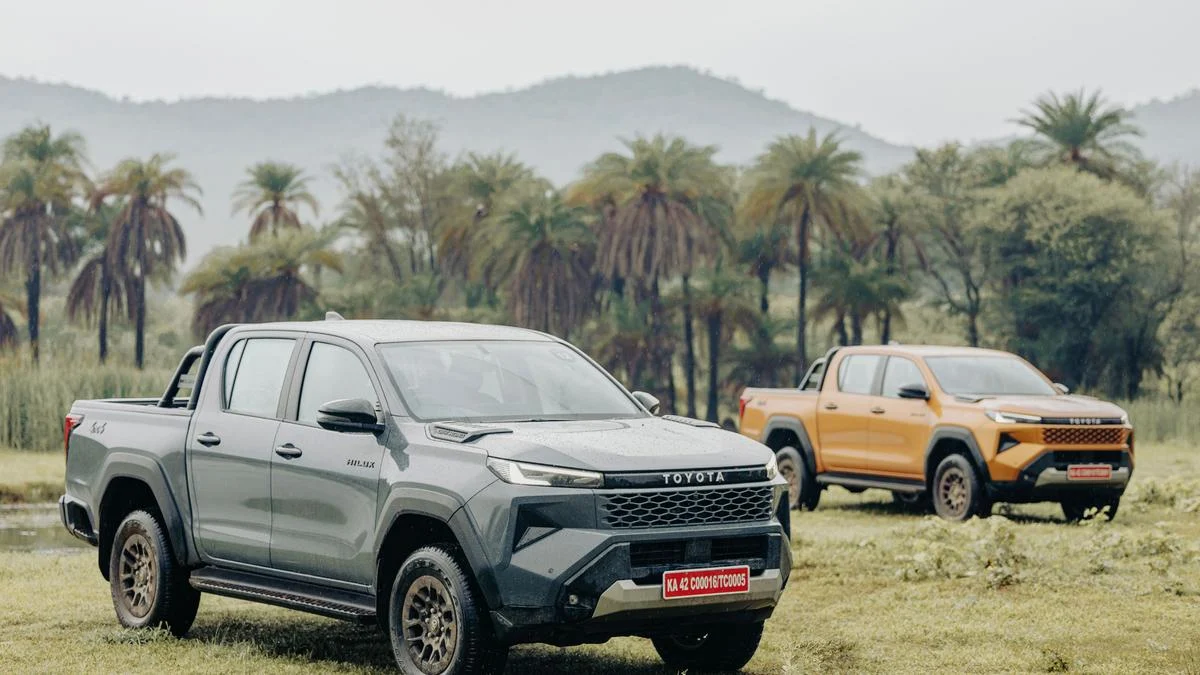
The Toyota Hilux occupies a rarefied space in the global automotive pantheon. It is not merely a vehicle; it is a symbol of mechanical resilience that has traversed the most inhospitable environments on Earth. From the frozen tundras of Antarctica to the blistering dunes of the Sahara, and even the high-stakes theaters of global conflict, the Hilux has earned a reputation for being virtually indestructible. In India, a market traditionally dominated by compact SUVs and luxury sedans, the Hilux represents a bold departure—a "lifestyle pickup" that prioritizes utility, adventure, and an almost mythical level of durability.
The latest update to the Indian-spec Hilux arrives at a crucial time. As the Indian consumer increasingly looks toward experiential travel and overlanding, the Hilux stands as the quintessential tool for those who find the limits of a standard SUV too restrictive. This revision is not a total reinvention but a calculated refinement, focusing on aesthetic aggression and cabin connectivity while doubling down on the rugged mechanicals that define the brand.
Main Facts: The Evolution of a Global Legend
The updated Toyota Hilux enters the Indian market with a price bracket ranging from INR 31.99 lakh to INR 36.69 lakh (ex-showroom). While it retains the core architecture that has made it a favorite for decades, the new model introduces a striking visual identity and a streamlined powertrain lineup.

Key Highlights of the Update:
- Design Philosophy: The introduction of the "Cyber Sumo" design language, featuring a more aggressive, angular front fascia.
- Powertrain: The familiar 2.8-liter four-cylinder turbo-diesel engine, now paired exclusively with a six-speed automatic transmission across the range.
- Interior Tech: A larger, more responsive touchscreen infotainment system with wireless integration for Apple CarPlay and Android Auto.
- Mechanical Integrity: Continued use of the heavy-duty ladder-frame chassis and leaf-spring rear suspension, optimized for a 500kg payload.
- Feature Re-calibration: A strategic shift away from luxury "creature comforts" (like leather and electric seats) toward functional simplicity and cabin durability.
Chronology: From Conservative Workhorse to ‘Cyber Sumo’
The history of the Hilux in India is relatively short compared to its half-century global tenure, but its impact has been immediate. When Toyota first launched the current generation in India, it featured a design that many considered conservative—a look that aligned closely with the Fortuner SUV. However, the 2024 update signals a departure from that understated elegance.
Toyota’s designers have implemented what they call the "Cyber Sumo" philosophy. This transition marks a chronological shift in how Toyota views the pickup buyer. The previous iteration sought to bridge the gap between a family SUV and a truck; the new version embraces its "truck-ness" with a flatter, more imposing bonnet and a redesigned grille that demands attention.
The evolution of the lighting signature is also notable. The revised LED units are sleeker and more futuristic, providing a sharp contrast to the vehicle’s massive, analog proportions. By integrating a side step into the rear cargo bed, Toyota has acknowledged the feedback of owners who use the vehicle for its intended purpose—hauling gear—making the transition from ground to cargo area significantly more ergonomic.

Supporting Data: Technical Specifications and Performance Metrics
To understand the Hilux, one must look at the data that supports its "indestructible" claim. This is a vehicle engineered for abuse, and its technical specifications reflect a priority for torque and structural rigidity over high-speed sprinting.
The Heart of the Beast: 2.8L Turbo-Diesel
The Hilux is powered by Toyota’s venerable 1GD-FTV engine. This 2.8-liter unit produces 201 PS of power and a massive 500 Nm of torque. In our performance testing, the Hilux managed a 0-100 km/h sprint in approximately 12 seconds. While this may not sound "fast" by modern sedan standards, for a ladder-frame vehicle weighing over two tons, the delivery of power is exceptionally linear and authoritative.
Off-Road Geometry and Capability
The Hilux’s prowess off the beaten path is supported by several key mechanical features:

- Four-Wheel Drive (4WD): A part-time system with high and low-range gearing.
- Differentials: An electronically locking rear differential and an electronic limited-slip differential (LSD) at the front.
- Wading Depth: Engineered to handle water crossings that would submerge the air intakes of most "soft-roaders."
- Terrain Modes: Multi-terrain Select (MTS) allows the driver to calibrate the traction control and engine mapping for mud, sand, or rock.
Interior Connectivity vs. Utility
In a move that has sparked debate among enthusiasts, Toyota has re-evaluated the interior feature list.
- The Additions: A larger touchscreen and a revised center console that feels more premium to the touch. The inclusion of a 360-degree camera is a vital addition, given the vehicle’s nearly 5.3-meter length.
- The Deletions: In a pivot toward ruggedness, leather upholstery has been swapped for high-durability fabric. Manual air conditioning replaces the previous automatic climate control, and the power-adjustable driver’s seat has been replaced by a manual unit.
While these omissions might seem like a regression, the data suggests that Hilux owners often subject their vehicles to dust, mud, and water—environments where fabric is often easier to maintain and manual controls are less prone to electronic failure over a twenty-year lifecycle.
Official Strategy: The Toyota Philosophy of "Purpose-Built"
Toyota’s approach to the Hilux update reflects a broader corporate philosophy: Genchi Genbutsu (Go and See). By observing how lifestyle pickups are actually used in markets like India, Southeast Asia, and Australia, Toyota determined that the Hilux does not need to compete with the luxury of a Mercedes-Benz or even its own Land Cruiser.

The removal of certain luxury features is a calculated decision to maintain the vehicle’s price point while upgrading the mechanical and technological components that matter most. Toyota’s messaging is clear: the Hilux is a tool, not a toy. The company has prioritized NVH (Noise, Vibration, and Harshness) levels, recognizing that while the truck must be rugged, the journey to the trail should not be fatiguing. The improved insulation and quieter engine note are direct results of this "long-distance touring" focus.
Furthermore, by offering the 4×2 variant exclusively with an automatic transmission, Toyota is responding to the urban "lifestyle" buyer who wants the look and utility of a truck but spends 80% of their time in stop-and-go traffic.
Implications: The Future of the Lifestyle Pickup in India
The updated Hilux has significant implications for the Indian automotive landscape. For years, the Isuzu D-Max V-Cross was the sole occupant of this niche. Toyota’s aggressive refinement of the Hilux forces a shift in the segment, moving it from a "niche workhorse" category into a "premium adventure" category.

For the Consumer
The Hilux presents a unique value proposition. It offers the peace of mind associated with Toyota’s legendary after-sales service and high resale value, combined with a level of capability that is unmatched by anything else in its price bracket. However, the "Implication of Size" cannot be ignored. In India’s densely packed Tier-1 cities, the Hilux is a challenge to park and maneuver. Buyers must weigh the emotional appeal of owning a global icon against the practical realities of urban infrastructure.
For the Market
The success of the Hilux could pave the way for other manufacturers to bring their global mid-size pickups to India, such as the Ford Ranger or the Mitsubishi Triton. It proves that there is a segment of the Indian population willing to spend over INR 35 lakh on a vehicle that doesn’t have a sunroof or ventilated seats, provided it offers "go-anywhere" freedom.
Conclusion: The Verdict
The new Toyota Hilux is a contradiction on wheels. It is more modern yet more basic; more aggressive yet more refined. By leaning into the "Cyber Sumo" aesthetic and upgrading the tech that facilitates adventure—like the 360-degree camera and wireless smartphone integration—Toyota has sharpened the Hilux’s appeal for the modern explorer.

The trade-off in luxury features will undoubtedly deter those looking for a "tough-looking" alternative to a luxury SUV. But for the core audience—the overlanders, the farm owners, and the enthusiasts who view a vehicle as an extension of their adventurous spirit—the Hilux remains peerless.
Ultimately, you don’t buy a Hilux because it is the most logical choice for a grocery run or a school drop-off. You buy it because when the road ends, the Hilux is just getting started. It remains a vehicle of resilience, a mechanical promise that no matter where you go, you will most certainly get back. In a world of increasingly fragile and over-computerized cars, the Hilux stands as a defiant, ladder-frame reminder of what a "proper" truck should be.
