Doha, Qatar – The highly anticipated group stage encounter between arch-rivals India A and Pakistan A in the Asia Cup Rising Stars 2026, held at the West End Park International Cricket Stadium in Doha, Qatar, was engulfed in an unforeseen wave of controversy even before the first ball was bowled. What was meant to be a routine pre-match ritual – the toss – quickly spiraled into a moment of confusion, drama, and widespread debate, leaving fans, players, and officials alike in a state of agitation. Beyond the palpable tension signified by a notable absence of a customary handshake between the two captains, it was a glaring error during the coin flip that ignited a social media firestorm and cast a shadow over the integrity of the crucial fixture.
The incident, captured and replayed countless times across digital platforms, saw an initial miscall by the presenter regarding the outcome of the toss, which was swiftly corrected following a vigilant intervention from Pakistan A captain Abdul Samad. This momentary lapse in judgment, however, was enough to fuel accusations of foul play from one side of the border and elicit strong defenses from the other, underscoring the deep-seated rivalry and the magnified scrutiny that accompanies any contest between these two cricketing giants, regardless of the ‘A’ team designation.
The Epicentre of the Storm: Main Facts Unveiled
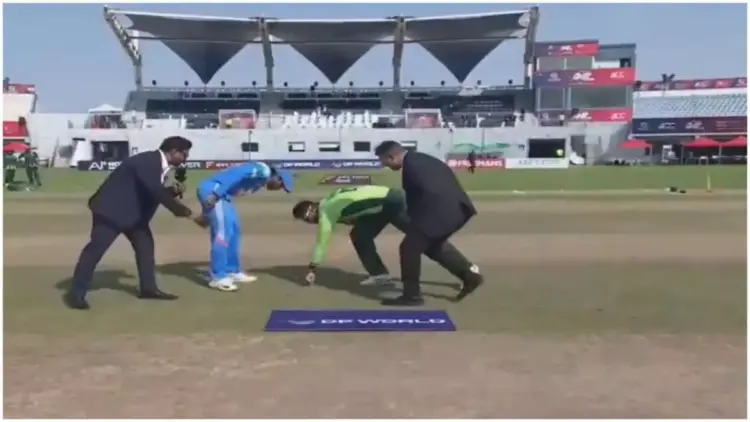
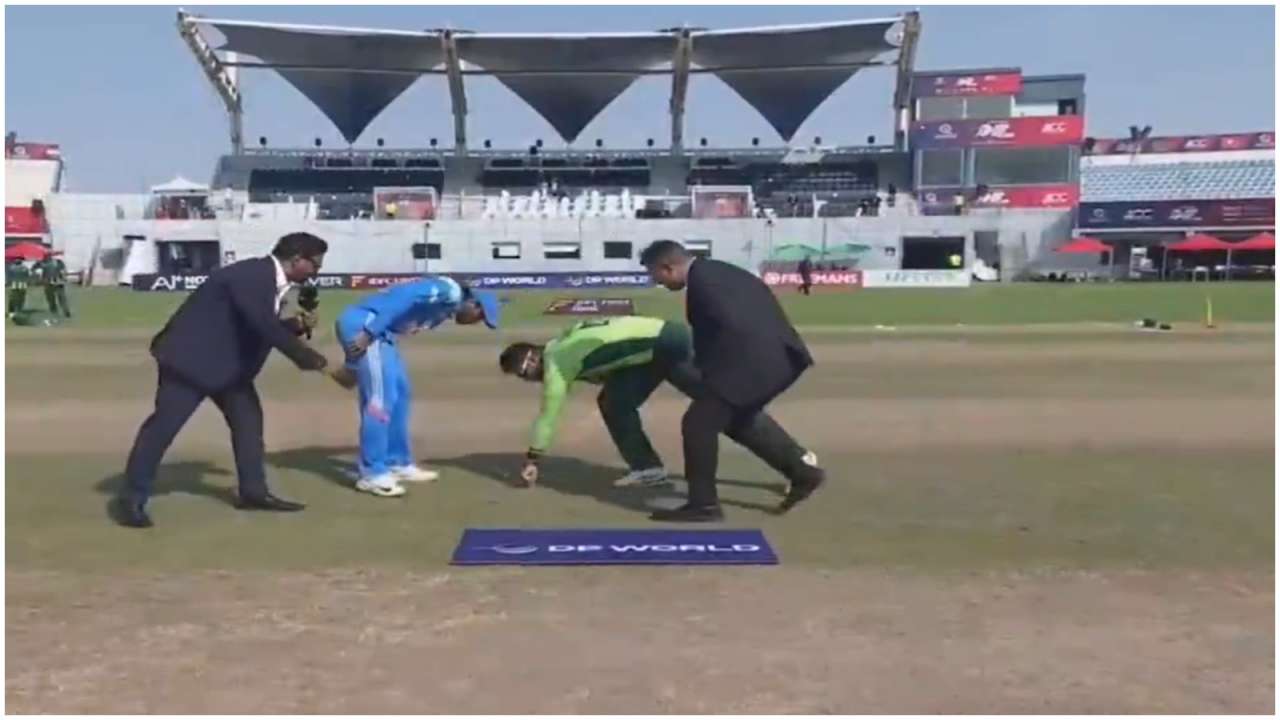
The crux of the controversy revolved around a critical misinterpretation of the coin’s landing during the pre-match toss for the India A vs Pakistan A fixture in the Asia Cup Rising Stars 2026. Indian skipper Tilak Varma had flicked the coin high into the Doha sky, while Pakistan’s captain, Abdul Samad, confidently called "Heads." As the coin settled on the pitch, the presenter, officiating the toss alongside the match referee, initially announced that India A had won, declaring the outcome as "Tails."
However, the decision was immediately challenged by Abdul Samad, who, with a keen eye, moved closer to the coin and emphatically pointed out that it had, in fact, landed on "Heads." Following Samad’s protest, the match official intervened, re-examined the coin, and confirmed that the Pakistani captain’s assertion was correct. Consequently, the initial announcement was retracted, and Pakistan A was rightly declared the winner of the toss. Opting to bat first on what he described as a "dry pitch," Samad expressed confidence in his team, while Tilak Varma, despite losing the toss, also admitted he would have chosen to bat, acknowledging the conditions.
This seemingly minor procedural error quickly escalated into a major talking point, not just because of the high-stakes nature of the India-Pakistan clash, but also due to the immediate and widespread reaction on social media. The incident was exacerbated by the absence of a handshake between the captains, a gesture traditionally signifying sportsmanship and mutual respect, particularly in such a high-profile rivalry. This dual-pronged moment of discord set a contentious tone for the match, igniting a heated debate among fans and pundits about officiating standards, the intense pressures of the rivalry, and the overarching spirit of the game.
A Play-by-Play Account: The Chronology of the Toss Drama
The atmosphere at the West End Park International Cricket Stadium in Doha was electric, as it always is when India and Pakistan meet on the cricket field. The anticipation for the Asia Cup Rising Stars 2026 encounter was palpable, with both sets of fans eager to witness the next generation of cricketing talent battle it out. The pre-match formalities commenced, drawing all eyes to the center square where the two captains, Tilak Varma of India A and Abdul Samad of Pakistan A, along with the match referee and the designated presenter, gathered for the toss.

The Pre-Toss Tension: Even before the coin was brought out, an undercurrent of tension was evident. The usual camaraderie often observed between captains from other nations was conspicuously absent. The captains stood a noticeable distance apart, and crucially, the traditional pre-toss handshake, a universal symbol of sportsmanship and mutual respect, did not take place. This unspoken formality set a somewhat frosty tone, hinting at the fierce rivalry that transcends even ‘A’ team cricket.
The Crucial Coin Flip: With the stage set, Indian skipper Tilak Varma took center stage, tasked with flicking the specially minted tournament coin. He sent it spinning high into the air, a sight familiar to cricket enthusiasts worldwide. As the coin ascended and began its descent, Abdul Samad made his call, a clear and decisive "Heads." The coin landed cleanly on the pitch, prompting immediate scrutiny from all involved.

The Initial Miscall: The moment the coin settled, the presenter, in what appeared to be a hasty assessment, declared, "India wins the toss, it’s Tails." The announcement was made with an air of finality, and for a fleeting moment, it seemed the toss was concluded. Tilak Varma offered a slight nod, seemingly accepting the outcome, while Abdul Samad’s expression remained unreadable, perhaps processing the announcement.
Samad’s Vigilance and Intervention: It was Abdul Samad’s quick thinking and keen observation that prevented a significant error from going unnoticed. Instead of simply accepting the presenter’s word, the Pakistan A captain immediately moved closer to the coin, bending down to inspect its face. With a clear gesture and verbal confirmation, he pointed out the error: "No, it’s Heads." His intervention was firm but respectful, leaving no room for ambiguity.

The Correction and Confirmation: The match official, responsible for the ultimate integrity of the toss, quickly stepped in. He too examined the coin closely, confirming Abdul Samad’s assertion. The presenter, acknowledging the mistake, corrected the announcement: "My apologies, it is indeed Heads. Pakistan wins the toss." The brief but intense moment of confusion dissipated, replaced by the definitive outcome.
Captains’ Post-Toss Reactions and Strategies: With the toss finally settled, Abdul Samad, having successfully called "Heads," was asked for his decision. He wasted no time in stating, "We would like to bat first. The team is very confident today. The pitch looks dry, so that’s why we want to bat. The boys are very confident. Maaz, every batsman, every bowler and every teammate is confident. You’ll see a good match today. Same side." His confidence was evident, underpinned by a clear tactical assessment of the conditions and the morale of his squad.

Tilak Varma, despite losing the toss, maintained a composed demeanor. When asked for his thoughts, he mirrored Samad’s assessment of the pitch, stating, "Pitch looks slightly dry." He also indicated that he would have chosen to bat first had he won. Varma then took a moment to laud his team’s recent performances, particularly highlighting the contributions of Harshit and Prince. "Terrific it was by Harshit and Prince. Was a treat to watch. After coming from injury, bowling like that is important for them and the team." He acknowledged the unique nature of an India-Pakistan clash, noting, "For us it’s just another game, but for spectators it’s an interesting match; they always look forward to it. Same team." His comments aimed to downplay the external pressure while still recognizing the immense public interest.
This sequence of events, from the initial no-handshake to the corrected toss decision, provided a dramatic prelude to what was already expected to be a fiercely contested match. The incident quickly became the dominant narrative, overshadowing the tactical decisions made and setting a precedent for the intense scrutiny that would follow every moment of the game.

Beyond the Boundary: Supporting Data and Contextual Insights
The controversy surrounding the toss in the India A vs Pakistan A Asia Cup Rising Stars 2026 fixture cannot be fully understood without delving into the broader context of this iconic cricketing rivalry and the significance of the tournament itself.
The Enduring India-Pakistan Rivalry: Cricket matches between India and Pakistan are not merely sporting contests; they are geopolitical events, imbued with intense national pride, historical baggage, and often, political undertones. This rivalry transcends generations, creating an atmosphere of unparalleled pressure and scrutiny, even at the ‘A’ team level. Every decision, every moment, is dissected with microscopic detail by millions of passionate fans across the globe. The absence of a handshake between the captains, a seemingly minor breach of protocol, was immediately interpreted as a reflection of the deep-seated tensions that often define these encounters. This history of intense competition means that any perceived injustice, no matter how small, can quickly ignite a firestorm of debate and accusation.

Significance of the Asia Cup Rising Stars: The Asia Cup Rising Stars tournament is designed as a crucial platform for emerging talents from Asian cricketing nations. It serves as a proving ground for players on the cusp of national team selection, offering them exposure to high-pressure situations and international competition. For young cricketers like Tilak Varma and Abdul Samad, leading their respective nations in an India-Pakistan clash, even at this level, is a career-defining moment. The tournament is vital for identifying future stars and ensuring the continued strength of cricket in the region. A controversy of this magnitude, therefore, threatens to detract from the tournament’s primary objective and place undue pressure on these developing athletes.
The Venue: Doha, Qatar: The choice of Doha, Qatar, as a neutral venue for the tournament underscores the logistical challenges and political sensitivities often associated with India-Pakistan sporting events. Playing on neutral soil is a common practice to ensure security and accessibility, providing a safe and controlled environment for such high-profile matches. Qatar, with its burgeoning interest in sports and world-class facilities like the West End Park International Cricket Stadium, offers a suitable setting. However, even a neutral venue cannot entirely insulate a match from the intensity of the rivalry or the scrutiny that follows.

Protocols of the Toss and Officiating Standards: The toss is a fundamental ritual in cricket, governed by clear rules and protocols. It involves the two captains, a match referee (appointed by the Asian Cricket Council or ICC), and often a presenter to facilitate the process. The match referee’s role is paramount, acting as the ultimate authority on all on-field decisions, including the outcome of the toss. While a presenter may announce the result, the final verification rests with the referee. The incident in Doha highlights the importance of meticulous attention to detail from all officials involved, especially in high-stakes matches where emotions run high and even minor errors can be amplified. It implicitly calls into question whether adequate training or pre-match briefings for such sensitive moments are universally applied.
The Power of Visual Media and Social Media: In the age of instant information and ubiquitous smartphones, every moment of a major sporting event is captured and shared. The video clip of the toss drama went viral within minutes, becoming fodder for millions of social media users. This rapid dissemination of visual evidence allowed fans worldwide to witness the incident firsthand, forming their own opinions and fueling the debate. The ability to pause, rewind, and slow-motion replay moments like the coin landing ensures that no detail goes unnoticed, often leading to intensified scrutiny and sometimes, unwarranted speculation. The digital landscape transforms a momentary error into a global phenomenon, underscoring the profound impact of social media on modern sports narratives.

The Echo Chamber: Official Responses and Netizens’ Reactions
The immediate aftermath of the toss controversy saw a mix of on-field correction and a massive wave of public reaction, primarily amplified through social media. While official statements from tournament organizers or cricketing bodies were conspicuously absent in the immediate hours following the incident, the court of public opinion was certainly in session.
The On-Field Correction and Lack of Immediate Official Statement: The most immediate "official response" came from the match referee who, upon Abdul Samad’s prompt, re-examined the coin and rectified the presenter’s error. This swift correction on the field, though crucial, was not followed by any formal statement or apology from the Asian Cricket Council (ACC) or the tournament management regarding the initial miscall or the confusion it caused. This silence, in itself, became a point of contention for some, who felt that a public acknowledgment of the error and reassurance of fair play would have been beneficial in defusing the burgeoning controversy. The absence of an immediate official statement meant that the narrative was largely shaped by unofficial channels and public discourse.

The Social Media Firestorm: A Divided Digital Audience: As clips of the toss went viral, social media platforms became battlegrounds for cricketing fans from both nations, each expressing their views with fervent passion.
Pakistani Cricket Fans: Allegations of ‘Fixing’ and ‘Cheating’. A significant segment of Pakistani cricket fans reacted with outrage and suspicion. The initial miscall was not seen as an innocent mistake but rather as a deliberate attempt to favor India. Accusations of ‘fixing’ and ‘cheating’ quickly gained traction, reflecting a deep-seated distrust that often surfaces during India-Pakistan encounters. Users pointed to the initial announcement as proof of malicious intent.

One prominent example, quoted from the original article, was by a user named Babbar56, who wrote, "India started this game with cheating. The match referee cheating on the toss but Abdul Samad caught it." This sentiment was echoed by numerous others, who questioned the integrity of the officiating and suggested a predetermined outcome. The fact that the error was caught by the Pakistani captain himself only fueled these suspicions further, portraying Samad as a hero who prevented an injustice. The tweet by Ankit Rawat 45, though from an Indian user, encapsulated the questions being raised by many, regardless of nationality, regarding the accountability of the ACC: "Ye ICC ka event nahi, ACC (Asian Cricket Council) ka event hai, jiske chairman Mohsin Naqvi hain. Toh toss ke waqt jo galti hui, wo sirf ek coincidence tha ya jaanbujhkar? Aur aakhir is event ka management kiski responsibility hai? #INDvsPAK" This tweet directly questioned the intentionality of the error and the responsibility of the Asian Cricket Council, whose chairman at the time was Mohsin Naqvi, the PCB (Pakistan Cricket Board) Chairman. This particular tweet added another layer of complexity, as it came from an Indian user questioning an event managed by an organization whose head was from Pakistan, complicating the ‘cheating’ narrative somewhat, but still highlighting the lack of faith in the process.
Indian Cricket Fans: Counter-Arguments and ‘Victim Card’ Accusations. On the other side, Indian cricket fans vehemently rejected the accusations of foul play. They largely dismissed the incident as a simple human error, quickly rectified, and accused Pakistani supporters of playing the ‘victim card’ and unnecessarily escalating a minor mix-up into a full-blown conspiracy theory. They highlighted the immediate correction and the fact that justice was ultimately served, emphasizing that no actual ‘cheating’ occurred.

A powerful counter-narrative, also quoted in the original source, came from a user named Varaha Warrior, who articulated this perspective clearly: "Match referee is from Bangladesh, ACC President is the PCB Chairman, and the toss controversy was settled in 5 seconds in Pakistan’s favour. The coin showed HEADS, but the presenter and referee called TAILS until Abdul Samad pointed it out. Yet somehow, India is cheating? Peak victim-card mentality." This statement meticulously dissected the accusations, pointing out the diverse nationalities of officials involved (a Bangladeshi referee), the fact that the ACC President was from Pakistan (Mohsin Naqvi), and that the decision was ultimately corrected in Pakistan’s favor. This perspective aimed to dismantle the ‘fixed’ narrative by highlighting the neutrality of the officials and the swift resolution of the error, framing the Pakistani reaction as an exaggerated and habitual complaint.
Journalists and Pundits: While not explicitly detailed in the provided content, it’s safe to assume that cricket journalists and pundits would have also weighed in. Their commentary would likely have focused on the need for better officiating standards, the immense pressure surrounding India-Pakistan games, and the potential for such incidents to further strain cricketing relations. Many would have called for greater transparency and more robust procedures to prevent such errors, especially in high-profile international tournaments.

The online debate showcased the deeply entrenched sentiments associated with India-Pakistan cricket, where every action is scrutinized through a nationalistic lens, and even a simple toss can become a flashpoint for accusations and counter-accusations.
Ripple Effects: Implications and Future Outlook
The toss drama during the India A vs Pakistan A clash in the Asia Cup Rising Stars 2026, while seemingly a minor incident, carries significant implications that extend beyond the boundaries of the match itself.

Immediate Impact on the Match and Player Psychology: The most immediate implication was the contentious start to a highly anticipated game. While Abdul Samad’s alertness ensured Pakistan A correctly won the toss and chose to bat, the preceding confusion could have had psychological effects. For Pakistan A, it might have instilled a sense of vigilance or even resentment, believing they had to fight for a fair start. For India A, it could have been a distraction or a source of frustration, even though they were not directly at fault for the miscall. The absence of a handshake further solidified the perception of intense rivalry and minimal goodwill, setting a less-than-ideal tone for a match intended to showcase rising stars. Such incidents, however quickly resolved, can linger in the minds of players and potentially influence their approach to the game.
Damage to Tournament and ACC’s Reputation: The Asia Cup Rising Stars is designed to be a springboard for young talent. A controversy of this nature, questioning the integrity of a fundamental pre-match ritual, inevitably casts a shadow over the tournament’s credibility and the organizational capabilities of the Asian Cricket Council (ACC). It raises concerns about officiating standards and the robustness of protocols for even routine procedures, especially in high-stakes matches. For an organization like the ACC, which governs cricket in Asia, such incidents can lead to reputational damage, potentially deterring future host nations or sponsors who seek flawless execution and uncontroversial events. The public questioning of whether the error was "coincidence or intentional," as highlighted by the Ankit Rawat tweet, necessitates a clear response and perhaps a review of procedures.

Fueling the India-Pakistan Rivalry: The incident further exacerbated the already volatile India-Pakistan cricketing rivalry. Every contest between these two nations is a pressure cooker, and any perceived unfairness, however small, tends to inflame passions and deepen existing animosities. The quick spread of the viral clip and the subsequent online war of words between fans demonstrated how easily a minor error can be weaponized to fuel narratives of distrust and victimhood. This only serves to make future encounters even more challenging to manage, both on and off the field, potentially affecting bilateral cricketing relations, which are already fraught with political complexities.
Call for Stricter Officiating Protocols: The incident serves as a stark reminder of the critical importance of impeccable officiating, particularly in high-profile matches. It underscores the need for match officials, including presenters, to exercise utmost care, precision, and clarity in their duties. There will likely be calls for the ACC and possibly the ICC to review and reinforce protocols for pre-match tosses, ensuring that such errors are minimized. This could include clearer visual verification procedures, explicit confirmation from the match referee before any announcement, and perhaps even a dedicated replay official for such sensitive moments, similar to how DRS reviews are handled. The integrity of the game hinges on the trust placed in its officials, and incidents like this erode that trust.

The Power and Peril of Social Media: This event perfectly illustrates the dual nature of social media in modern sports. On one hand, it provided immediate transparency, allowing the error to be identified and corrected quickly due to public scrutiny. Abdul Samad’s action, combined with the rapid sharing of the video, ensured the truth came to light. On the other hand, it also showcased how easily misinformation and unfounded accusations can spread, creating a toxic environment of distrust and conspiracy theories. The speed and reach of social media mean that organizations must be prepared to respond swiftly and transparently to manage narratives during controversies.
In conclusion, the toss drama in Doha was more than just a momentary mix-up; it was a potent symbol of the unique pressures, deep-seated rivalries, and heightened scrutiny that define India-Pakistan cricket. While the error was rectified on the field, its implications for officiating standards, tournament reputation, and the broader cricketing relationship between the two nations are likely to resonate for some time, demanding introspection and potential reforms from the Asian Cricket Council to uphold the spirit and integrity of the beautiful game.