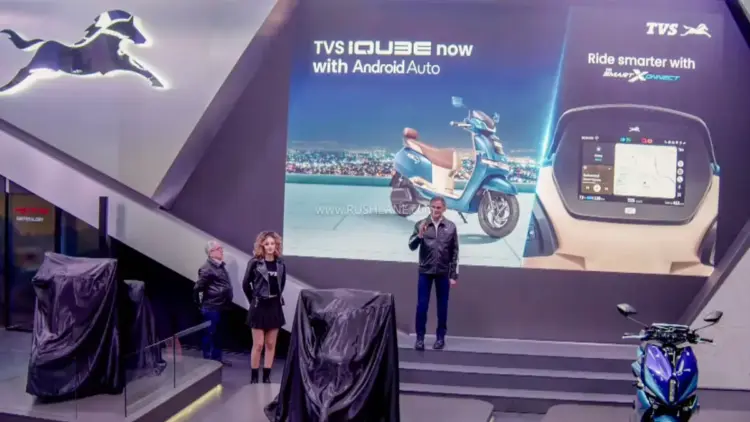
MILAN, ITALY – In a move that signals a significant leap forward for connected two-wheeler technology, TVS Motor Company has officially announced the integration of Google’s Android Auto into its flagship electric scooter, the TVS iQube. The announcement, made during the prestigious EICMA 2026 motorcycle show in Milan, underscores the Indian manufacturer’s ambition to bridge the gap between automotive-grade infotainment and the electric micro-mobility sector.
While the EICMA stage was crowded with high-performance internal combustion engines and futuristic electric concepts, the revelation of a deeper partnership with Google for the iQube lineup emerged as one of the most practical and consumer-centric highlights of the event. This development marks a transition for the iQube from a standard electric commuter to a sophisticated, "smartphone-on-wheels" platform.
1. Main Facts: The Evolution of the iQube Interface
The core of the announcement centers on the TVS iQube’s top-tier variants, which currently feature a 7-inch full-color TFT touchscreen. Under the new partnership with Google, this hardware will now support a native Android Auto interface, allowing riders to mirror their smartphone environments directly onto the scooter’s dashboard.
Key Highlights of the Integration:
- Seamless Connectivity: Riders will be able to access Google Maps, music streaming services like Spotify and YouTube Music, and messaging notifications through a familiar interface.
- Optimized Real Estate: The existing 7-inch display, already one of the largest in its segment, is deemed sufficient to host the Android Auto UI without compromising the visibility of critical vehicular data.
- Dual-Layer Information: The system is designed to show essential riding telemetry—including Battery State of Charge (SOC), real-time range estimation, trip meters, and digital speedometers—alongside the Android Auto applications.
- Google Partnership: This is not a third-party "skin" but a direct collaboration with Google, ensuring stability, security, and regular feature updates.
2. Chronology: TVS Motor’s Strategic Display at EICMA 2026
The announcement regarding the iQube did not happen in isolation. It was part of a meticulously choreographed presentation by TVS Motor at their grand pavilion in Milan, aimed at establishing the brand as a formidable player in the European market.
The EICMA Timeline:
- The European Portfolio Launch: TVS began by outlining its roadmap for the European continent. This included the introduction of the M1S, an electric scooter slated for an initial launch in Indonesia before heading to European shores.
- The Electric Hierarchy: Following the M1S, TVS showcased the TVS X (its premium performance electric crossover) and the Orbiter, a concept aimed at the premium urban mobility segment.
- The Surprise Showstopper: While the electric news was substantial, the TVS RTR 125—a liquid-cooled, 6-gear performance machine—stole much of the initial limelight, catering to the European "A1" license category.
- The iQube Revelation: Amidst the high-octane reveals, TVS leadership pivoted to the iQube. In what was initially a "passing glance" on the digital screens, the company confirmed that Android Auto was coming to the iQube, sparking immediate interest from tech analysts and automotive journalists.
3. Supporting Data: The Technical and Market Context
To understand why the addition of Android Auto is a watershed moment for TVS, one must look at the existing technological landscape of the brand and the broader market demographics.
Precedent in the TVS X
TVS is not new to the Google ecosystem. The TVS X, the brand’s premium electric flagship in India, already boasts wireless Android Auto integration on its massive 10.2-inch TFT instrument cluster. By bringing this technology to the iQube, TVS is essentially "democratizing" a premium feature, moving it from a niche performance vehicle to a high-volume family scooter.
The Screen Specifications
The iQube’s current 7-inch screen is powered by a multi-core processor capable of handling complex graphics. The integration of Android Auto utilizes the scooter’s onboard Bluetooth and Wi-Fi modules to establish a handshake with the user’s smartphone.
The Android Dominance in Key Markets
The decision to prioritize Android Auto over Apple CarPlay is backed by significant market data.
- In India: Android holds a market share of over 95%. Since the iQube is a volume driver in the Indian market, focusing on Android ensures the highest utility for the largest number of users.
- In Europe: While iOS has a higher penetration in Europe than in India, Android remains the leading operating system in several key Mediterranean markets where scooters are most popular.
4. Official Stance and Corporate Vision
While TVS executives at EICMA remained tight-lipped about the specific rollout dates for the Android Auto update, the company’s official communication emphasized a "digital-first" approach to mobility.
In a statement reflecting the brand’s philosophy, TVS representatives noted that the modern rider views their vehicle as an extension of their digital life. The partnership with Google is intended to reduce "device friction"—the distraction and difficulty caused by riders trying to check phones or mount external GPS devices on their handlebars.

Unanswered Questions
Despite the excitement, several technical details remain under wraps:
- Wired vs. Wireless: It is yet to be confirmed if the iQube will support wireless Android Auto (like the TVS X) or if it will require a USB connection.
- Retroactive Compatibility: One of the most pressing questions from the current iQube community is whether this feature will be delivered via an Over-The-Air (OTA) update to existing owners or if it will be restricted to new hardware versions.
- Apple CarPlay: There was no mention of Apple CarPlay. Given the partnership with Google, it appears TVS is currently focusing on a single-ecosystem optimization to ensure a bug-free experience.
5. Implications: What This Means for the EV Industry
The integration of Android Auto into a mass-market electric scooter like the TVS iQube has far-reaching implications for the global two-wheeler industry.
A Death Knell for Proprietary Navigation?
For years, manufacturers like Ather Energy, Ola Electric, and TVS itself have spent millions developing proprietary navigation systems (often based on MapMyIndia or OpenStreetMap). However, these systems rarely match the real-time accuracy and ease of use of Google Maps. By adopting Android Auto, TVS is acknowledging that consumers prefer the apps they already know and use daily.
Enhanced Safety
By mirroring phone apps to the dashboard, TVS is promoting a "hands-on-bars" approach. With voice command integration via Google Assistant, riders can change music, set navigation destinations, or listen to incoming messages without taking their eyes off the road for extended periods.
Competitive Pressure
This move puts immense pressure on rivals. In the Indian market, the Ola S1 Pro and Ather 450X have long touted their software prowess. However, neither currently offers native Android Auto or Apple CarPlay. TVS’s move could trigger a "software arms race" in the electric two-wheeler segment, where the quality of the infotainment system becomes as critical as the range or top speed of the vehicle.
Global Expansion Strategy
The timing of this announcement at EICMA is no coincidence. As TVS prepares to enter the European market, they are competing with established giants like Piaggio and BMW. Offering a familiar, high-tech interface like Android Auto is a strategic way to appeal to tech-savvy European urbanites who demand seamless connectivity.
Conclusion: The Road Ahead
The TVS iQube has already established itself as a reliable, sensible, and high-performing electric scooter. With the addition of Android Auto, TVS is adding a layer of "smart" sophistication that few in the segment can currently match.
As we look toward 2027, the focus for TVS Motor Company is clear: it is no longer just about building a vehicle that gets a rider from point A to point B. It is about the quality of the experience during that journey. By partnering with Google, TVS has ensured that the iQube remains at the cutting edge of the electric revolution, proving that even in the world of two wheels, software is increasingly becoming the driver of hardware success.
Further details regarding the official launch date and regional availability are expected to be released in the coming months as TVS finalizes its 2027 model year specifications. For now, the message from Milan is loud and clear: TVS is ready to lead the world in connected electric mobility.