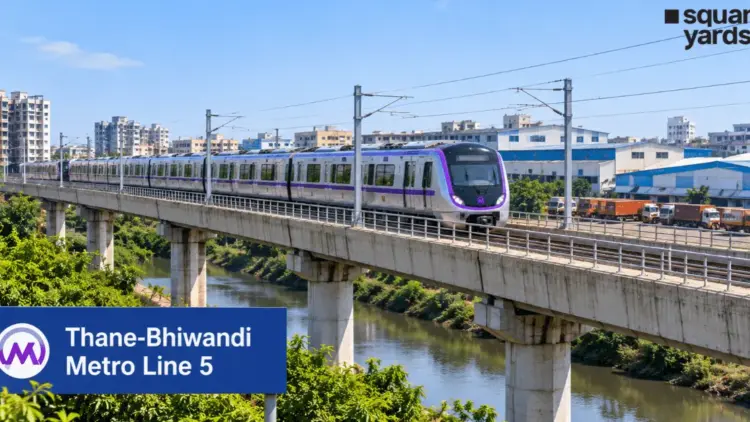
The Mumbai Metropolitan Region (MMR) is currently witnessing one of the most significant infrastructure overhauls in its history. At the heart of this transformation is the Mumbai Metro Line 5, popularly known as the Orange Line. Designed to bridge the connectivity gap between the residential powerhouse of Thane and the logistics and industrial backbone of Bhiwandi, this corridor is poised to redefine the socio-economic landscape of the eastern suburbs.
With the first phase of the project nearing completion and a tentative operational date set for late 2026, the region is bracing for a shift from congested road-based commuting to a high-speed, reliable rapid transit system. This report provides an in-depth analysis of the project’s progress, technical specifications, strategic importance, and its profound impact on the local real estate and industrial sectors.
1. Main Facts: The Strategic Blueprint of Line 5
Mumbai Metro Line 5 is a 24.9-km elevated corridor planned to connect Thane, Bhiwandi, and Kalyan. However, to ensure early benefits for commuters, the Mumbai Metropolitan Region Development Authority (MMRDA) has prioritized the 11.9-km first phase.
Phase 1 Overview
The initial stretch extends from Balkum Naka in Thane to Dhamankar Naka in Bhiwandi. This segment is particularly critical as it traverses the most congested parts of the Thane-Bhiwandi road, which currently serves as the primary artery for heavy-duty logistics vehicles and passenger traffic alike.
- Corridor Length (Phase 1): 11.9 km
- Total Estimated Cost (Phase 1): Rs 6,741 crore
- Station Count (Phase 1): 6 stations
- Travel Time Efficiency: Reduction from 45–60 minutes (by road) to approximately 25 minutes (by Metro).
- Daily Ridership Projection: Estimated to serve 3.025 lakh passengers daily by 2031.
The Connectivity Grid
The Orange Line is not an isolated corridor; it is a vital cog in the larger Mumbai Metro master plan. Its strategic importance is amplified by its interchanges:
- Kasarvadavali (Line 4 Interchange): This allows commuters from Bhiwandi to switch to the Wadala-Kasarvadavali Line, providing a direct link to the heart of Mumbai.
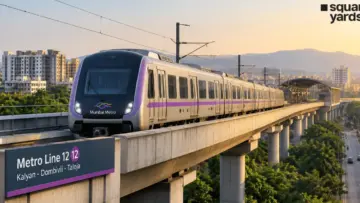
- Kalyan (Line 12 & Central Railway Interchange): Future phases will link to the Kalyan-Taloja Metro (Line 12) and the Central Railway suburban network, creating a seamless multi-modal transit hub.
2. Project Chronology: From Blueprint to Track Energization
The journey of Metro Line 5 has been one of engineering resilience, especially considering the challenges of navigating through the densely packed industrial clusters of Bhiwandi.
Early Development and Planning
The project was conceived to address the growing demand for public transport in the Thane-Kalyan-Bhiwandi triangle. While Thane has seen massive residential growth, Bhiwandi remained underserved by rapid transit despite being the "Warehousing Capital of India."
Current Milestones (2024–2026)
- October 2024: Significant progress in civil construction, with the majority of the viaducts for Phase 1 completed.
- Early 2026 (Projected): Energization of tracks and overhead electrical equipment (OHE). This is a critical safety and technical milestone that paves the way for high-speed trials.
- October 2026 (Anticipated): Delivery of the first bespoke train set. These coaches are designed to handle high-capacity crowds while offering modern amenities like regenerative braking and advanced climate control.
- December 2026 (Target): Tentative commencement of commercial passenger operations for Phase 1.
The MMRDA has recently intensified efforts at the Kasheli Depot, which will serve as the primary maintenance and stabling yard for the line. The depot is essential for the daily deployment of rakes and ensures the operational health of the rolling stock.
3. Supporting Data: Technical Specifications and Route Mapping
The success of a transit project is often found in its granular details. Phase 1 of Line 5 is designed to cater to a diverse demographic—from white-collar professionals in Thane to industrial workers in the Bhiwandi logistics belt.
Phase 1 Station List
The 11.9-km route includes six strategically located stations:
- Balkum: Serving the high-end residential towers of Thane.
- Kasheli: A transition point near the depot and burgeoning industrial zones.
- Kalher: A major hub for warehousing and small-scale manufacturing.
- Purna: Home to large-scale logistics centers.
- Anjurphata: A critical junction connecting to the Gujarat-bound highway.
- Dhamankar Naka: The gateway to Bhiwandi’s urban and commercial core.
Infrastructure Highlights
| Project Feature | Details |
|---|---|
| Type | Fully Elevated (Phase 1) |
| Depot Location | Kasheli (Spanning approx. 27 hectares) |
| Inter-station distance | Average 1.8 km to 2.2 km |
| Rolling Stock | 6-car train sets (Standard Gauge) |
| Signaling | Communication-Based Train Control (CBTC) for high-frequency operations |
4. Official Responses and Administrative Context
While the MMRDA has faced hurdles regarding land acquisition—particularly for the Kasheli depot and the second phase toward Kalyan—the administration remains optimistic.
Overcoming Geographical Hurdles
Officials have noted that the stretch between Kasheli and Kalher required specialized engineering due to the marshy terrain and the need for high-clearance viaducts to bypass existing industrial structures. The "Bhiwandi-Durgadi" section of the future phase will even include an underground portion to navigate the narrow, congested streets of old Bhiwandi without disrupting the local economy.
Extension Plans (Metro Line 5A)
In response to the growing urban sprawl, the state government has proposed Metro Line 5A, an 11.83-km extension. This spur will connect Durgadi with Kalyan via Khadakpada and Bhoirwadi, eventually reaching Ulhasnagar. This demonstrates the government’s commitment to creating a "ring rail" effect in the MMR, ensuring no major satellite city is left behind.
5. Economic and Logistics Implications
Bhiwandi is the logistics backbone of Western India. With the rise of e-commerce giants like Amazon, Flipkart, and Reliance Retail, the demand for efficient movement of people has skyrocketed.
Impact on the Workforce
Currently, thousands of workers rely on shared rickshaws and state transport buses to reach warehouses in Kalher and Purna. These roads are notorious for traffic snarls, often caused by heavy container trucks. By shifting passenger traffic to the Metro, the roads will become more efficient for freight movement, while workers will enjoy a safer, air-conditioned, and predictable commute.
Reducing the Carbon Footprint
The transition from fossil-fuel-dependent road transport to an electric metro system is expected to significantly reduce carbon emissions in the Thane-Bhiwandi corridor. This aligns with India’s broader "Green Mobility" goals.
6. Real Estate Impact: A Tale of Two Markets
The "Metro Effect" is already visible in the property valuations along the Line 5 corridor. However, the impact varies significantly based on the locality’s current profile.
Residential Upsurge in Thane (Balkum)
Balkum has transformed into a premium residential pocket. With prices ranging between Rs 18,000 and Rs 21,000 per sq. ft., it caters to the upper-middle-class segment. The Metro connection to Line 4 (Wadala) makes Balkum a viable residence for those working in South or Central Mumbai, further driving up capital values.
The Industrial-to-Residential Shift in Kasheli and Kalher
Historically industrial, areas like Kasheli and Kalher are now seeing interest from "affordable housing" developers.
- Kasheli (Rs 4,000 – Rs 9,000 per sq. ft.): Offers some of the most competitive rates in the MMR, making it a magnet for first-time homebuyers.
- Kalher (Rs 11,000 – Rs 13,000 per sq. ft.): Reflects a premium over Kasheli due to its established commercial infrastructure.
Market Insights: Price Per Square Foot
| Locality | Average Price Range (INR) | Primary Driver |
|---|---|---|
| Balkum | 18,000 – 21,000 | Luxury Residential / Connectivity to Thane City |
| Kasheli | 4,000 – 9,000 | Metro Depot Proximity / Industrial Jobs |
| Kalher | 11,000 – 13,000 | E-commerce Hubs / Warehousing |
| Purna | 7,500 – 9,500 | Logistics and Manufacturing |
| Anjurphata | 6,500 – 7,000 | Highway Connectivity / Transit Hub |
Source: Square Yards Research
Commercial Prospects
The termination point of Phase 1 at Dhamankar Naka is expected to become a commercial hotspot. As footfall increases due to the metro station, traditional wholesale markets in Bhiwandi are likely to upgrade to organized retail formats, malls, and modern office spaces.
7. Conclusion: The Future of the Eastern MMR
The Mumbai Metro Line 5 is more than just a transportation project; it is an economic catalyst. By connecting the residential maturity of Thane with the industrial vigor of Bhiwandi and eventually the suburban density of Kalyan, the MMRDA is creating a balanced urban ecosystem.
While the December 2026 deadline for Phase 1 remains tentative, the progress on track energization and the procurement of rolling stock indicates that the project is on a firm footing. For the residents of Thane and the workers of Bhiwandi, the "Orange Line" represents the end of grueling commutes and the beginning of a new era of urban mobility.
As the viaducts rise and the tracks are laid, the corridor stands as a testament to Mumbai’s ability to reinvent itself, ensuring that its vital industrial hinterlands are seamlessly integrated into the modern metropolitan fabric. The next two years will be crucial as the project moves from engineering to operations, ultimately unlocking the true potential of the Thane-Bhiwandi-Kalyan axis.