

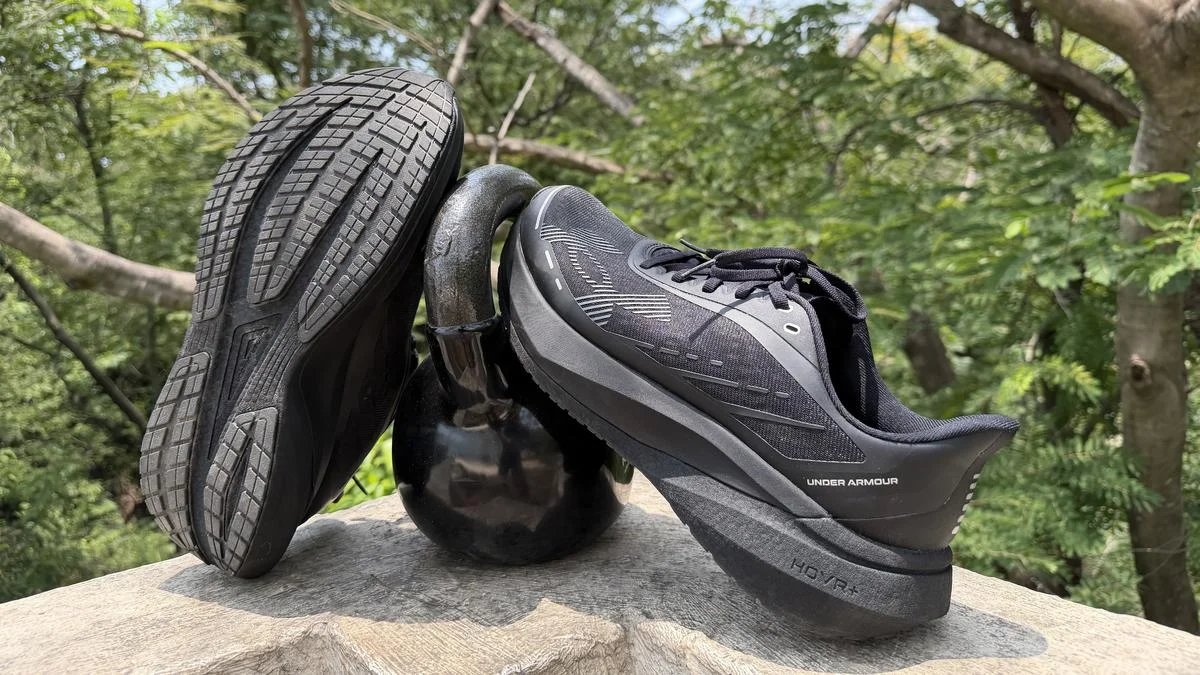
Under Armour, a brand often perceived as the tenacious challenger in the performance running shoe arena, has launched its latest offering for the dedicated high-mileage runner: the Velociti Distance. This shoe is a testament to technical prowess and a willingness to innovate, delivering a potent blend of plush cushioning and a surprisingly versatile ride. However, its defining characteristic is a polarizing stability system that promises to either elevate your long runs or introduce an unwelcome rigidity, making it a shoe that demands careful consideration based on individual biomechanics.
A Challenger’s Ambition: Redefining the Long-Run Experience
For years, Under Armour has carved a niche by offering technically sound footwear, occasionally producing standout models, yet struggling to consistently command the attention of seasoned runners. The Velociti Distance represents a significant stride towards challenging established giants, particularly in the high-mileage, long-distance category. This shoe doesn’t shy away from its purpose; it’s engineered to eat up the miles, offering a cushioned embrace designed for endurance. Yet, its innovative approach, particularly regarding stability, creates a distinct dichotomy in the running experience, setting it apart from more conventional offerings and sparking a debate about its ideal user.
First Impressions: Weighty Promise and Refined Comfort
Upon first picking up the Velociti Distance, its substantial nature is immediately apparent. Weighing in at 298 grams, it positions itself firmly in the more traditional, less minimalist end of the modern running shoe spectrum. This is not a shoe striving for feather-light agility; rather, it embraces its build with a purpose. The generous 38mm stack height of Under Armour’s proprietary Hovr+ foam is a clear indicator of its mission: to provide unwavering shock absorption over extended distances. This substantial cushioning is designed to mitigate fatigue and keep the runner feeling fresh, even as the kilometers accumulate.
The upper construction is where Under Armour truly shines. A meticulously engineered woven mesh envelops the forefoot, ensuring exceptional breathability. This is a critical feature for long runs, especially those conducted in warmer conditions, where heat buildup can quickly become a source of discomfort. The design team has paid close attention to the finer details: a gusseted tongue remains securely in place, preventing any unwanted slippage, while the heel counter is both well-padded and structurally sound, offering a locked-in feel without inducing pressure points. The overall lockdown is confident and reassuring, a crucial element for maintaining foot security during prolonged efforts.
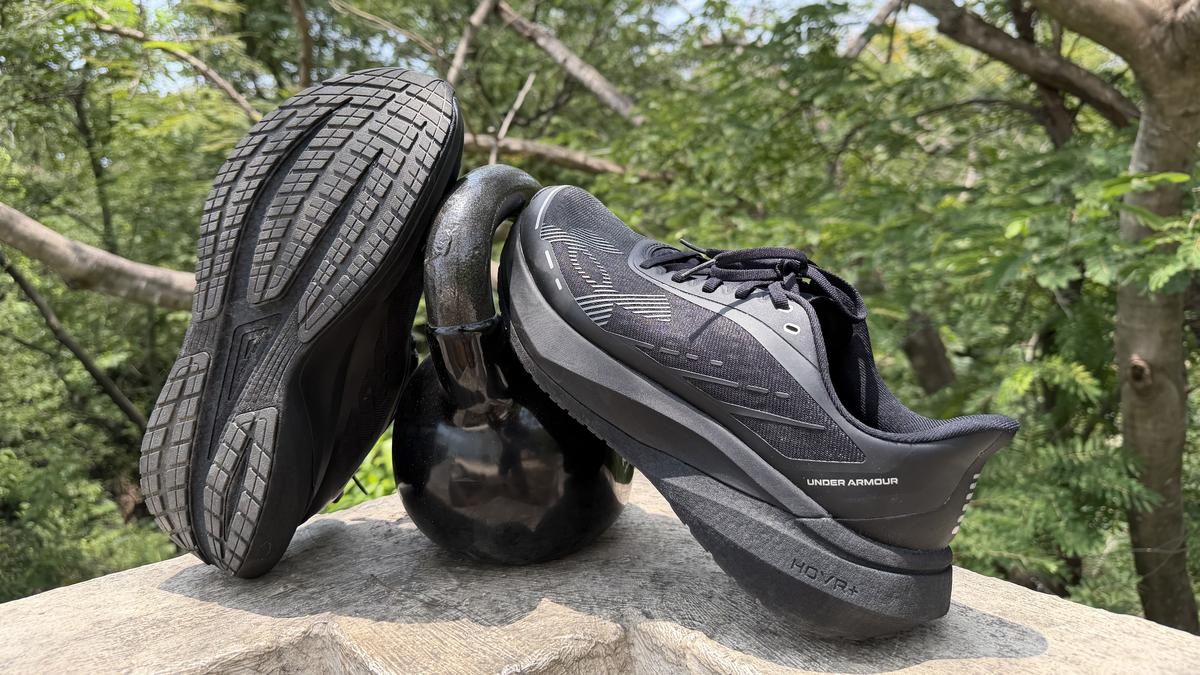
While the New Balance Fresh Foam X 1080, a contemporary in the max-cushion space, often impresses with its accommodating and relaxed fit, the Velociti Distance adopts a more assertive stance. It prioritizes security, a characteristic that runners tackling long distances will find immensely valuable. The shoe effectively cradles the foot, offering a sense of steadfast support that becomes increasingly appreciated with every mile. The only minor point of contention in this otherwise refined upper is the quality of the laces. Compared to the premium feel of the rest of the shoe, the laces feel noticeably less durable and sophisticated, a small detail that slightly mars an otherwise excellent construction.
On the Pavement and Beyond: A Ride That Adapts
Stepping out for the first run in the Velociti Distance, the Hovr+ foam immediately lives up to its promise. This supercritical TPU material, also found in Under Armour’s elite racing shoes, delivers a ride that is both remarkably soft and surprisingly firm. The cushioning is adept at absorbing the relentless impact of the road, yet it possesses enough responsiveness to maintain a lively turnover. This means that despite its substantial cushioning, the shoe doesn’t feel sluggish or dead underfoot. Instead, it offers a propulsive sensation that encourages a consistent and efficient stride.
What truly elevates the Velociti Distance beyond a mere high-cushion cruiser is its remarkable versatility across different running intensities. While explicitly marketed as a long-run trainer, the shoe demonstrates an impressive ability to perform well during tempo efforts and steady-state runs. This adaptability means that the Velociti Distance isn’t confined to being a specialist shoe for your weekly long run; it can seamlessly integrate into your broader training regimen, serving as a reliable companion for a variety of workouts. This multi-faceted capability is a significant advantage for runners seeking a shoe that can handle diverse training demands without requiring constant rotation.
The outsole is a testament to Under Armour’s commitment to durability and confidence on varied terrain. The generous application of rubber across the outsole provides robust protection and exceptional traction. While this extensive rubber coverage undoubtedly contributes to the shoe’s overall weight, it translates into a tangible benefit: the ability to confidently navigate both smooth pavement and rugged gravel paths with equal assurance. For runners who have experienced the frustration of outsoles wearing out long before the midsole loses its integrity, the prospect of such enduring durability is a significant selling point. This robust outsole ensures that the shoe’s performance remains consistent over a considerable lifespan, offering excellent value for dedicated mileage.

The Stability Conundrum: A Defining Feature That Divides
It is within the realm of its stability system that the Velociti Distance truly crystallies its identity, presenting a feature that will either resonate deeply with a runner or alienate them entirely, with very little room for a middle ground. Under Armour has integrated firm TPU inserts along both the lateral and medial sides of the midsole. The stated intention of these "stability rails" is to guide the foot through its natural gait cycle, thereby mitigating excessive motion within the plush Hovr+ foam. In theory, this is an intelligent engineering solution designed to enhance control and efficiency.
However, in practice, the effect of these rails is more pronounced and assertive than the term "guide" might suggest. For runners whose natural foot mechanics align harmoniously with the direction prescribed by these stability elements, the experience can be one of enhanced support and controlled motion. The shoe feels like an extension of their own biomechanics, promoting a stable and efficient stride.
Conversely, for individuals whose natural gait deviates from the rails’ intended path, the inserts can impose a forced pronation or supination, leading to a sensation that is jarring and unnatural. The correction is not subtle; it is a firm, directive intervention. The shoe possesses a distinct vision for how it believes your foot should move, and if this vision clashes with your body’s innate mechanics, runs that should feel effortless can devolve into a source of discomfort and strain, rather than the intended release and enjoyment. This polarising aspect means that the Velociti Distance is not a universally applicable shoe. It demands a degree of introspection from the runner, an understanding of their own biomechanics, and a willingness to test how their foot interacts with the shoe’s prescriptive design.
The Velociti Distance enters a competitive landscape populated by daily trainers from brands with extensive running pedigrees. Many of these established competitors offer a more inherently neutral ride, often providing a sense of natural foot movement without the polarizing influence of a pronounced stability system. This means that for runners who prioritize a less intrusive approach to stability, alternative options might offer a more straightforward and universally comfortable experience.

The Verdict: Who Should Lace Up the Velociti Distance?
The Under Armour Velociti Distance is unequivocally designed for the runner who craves substantial cushioning that remains both soft and responsive, enabling them to push beyond an easy pace without needing to switch to a more performance-oriented shoe. It is a capable and potentially deeply rewarding training shoe for individuals who possess a biomechanically neutral gait, or who experience mild pronation and find that the specific geometry of the stability rails happens to complement their natural stride.
However, for those who have historically found comfort and efficiency in neutral shoes, and who have always experienced a natural range of foot motion, approaching the Velociti Distance’s integrated stability system requires a degree of caution. It is essential to try these shoes on and, if possible, test them on a run to ascertain how the stability rails interact with your unique gait.
Ultimately, Under Armour has engineered a technically impressive shoe with the Velociti Distance. It showcases their growing expertise in performance footwear and their willingness to push boundaries. Whether this technically impressive shoe is the technically right choice for an individual runner hinges entirely on a critical question: do the shoe’s strong, defined opinions about how your foot should move align with your own body’s natural tendencies and preferences? For those who find that alignment, the Velociti Distance offers a unique and potent pathway to conquering their longest runs.
