

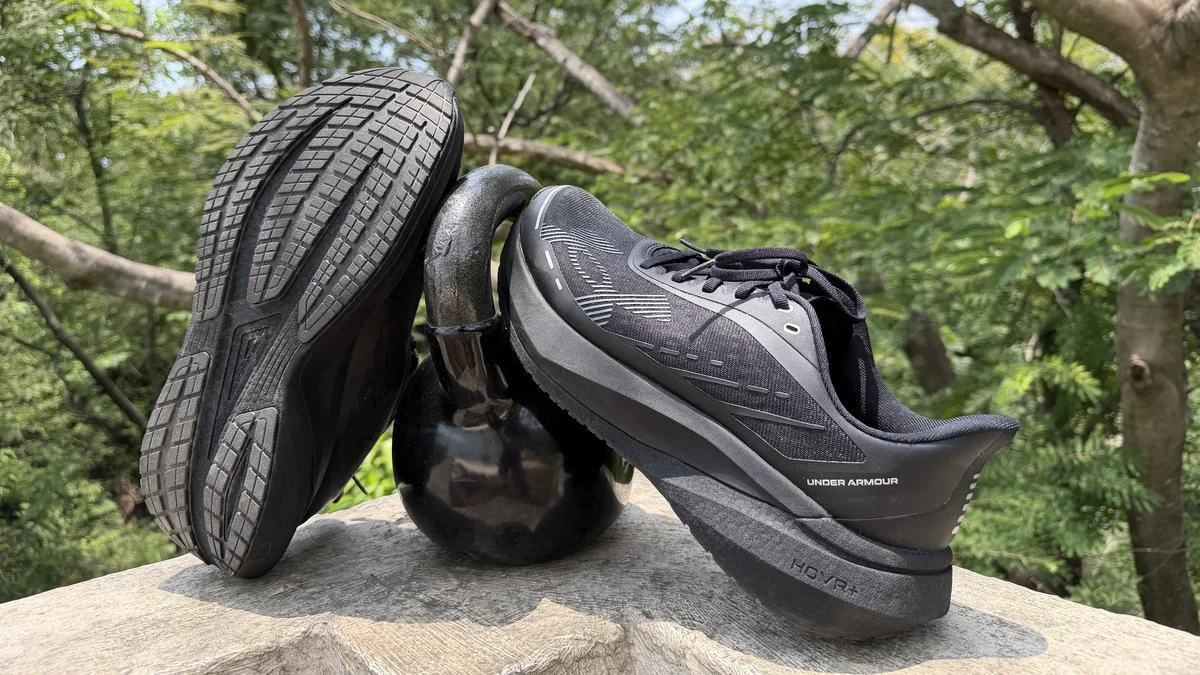
Under Armour, a brand often perceived as the tenacious underdog in the competitive running shoe market, has consistently showcased technical prowess and flashes of brilliance. However, it has yet to firmly establish itself as a go-to choice for seasoned runners. Their latest offering, the Velociti Distance, aims to carve out a significant niche as a high-mileage, long-run trainer. This shoe is a testament to ambitious engineering, excelling in many aspects while simultaneously making design decisions that promise to ignite fervent debate among its wearers. The very essence of the Velociti Distance experience lies in this inherent tension between its commendable attributes and its polarizing features.
H2: First Impressions: Weight, Cushioning, and Upper Construction
Upon first handling the Under Armour Velociti Distance, its substantial weight is immediately apparent. Tipping the scales at 298 grams, it eschews the ultralight trend that dominates modern running footwear, and this is a deliberate design choice. The shoe is engineered for endurance, evident in its impressive 38mm stack height of Hovr+ foam. This generous cushioning is designed to absorb the relentless impact of countless miles, promising a comfortable ride even on the most demanding long runs.
The upper construction is a standout element, showcasing Under Armour’s meticulous attention to detail. A breathable woven mesh envelops the forefoot, ensuring optimal airflow and keeping feet cool, a crucial feature during extended efforts when heat buildup can become a significant concern. The gusseted tongue is engineered to remain securely in place, preventing any unwelcome slippage. Furthermore, the heel section is thoughtfully padded and structured, providing a secure and supportive embrace for the foot. The overall lockdown is confident and reassuring, without ever feeling constrictive, allowing for a natural foot splay.
While the New Balance’s Ellipse might impress with its accommodating and relaxed fit, the Velociti Distance prioritizes a secure, almost encompassing feel. This sense of being held is precisely what many runners seek during prolonged efforts, offering a crucial element of stability and control. The only minor detraction from this otherwise refined upper is the quality of the laces, which, in comparison to the shoe’s premium materials and construction, feel noticeably less substantial and of a lower caliber. This is a subtle detail, but one that keen observers of running shoe craftsmanship will likely notice.
H2: Performance on the Pavement: The Hovr+ Advantage
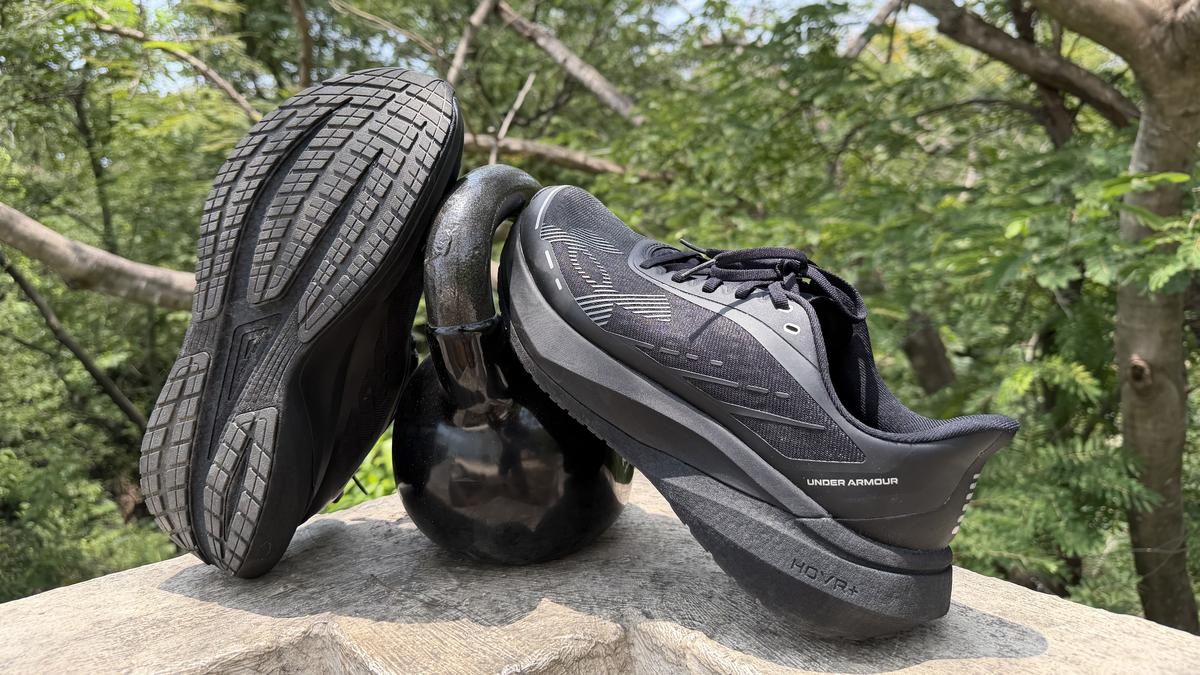
Taking the Velociti Distance out for a spin reveals the true capabilities of the Hovr+ foam. This supercritical TPU material, also featured in Under Armour’s elite racing shoes, delivers a ride that is both luxuriously soft and reassuringly firm. The foam excels at absorbing impact, providing a substantial buffer against the jarring forces of the road. Crucially, it also offers a respectable energy return, ensuring that turnover remains lively rather than feeling sluggish, a common pitfall of overly soft maximalist shoes.
What elevates the Velociti Distance beyond the typical max-cushion trainer is its versatility across different running intensities. While marketed primarily as a long-run companion, the shoe demonstrates an impressive ability to handle tempo efforts and steady-state runs with equal aplomb. This adaptability means that runners need not relegate the Velociti Distance to solely their Sunday long runs; it can effectively serve as a dependable daily trainer, integrated into a varied weekly training schedule.
The outsole is another area where Under Armour has made a significant investment. Generous rubber coverage is strategically placed across the entirety of the outsole, a decision that, while contributing to the shoe’s overall weight, imparts exceptional confidence on a variety of surfaces. Whether navigating the smooth tarmac of city streets or the more unpredictable terrain of gravel paths, the Velociti Distance maintains its composure and grip. This robust rubber application also strongly suggests a high degree of durability, promising that the outsole will likely outlast the midsole – a welcome attribute for runners who have experienced premature wear on less protected outsoles. For those prioritizing longevity and a shoe that can withstand significant mileage, this durability is a compelling selling point.
H2: The Divisive Core: Stability Rails and Their Impact
The true character of the Velociti Distance, and indeed the aspect that will most profoundly divide opinion, lies within its innovative, yet potentially polarizing, stability system. Under Armour has integrated firm TPU inserts along both the lateral and medial sides of the midsole. The stated intention of these "stability rails" is to guide the foot through its natural gait cycle and to mitigate excessive motion within the plush Hovr+ foam. In theory, this is an elegant engineering solution designed to enhance control and efficiency.

However, in practice, the effect of these rails is often more assertive than the term "guide" might suggest. For runners whose natural foot mechanics align harmoniously with the specific trajectory prescribed by these inserts, the experience is one of unwavering support and controlled motion. The feeling is one of being securely anchored, with each stride feeling purposeful and efficient.
Conversely, for runners whose natural gait deviates from the intended path of the stability rails, the experience can be less forgiving. The firm TPU inserts can, in some cases, impose a supinated landing, leading to a sensation that feels jarring and unnatural. This is not a subtle nudge towards a more neutral stride; rather, it is a pronounced intervention. The shoe possesses a distinct philosophy regarding how the foot should move, and when this philosophy clashes with an individual’s biomechanics, runs that should feel effortless can transform into sources of discomfort. The potential for this disconnect is a significant consideration, transforming a shoe designed for comfort over distance into one that could introduce an unwanted element of strain.
This assertive stability system places the Velociti Distance in direct competition with a pantheon of established daily trainers. Many of these rivals, hailing from brands with longer pedigrees in the running shoe industry, often achieve a more natural and less intrusive ride, eschewing the potentially divisive influence of such a prominent stability mechanism.
H3: Implications for Gait and Foot Strike
The success or failure of the Velociti Distance is intrinsically linked to an individual’s biomechanics. Runners with a naturally neutral gait, or those who exhibit mild pronation and whose foot strike happens to align with the shoe’s guiding principles, are likely to find a highly capable and rewarding training partner. The controlled transition provided by the rails can enhance efficiency and reduce fatigue over long distances.

However, for individuals who have historically favored neutral shoes due to a preference for unimpeded foot motion, approaching the stability system of the Velociti Distance requires a degree of caution. The potential for the rails to force an unnatural landing can lead to compensatory movements, potentially resulting in discomfort in the feet, ankles, or even higher up the kinetic chain. It is imperative for prospective buyers to carefully consider their own gait patterns and, if possible, test the shoe thoroughly to ascertain compatibility with its unique stability features.
H2: The Under Armour Enigma: Technical Prowess Meets Opinionated Design
Under Armour has undoubtedly engineered a technically impressive shoe in the Velociti Distance. It offers a compelling blend of plush cushioning, responsive energy return, and robust durability. The upper is a masterclass in comfort and secure lockdown, and the outsole provides confidence across diverse terrains. The Hovr+ foam is a genuine asset, delivering a ride that is both protective and engaging.
The critical question, however, is not whether the shoe is technically proficient, but whether its technical solutions are technically right for the individual runner. The Velociti Distance is not a shoe that seeks to blend in; it has strong opinions about how your foot should move. For some, these opinions will resonate deeply, leading to a profoundly positive running experience. For others, this assertive guidance may prove to be a misaligned partnership, transforming a potentially excellent long-run shoe into a source of frustration.
Ultimately, the Under Armour Velociti Distance represents a bold statement from a brand eager to make its mark. It is a shoe that demands a certain level of self-awareness from the runner, encouraging a dialogue between the shoe’s design and the runner’s natural biomechanics. Whether this dialogue leads to a harmonious symphony of performance or a discordant clash of intentions will be the defining narrative for those who choose to lace up this ambitious challenger. The success of the Velociti Distance will hinge not just on its technical merits, but on its ability to find the runners whose gaits align with its resolute vision.
