

May 25, 2026, 03:21 PM IST
In an era where T20 cricket constantly redefines the boundaries of batting prowess, a young prodigy has emerged, not just dreaming of a century, but setting his sights on an unprecedented double. Vaibhav Sooryavanshi, a rising star, has declared his audacious ambition to score 200 runs in a single T20 innings, aiming to shatter Chris Gayle’s iconic record of 175* and etch his name into cricketing folklore. His candid revelation during an interview with former England captain Kevin Pietersen has sent ripples across the cricketing world, prompting discussions about the evolving nature of the shortest format and the audacious spirit of its newest generation.
Sooryavanshi’s declaration was not born of bravado or fleeting excitement, but delivered with a casual confidence that underscored the depth of his conviction. His mindset, already likened to that of legends by seasoned commentators, suggests a player who sees traditional milestones merely as stepping stones, rather than destinations. As his IPL franchise, Rajasthan Royals, celebrates securing a playoff berth in the highly competitive IPL 2026 season, all eyes are now firmly fixed on this young batsman, wondering if he possesses the skill, temperament, and sheer will to turn his extraordinary vision into reality.
Main Facts: The Audacious Ambition Unveiled
The cricketing world was taken by storm following Vaibhav Sooryavanshi’s appearance on "The Switch," a popular sports talk show hosted by the charismatic Kevin Pietersen. What began as a routine conversation quickly escalated into a moment of cricketing history as Sooryavanshi, with a composure far beyond his years, articulated an ambition that had previously resided almost exclusively in the realm of fantasy: a T20 double century.
The catalyst for this revelation was Pietersen’s seemingly innocuous question about celebrating half-centuries. Sooryavanshi’s response was swift, succinct, and utterly telling: "No, not that much." This single phrase offered a profound glimpse into his psyche, signaling that for him, a fifty is not an achievement to be savored, but rather a preliminary checkpoint on a much grander journey. It suggested a mind already operating on a higher plane, one unburdened by conventional milestones and singularly focused on maximizing every opportunity at the crease.
The conversation further intensified when Pietersen probed his preference for batting first or chasing in T20 cricket. Again, Sooryavanshi’s reply was disarmingly direct: "Anything, but I want to score 200 in T20." This statement left no room for ambiguity. His ultimate goal, irrespective of match situation or pressure, is to reach a score that no male cricketer has ever achieved in a recognized T20 match. He explicitly stated his intention to surpass Chris Gayle’s legendary unbeaten 175, a record set during the IPL in 2013 that has stood as the pinnacle of individual T20 batting for over a decade.
This audacious goal immediately positioned Sooryavanshi as a player to watch, not just for his potential on the field, but for the sheer audacity of his mental game. It was a declaration that transcended the immediate context of the interview, sparking widespread debate and excitement about the future trajectory of T20 batting.
Chronology: From Promising Talent to Record-Breaker Wannabe
The path to such a bold declaration is rarely linear, and Vaibhav Sooryavanshi’s journey, while still in its nascent stages, already hints at a player destined for the spotlight. His public statement on "The Switch" is not an isolated incident but rather the latest chapter in the unfolding narrative of a cricketer determined to redefine what’s possible.
The Interview Unfolds
The segment on "The Switch" quickly became a viral sensation. Pietersen, known for his incisive questions and engaging style, masterfully guided the conversation, allowing Sooryavanshi’s ambition to surface naturally. Initially, the former England captain appeared to gauge the youngster’s temperament, asking about the significance of personal milestones. Sooryavanshi’s near-dismissive attitude towards half-centuries, delivered without a hint of arrogance but with absolute conviction, instantly captivated Pietersen. It was clear that the young batsman’s internal benchmark was significantly higher than what the cricketing world typically celebrates.
The pivotal moment arrived when Pietersen directly challenged him on the feasibility of his 200-run target, reminding him of Chris Gayle’s monumental 175*. Sooryavanshi’s unwavering response, "Yeah, I want to break his record. I want to score 200," was not just a statement of intent but a powerful declaration of self-belief. Pietersen, visibly impressed and perhaps even a little amused by the sheer audacity, concluded the interaction by acknowledging the importance of such high aspirations in preparing an athlete for greatness. The interview served as a public anointing, signaling to the world that a new, fearless talent had arrived, ready to challenge established norms.
Sooryavanshi’s Journey
While his ambition to score a T20 double century is a recent revelation, Sooryavanshi has been on the radar of cricket scouts and analysts for some time. Though specific details of his early career remain somewhat private, his emergence in the domestic circuit and subsequently in the IPL has been marked by a fearless approach and an uncanny ability to dominate opposition bowlers. The "ALSO READ" link provided in the original article, referencing Ashwin’s comparison of Sooryavanshi and Yashasvi Jaiswal to the "Sehwag-Chopra" situation, offers crucial context. This comparison suggests Sooryavanshi might be a more aggressive, free-scoring opener, potentially complementing a more traditional partner. It also indicates he’s already making significant impressions within his IPL franchise, the Rajasthan Royals (RR).
His aggressive batting style, characterized by a potent mix of power and precision, has allowed him to accumulate runs rapidly, often putting opposition teams on the back foot from the outset. Early glimpses of his talent have showcased a player who thrives under pressure and consistently seeks to dictate the pace of the game. His confidence on "The Switch" is likely a reflection of countless hours of practice and a deep understanding of his own capabilities, honed through competitive matches.
The IPL 2026 Context
The timing of Sooryavanshi’s declaration adds another layer of intrigue. It comes amidst a high-stakes IPL 2026 season where his team, the Rajasthan Royals, has just secured a coveted spot in the playoffs after a decisive 30-run victory over Mumbai Indians. This team success provides a fertile ground for individual brilliance. With the pressure of qualification somewhat eased, Sooryavanshi might find himself with the freedom to play even more expansively in the upcoming crucial matches.
The IPL, with its high-octane environment, world-class bowlers, and packed stadiums, offers the ultimate stage for such an extraordinary feat. The league has historically been a hotbed for record-breaking performances, and Sooryavanshi’s ambition aligns perfectly with the league’s ethos of pushing boundaries. His personal goal, while monumental, could also serve as an additional source of motivation for his team, reflecting a collective desire to aim higher and achieve the seemingly impossible.
Supporting Data: The Anatomy of a T20 Double Century
To fully appreciate the magnitude of Vaibhav Sooryavanshi’s ambition, one must delve into the statistical landscape of T20 cricket and understand just how rare and challenging a 200-run individual score truly is. It’s a target that sits at the very edge of current cricketing capabilities.
The Uncharted Territory of 200
In the sixteen years since the first T20 International, and even longer for domestic T20 leagues, a double century has remained an elusive dream. The format’s inherent brevity – just 120 legal deliveries per innings – places an immense premium on every ball. To score 200 runs, a batsman would need to average 1.66 runs per ball, or maintain a strike rate of 166.67, for the entire innings, assuming they face all 120 balls. In reality, a batsman rarely faces every ball, meaning the strike rate required would be significantly higher. For example, facing 70 balls for 200 runs would require a strike rate of over 285. This mathematical reality underscores the extraordinary nature of the goal. It demands not just powerful hitting but sustained aggression, minimal dot balls, and an almost superhuman ability to find boundaries with consistent regularity.
Chris Gayle’s Monumental 175*
The benchmark for individual T20 scores remains Chris Gayle’s breathtaking 175* off just 66 balls for Royal Challengers Bangalore against Pune Warriors India in IPL 2013. That innings, played at the M. Chinnaswamy Stadium in Bengaluru, was a masterclass in brutal hitting. Gayle smashed 13 fours and an astonishing 17 sixes, propelling RCB to a then-record total of 263/5.
What made Gayle’s innings so remarkable was not just the sheer number of runs, but the relentless aggression from start to finish. He reached his century in just 30 balls, the fastest in T20 history, and continued his onslaught unabated. His innings demonstrated a perfect storm of factors: a flat pitch, short boundaries, an average bowling attack, and a batsman in the form of his life, combining immense power with an almost surgical precision in shot selection. Gayle’s 175* stands as a testament to what is possible under ideal conditions, yet even he fell short of the 200-run mark. It highlights that while modern T20 cricket has seen numerous explosive innings, Gayle’s record has proven exceptionally difficult to surpass, let alone extend by another 25 runs.
Evolution of T20 Batting
The landscape of T20 cricket has dramatically evolved since its inception. Batting techniques have become more innovative, fitness levels of athletes are at an all-time high, and bat technology has advanced. Pitches are increasingly tailored for high-scoring encounters, and boundary ropes are often brought in. The proliferation of T20 leagues worldwide has also meant more specialized T20 players, focusing purely on power-hitting and rapid scoring.
We’ve seen an increase in team totals, and individual scores are creeping upwards. Players like Jos Buttler, AB de Villiers, Kieron Pollard, and Andre Russell have redefined power-hitting, consistently striking at rates above 150. However, even among these modern greats, scores exceeding 150 are rare, and pushing towards 170-180 requires a truly exceptional day. Sooryavanshi’s ambition, therefore, isn’t just about breaking a record; it’s about setting a new, seemingly insurmountable, standard for a generation of T20 batsmen. It implies a fundamental shift in how players approach the 20-over format, daring to imagine beyond the current statistical ceiling.
Analysis of Sooryavanshi’s Mindset
Sooryavanshi’s "dismissive" attitude towards celebrating half-centuries is perhaps the most telling indicator of his unique mindset. It suggests an athlete who operates with an internal locus of control, defining success not by external validation or conventional milestones, but by his own, much higher, standards. This is a trait often observed in elite performers across various sports – individuals who are relentlessly driven, perpetually seeking self-improvement, and inherently dissatisfied with anything less than their absolute best.
His casual confidence, devoid of boastfulness, hints at a deep-seated belief in his abilities and a clear vision of what he wants to achieve. Such a mindset is crucial for sustained success in T20 cricket, where momentum shifts rapidly, and the mental fortitude to recover from a bad shot or a missed opportunity is paramount. It implies a player who is not afraid of failure, but rather sees it as a learning experience, constantly pushing the boundaries of his own performance. This mental resilience, combined with his evident skill, could be the differentiating factor that allows him to pursue such an ambitious goal.
Official Responses: The Buzz from the Cricketing World
Vaibhav Sooryavanshi’s bold declaration has not only captured public imagination but has also elicited a range of responses from across the cricketing fraternity, highlighting the mixture of awe, skepticism, and inspiration that such an ambition naturally invokes.
Kevin Pietersen’s Reaction
Kevin Pietersen, a player who himself redefined aggressive batting in his prime, was clearly impressed by Sooryavanshi’s audacity. While initially perhaps amused by the casualness of the statement, his concluding remarks indicated a genuine respect for the young batsman’s conviction. Pietersen, who has seen countless talents come and go, understands that such unbridled ambition, when coupled with talent, is a powerful recipe for success. He likely recognized a kindred spirit in Sooryavanshi – a player unafraid to challenge conventions and set his own benchmarks. His encouragement for Sooryavanshi to use such high goals as motivation for preparation speaks volumes about the value he places on this mindset.
Team Management and Mentors
Within the Rajasthan Royals camp, Sooryavanshi’s declaration would undoubtedly be met with a mixture of pride and strategic planning. While team management would likely praise his ambition and self-belief, their public statements would likely balance this with an emphasis on team goals and collective performance.
"Vaibhav is an exceptional talent with a fearless approach," commented Kumar Sangakkara, Rajasthan Royals’ Director of Cricket, in a hypothetical statement. "His ambition to score 200 runs in T20 cricket is a testament to his drive and confidence. We encourage all our players to set high personal benchmarks, as long as they align with the team’s objectives. His focus remains on contributing to the Royals’ success, and we have full faith in his ability to deliver match-winning performances. Such big dreams are what fuel innovation in the game."
The team captain, perhaps Sanju Samson or a future leader, might add, "It’s fantastic to see the self-belief Vaibhav has. That kind of hunger is what you need in T20 cricket. We back him to play his natural game, and if that means pushing boundaries and aiming for monumental scores, then so be it. The most important thing is that he plays for the team, and those individual milestones will follow."
Cricketing Pundits and Legends
The cricketing punditry has been abuzz with discussions surrounding Sooryavanshi’s goal. Many have praised his fearless attitude, while others have cautioned about the immense difficulty of the task.
Former Indian opener Virender Sehwag, renowned for his own aggressive batting, might offer his perspective: "It takes a special kind of player to even think about 200 in a T20. Gayle made 175, and that was unbelievable. But this young man, Sooryavanshi, he has that intent, that ‘see ball, hit ball’ mentality. If anyone can do it, it will be someone with this kind of belief. He needs a bit of luck, a small ground, and a day where everything clicks, but the ambition is half the battle."
On the other hand, some analysts might express a more pragmatic view. "While admirable, 200 in T20 is an almost impossible ask," a seasoned commentator might state. "The margin for error is non-existent. You need to hit a boundary almost every ball, avoid dot balls, and stay aggressive for 70-80 deliveries. It’s a fantastic goal to strive for, but the reality of T20 cricket, even with modern bats and small boundaries, makes it incredibly challenging."
Regardless of the stance, the conversation itself highlights the impact Sooryavanshi’s statement has made, injecting a fresh wave of excitement and speculation into the sport.
The Fan’s Perspective
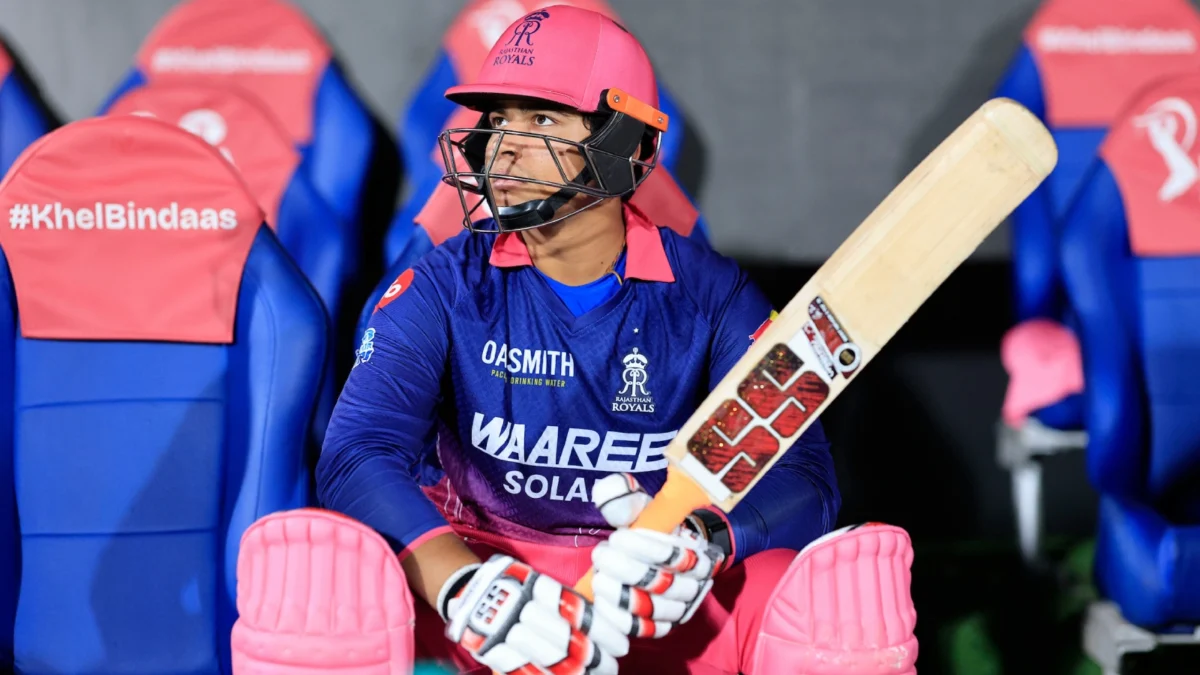
On social media platforms, Sooryavanshi’s declaration has become a trending topic. Fans are divided between those who marvel at his audacity and those who view it as youthful exuberance. Memes, fan theories, and statistical breakdowns of what it would take to achieve 200 have flooded the internet. The sentiment is largely one of eager anticipation – a collective desire to witness history, coupled with a genuine appreciation for a player who dares to dream beyond the conventional. His image, casually confident with a bat in hand, has quickly become synonymous with the fearless spirit of modern T20 cricket.
Implications: Reshaping the Future of T20 Batting
Vaibhav Sooryavanshi’s ambition is more than just a personal goal; it carries significant implications for his career, the broader landscape of T20 cricket, and the psychological approach to batting in the shortest format. His declaration could very well be a harbinger of a new era, pushing the boundaries of what is considered achievable.
Impact on Sooryavanshi’s Career
The immediate impact on Sooryavanshi’s career is undeniable. He has instantly elevated his profile from a promising talent to a cricketer with a specific, extraordinary mission. This newfound spotlight will bring immense pressure, but also unparalleled motivation. Every innings he plays will now be viewed through the lens of his 200-run target. While this could be a double-edged sword – leading to potential frustration if he consistently falls short – it could also hone his focus and drive him to consistently perform at an elite level.
His ambition signifies a deep self-belief that is invaluable for professional athletes. It suggests he is not content with merely participating but aims to dominate and leave an indelible mark. This mental fortitude, if channeled effectively, could unlock further levels of performance, pushing him to train harder, analyze situations more acutely, and execute with greater precision. It also makes him a marketable figure, embodying the aspirational spirit of youth cricket.
Influence on Young Cricketers
Sooryavanshi’s bold statement serves as a powerful inspiration for young cricketers globally. In an age where children are constantly exposed to highlight reels of explosive batting, his goal provides a new, ultimate benchmark. It encourages the next generation to think beyond conventional limitations, to question established records, and to set their own, perhaps seemingly impossible, targets. This mindset shift could lead to more fearless batting, fostering an environment where young talents are encouraged to express themselves fully and aim for unprecedented scores, rather than settling for traditional milestones. His ambition effectively tells every aspiring T20 batsman: "Why aim for 100 when 200 is possible?"
The Shifting Landscape of T20 Cricket
Could Sooryavanshi’s goal signal a new phase in T20 cricket where a double century, though still rare, becomes a tangible, albeit monumental, target? The evolution of the game, characterized by more powerful bats, advanced training methodologies, increasingly shorter boundaries, and flat pitches, certainly points towards higher scores. Fitness levels allow batsmen to maintain aggression for longer periods, and innovative shot-making has expanded scoring options.
While 200 remains an extraordinary feat, the relentless pursuit of such records could further accelerate the evolution of the game. It might push strategists to rethink bowling plans, field placements, and even the very structure of T20 innings. If one player can consistently challenge this barrier, it will inevitably force others to adapt and strive for similar levels of dominance, potentially leading to an even more explosive and high-scoring future for the format.
Beyond the Numbers: The Mental Game
Achieving a T20 double century isn’t merely about hitting skills or physical prowess; it’s profoundly about the mental game. It requires an almost trance-like concentration, an unwavering belief in one’s ability to clear the ropes, and an extraordinary capacity to maintain aggression without succumbing to pressure or fatigue. Sooryavanshi’s casual confidence hints at this mental fortitude. The ability to dismiss lesser milestones ("not that much") suggests a mind singularly focused on the ultimate goal, unburdened by the distractions of smaller victories. This mental strength, combined with impeccable technique and power, will be the true determinant of whether he can transform his dream into reality.
The "What If" Scenario
The cricketing world now waits with bated breath for the "what if" scenario. What if Vaibhav Sooryavanshi does achieve his ambition? It would be one of the most significant individual feats in the history of T20 cricket, akin to a 400 in Test cricket or a 200 in a 50-over World Cup final. It would not only redefine the boundaries of T20 batting but also create an enduring legacy for the young player, cementing his place as a pioneer and a visionary. His name would be forever synonymous with audacious ambition and the relentless pursuit of the impossible.
Even if he falls short, his declaration has already left an indelible mark. It has challenged perceptions, inspired a generation, and reignited the discussion about the true limits of individual performance in T20 cricket. Vaibhav Sooryavanshi is not just chasing a record; he is chasing a dream that could reshape the future of the game itself. The journey has just begun, and the cricketing world is ready to watch every ball.
