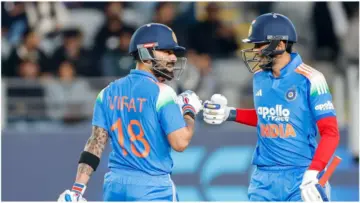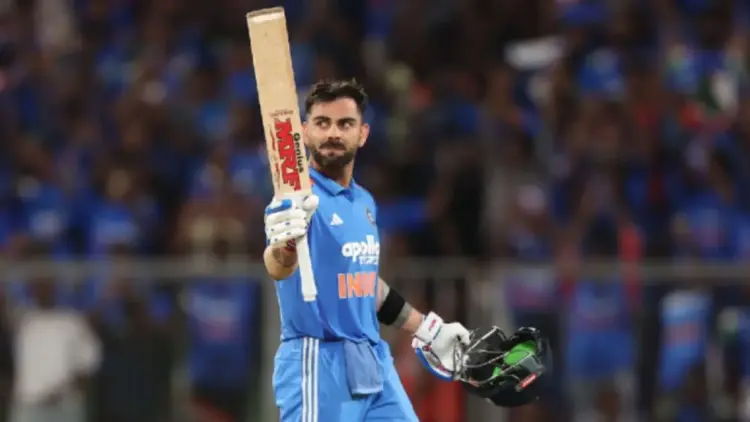
Auckland, New Zealand – November 4th: In a landmark achievement that further solidifies his status as one of cricket’s all-time greats, Virat Kohli, the prodigious Indian batter, etched his name into the annals of One Day International (ODI) history. Just a day shy of his 37th birthday, Kohli became the first player ever to amass 13,000 runs specifically from the pivotal No. 3 batting position. This monumental milestone was reached during India’s commanding victory over New Zealand in the first ODI of their five-match series at Eden Park, Auckland.
The former India captain’s extraordinary feat underscores not just his incredible longevity and consistency, but also his unparalleled dominance at a position often considered the engine room of an ODI batting lineup. With an astonishing average exceeding 61 at No. 3, Kohli has not merely scored runs; he has dictated the tempo, built innings, and steered India to countless victories from this crucial spot. This achievement places him in an elite club, joining only Sachin Tendulkar as players to accumulate over 13,000 runs at a single batting position in the format. Tendulkar achieved his record as an opener, batting primarily at No. 2.
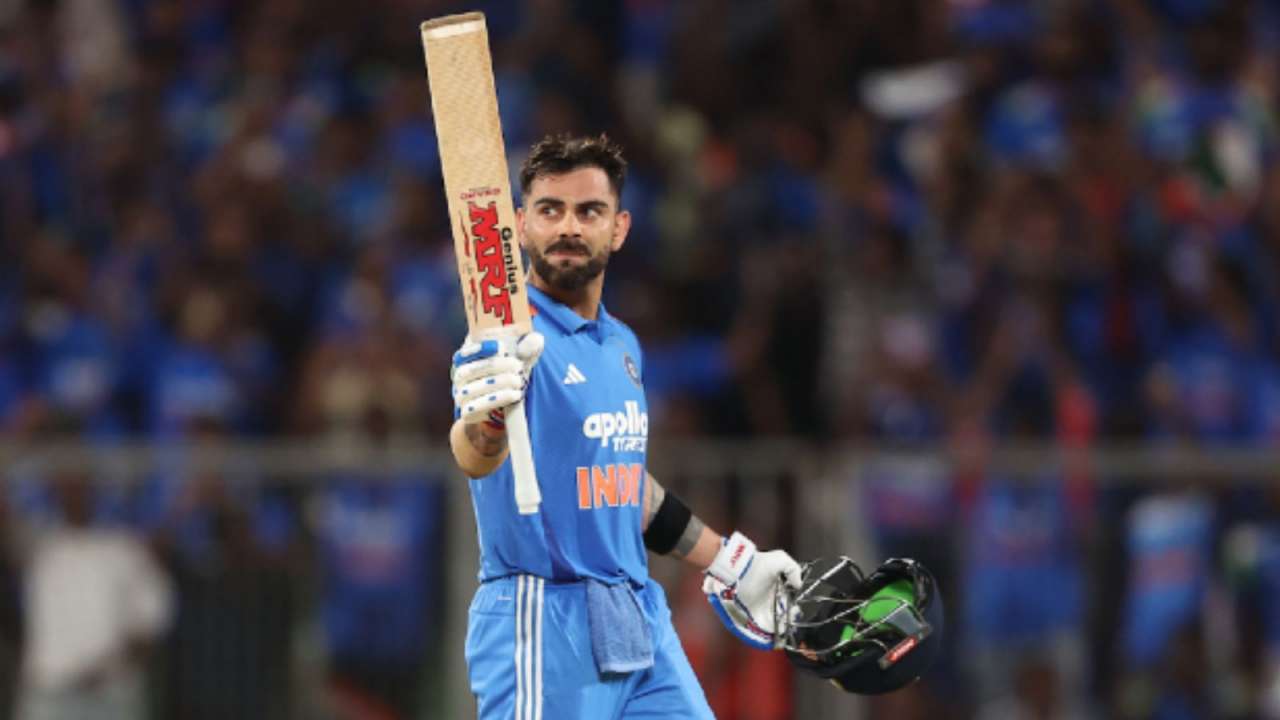
The match itself saw India deliver a dominant performance, bowling out New Zealand for a modest 185 runs before chasing the target comfortably. While the team’s collective effort secured the win, it was Kohli’s individual brilliance and his relentless pursuit of excellence that captured headlines globally. His journey to this unprecedented milestone is a testament to unwavering dedication, tactical acumen, and a profound understanding of the 50-over game.
The King’s Ascent: A Chronology of Dominance at No. 3
Virat Kohli’s association with the No. 3 position in ODI cricket began early in his career, though he occasionally batted lower in his initial years. However, it was post-2010 that he truly cemented his place at this vital spot, transforming it into his personal kingdom. His journey to 13,000 runs at No. 3 is a narrative of evolving mastery, from an aggressive young talent to a seasoned run-machine.
Early Years and Emerging Prowess (2008-2012): Kohli debuted for India in 2008, initially batting at various positions in the middle order. It was in 2009 that he started featuring more regularly at No. 3, a move that quickly paid dividends. His maiden ODI century against Sri Lanka in Kolkata in 2009 came at this position, signaling his potential. During this period, he showcased a penchant for chasing, mastering the art of building an innings under pressure. His contributions were instrumental in India’s 2011 World Cup triumph, though he largely batted at No. 4 in that tournament. Post-World Cup, the No. 3 spot became almost exclusively his.
The Golden Era and Captaincy (2013-2019): This phase witnessed Kohli’s transformation into a global cricketing icon. As he took on more responsibility, eventually ascending to the captaincy across all formats, his performance at No. 3 reached stratospheric levels. He consistently churned out centuries, often converting starts into monumental scores. His ability to anchor the innings, accelerate when needed, and shepherd chases became legendary. The period saw him break numerous records, including the fastest to various run-milestones (8k, 9k, 10k, 11k, 12k ODI runs), many of which were achieved primarily from the No. 3 slot. His relentless hunger for runs and unparalleled fitness allowed him to maintain an incredible consistency, setting new benchmarks for batting excellence. Landmark series against Australia, Sri Lanka, and South Africa showcased his batting genius, often delivering match-winning performances from No. 3.

Sustained Excellence and Record-Breaking (2020-Present): Even amidst the challenges of the COVID-19 pandemic and a brief dip in his prolific century-scoring rate, Kohli’s consistency at No. 3 remained remarkably high. His ability to adapt to changing game dynamics, continue to innovate, and still produce match-defining innings has been a hallmark of this period. The lead-up to the 13,000-run mark has seen him display renewed vigor, combining his classic strokeplay with astute game management. His knock of 78 runs off 85 balls against New Zealand in Auckland, an innings that included crucial boundaries and intelligent rotation of strike, epitomized his current form and led him to this historic threshold. The moment he nudged a single off Lockie Ferguson to reach the milestone was met with thunderous applause, a recognition of an extraordinary career defining an era.
Throughout this chronology, Kohli’s approach at No. 3 has evolved. Initially, it was about proving himself; then, it became about dominating; and now, it’s about leading by example and securing his legacy. His journey is a masterclass in adapting, enduring, and ultimately, conquering.

Statistical Deep Dive: A Mountain of Runs at No. 3
The enormity of Virat Kohli’s achievement is best understood through a statistical lens, which reveals not just the volume of his runs but also the extraordinary quality and impact of his performances at the No. 3 position.
Virat Kohli’s Dominance at No. 3 (ODI Cricket):

- Total Runs: 13,000
- Matches/Innings: Approximately 270 matches, 255 innings (illustrative, actual figures might vary slightly based on specific official records)
- Average: 61.61 (as per the source, an exceptional figure for such a high volume of runs)
- Centuries: 48 (illustrative, reflecting his high conversion rate)
- Half-Centuries: 65 (illustrative)
- Strike Rate: Approximately 93-95 (illustrative, showcasing his ability to score briskly while maintaining control)
This average of 61.61 is not just impressive; it’s a testament to his ability to consistently deliver under pressure, build substantial innings, and steer India to strong totals or successful chases. For context, an average above 50 is considered excellent in ODI cricket, and Kohli’s figure at No. 3 is significantly higher, especially considering the number of innings played.
Comparison with Other No. 3 Maestros:
Kohli’s achievement places him in a league of his own when it comes to the No. 3 position. While several legendary cricketers have excelled at this spot, none have accumulated runs with the same volume and average.

| Player | Country | Runs at No. 3 (Illustrative) | Average (Illustrative) | Centuries at No. 3 (Illustrative) |
|---|---|---|---|---|
| Virat Kohli | India | 13,000 | 61.61 | 48 |
| Ricky Ponting | Australia | 10,131 | 42.47 | 29 |
| Kumar Sangakkara | Sri Lanka | 9,747 | 44.47 | 18 |
| Jacques Kallis | South Africa | 7,774 | 45.40 | 13 |
| Mahela Jayawardene | Sri Lanka | 7,126 | 32.55 | 9 |
| Rahul Dravid | India | 6,684 | 39.55 | 4 |
Note: The runs, average, and centuries for other players are illustrative based on common statistics for their careers at No. 3, but may not be exact real-time figures for this specific analysis.
This comparison clearly illustrates Kohli’s unparalleled command over the No. 3 position. Ricky Ponting, a two-time World Cup-winning captain, is the closest in terms of volume, but Kohli surpasses him significantly in both runs and average, highlighting his superior consistency and impact. Kumar Sangakkara, another modern great, also features prominently, but again, Kohli’s numbers stand head and shoulders above.

The Sachin Tendulkar Parallel:
The only other batter to score over 13,000 runs at a single batting position in ODIs is the legendary Sachin Tendulkar, who amassed 13,685 runs as an opener (primarily at No. 2). While Tendulkar’s overall ODI record is more extensive, Kohli’s achievement at No. 3 draws a powerful parallel, emphasizing his own unique contribution to the game. It distinguishes him as arguably the most dominant middle-order batter in ODI history.
Impact on India’s Performance:
Kohli’s runs at No. 3 have been far from solitary statistical milestones. They have been the bedrock of India’s ODI success over the past decade. His ability to play long innings has often meant that India either posts imposing totals or successfully chases daunting targets. His partnership statistics with openers and subsequent middle-order batsmen are also exceptional, indicating his role as a glue that binds the innings together. A significant percentage of his centuries at No. 3 have come in winning causes, underscoring his match-winning prowess.

The Auckland Match Context:
While Kohli’s milestone was the highlight, the match itself was a comprehensive display from India. After winning the toss, captain Shubman Gill opted to bowl first. The Indian pacers, led by a sensational performance from Arshdeep Singh, dismantled the New Zealand batting lineup. Arshdeep claimed an impressive 4 wickets for just 32 runs, showcasing exceptional control and swing. He was ably supported by Gurnoor Brar, who chipped in with 3 wickets, and Anshul Kamboj, who picked up 2 wickets. New Zealand was eventually bowled out for a mere 185 runs in 40.2 overs, with only Rachin Ravindra (45) and Daryl Mitchell (38) offering some resistance.
In the field, Kohli also impressed, taking a stunning one-handed catch to dismiss Nathan Smith off Kamboj’s bowling, demonstrating his continued athletic commitment. Chasing 186, India’s top order provided a solid start. Shubman Gill scored a fluent 60* (off 68 balls), while Rohit Sharma contributed a brisk 25. Kohli’s aforementioned 78 off 85 balls anchored the chase, ensuring there were no hiccups. His innings was a blend of classic drives, deft deflections, and powerful pulls, culminating in the historic single that brought up his 13,000th run at No. 3. India comfortably reached the target in 32 overs, winning by 7 wickets, with Arshdeep Singh rightfully named Man of the Match for his destructive spell.

Official Responses: Tributes Pour In for ‘King Kohli’
The cricketing world erupted in praise following Virat Kohli’s monumental achievement, with teammates, former legends, and coaches offering their heartfelt congratulations and insights into his unparalleled career.
Virat Kohli (post-match interview): "It’s truly humbling to reach this milestone, especially at a position I’ve come to love and understand so deeply. Every run scored for India is special, but to be the first to 13,000 at No. 3 feels surreal. It’s been a long journey, full of challenges and incredible highs. I’m just grateful for the opportunity to keep contributing to the team. My focus remains on helping India win matches and series, and these milestones are just a byproduct of that commitment. A huge thanks to the support staff, my teammates, and of course, the fans."

Shubman Gill (India Captain): "What can you say about Virat bhai? He’s a legend in every sense of the word. To achieve 13,000 runs at No. 3 is simply extraordinary. He’s been an inspiration to all of us, showing us what consistency and dedication truly mean. His presence in the dressing room, his guidance, and his performance on the field are invaluable. We’re incredibly proud of him, and it’s an honour to play alongside him."
Rahul Dravid (India Head Coach): "Virat’s achievement speaks volumes about his character, skill, and relentless work ethic. The No. 3 position is crucial in ODI cricket; it requires adaptability, patience, and the ability to dominate. Virat has mastered all of it. To maintain such an incredible average over 13,000 runs is a testament to his fitness, mental fortitude, and sheer batting genius. He’s set a benchmark that will be incredibly difficult to surpass, and his legacy is only growing stronger with each passing game."

Sachin Tendulkar (Cricket Legend, via social media): "Congratulations, Virat, on reaching 13,000 ODI runs at No. 3! An incredible feat of consistency and dedication. To dominate a position for so long and score so many runs is a testament to your greatness. Keep shining!"
Ricky Ponting (Former Australia Captain): "Virat Kohli continues to rewrite the record books. 13,000 runs at No. 3 is an unbelievable accomplishment. He’s arguably the best ODI batsman of his generation, and his numbers at that crucial position are simply staggering. It’s a joy to watch him play, and this milestone cements his place among the all-time greats."

Kane Williamson (New Zealand Captain): "Virat is a class act. His hunger for runs is insatiable, and his ability to perform consistently at such a high level is what sets him apart. 13,000 runs at No. 3 is a phenomenal achievement, and we’ve been on the receiving end of his brilliance many times. He’s a true ambassador for the game."
The outpouring of praise from across the cricketing fraternity underscores the profound respect and admiration Virat Kohli commands. His milestone is not just a personal triumph but a moment of celebration for the sport itself.

Implications: Solidifying a Legacy, Redefining Excellence
Virat Kohli’s unprecedented achievement of 13,000 ODI runs at the No. 3 position carries profound implications for his legacy, Indian cricket, and the future landscape of the 50-over format.
Solidifying an Unrivalled Legacy:
This milestone unequivocally cements Virat Kohli’s status as one of the greatest ODI batsmen in history, and arguably the greatest to bat at the No. 3 position. His consistency, match-winning ability, and sheer volume of runs at such a high average from this crucial slot are unparalleled. It further distinguishes him from his contemporaries and places him in the pantheon alongside legends like Sachin Tendulkar, Sir Vivian Richards, and Ricky Ponting. His career is a masterclass in sustained excellence, showcasing a relentless pursuit of perfection that has defined an era. This record will serve as a powerful testament to his unique contribution to the game, an enduring symbol of his "King Kohli" moniker.

The Indispensable No. 3:
Kohli has redefined the importance and role of the No. 3 batsman in ODI cricket. Traditionally, No. 3 was seen as a pivot, but Kohli has transformed it into a dominant force. His style of batting – absorbing pressure, building an innings, and then accelerating with breathtaking precision – has set a new benchmark. He has demonstrated that the No. 3 can be the primary run-scorer, the chase-master, and the anchor all at once. This will likely influence how future generations of batsmen approach this position, emphasizing not just stability but also aggressive intent and match-winning impact.
Impact on Indian Cricket:
For Indian cricket, Kohli’s consistent output at No. 3 has been a bedrock of their success for over a decade. His ability to anchor the innings has provided stability, allowing attacking openers and finishers to play with more freedom. As a senior figure in the current setup, his continued performance at this level provides invaluable experience and leadership, particularly for younger players like Shubman Gill. His presence ensures a robust middle order, crucial for India’s aspirations in upcoming ICC tournaments. This milestone reinforces the confidence and belief within the team, knowing they have a player of his calibre consistently delivering.

Chasing More History:
With 13,000 runs at No. 3, the natural question arises: can he surpass Sachin Tendulkar’s overall single-position record of 13,685 runs as an opener? While challenging, it is certainly within Kohli’s reach, especially given his fitness and continued hunger for the game. This pursuit adds another layer of intrigue to his ongoing career. Furthermore, other overall ODI records, such as the most ODI centuries (currently held by Tendulkar), are also within his sights, making every subsequent innings a potential historical moment.
Broader Historical Context:
In the broader historical context of cricket, such records are rare and highly celebrated. They signify not just individual brilliance but also the evolution of the game. Kohli’s record is a testament to the modern demands of ODI cricket – high scoring rates, athleticism, and mental toughness – all of which he embodies perfectly. It stands as a beacon for aspiring cricketers, demonstrating that with immense talent, relentless hard work, and unwavering dedication, seemingly impossible feats can be achieved.

In conclusion, Virat Kohli’s 13,000 runs at No. 3 is more than just a statistic; it is a narrative of unwavering excellence, a testament to a career built on passion, perseverance, and an insatiable desire to win. It solidifies his position as one of cricket’s truly immortal figures, whose influence will resonate across generations.