

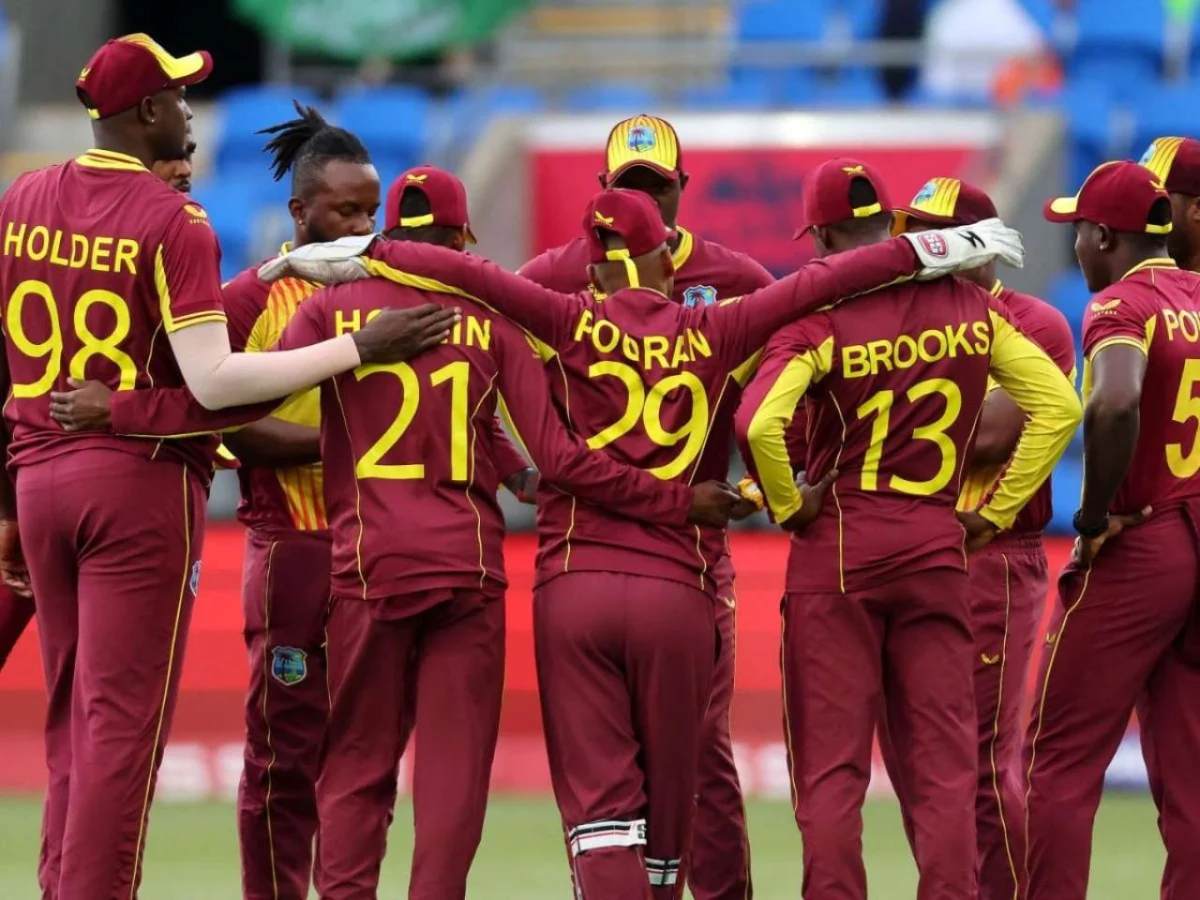
Kingston, Jamaica – August 8, 2026 – A somber cloud hangs over Caribbean cricket following the definitive confirmation that the West Indies, once formidable two-time champions of the One Day International (ODI) World Cup, have failed to secure direct qualification for the 2027 ICC Men’s ODI World Cup. Their fate was sealed unequivocally on August 7, 2026, when Afghanistan triumphed over Ireland in a rain-affected encounter, an outcome that reverberated with profound disappointment across the cricketing world and has condemned the iconic maroon brigade to the arduous and unpredictable qualifiers route once more.
This latest setback marks a troubling continuation of a concerning trend for West Indies cricket, forcing them to confront the harrowing prospect of earning their place through the qualifying tournament – a pathway that proved fatal for their 2023 World Cup aspirations. The thought of a major global tournament without one of its most storied participants sends shivers down the spines of fans and pundits alike, raising urgent questions about the structural integrity and future direction of cricket in the Caribbean.
The Dire Reality: West Indies Miss Direct 2027 ODI World Cup Spot
The immediate trigger for this cricketing calamity was Afghanistan’s decisive 92-run victory over Ireland in the second ODI of their series at Bready Cricket Club. This win not only secured Afghanistan’s own direct passage to the 2027 World Cup but, more critically for the West Indies, it extinguished any lingering mathematical possibilities for them to climb into the coveted direct qualification berths. The West Indies now face the daunting task of navigating the treacherous World Cup Qualifier tournament, a pathway fraught with peril and the very same one that saw them miss the main event entirely in 2023 – a historic low for a team with such a celebrated legacy.
The 2027 ICC Men’s ODI World Cup is slated to be held across 12 venues in South Africa, Zimbabwe, and Namibia during October and November 2027. While South Africa and Zimbabwe automatically qualify as co-hosts, the remaining spots are fiercely contested. For the West Indies, a team synonymous with cricketing excellence for decades, the current reality represents a stark contrast to their glorious past and underscores a period of sustained decline that has deeply troubled followers of the sport. The path through the qualifiers is not merely a formality; it is a cut-throat competition where only a few teams emerge victorious, and the memory of their 2023 failure looms large as a chilling precedent.
)
A Troubling Trajectory: West Indies’ Recent Qualification Woes
The current predicament is not an isolated incident but rather the latest chapter in a concerning narrative of decline for West Indies cricket on the global stage. This marks the third consecutive time the West Indies have failed to secure direct qualification for the ODI World Cup, painting a grim picture of their standing in the 50-over format.
The Golden Era and Early Dominance
To fully grasp the magnitude of this decline, one must recall the golden era of West Indies cricket. Under the inspirational leadership of Clive Lloyd and later Sir Vivian Richards, the West Indies were an unstoppable force in the late 1970s and early 1980s. They lifted the inaugural World Cup trophy in 1975, successfully defended it in 1979, and reached the final again in 1983. Their brand of aggressive, fearless cricket, powered by fearsome fast bowlers and flamboyant batsmen, captivated audiences worldwide and established them as the undisputed kings of the sport. For decades thereafter, direct qualification was not merely expected but an assumed right for a team consistently ranked among the world’s best.

2019: A Narrow Escape
The first serious tremors of decline in the qualification landscape emerged ahead of the 2019 World Cup. For the first time, the West Indies found themselves outside the top-ranked teams and were forced to compete in the 2018 World Cup Qualifier tournament in Zimbabwe. It was a tense affair, with the West Indies battling fiercely against emerging nations like Afghanistan, Ireland, and Scotland. They ultimately scraped through, securing one of the two available spots in a dramatic finish, but the experience served as a potent warning sign. The narrative then was one of relief, but for many astute observers, it was a clear indicator that the glory days of automatic qualification were fading fast. The near-miss should have triggered a profound introspection, but the structural issues persisted.
2023: The Unthinkable Low
The warning signs of 2018 became a brutal reality for the 2023 World Cup in India. Once again relegated to the qualifiers, this time held in Zimbabwe in mid-2023, the West Indies suffered an unprecedented collapse. Despite boasting a squad with international experience, they shockingly failed to progress past the qualifying stage, suffering humiliating defeats to Zimbabwe, the Netherlands, and Scotland. For the first time in the history of the ODI World Cup, the West Indies were absent from the main tournament. This colossal failure sent shockwaves through the cricketing world, prompting widespread anguish and a desperate call for radical reform within West Indies cricket. It was an embarrassment of monumental proportions, tarnishing a legacy built over decades.
)
The Road to 2027: A Continuation of Struggles
Against this backdrop of historical struggle, the current qualification cycle for 2027 has seen the West Indies continue their battle to regain relevance in the 50-over format. Their performances in the ICC Cricket World Cup Super League and subsequent ODI series have been inconsistent, characterized by flashes of brilliance often overshadowed by periods of lackluster play and tactical shortcomings. The team has struggled to find a consistent winning formula, grapple with player availability due to the allure of T20 leagues, and build a cohesive unit capable of challenging the world’s elite. Their inability to accumulate enough ranking points or secure crucial victories against direct competitors has culminated in this latest and equally painful outcome. The current situation, therefore, is not an anomaly but a predictable consequence of persistent challenges that have plagued the team for over a decade.
The Numbers Don’t Lie: A Deep Dive into Qualification Mechanics
Understanding the intricacies of the ICC’s qualification pathway for the 2027 World Cup is crucial to fully appreciate the West Indies’ predicament. The system is designed to reward consistency and performance, leaving no room for complacency for even the most historically significant teams.
)
The ICC Qualification Pathway for 2027
The International Cricket Council (ICC) has outlined a clear and merit-based qualification pathway for the 2027 ODI World Cup:
- Co-Hosts: South Africa and Zimbabwe automatically secure two berths as host nations.
- Direct Qualifiers: The next seven places will be awarded to the top-ranked teams in the ICC Men’s ODI rankings as of September 30, 2026. This is the primary pathway that the West Indies have now missed.
- Qualifier Tournament: The remaining spots in the 14-team tournament will be filled through a rigorous World Cup Qualifier tournament, involving teams that failed to make the direct cut, along with qualifying teams from various associate member pathways.
This structure emphasizes the importance of sustained performance in bilateral series and ICC tournaments leading up to the cutoff date. For the West Indies, their inconsistent run over the past few years has proven costly in accumulating the necessary ranking points.
)
Current Ranking Landscape
As of the latest ICC ODI rankings (and crucially, the effective rankings after Afghanistan’s win), the West Indies find themselves in a precarious position.
- West Indies: Currently sit at a disheartening tenth place in the global ODI rankings.
- Afghanistan: Their recent triumph over Ireland has cemented their eighth position, effectively securing their direct spot.
- Bangladesh: Hold the ninth spot, comfortably ahead of the West Indies.
- Zimbabwe: Are currently ranked eleventh. However, as co-hosts, their automatic qualification frees up one spot in the top nine for non-host teams. Even with this theoretical opening, the West Indies remain outside the qualification zone, needing to displace Bangladesh or a higher-ranked team.
The mathematical permutations were complex, but the bottom line was simple: the West Indies needed results to go their way and for them to perform exceptionally in any remaining fixtures before the September 2026 cutoff. Afghanistan’s win over Ireland effectively eliminated the first part of that equation.
)
The Afghanistan vs. Ireland Decider
The match that sealed the West Indies’ fate was the second One Day International between Afghanistan and Ireland, played on August 7, 2026, at the Bready Cricket Club in Northern Ireland. A rain-affected contest saw Afghanistan deliver a convincing performance, ultimately securing a 92-run victory. This result was pivotal. Had Ireland managed to win the series, or had the match been washed out, the West Indies might have retained a razor-thin mathematical chance, dependent on future results and their own performance. However, Afghanistan’s comprehensive win ensured their ascent in the rankings, effectively shutting the door on any last-ditch West Indies hopes. It was a bitter pill for Caribbean fans to swallow, watching their team’s destiny decided by a match thousands of miles away.
Ireland’s Parallel Struggle
It’s worth noting that Ireland also finds itself in a similar predicament, heading for the 2027 World Cup qualifiers alongside the West Indies. Their already slim hopes of direct qualification were further diminished when rain washed out the first match of their home series against Afghanistan. For Ireland to have had any realistic shot at direct qualification, they would have needed an improbable 5-0 series whitewash against a rapidly improving Afghanistan side. With that dream dashed, both Ireland and the West Indies now share the unenviable task of battling through the arduous qualifying tournament next year. This highlights the increasing competitiveness of international cricket, where even established teams can no longer take direct qualification for granted.
)
The Upcoming India Series: Too Little, Too Late
Adding a layer of poignant irony to the situation, the West Indies are scheduled to play a three-match away ODI series against cricketing powerhouse India later this year. The first two games are set for September 27 in Thiruvananthapuram and September 30 in Guwahati. While these matches offer a crucial opportunity for the West Indies to test themselves against top-tier opposition and potentially gain some valuable ranking points, the reality is stark. Even if the West Indies were to pull off a monumental upset and win both of these challenging encounters, it would not be enough to lift their ranking into the direct qualification zone before the September 30, 2026, cutoff. This underscores the finality of their current position and the long-term nature of the issues that have led them here. The series will now serve more as preparation for the qualifiers and an assessment of their current squad’s capabilities rather than a last-ditch effort for direct entry.
Voices from the Cricket World: Reactions and Future Concerns
The news of the West Indies missing direct qualification has been met with a mixture of disappointment, resignation, and urgent calls for introspection across the global cricketing fraternity.
)
The Silence from the West Indies Cricket Board (CWI)
In the immediate aftermath of Afghanistan’s decisive victory, an official statement from Cricket West Indies (CWI) has been notably absent. This silence, while perhaps understandable as the board processes the gravity of the situation, speaks volumes. It suggests a period of internal deliberation, perhaps disappointment, and a looming recognition of the immense challenge ahead. Historically, such setbacks have often led to public pronouncements about reviews, structural changes, and renewed commitments, but the immediate lack of a detailed response leaves fans and stakeholders awaiting clarity on the board’s strategy to address this recurring crisis. The expectation is for CWI to articulate a clear roadmap for the qualifiers and beyond, addressing the systemic issues that have led to this repeated failure.
Commentary and Expert Analysis
Cricket pundits and former players have not shied away from expressing their concern and offering their analysis. The general consensus points towards a deeper, more systemic problem than just individual player performance.
)
- Decline in Domestic Cricket: Many experts highlight the weakening domestic structure in the Caribbean as a primary cause. A robust domestic system is the bedrock of international success, providing a steady pipeline of talent. The perceived decline in the regional first-class and List A competitions means less exposure to high-quality, competitive cricket for aspiring international players.
- Talent Drain to T20 Leagues: The burgeoning global T20 franchise circuit, while lucrative for players, has often been cited as drawing talent away from longer formats. Players, seeking financial stability and shorter-format glory, sometimes prioritize T20 commitments over national duties in ODIs and Tests, impacting team cohesion and availability.
- Administrative Instability: Recurring issues of administrative instability, governance challenges, and political infighting within various Caribbean cricket boards have historically hampered long-term strategic planning and development initiatives.
- Lack of Investment in Youth Cricket: Concerns have been raised about insufficient investment in grassroots cricket and youth development programs, which are essential for nurturing the next generation of West Indian stars.
- Fan Frustration: The reaction from fans, both within the Caribbean and globally, has been one of profound disappointment and frustration. Many feel a deep connection to the West Indies’ glorious past and are pained to see the current team struggle. Social media platforms have been abuzz with calls for radical changes, expressing a mix of anger, sadness, and a desperate hope for a resurgence.
ICC’s Stance on Qualification
From the International Cricket Council’s perspective, the qualification system is designed to ensure that the best and most consistent teams participate in its flagship event. While the absence of a historically significant team like the West Indies from direct qualification is lamentable for romanticists of the game, the ICC maintains that the system is fair and based on meritocracy. It underscores the global expansion of cricket, where emerging nations are increasingly challenging the traditional powerhouses, necessitating a qualification pathway that rewards current performance over past glories. The ICC’s commitment to the current structure emphasizes that no team, regardless of its legacy, is exempt from proving its worth on the field.
The Road Ahead: Profound Implications for West Indies Cricket
The immediate consequence of missing direct qualification is, of course, the necessity of competing in the World Cup Qualifiers. However, the implications extend far beyond this immediate challenge, touching upon the very fabric of West Indies cricket.
)
The Qualifiers Gauntlet: A Repeat of 2023 Fears
The upcoming Qualifier tournament will be an event laden with immense pressure. The memory of their 2023 failure to even progress past this stage will undoubtedly weigh heavily on the minds of players, coaches, and administrators. The format of the qualifiers is brutal, often involving a round-robin stage followed by crucial knockout matches. There is no room for error, and every match becomes a must-win encounter.
- Mental Fortitude: The mental challenge of overcoming the psychological scars of past failures will be paramount. The team will need to demonstrate exceptional resilience and focus.
- Strategic Planning: CWI will need to engage in meticulous strategic planning, identifying the right squad, coaches, and support staff, and ensuring optimal preparation for the unique challenges of a qualification tournament.
- Avoiding Another Miss: The prospect of missing two consecutive World Cups is unthinkable for West Indies cricket. Such an outcome would deal a devastating blow to the sport’s popularity, financial stability, and morale in the region.
Structural and Systemic Challenges
This recurring qualification crisis necessitates a deeper examination of the underlying structural and systemic issues plaguing West Indies cricket.
)
- Domestic Cricket Overhaul: A comprehensive overhaul of the domestic first-class and List A competitions is urgently needed. This includes improving playing conditions, increasing the number of matches, enhancing player contracts, and providing better coaching and support infrastructure.
- Talent Identification and Retention: CWI must redouble its efforts in identifying and nurturing young talent from across the diverse islands of the Caribbean. Strategies to retain top talent within the West Indies cricketing ecosystem, possibly through improved contracts and development pathways, are crucial to counter the allure of foreign T20 leagues.
- Administrative Reform: A stable, transparent, and forward-thinking administration is essential. Addressing long-standing issues of governance, ensuring accountability, and fostering collaboration among the various territorial boards will be vital for any sustainable long-term success.
- Focus on All Formats: While T20 cricket has brought some success, there needs to be a renewed emphasis on developing players capable of excelling in all three formats, particularly the 50-over game, which demands different skill sets and strategic approaches.
Impact on Fan Engagement and Legacy
The continued struggles have a direct and detrimental impact on fan engagement. The West Indies team, once a source of immense pride and unity across the Caribbean, risks alienating a generation of potential fans. Children growing up without seeing their heroes compete at the highest level of ODI cricket may turn to other sports or international teams. The erosion of this proud cricketing legacy is perhaps the most tragic consequence, as the West Indies’ rich history deserves to be represented consistently on the world stage. Rebuilding trust and rekindling passion among the fan base will be a monumental task.
Financial Ramifications
Missing out on the World Cup has significant financial implications. Participation in an ICC global event brings substantial revenue through prize money, broadcast rights, and sponsorship deals. Repeated absence translates to lost income, further exacerbating the financial challenges faced by CWI and limiting their ability to invest in development programs. This creates a vicious cycle where financial constraints hinder performance, which in turn reduces revenue.
)
The Call for Resilience and Rebuilding
Despite the current gloom, the spirit of West Indies cricket has always been one of resilience. The immediate future demands a concerted, unified effort from players, coaches, administrators, and fans. The task of qualifying for the 2027 World Cup will be arduous, but it also presents an opportunity for redemption. It’s a chance to demonstrate that the passion and talent for cricket still burn brightly in the Caribbean. The journey through the qualifiers will test their character, skill, and unity, but it is a challenge they must embrace if they are to reclaim their rightful place among the cricketing elite and begin the long, difficult process of rebuilding a once-mighty cricketing empire. The world will be watching to see if the two-time champions can rise from the ashes once more.
