

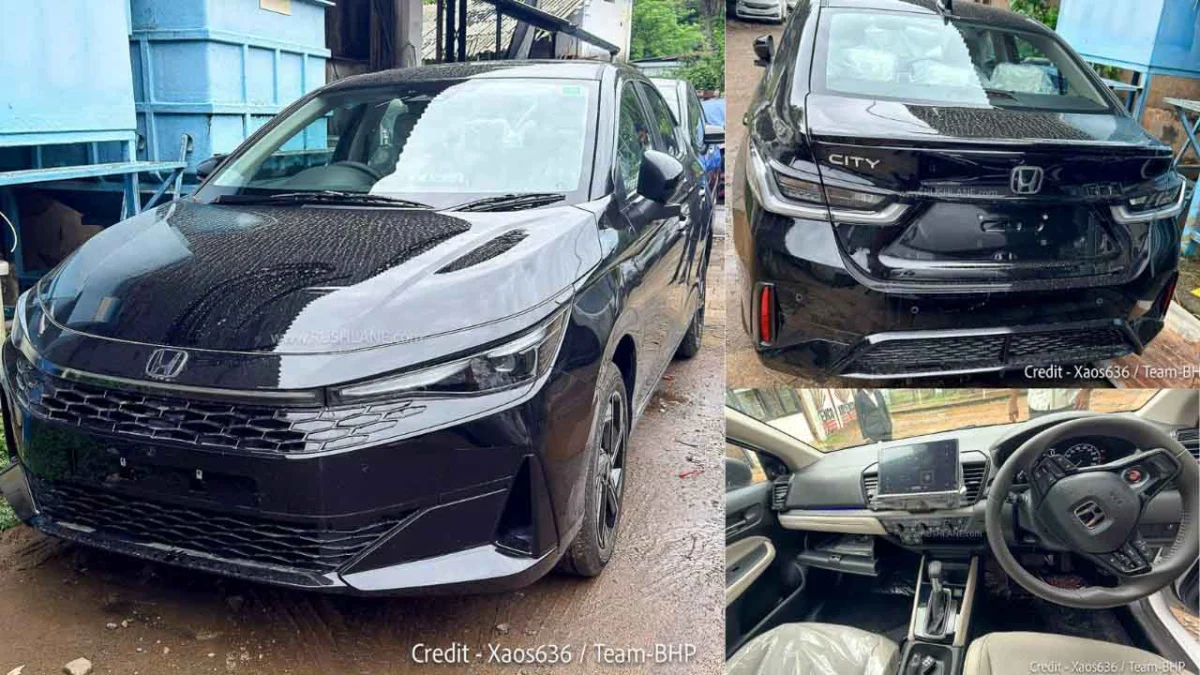
The mid-size sedan segment in India, long considered the battleground for automotive elegance and executive comfort, is bracing for the arrival of its most storied protagonist. Honda Cars India Ltd (HCIL) is set to officially pull the wraps off the 2026 Honda City Facelift on May 22nd in Delhi. While the official launch is mere days away, the "City" brand—a nameplate that has defined the Indian sedan market for over two decades—has already seen its secrets spilled across the digital landscape. Detailed leaks from dealership yards and social media teasers have provided an exhaustive look at what is arguably the most significant update to the fifth-generation model since its inception.

Main Facts: A Mid-Life Renaissance for the Executive Sedan
The 2026 Honda City Facelift arrives at a critical juncture for Honda. As the automotive industry leans heavily toward SUVs, the City remains the standard-bearer for those who prioritize the low-slung silhouette, driving dynamics, and rear-seat comfort of a traditional three-box sedan. The facelift is not merely a cosmetic exercise; it is a strategic recalibration designed to fend off increasingly sophisticated rivals like the new-generation Hyundai Verna and the European duo of the Skoda Slavia and Volkswagen Virtus.

Key Highlights of the 2026 Refresh:
- Aesthetic Evolution: A sharper, more aggressive front fascia featuring a slimmer grille and revised LED lighting signatures.
- Technological Integration: The introduction of a 360-degree camera system and a significantly larger, "floating" infotainment display.
- Comfort Upgrades: The long-awaited inclusion of ventilated front seats, a feature that has become a "must-have" in the Indian climate.
- The "Stealth" Factor: A new Black exterior paint option joins the palette, adding a sense of modern sportiness to the City’s sophisticated image.
- Mechanical Continuity: Retaining the proven 1.5L i-VTEC petrol and the class-leading e:HEV strong hybrid powertrains.
Chronology: From Camouflaged Mules to Showroom Floors
The journey of the 2026 Honda City Facelift has been a subject of intense scrutiny by enthusiasts and industry analysts alike. The timeline of its reveal follows a classic automotive trajectory:

- Early Spy Shots: Throughout the previous year, camouflaged test mules were spotted across various terrains in India, hinting at changes to the bumpers and lighting clusters.
- Global Precedence: Similar updates were seen in international markets (such as Thailand and Brazil), giving Indian consumers a blueprint of what to expect.
- Official Social Media Teasers: In early May, Honda Cars India began a coordinated social media campaign, releasing cryptic silhouettes and highlighting the May 22nd launch date in the national capital.
- The Dealership Leaks: As logistics began moving units to primary hubs, enthusiasts (notably Team-BHP contributor Xaos636) captured high-resolution images of the cars in dealership yards. These "unmasked" photos revealed the specific trim levels, the new color options, and the interior layout in full detail.
- Pre-Launch Bookings: Unofficial bookings have reportedly commenced at several dealerships across the country, with deliveries expected to begin almost immediately after the price announcement.
Supporting Data: Exterior and Interior Specifications
The 2026 facelift focuses on "sharpening" the City’s visual identity. Here is a detailed breakdown of the technical and aesthetic changes.

Exterior Design: The "Sporty Executive" Persona
The most immediate change is the front grille. Honda has opted for a slimmer chrome bar (or gloss black on higher trims), which integrates more seamlessly into the headlight clusters. The LED projector headlights now feature a new "eyebrow" signature for the Daytime Running Lamps (DRLs), providing a more technical and wider look at night.

The front bumper has been completely redesigned. It now incorporates more blacked-out elements and larger faux air intakes, which serve to reduce the "visual bulk" of the front end. Moving to the side profile, the 16-inch alloy wheels feature a new diamond-cut pattern. While some enthusiasts hoped for an upgrade to 17-inchers to match the Slavia or Verna, Honda has stuck with the 185-section 16-inch tires, likely to maintain the City’s acclaimed ride quality.

At the rear, the changes are subtle but effective. The LED tail lights now feature a "smoked" clear-lens effect, giving them a more premium, aftermarket-style appearance. The rear bumper has also been tweaked to include a faux diffuser element and integrated reflectors, topped off by a subtle lip spoiler on the trunk lid.

Interior and Features: Bridging the Tech Gap
The cabin of the Honda City has always been praised for its "Man Maximum, Machine Minimum" philosophy. The 2026 facelift enhances this with several key additions:

- Ventilated Seats: The leatherette upholstery is now perforated. The controls for the seat ventilation are located near the automatic climate control stack. This addresses one of the most consistent criticisms of the outgoing model.
- Infotainment and Connectivity: The central touchscreen is larger and features a revised interface. It appears to "float" more prominently from the dashboard. Enhanced wireless Apple CarPlay and Android Auto are standard on the higher trims.
- Ergonomic Refinements: The center console has been reorganized. The wireless charging pad has been moved to a more accessible position above the cup holders, and two new dedicated cup holders have been integrated into the center stack.
- Safety Tech: The biggest addition is the 360-degree camera system. Interestingly, Honda has retained its unique "Lane Watch" camera on the left Wing Mirror. This means the left-side mirror now houses two separate cameras—one for the 360-degree top-down view and one for the blind-spot monitoring.
Powertrain and Performance
Under the hood, Honda maintains its "if it isn’t broken, don’t fix it" approach. The 2026 City will continue to offer two distinct flavors of performance:

- 1.5L i-VTEC Petrol: Producing approximately 121 PS and 145 Nm of torque, mated to either a 6-speed manual or a 7-step CVT. This engine remains a favorite for its high-revving nature and reliability.
- 1.5L Atkinson Cycle Hybrid (e:HEV): This "Strong Hybrid" system uses two electric motors and a petrol engine to provide a combined output of 126 PS and a massive 253 Nm of torque. It remains the fuel-efficiency champion of the segment, often delivering over 25 km/l in real-world conditions.
Official Responses and Market Positioning
While Honda Cars India Ltd has remained tight-lipped regarding the exact pricing, their official teasers emphasize "Sophistication" and "Modernity." A spokesperson for a major Delhi dealership noted that "The interest in the facelift is exceptionally high, particularly for the Hybrid variant and the new Black color option, which consumers have been requesting for years."

Honda’s strategy appears to be one of "value-added premiumization." By adding features like ventilated seats and a 360-camera, they are neutralizing the feature-list advantages held by the Hyundai Verna, while relying on their superior brand equity and the City’s reputation for longevity to carry the sales momentum.

Implications: The High-Stakes Battle for the Sedan Crown
The launch of the 2026 Honda City Facelift has far-reaching implications for the Indian automotive market:

1. The Revival of the Sedan
Despite the SUV onslaught, the mid-size sedan segment has seen a mini-renaissance. The arrival of the Skoda Slavia and the new Verna injected fresh life into the category. The City’s update ensures that the segment remains competitive, offering buyers a genuine alternative to mid-size SUVs like the Creta or Seltos.

2. The Hybrid vs. Turbo-Petrol War
The City e:HEV is the only strong hybrid in its class. While its rivals (Verna, Virtus, Slavia) have moved toward high-performance 1.5L Turbo-Petrol engines, Honda is doubling down on efficiency and smooth electric-drive feel. The success of this facelift will determine if Indian buyers prioritize the "thrill of the turbo" or the "economy of the hybrid."

3. Pricing Pressure
The City has traditionally been priced at a premium. With the added features, a price hike is inevitable. However, Honda must be careful; if the top-end City Hybrid pushes too far into the 20-22 lakh (ex-showroom) territory, it begins to overlap with larger D-segment SUVs and even entry-level luxury offerings.

4. Resale Value and Brand Loyalty
The Honda City consistently boasts some of the highest resale values in the Indian market. This facelift, by bringing the car up to modern tech standards, ensures that current owners have a viable upgrade path within the brand, preventing "brand migration" to competitors.

Conclusion
The 2026 Honda City Facelift is more than just a new bumper and a larger screen. It is a calculated move by Honda to protect its most valuable asset in India. By blending the car’s traditional strengths—mechanical refinement, rear-seat comfort, and a prestigious image—with modern necessities like seat ventilation and 360-degree visibility, Honda has crafted a compelling package for the executive buyer.

As the units begin to roll into showrooms in white, silver, and the striking new black, the stage is set for May 22nd. Whether the City can maintain its throne in the face of increasingly aggressive competition remains to be seen, but one thing is certain: the "King of Sedans" is not vacating its seat without a sophisticated fight.
