The global climate landscape is bracing for a significant disruption as multiple international meteorological agencies sound the alarm over a potential “Super El Niño” event slated for late 2026. With sea surface temperatures in the equatorial Pacific Ocean rising at an unprecedented rate, the implications for global weather patterns—and specifically the Indian southwest monsoon—are profound. As the "lifeblood" of the Indian economy, the monsoon’s performance dictates everything from food security to industrial growth. The projected development of a very severe El Niño threatens to destabilize this delicate balance, prompting calls for urgent preparedness and strategic adaptation.
Main Facts: The Mechanics of a Super El Niño
The El Niño-Southern Oscillation (ENSO) is perhaps the most influential naturally occurring climate phenomenon on Earth. It involves a periodic fluctuation in sea surface temperatures (SSTs) and the overlying atmospheric circulation across the equatorial Pacific Ocean. El Niño represents the "warm phase" of this cycle, while La Niña represents the "cool phase."
Defining the "Super" Threshold
Meteorologists monitor the intensity of El Niño through the Niño 3.4 region—a specific corridor in the central and eastern equatorial Pacific. An El Niño event is officially declared when the three-month running mean SST anomaly in this region remains at least +0.5°C above the long-term average for five consecutive overlapping seasons.
However, the current projections for 2026 suggest something far more intense. A "Super El Niño"—an informal but widely recognized term—is categorized when these temperature anomalies exceed a staggering +2.0°C. Since 1951, only a handful of such events have occurred, each leaving a trail of significant climatic and economic upheaval in its wake.
Current Observations and the 2026 Outlook
Recent satellite data and ocean buoys have detected a rapid warming of the equatorial Pacific. More critically, there is a substantial build-up of heat beneath the ocean surface. This subsurface heat content is a primary driver for surface warming; as it migrates eastward and rises, it fuels the atmospheric changes that define El Niño. Global climate models now show a high probability that this warming will peak during the October–December 2026 window, potentially rivaling the strongest events in recorded history.
Chronology: A History of Disruption (1951–2026)
To understand the gravity of the 2026 forecast, one must examine the historical timeline of ENSO events and their correlation with the Indian monsoon. Since 1951, India has navigated 28 El Niño events of varying intensities.
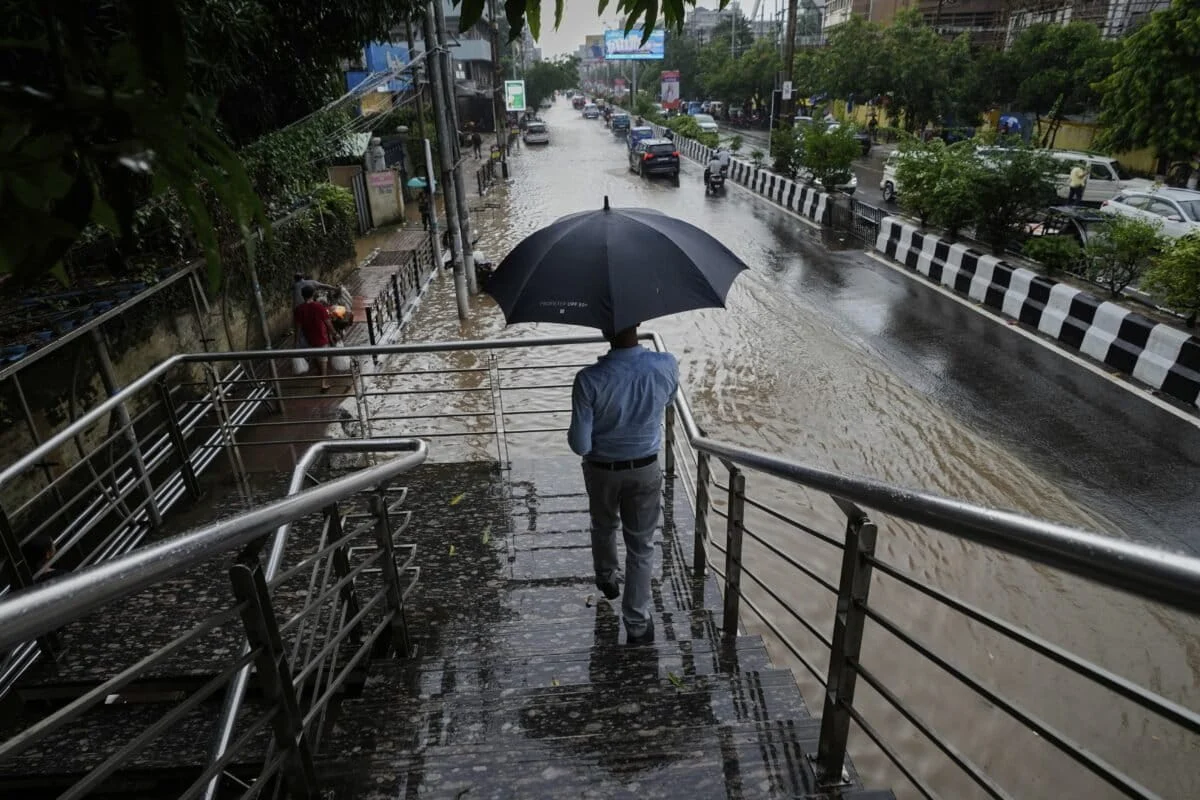
![A strong El Niño demands planning, not panic [Commentary]](https://imgs.mongabay.com/wp-content/uploads/sites/30/2026/06/03163434/AP25240537416263-1200x800.jpg)
- The 1972 Drought: While not always classified as a "Super" event, the 1972 El Niño coincided with India’s most severe drought in the 20th century, with a rainfall deficiency of 22%. This event underscored the vulnerability of the nation’s food systems.
- The 1982-83 Super El Niño: This was one of the first events to be studied with modern instruments. It resulted in a significantly deficient monsoon, leading to widespread agricultural stress across the Indian subcontinent.
- The 1997 Anomaly: The 1997 Super El Niño is often cited as a "scientific paradox." Despite record-breaking Pacific warming, the Indian monsoon remained near-normal. Scientists later attributed this to a "strong positive Indian Ocean Dipole (IOD)," which acted as a counter-buffer, bringing moisture to the Indian landmass despite the El Niño.
- The 2015-16 Event: This most recent Super El Niño resulted in two consecutive years of drought for India (2014 and 2015), causing a sharp spike in food inflation and rural distress.
- The 2023-2024 Transition: Following a rare "triple-dip" La Niña, an El Niño developed in 2023. This set the stage for the current atmospheric conditions that models suggest will evolve into the 2026 extreme event.
Supporting Data: Meteorological Indicators and Forecasts
The 2026 forecast is underpinned by sophisticated climate modeling from agencies such as the National Oceanic and Atmospheric Administration (NOAA), the European Centre for Medium-Range Weather Forecasts (ECMWF), and the India Meteorological Department (IMD).
The Niño 3.4 Anomaly
The consensus among these models is a steady climb in SST anomalies. By mid-2026, the Niño 3.4 region is expected to breach the +1.5°C mark, with several models pushing the ceiling past +2.0°C by the final quarter of the year. This magnitude of warming alters the "Walker Circulation"—the massive atmospheric loop that regulates rainfall in the tropics—effectively shifting rain clouds away from the Indian Ocean toward the central Pacific.
Rainfall Projections and the LPA
The IMD utilizes the "Long Period Average" (LPA) to benchmark monsoon performance. The current LPA for the June–September season is approximately 87 cm. In its updated long-range forecast issued on May 29, 2026, the IMD projected seasonal rainfall at just 90% of the LPA.
- Deficiency Probability: There is a 60% probability of a "deficient" monsoon (rainfall below 90% of LPA).
- Regional Variance: While Northeast India might see near-normal rains due to local orographic factors, the core monsoon zone—comprising central, western, and peninsular India—is at high risk of significant rainfall gaps.
The Wildcard: The Indian Ocean Dipole (IOD)
The only potential "savior" for the 2026 monsoon is a positive IOD. A positive IOD occurs when the western Indian Ocean becomes warmer than the eastern part, encouraging cloud formation over India. While some models predict a positive IOD for late 2026, meteorologists warn that IOD predictability is notoriously low compared to ENSO, making it a risky factor to rely on for national planning.
Official Responses: Institutional Vigilance
The prospect of a failed monsoon has triggered a coordinated response from Indian scientific and governmental institutions.
The India Meteorological Department (IMD)
The IMD has moved toward a more granular forecasting approach. By providing district-level advisories and updated long-range forecasts, the agency aims to give farmers and policymakers a clearer window for decision-making. Officials have emphasized that while the "Super El Niño" is a formidable threat, the timing of the warming—peaking late in the year—might offer a slight window of relief for the early part of the monsoon.
![A strong El Niño demands planning, not panic [Commentary]](https://imgs.mongabay.com/wp-content/uploads/sites/30/2026/06/03164450/pexels-qaarif-11570221-768x512.jpg)
The Ministry of Earth Sciences
Former Secretary of the Ministry of Earth Sciences and current Vice Chancellor of Atria University, the author of the primary findings, notes that India’s resilience has grown. The "Finance Minister" quote from 2011—referring to the monsoon’s economic weight—remains a guiding principle for the Ministry, which is now integrating AI and machine learning into its monsoon models to improve accuracy.
Global Consensus
International bodies have echoed the IMD’s concerns. The World Meteorological Organization (WMO) has noted that 2026 could be one of the warmest years on record globally, driven by the dual forces of the Super El Niño and anthropogenic climate change. This global heat stress further complicates the local monsoon dynamics by altering the thermal contrast between the Indian landmass and the surrounding oceans.
Implications: The Socio-Economic Ripple Effect
A deficient monsoon in 2026 would not be a mere meteorological event; it would be a socio-economic challenge affecting nearly 1.4 billion people.
1. Agriculture and Food Security
Agriculture remains the bedrock of rural India. Nearly 50% of the country’s net sown area is rainfed.
- Kharif Vulnerability: Major crops such as rice, pulses, oilseeds (soybean), and cotton are sown during the monsoon. A delay in rainfall or prolonged "break periods" can lead to stunted crop growth and massive yield losses.
- Rural Demand: A dip in farm income immediately translates to lower rural demand for consumer goods, automobiles, and services, creating a drag on the national GDP.
2. Water Security and Urban Stress
The monsoon is the primary source for recharging India’s 150 major reservoirs.
- Hydropower: Low reservoir levels reduce the capacity for hydropower generation, forcing a greater reliance on coal-fired thermal plants, which increases carbon emissions and power costs.
- Groundwater: In the absence of rain, farmers turn to groundwater pumping. This accelerates the depletion of already stressed aquifers, particularly in states like Punjab, Haryana, and Maharashtra.
3. Inflation and Monetary Policy
Food inflation is a sensitive political and economic issue. A shortage of pulses or vegetables due to a weak monsoon can lead to double-digit inflation in the food basket. This, in turn, prevents the Reserve Bank of India (RBI) from lowering interest rates, as it must maintain a hawkish stance to curb overall retail inflation, thereby slowing down industrial investment.
![A strong El Niño demands planning, not panic [Commentary]](https://imgs.mongabay.com/wp-content/uploads/sites/30/2026/06/03164921/pexels-aryan-prajapati-843541-27592335-scaled-e1780485586423-768x512.jpg)
4. The Fiscal Burden
The government often has to step in with drought relief packages, expanded rural employment schemes (like MGNREGA), and subsidies for seeds and fertilizers. These "unplanned" expenditures can widen the fiscal deficit, diverting funds from long-term infrastructure projects.
Conclusion: Preparedness Over Panic
While the data regarding the 2026 Super El Niño is concerning, experts emphasize that "the occurrence of a poor monsoon cannot be prevented, but its adverse impacts can certainly be reduced." India is no longer the nation it was in 1972 or even 1982. With better satellite monitoring, a robust public distribution system (PDS) for foodgrains, and improved irrigation coverage, the country has the tools to weather the storm.
The focus for 2026 must be on climate-smart agriculture: promoting drought-resistant crop varieties, enhancing micro-irrigation, and utilizing real-time weather data to manage sowing cycles. By shifting from a "disaster response" mindset to one of "risk management," India can mitigate the impact of the Super El Niño, ensuring that even if the rains fail, the economy and its people remain resilient.