

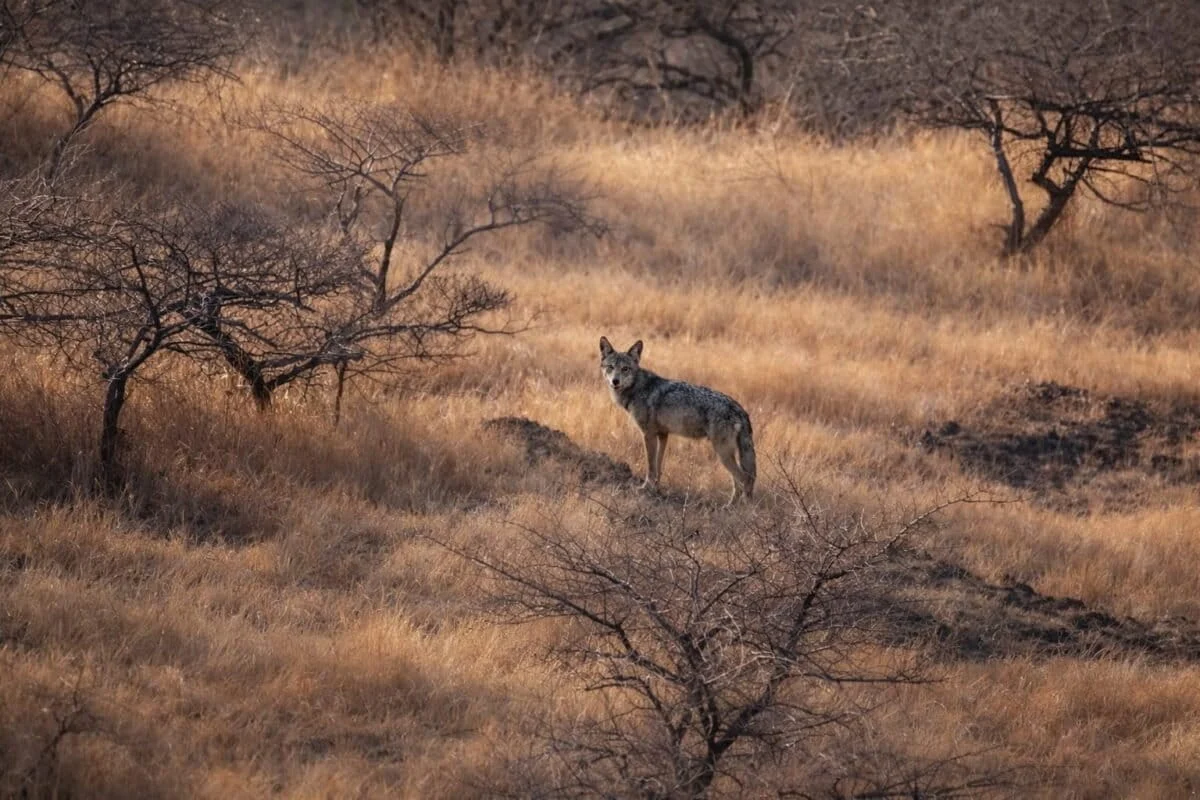
KIRAKSAL, MAHARASHTRA — In the rain-shadow region of the Maan taluka in Satara district, the landscape is often dismissed by passing travelers as a desolate expanse of thorny scrub and parched earth. Historically categorized as "wasteland" by colonial-era land records—a classification that persists in modern administrative mindsets—these semi-arid grasslands are, in fact, one of India’s most misunderstood and threatened ecosystems.
Today, the village of Kiraksal is at the center of a pioneering conservation movement. What began as a solitary quest by a wildlife biologist during the COVID-19 pandemic has blossomed into a sophisticated, community-led initiative. Supported by the World Wide Fund for Nature (WWF), the Kiraksal Conservation Project is now seeking formal legal protection for nearly 4,800 hectares of forest and grassland, aiming to secure a future for the Indian grey wolf, the striped hyena, and a staggering array of biodiversity that was, until recently, entirely undocumented.
Main Facts: A Grassroots Scientific Revolution
The Kiraksal success story is built on the foundation of "citizen science." While the area was known to village elders as a former stronghold for blackbucks and chinkaras (Indian gazelles), the scientific community had largely ignored the Maan and Khatav ranges. This lack of data meant the land was vulnerable to conversion for agriculture or industrial use.
The project has achieved several critical milestones:

- Biodiversity Documentation: A community-led survey identified 606 species of flora and fauna, including 212 bird species, 160 plants, 34 herpetofauna (reptiles and amphibians), and 18 mammal species.
- The Kiraksal-Kukudwad Proposal: A formal proposal has been submitted to the Satara Forest Division to declare 4,793 hectares (47.93 sq km) across 23 villages as a Conservation Reserve.
- Ecological Resilience: Despite the local extinction of primary wild prey (ungulates) in the 1950s, apex predators like the Indian grey wolf and striped hyena have managed to survive in the landscape by adapting their diets.
- Policy Shift: The project aligns with a landmark Maharashtra Government Resolution passed on May 7, 2026, which mandates that grasslands must be recognized as unique ecosystems rather than "wastelands" and prohibits traditional tree-planting drives that can destroy grassland habitats.
Chronology: From Local Extinction to Global Recognition
The ecological trajectory of Kiraksal is a microcosm of India’s broader grassland crisis.
The Pre-1950s Era: Village oral histories describe a "thriving grassland" where ungulate species like blackbucks were common. These herbivores maintained the grass height and provided a steady prey base for large carnivores.
1950–2020: The Silent Decline: Following the 1950s, hunting and habitat loss led to the local extinction of ungulates. The landscape transitioned into a "ghost ecosystem" where predators survived on the fringes, their presence known to locals but unrecorded by science.
2020: The Pandemic Catalyst: Chinmay Sawant, a wildlife biologist whose grandparents reside in Kiraksal, found himself in the village during the COVID-19 lockdown. Recognizing the untapped potential of the surrounding hills and table mountains, Sawant began a systematic study. With the blessing of the local Gram Panchayat and member Amol Katkar, he began drafting the village’s People’s Biodiversity Register (PBR).

2023–2025: The WWF Era: The Kiraksal Conservation Project gained momentum with a grant from WWF-India. This funding transitioned the project from a volunteer effort to a structured three-phase operation focusing on youth training, GIS mapping, and habitat restoration.
May 2026: Legislative Support: The movement received a significant boost from the Maharashtra government’s decision to protect grasslands from ill-conceived afforestation projects, providing the legal tailwind needed for the Conservation Reserve proposal.
Supporting Data: Mapping the Loss and the Life
The scientific rigor of the project is evidenced by its use of GIS (Geographic Information System) mapping and camera trap monitoring.
Habitat Loss: GIS analysis of data over five years revealed a concerning trend: 1.67 square kilometers of pristine grasslands had been converted into agricultural fields or built-up areas. This fragmentation poses the greatest threat to the Indian grey wolf, a species that requires vast, open ranges to hunt and breed.

Species Richness: The documentation of 606 species serves as a powerful rebuttal to the "wasteland" label. Among the 18 mammal species recorded are the Indian grey wolf (Canis lupus pallipes), striped hyena (Hyaena hyaena), golden jackal, and the Bengal fox. The presence of 212 bird species indicates that the Kiraksal scrublands serve as a vital corridor for both resident and migratory avian populations.
The Predator Paradox: A key focus of the research was understanding how wolves survived the disappearance of their natural prey. Field biologist Arnav Gandhe noted that the wolves have become "generalist" survivors. Their diet now consists of:
- Rodents and black-naped hares.
- Small carnivores like civets and mongooses.
- Poultry and poultry waste from nearby farms.
- Sheep from the nomadic Dhangar community (primarily during the monsoon).
While this adaptability is impressive, experts warn it is unsustainable. Mihir Godbole, founder of the Grasslands Trust, emphasizes that while wolves can survive on rodents, a pack of three to four individuals cannot thrive long-term without native wild herbivores. The lack of wild prey increases "depredation"—attacks on livestock—which fuels human-wildlife conflict.
Official Responses: The Path to Legal Protection
The shift from community initiative to state-protected reserve requires a delicate balancing act between conservation goals and the rights of local inhabitants.

Amol Satpute, Deputy Conservator of Forests (DCF) for Satara, has expressed cautious optimism regarding the Kiraksal-Kukudwad Conservation Reserve. "There are very few landscapes dedicated specifically to hyenas and wolves," Satpute noted. However, he emphasized that the process must be democratic. A jan sunavni (public hearing) is mandatory to ensure the 23 villages involved are willing participants.
One potential strategy mentioned by Satpute is the "holistic reintroduction" of deer species. By restoring the natural prey base, the Forest Department hopes to reduce the wolves’ reliance on sheep, thereby lowering the economic burden on the Dhangar shepherds and reducing retaliatory killings.
However, some experts suggest an alternative legal route. Y.V. Jhala, former dean of the Wildlife Institute of India, argues that a "Community Reserve" might be more appropriate than a "Conservation Reserve." A Community Reserve allows for more flexibility in land-use patterns, ensuring that the local people—who have been the primary stewards of the land—do not feel disenfranchised by rigid forest laws.
Implications: The Leopard in the Sugarcane
The conservation of Kiraksal is not just about protecting what is there; it is about preventing a dangerous ecological shift. As irrigation reaches the Maan taluka, traditional dryland farming is being replaced by sugarcane cultivation.

This change in vegetation is a "double-edged sword." While it brings economic prosperity, it also invites leopards into the landscape. "Wolves cannot out-compete leopards," warns Y.V. Jhala. Indian wolves are highly specialized for open, semi-arid spaces. As the landscape becomes more "densely vegetated" due to sugarcane and misplaced tree-planting drives, leopards—which thrive in cover—will likely displace the wolf populations.
To counter these threats, Kiraksal has implemented a "Three-Point Ban" that serves as a model for other Indian villages:
- Kurhad Bandhi (Tree Felling Ban): Aimed at allowing native scrub to regenerate.
- Vanva Bandhi (Forest Fire Control): Villagers now actively patrol to prevent fires, which are often sparked by short-circuits in local windmills.
- Shikar Bandhi (Hunting Ban): Perhaps the most significant cultural shift. Historically, the Nag Panchami festival involved a ritual hunt where animal heads were buried near the village temple. Today, thanks to the Biodiversity Management Committee, these practices have ceased.
Conclusion: A Model for the Future
The Kiraksal Conservation Project demonstrates that the most effective way to save "invisible" ecosystems is to make them visible through data and community pride. By transforming the "wasteland" of Maan taluka into a documented biodiversity hotspot, Chinmay Sawant and the people of Kiraksal have challenged the national narrative on grassland management.
As the proposal for the Kiraksal-Kukudwad Conservation Reserve moves through the bureaucratic channels of the Satara Forest Division, it carries the hopes of a village that has decided its "scrubland" is worth more than the sum of its parts. If successful, Kiraksal will provide a blueprint for how India can protect its semi-arid landscapes—not by excluding people, but by empowering them as the primary defenders of the wild.
