

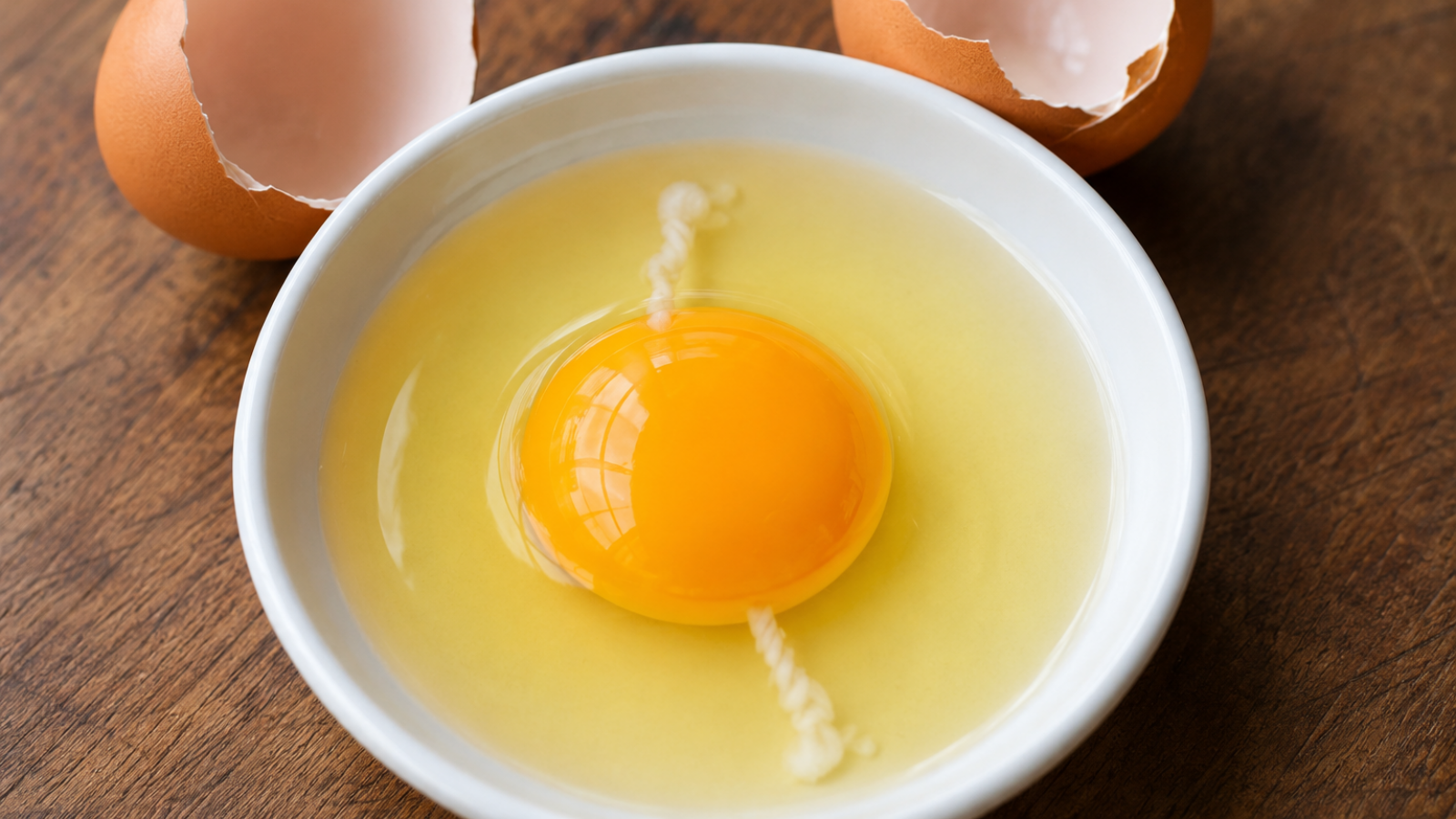
The simple act of cracking an egg into a pan often yields a moment of hesitation for the uninitiated. Amidst the translucent albumen and the vibrant yellow yolk, a thick, opaque, white rope-like strand frequently clings to the center. For generations, home cooks have debated the nature of this "string." Some mistake it for a sign of spoilage, others for a developing embryo, and many simply pick it out with a fork, viewing it as an unappealing impurity.
However, food scientists and nutritionists are increasingly advocating for better "egg literacy." According to experts, including Dr. Aarti Nath, a prominent dietician at Paras Health, this structure—known scientifically as the chalaza (plural: chalazae)—is not only a natural component of the egg but a vital indicator of its freshness and structural integrity. Far from being a defect, the presence of a prominent chalaza is a biological certificate of a high-quality, recently laid egg.
Main Facts: Understanding the Anatomy of the Egg
To understand the chalaza, one must first understand the complex architecture of the avian egg. An egg is not merely a liquid held in a shell; it is a highly engineered biological vessel designed to protect and nourish.
The chalaza consists of two spiral-shaped bands of protein. These strands are located on opposite sides of the yolk, extending into the thick white (albumen). Their primary function is mechanical: they act as microscopic anchors, or "tension wires," that suspend the yolk in the dead center of the egg.
Key Characteristics of the Chalaza:
- Composition: It is made almost entirely of mucin, a type of protein also found in the egg white. It is not a vein, an umbilical cord, or a sign of fertilization.
- Appearance: In a fresh egg, it appears as a twisted, white, stringy mass. It is most visible when the egg is raw; once cooked, it denatures and blends into the rest of the egg white, becoming indistinguishable.
- Edibility: It is 100% edible and contains the same nutritional profile as the rest of the egg white.
- Function: It prevents the yolk from drifting toward the shell, where it might be exposed to bacteria or sustain damage during transport.
Chronology: The Lifecycle of an Egg and the Disappearing Strand
The state of the chalaza changes predictably over time, providing a chronological map of the egg’s age. Understanding this timeline is essential for both commercial distributors and consumers.
Phase 1: The Freshly Laid Egg (Days 1–7)
Immediately after an egg is laid, the proteins in the albumen are at their strongest. The chalaza is tightly coiled and opaque. If you crack an egg during this window, the white string will be very prominent and may even be difficult to detach from the yolk. This is a sign that the egg’s internal pH is low (slightly acidic to neutral) and its structural proteins have not yet begun to degrade.
Phase 2: The Aging Process (Days 8–21)
As an egg ages, the shell—which is porous—allows carbon dioxide to escape and oxygen to enter. This process causes the pH of the egg white to rise, becoming more alkaline. As the environment becomes more basic, the protein strands (ovomucin) that make up the chalaza and the thick albumen begin to break down and liquefy. The chalaza starts to lose its "twist" and becomes more transparent and less noticeable.
Phase 3: The Older Egg (Day 21+)
In an older egg, the chalaza may seem to disappear entirely. The yolk no longer sits firmly in the center but may drift to one side. When cracked, the egg white will appear watery and spread out thinly across the pan. While the egg may still be safe to eat (provided it has been refrigerated and passes a "smell test"), the absence of a visible chalaza indicates that the egg has lost its peak culinary properties.
Supporting Data: The Nutritional and Structural Importance
While the chalaza is often viewed as a textural nuisance, scientific data supports its role in food safety and nutrition.
Structural Integrity and Transport
The poultry industry relies on the chalaza to ensure that eggs survive the journey from farm to table. Research into "egg rheology"—the study of the flow of matter within the shell—shows that without the tension provided by the chalaza, the yolk would frequently collide with the interior of the shell during the "jiggling" of transport. If the yolk membrane (the vitelline membrane) ruptures before the egg is cracked, the egg becomes much more susceptible to rapid bacterial spoilage.
Nutritional Profile
From a nutritional standpoint, the chalaza is a concentrated source of protein. Because it is essentially a "twisted" version of the egg white, it contains the same essential amino acids. There is no evidence to suggest that removing the chalaza provides any health benefit; in fact, doing so simply removes a small portion of the egg’s high-quality protein content.
The Fertilization Myth
A common misconception is that the chalaza is only present in fertilized eggs. Data from the USDA and global agricultural boards confirm that all eggs, whether produced in a commercial battery farm without roosters or in a backyard coop, contain chalazae. The presence of the white string has zero correlation with whether the egg would have hatched into a chick.
Official Responses: Expert Opinions and Food Safety Guidelines
Medical and culinary experts have weighed in to dispel the "ick factor" associated with the chalaza.
Dr. Aarti Nath, Dietician at Paras Health, emphasizes that the chalaza is a sign of health. "It is a natural part of the egg and has an important job. It acts as a tiny anchor that helps keep the yolk centered. When you transport it, the egg structure stays intact despite disturbances," she explains. Dr. Nath further clarifies that "a prominent chalaza is generally considered a sign of freshness. As eggs get older, the chalaza becomes weaker and less visible."
Culinary Experts and Chefs:
In the professional kitchen, the response to the chalaza depends on the desired outcome. For everyday cooking—scrambling, frying, or baking—chefs recommend leaving the chalaza intact, as it is unnoticeable once heat is applied.
However, in "haute cuisine" or specific pastry applications, such as making a silky-smooth lemon curd, a stirred custard, or a delicate flan, chefs may use a fine-mesh sieve to strain the eggs. This is not for safety reasons, but to ensure a perfectly uniform texture, as the chalaza can sometimes remain as a tiny, slightly firmer "node" in an otherwise liquid-smooth sauce.
Food Safety Organizations:
The USDA (United States Department of Agriculture) official guidelines state: "The chalazae are neither imperfections nor embryos. They are natural parts of the egg white… They do not interfere with the cooking or beating of the white." Most international food safety bodies echo this sentiment, categorizing the chalaza as a functional protein rather than a contaminant.
Implications: Food Waste and Consumer Education
The misunderstanding of the chalaza has broader implications for food waste and consumer behavior.
Reducing Food Waste
In an era where global food security and waste reduction are paramount, educating consumers about the chalaza is vital. Many uninformed consumers discard perfectly fresh eggs because they believe the white strand indicates the egg is "bad" or "bloody." By clarifying that the chalaza is a mark of freshness, food educators can help prevent the unnecessary disposal of nutrient-dense food.
The "Freshness Test"
Understanding the chalaza empowers consumers to judge the quality of their food without relying solely on "Best Before" dates, which are often conservative estimates. A cook who cracks an egg and sees a thick, ropey chalaza can be confident that they are using a high-quality ingredient, ideal for poaching or frying where the integrity of the yolk is essential.
Better Kitchen Practices
The presence of the chalaza also serves as a reminder of the delicate nature of eggs. Because the chalaza is designed to protect the yolk, consumers should handle eggs with care to avoid snapping these protein anchors. Storing eggs in their original carton—large end up—helps keep the yolk centered and the air cell stable, working in tandem with the chalaza to preserve the egg’s internal structure.
Conclusion
The next time you encounter a white, stringy strand in your breakfast egg, there is no need for alarm. As Dr. Aarti Nath and numerous food scientists have confirmed, the chalaza is a marvel of biological engineering—a protein anchor that ensures your egg remains fresh, centered, and intact from the farm to your frying pan.
In the world of nutrition, appearances can be deceiving. While the chalaza may look like an intruder, it is actually a sign of a "superior" egg. Embracing this small detail of egg anatomy is a step toward becoming a more informed, confident, and less wasteful consumer. Whether you are a home cook or a professional chef, the chalaza is not a defect to be removed, but a natural assurance of quality.
DISCLAIMER: This article is based on information from the public domain and expert consultations. Always consult your health practitioner or a certified nutritionist before starting any specific dietary routine or if you have concerns regarding food allergies.
