

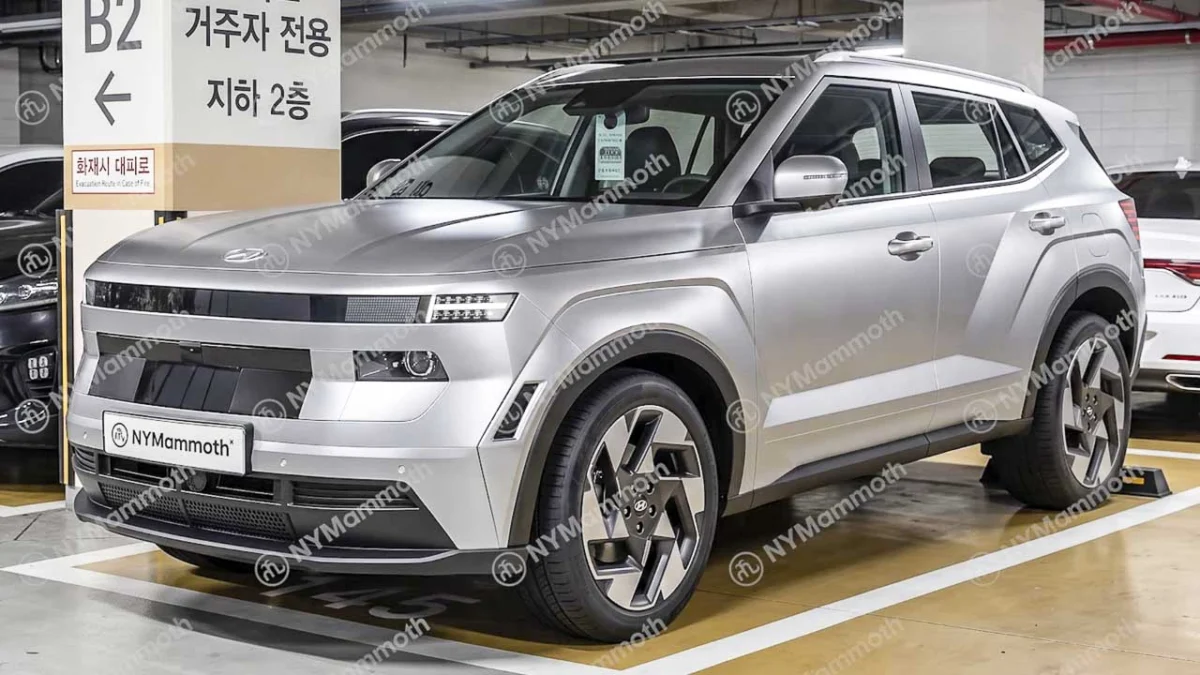
The automotive landscape is currently witnessing a tectonic shift as Hyundai, the South Korean giant, prepares to launch the third generation of its most successful mid-size SUV, the Creta. Codenamed the SX3, this upcoming iteration is not merely a facelift or a minor update; it represents a fundamental reimagining of what a compact crossover can be in the era of electrification and digital connectivity.
Recent sightings of camouflaged test mules and the subsequent release of high-quality digital renderings have ignited a global conversation about Hyundai’s future design direction. Slated for a late 2026 or early 2027 debut, the 3rd-gen Creta is poised to transition from a traditional internal combustion engine (ICE) vehicle into a sophisticated Software Defined Vehicle (SDV), featuring futuristic aesthetics and a pioneering hybrid powertrain.
1. Main Facts: A Paradigm Shift in Design and Engineering
The upcoming Hyundai Creta SX3 marks a departure from the "Sensuous Sportiness" design language that defined the current model. Instead, it adopts a more "Parametric Dynamics" approach, heavily influenced by the Crater Concept showcased at AutoMobility LA in late 2025.
Key Highlights of the 3rd-Gen Creta:
- Futuristic Aesthetic: The vehicle moves away from organic curves toward a boxy, sci-fi-inspired silhouette that aligns it with Hyundai’s IONIQ electric sub-brand.
- Software Defined Vehicle (SDV) Architecture: The SX3 is built on a new electronic architecture that prioritizes software, allowing for seamless Over-the-Air (OTA) updates for everything from infotainment to powertrain performance.
- Hybrid Integration: For the first time, the Creta will feature a dedicated hybrid powertrain based on the 1.5-litre naturally aspirated petrol engine, aimed at competing with Toyota and Maruti Suzuki’s strong hybrid offerings.
- Advanced Interior Tech: The cabin will feature the Pleos Connect system, a unified interface that merges the instrument cluster and infotainment into a cohesive digital experience.
- Platform Sharing: The SX3 platform will be shared with the next-generation Hyundai Kona, ensuring global standards of safety, rigidity, and driving dynamics.
2. Design Evolution: From Curvy to Cyberpunk
The visual transformation of the 3rd-gen Creta is perhaps its most jarring and exciting feature. The renderings, based on rigorous analysis of test mules, suggest a vehicle that looks more like a concept car brought to life than a mass-market SUV.

Front Fascia and Lighting
The front of the SX3 is significantly more upright and imposing. The signature "C-shaped" LED DRLs of the current model are being replaced by a sophisticated pixel-style lighting signature. This "Parametric Pixel" design is a direct nod to the IONIQ 5 and IONIQ 6, creating a bridge between Hyundai’s ICE and EV lineups. The headlamps are positioned lower and deeper within the bumper, creating a seamless, "hidden" look when the lights are off. The grille is partially closed, improving aerodynamic efficiency—a necessity for the hybrid variants.
Profile and Stance
In profile, the Creta SX3 sheds its rounded shoulders for sharp, geometric character lines. The wheel arches are more pronounced and squarish, housing newly designed aerodynamic alloy wheels. A notable change is the shift from oval-shaped Outside Rear View Mirrors (ORVMs) to more angular, boxy units. The roofline remains sloping to maintain a sporty silhouette, complemented by integrated roof rails and a shark-fin antenna.
Rear Design
The rear of the vehicle is equally dramatic. The pixel theme continues with horizontal LED tail lamp stripes that span the width of the tailgate. A glossy black trim piece connects the lamps, creating a "continuous light" effect that is becoming a hallmark of modern luxury SUVs. The bumper is cleaner and flatter, housing horizontal reflectors and a silver-finished faux skid plate to maintain its rugged SUV credentials.
3. The Digital Revolution: Software Defined Vehicle (SDV)
The most significant upgrade to the Creta is under its skin. Hyundai is moving toward a Software Defined Vehicle (SDV) philosophy. In traditional vehicles, hardware defines the car’s capabilities. In an SDV, the software manages the hardware, allowing the vehicle to improve over time.

Pleos Connect Infotainment
Inside the cabin, the centerpiece is the Pleos Connect system. Unlike current setups that often feel like a tablet glued to a dashboard, Pleos integrates the entire cockpit. A massive curved display houses both the driver’s vitals and the multimedia interface.
Crucially, the system includes a secondary "compact screen" dedicated to turn-by-turn navigation and speed. This ensures that even when the main screen is being used for media or settings, the driver never loses sight of critical driving information. This dual-screen approach is designed to minimize driver distraction while maximizing the "wow factor" of the interior.
Connectivity and OTA Updates
As an SDV, the Creta SX3 will allow owners to subscribe to new features or improve the vehicle’s fuel efficiency and safety systems through software downloads. Whether it is a new ambient lighting pattern or an update to the ADAS algorithms, the vehicle will remain "fresh" long after it leaves the showroom.
4. Supporting Data: Powertrains and Performance
The global push for fuel efficiency and lower emissions has led Hyundai to rethink the Creta’s engine lineup. While the 1.5-litre naturally aspirated petrol and the 1.5-litre turbocharged petrol engines will likely remain for certain markets, the headline act is the 1.5-litre Strong Hybrid.

Technical Expectations:
| Feature | Specification (Estimated) |
|---|---|
| Engine | 1.5L Atkinson Cycle Petrol + Electric Motor |
| Combined Power | ~140 PS |
| Transmission | e-CVT or 6-speed Dedicated Hybrid Transmission (DHT) |
| Fuel Efficiency | 22–25 km/l (Targeted) |
| Safety | Level 2+ ADAS (360-degree radar/camera suite) |
The inclusion of a hybrid is a strategic move to capture the middle ground between traditional petrol engines and full electrification, particularly in markets where EV infrastructure is still developing. By utilizing an Atkinson cycle engine paired with a high-torque electric motor, Hyundai aims to provide diesel-like fuel economy with the refinement of a petrol engine.
5. Official Strategy and Global Responses
While Hyundai Motor India and Hyundai Global have yet to release a final "production-ready" statement, their broader corporate strategy, "Hyundai Way," provides ample context. At the 2024 CEO Investor Day, Hyundai leadership emphasized a "flexible response to the market," which includes expanding their hybrid (HEV) lineup from seven to fourteen models.
Industry Perspectives
Market analysts suggest that the SX3 is the lynchpin of this strategy. "The Creta is Hyundai’s volume driver in emerging markets," says an industry consultant. "By turning it into an SDV with a hybrid heart, Hyundai is future-proofing its most important asset against the rise of Chinese EV manufacturers and established Japanese hybrid rivals."
Hyundai’s focus on the "Crater Concept" as a design base also indicates a desire to unify their global design language. The SX3 will not just be a "car for India" or a "car for Brazil"; it will be a global product capable of meeting the stringent safety and emission norms of Europe and North America (as the Kona).

6. Chronology: The Road to SX3
To understand the significance of the 3rd-generation Creta, one must look at the timeline of its evolution:
- 2015: The 1st-generation Creta launches, setting a new benchmark for the premium compact SUV segment.
- 2020: The 2nd-generation Creta (current) is introduced with "Sensuous Sportiness" design, becoming an instant bestseller despite its polarizing looks.
- January 2024: Hyundai launches a major facelift for the 2nd-gen model, introducing Level 2 ADAS and a more squared-off front end.
- November 2025: The Crater Concept debuts at AutoMobility LA, showcasing the futuristic design language intended for the next generation of SUVs.
- Mid-2026: Test mules of the SX3 are spotted in South Korea and India, confirming the move toward a pixel-based design and SDV architecture.
- Early 2027: Expected global commercial launch of the 3rd-generation Creta.
7. Implications: What This Means for the Market
The arrival of the Creta SX3 will have far-reaching implications for consumers and competitors alike.
For the Consumer
The shift to an SDV means the Creta will hold its value better. In the past, a car’s technology became obsolete within three years. With OTA updates, the 3rd-gen Creta will stay technologically relevant for much longer. Additionally, the hybrid powertrain will significantly lower the total cost of ownership (TCO) for high-mileage users who are currently wary of rising fuel prices but not yet ready to switch to a pure EV.
For the Competition
The Creta SX3 puts immense pressure on rivals like the Kia Seltos, Maruti Suzuki Grand Vitara, and Toyota Hyryder. While Maruti and Toyota currently lead in the hybrid space, they lag in terms of "connected car" technology and software integration. Hyundai’s move to combine a strong hybrid with a Software Defined Vehicle architecture could redefine the "gold standard" of the segment.

For the Environment
By mainstreaming hybrid technology in one of the world’s best-selling SUVs, Hyundai is contributing to a significant reduction in fleet emissions. The SX3 represents a pragmatic step toward carbon neutrality, offering a low-emission alternative that does not require the consumer to change their driving habits or rely on a charging grid.
Conclusion
The 3rd-generation Hyundai Creta (SX3) is more than just a new car; it is a statement of intent. It shows a company that is willing to take risks with design and invest heavily in the future of software and hybrid power. As we move toward 2027, the automotive world will be watching closely to see if this "sci-fi" SUV can maintain the Creta’s legacy as the undisputed king of the compact crossover segment. If the renderings and technical leaks are any indication, the SX3 is not just ready for the future—it is aiming to define it.
