

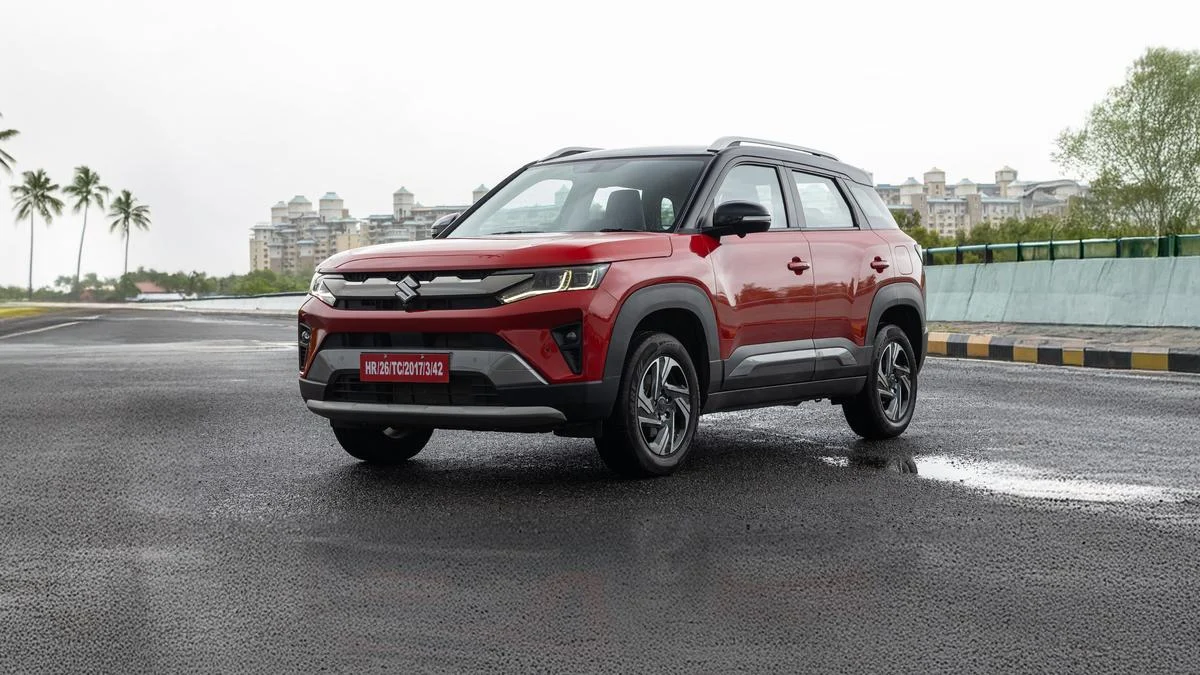
The Indian automotive landscape is currently witnessing one of its most aggressive competitive cycles in history, particularly within the sub-four-meter compact SUV segment. At the heart of this storm is the Maruti Suzuki Brezza—a vehicle that has served as a cornerstone of the company’s "Arena" portfolio and a consistent bestseller for years. However, as consumer expectations pivot from mere fuel efficiency to performance-oriented driving dynamics and high-tech features, Maruti Suzuki has introduced a significant course correction: the 1.0-litre Boosterjet turbo-petrol engine.
This move marks a strategic shift for India’s largest automaker, signaling a departure from its traditional reliance on naturally aspirated engines in favor of forced induction to meet the demands of a more discerning, "power-hungry" audience.
Main Facts: The Boosterjet’s Return and the New Value Proposition
The headline of the latest Brezza update is undoubtedly the powertrain. The 1.0-litre, three-cylinder Boosterjet turbo-petrol engine is not entirely new to India—it previously saw a brief stint in the Baleno RS—but its integration into the Brezza chassis represents a more mainstream application of the technology.
Key Specifications and Pricing
The new engine produces 110.12 PS of power and a peak torque of 170 Nm. This is a notable step up in "feel" compared to the existing 1.5-litre K15C naturally aspirated engine, which, while reliable and smooth, often lacked the mid-range punch required for spirited driving. The 1.0 Turbo is currently paired exclusively with a six-speed manual gearbox, targeting enthusiasts and those who prioritize driver engagement.

In terms of pricing, Maruti Suzuki has maintained its reputation for competitive positioning:
- LXi Turbo (Entry Level): Starts at ₹7.40 lakh (ex-showroom, Delhi).
- ZXi+ Dual-Tone Turbo (Top Tier): Reaches up to ₹11.31 lakh.
- Full Range Ceiling: Depending on the variant and the inclusion of the 1.5-litre automatic options, the price can extend to ₹13.55 lakh.
By keeping the entry price for a turbocharged SUV under the ₹8 lakh mark, Maruti is effectively undercutting several rivals, making performance more accessible to the middle-class Indian buyer.
Chronology: The Journey from Diesel Dominance to Turbocharged Ambition
To understand the significance of the 1.0 Turbo, one must look at the Brezza’s decade-long evolution.
- The Genesis (2016): Launched as the "Vitara Brezza," the car was initially a diesel-only offering. Powered by the legendary Fiat-sourced 1.3-litre DDiS engine, it quickly became India’s favorite SUV due to its rugged looks and exceptional fuel economy.
- The Petrol Pivot (2020): As Bharat Stage VI (BS6) emission norms kicked in, Maruti Suzuki made the bold decision to exit the diesel market. The Brezza transitioned to a 1.5-litre K-Series petrol engine. While it remained a top seller, some critics felt it lost the "grunt" that the old diesel offered.
- The Sophistication Era (2022): Maruti dropped the "Vitara" prefix and gave the Brezza a massive overhaul. This version introduced a sunroof (a first for Maruti), a 360-degree camera, and a heads-up display, aiming to shed the "budget" image.
- The Turbo Era (Present): Recognizing that rivals like the Tata Nexon and Hyundai Venue were winning over younger buyers with turbocharged engines, Maruti reintroduced the Boosterjet. This represents the "modernization" of the Brezza, bridging the gap between sensible practicality and driving excitement.
Supporting Data: Performance, Safety, and Cabin Refinement
The Brezza 1.0 Turbo is more than just an engine swap; it is a recalibration of the SUV’s DNA.

The Power Delivery Dynamics
While the 110 PS figure is not class-leading (competitors like the Mahindra XUV 3XO offer higher output), the way the torque is delivered is the real story. The 170 Nm of torque kicks in early, providing a "muscle" that is particularly useful during:
- Rolling Starts: Quicker acceleration from 20 km/h to 80 km/h.
- Gradient Climbing: Better performance on hilly terrain without needing frequent downshifts.
- Highway Overtaking: A broader torque spread that allows for confident maneuvers at high speeds.
Safety as a Priority
For years, Maruti Suzuki faced criticism regarding the structural integrity of its vehicles. The new Brezza has effectively silenced many of those critics. The vehicle recently earned a five-star Bharat NCAP rating. Although the test was conducted on the 1.5-litre automatic variant, the certification applies to the 1.0 Turbo models as well. This 5-star pedigree is a crucial data point for modern Indian families who now rank safety as a top-three priority when purchasing a new car.
Technological Advancements
The cabin has undergone a digital transformation to keep pace with Hyundai and Kia. Key upgrades include:
- Infotainment: A new 10.1-inch SmartPlay Pro+ touchscreen system that is more responsive and offers better resolution.
- Comfort: The addition of ventilated front seats—a necessity in India’s tropical climate—and wireless charging.
- Aesthetics: Ambient lighting and a more premium dashboard layout using higher-quality plastics compared to previous generations.
Official Responses and Strategic Positioning
Maruti Suzuki’s leadership has often emphasized that they do not build cars just for the sake of specs, but for "total cost of ownership." The introduction of the 1.0 Turbo is an official response to the "spec-war" initiated by competitors.

By offering the 1.0 Turbo alongside the 1.5-litre naturally aspirated engine, Maruti is employing a "dual-track" strategy:
- The 1.5L NA + 6-Speed AT: Targeted at urban commuters who prioritize smoothness, reliability, and the convenience of an automatic in heavy traffic.
- The 1.0L Turbo + 6-Speed MT: Targeted at the "New India" buyer—younger, more tech-savvy, and seeking a car that feels "less ordinary" from behind the wheel.
This strategy allows Maruti to protect its flank against the Tata Nexon (safety/design) and the Hyundai Venue/Kia Sonet (features/performance) simultaneously.
Implications: A Shifting Compact SUV Landscape
The re-entry of the Brezza Turbo has profound implications for the segment.
1. The End of the "Boring" Label
Maruti has long been the "safe" choice—the car you buy with your head, not your heart. The 1.0 Turbo adds "attitude" to the package. It signals that Maruti is willing to experiment with performance, which could pave the way for more Boosterjet engines in other models like the Fronx or the Swift.

2. The Pressure on Rivals
With a 5-star safety rating and a turbocharged engine, the Brezza has removed the two biggest advantages its rivals held. The Tata Nexon can no longer claim safety as its sole USP, and the Hyundai Venue no longer holds a monopoly on "techy" turbo-petrols. This forces rivals to either lower prices or innovate further, benefiting the end consumer.
3. The Power of the Network
The Brezza’s greatest "hidden" feature remains the Maruti Suzuki service network. As vehicles become more complex with turbochargers and advanced electronics, the ability to get a car serviced in a Tier-3 town or a remote hill station remains an unmatched advantage. For a family-oriented SUV, this "peace of mind" factor often outweighs a few extra horsepower or a slightly larger sunroof.
4. Market Correction
The Brezza 1.0 Turbo is less of a reinvention and more of a "course correction." It acknowledges that the "sensible SUV" formula of 2016 is no longer enough for 2024. By blending its traditional strengths—visibility, ease of driving, and high resale value—with modern performance and safety, Maruti is attempting to future-proof its most important SUV.
Conclusion: The New Benchmark for Pragmatic Performance?
The Maruti Suzuki Brezza 1.0 Turbo arrives at a time when the Indian consumer is more empowered and knowledgeable than ever before. The segment is crowded with formidable players like the Mahindra XUV 3XO, the Skoda Kylaq, and the ever-popular Tata Nexon.

Against this backdrop, the Brezza does not necessarily need to be the fastest or the most luxurious car in its class. Instead, it succeeds by being the most complete package. It offers a 5-star safety net, a punchy and modern turbocharged engine, a feature-rich cabin, and the backing of India’s most extensive service infrastructure—all at a price point that remains grounded in reality.
For the buyer who wants a car that is "easy to live with" but no longer "ordinary to drive," the Brezza 1.0 Turbo represents a compelling evolution. It is a signal that the king of the segment has no intention of vacating the throne, and it has finally found the "boost" it needs to stay ahead.
